









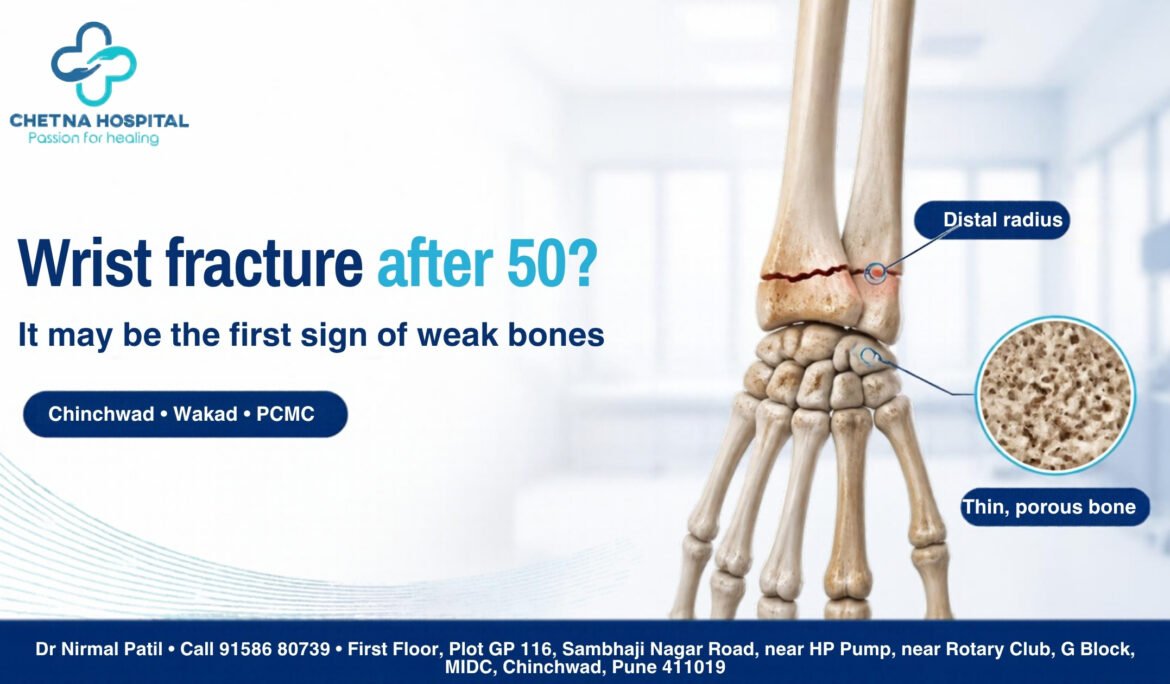
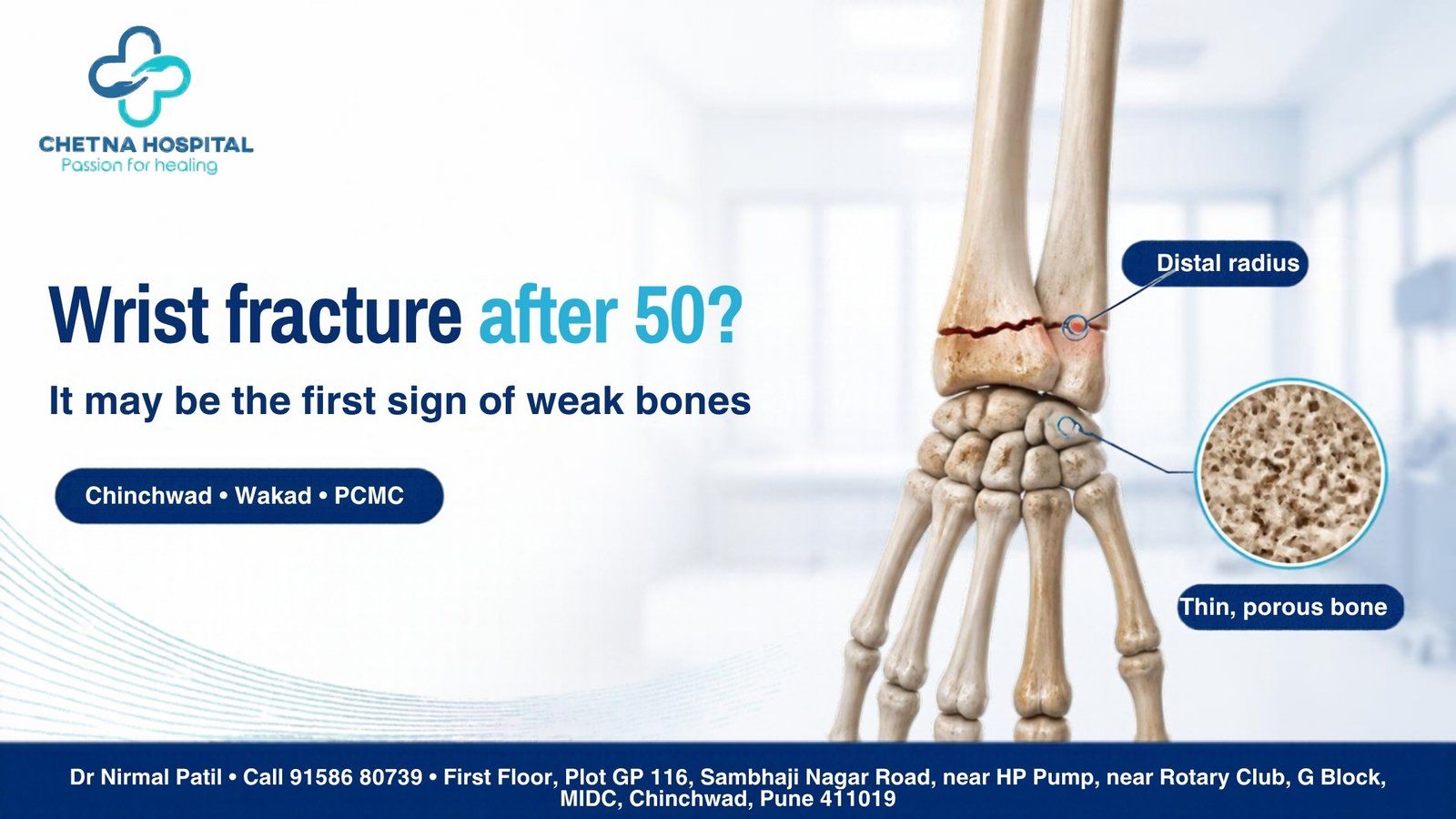
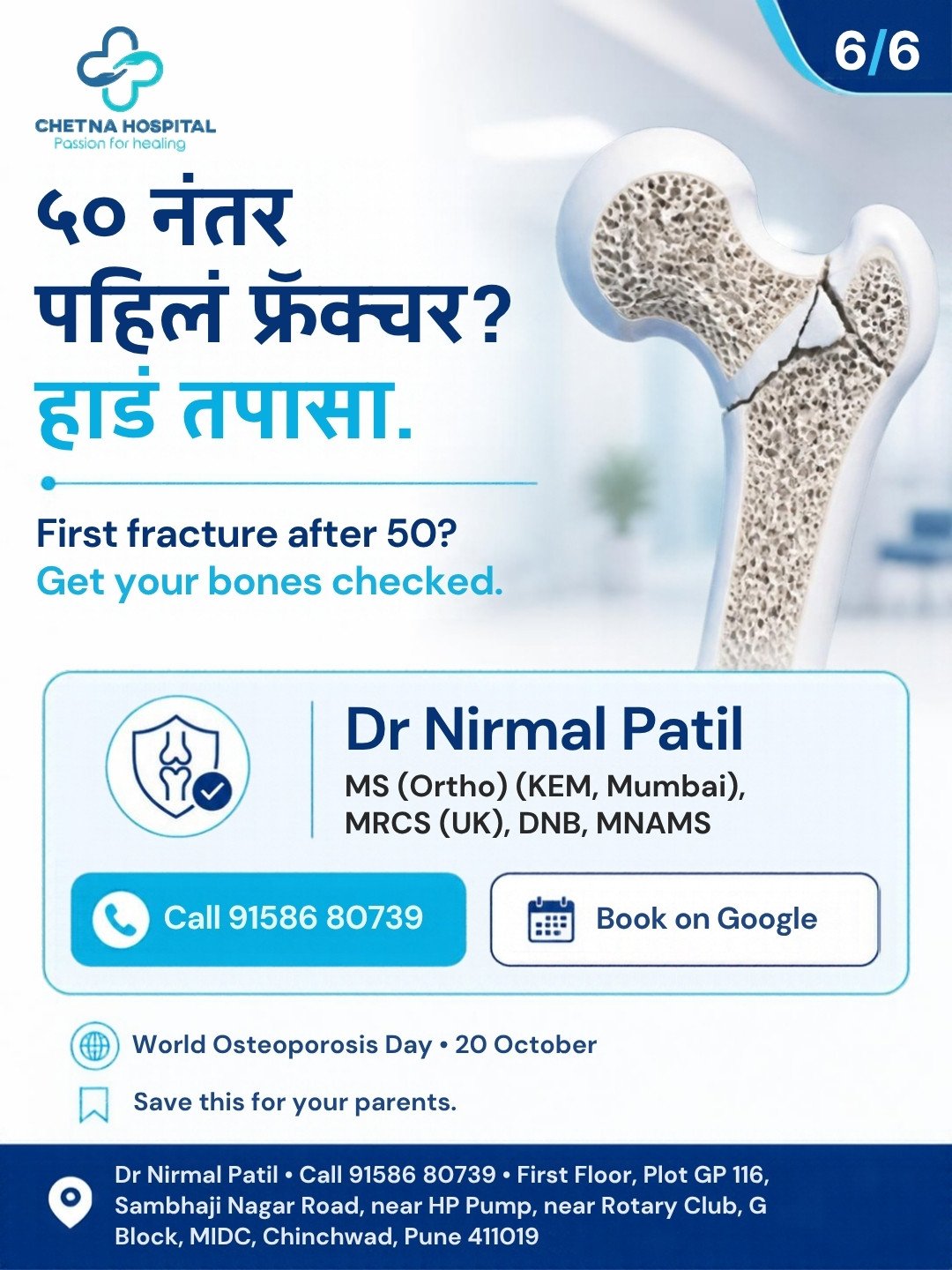
A wrist fracture after 50 from a simple slip is often the first sign of weak bones (osteoporosis). The usual approach is to treat the break and then check bone strength. See a doctor the same day if the wrist is swollen, bent or too painful to move.
Dr Nirmal Patil – Spine & Orthopaedic Surgeon in Chinchwad, PCMC
First Floor, Plot GP 116, Sambhaji Nagar Road, near HP Pump, near Rotary Club, G Block, MIDC, Chinchwad, Pune 411019
Key takeaways
- A wrist fracture after 50 from a simple fall is a fragility fracture.
- The wrist is often the first bone to break when bones are thin.
- Treat the fracture first, then test bone density.
- Calcium, vitamin D, exercise and safer floors cut the risk of a second break.
- A bent, numb or very swollen wrist needs care the same day.
In this article
- What it usually looks like
- Why a small fall breaks a bone
- What the doctor checks
- Making the home safer
- When to go the same day
- Questions patients ask
Last updated 13 October 2026
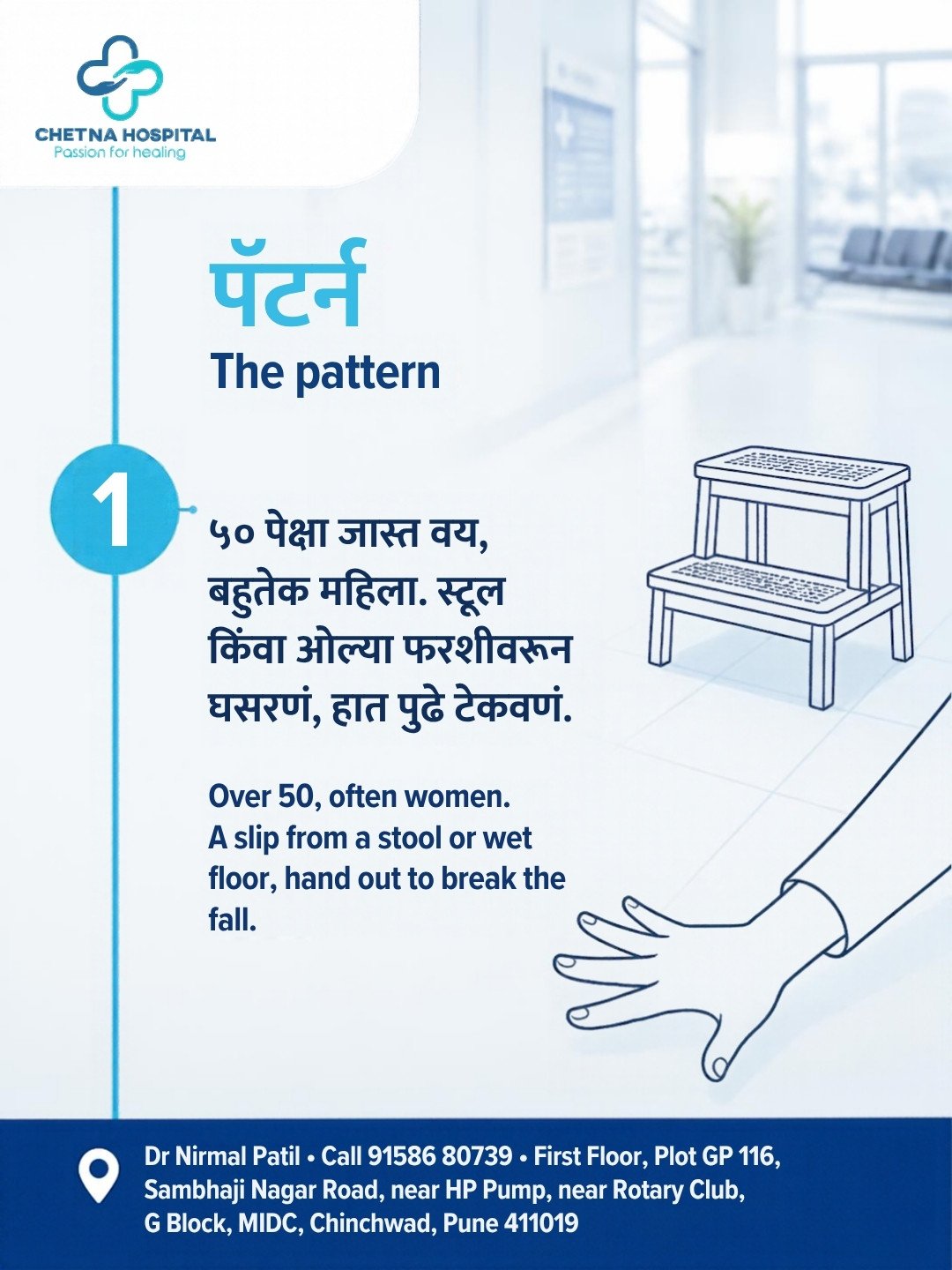
It can happen like this. Someone past 50 is cleaning a top shelf, the stool tips, and they put a hand out to save themselves. Now the wrist is swollen and bent, and the family says, “It was such a small fall.”
That sentence is the clue. This guide explains why a wrist fracture after 50 deserves two treatments: one for the bone that broke, and one for the bones that have not broken yet. Dr Nirmal Patil, spine and orthopaedic surgeon at Chetna Hospital, consults in Chinchwad and Wakad.
What does a wrist fracture after 50 usually look like?
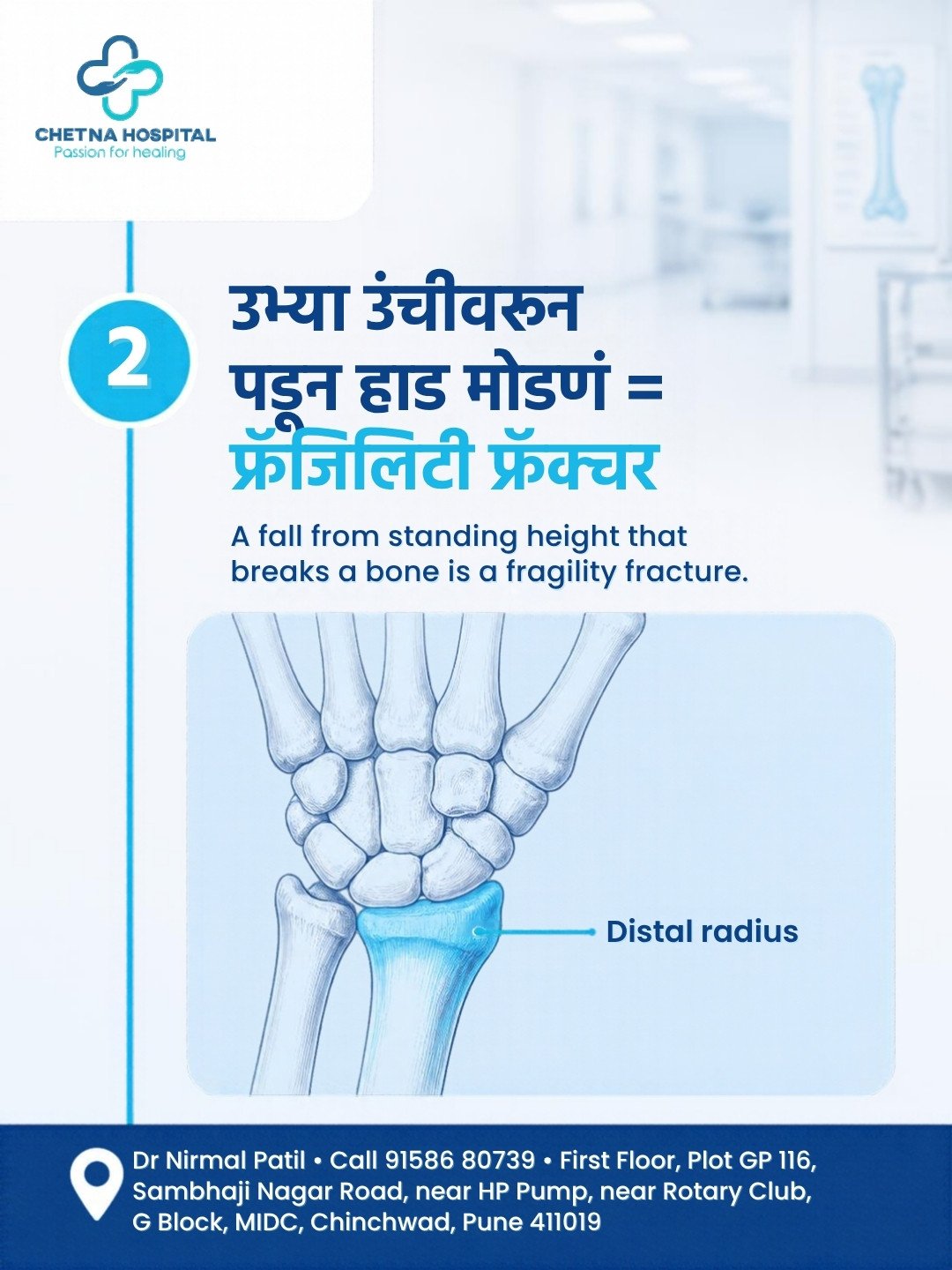
It often follows a simple slip, for example on a wet floor or from a wobbly stool, with a landing on an outstretched hand. The wrist can swell within minutes and may look like a fork from the side. The X-ray shows a break at the lower end of the radius, the larger forearm bone.
The American Academy of Orthopaedic Surgeons says that a fall onto an outstretched arm is the most common cause of this break. It also notes that with osteoporosis, even a minor fall can break the wrist.
Why can a small fall break a healthy-looking wrist?
Bone is living tissue. After menopause, and with age in men too, it can lose strength without any pain. Then the inside of the bone becomes more porous, like a sponge with bigger holes. As a result, a fall that would only bruise a younger person can crack the bone.
Doctors call this a fragility fracture. The NHS explains that osteoporosis is often only found when a fall or sudden impact breaks a bone, and the wrist, hip and spine are the usual sites. This matters because the next break may be the hip or a spinal bone. For that reason, a wrist fracture after 50 should not be treated as “just a wrist”.
What does the doctor check after a wrist fracture after 50?
First, the doctor usually looks at the position of the broken pieces on the X-ray, the nerves and blood flow in the hand, and the skin. Then come questions about earlier falls, height loss, steroid tablets, thyroid problems and early menopause. Also, expect questions about hip or spine fractures in the family.
How is the fracture itself treated?
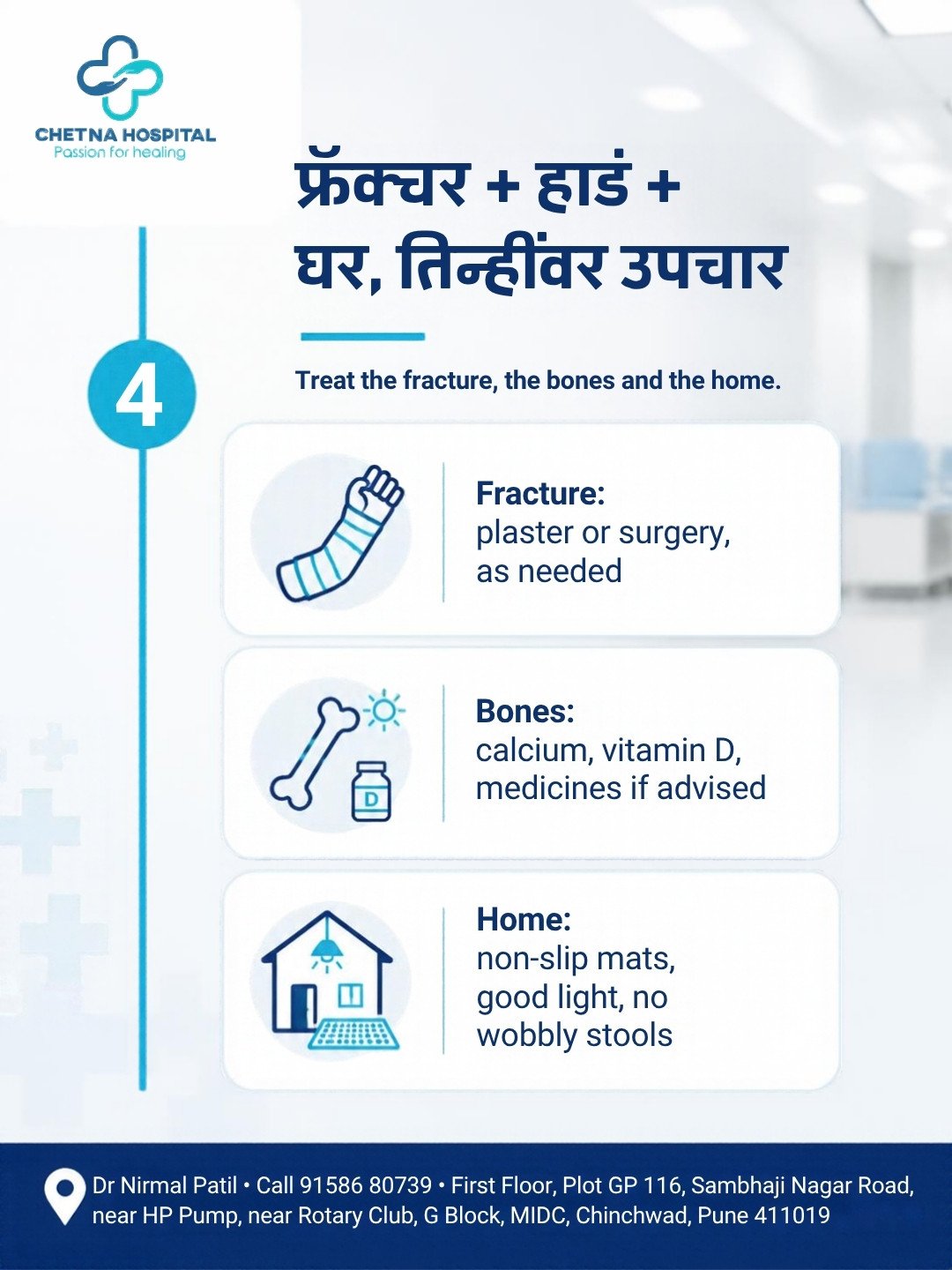
If the bone is in a good position, a plaster or cast usually holds it while it heals. However, if the pieces have shifted and will not stay in line, surgery with a small plate and screws may be advised. The choice depends on the break and your health, not age alone. Afterwards, guided exercises help the fingers and wrist regain movement, so physiotherapy and rehabilitation are part of the plan.
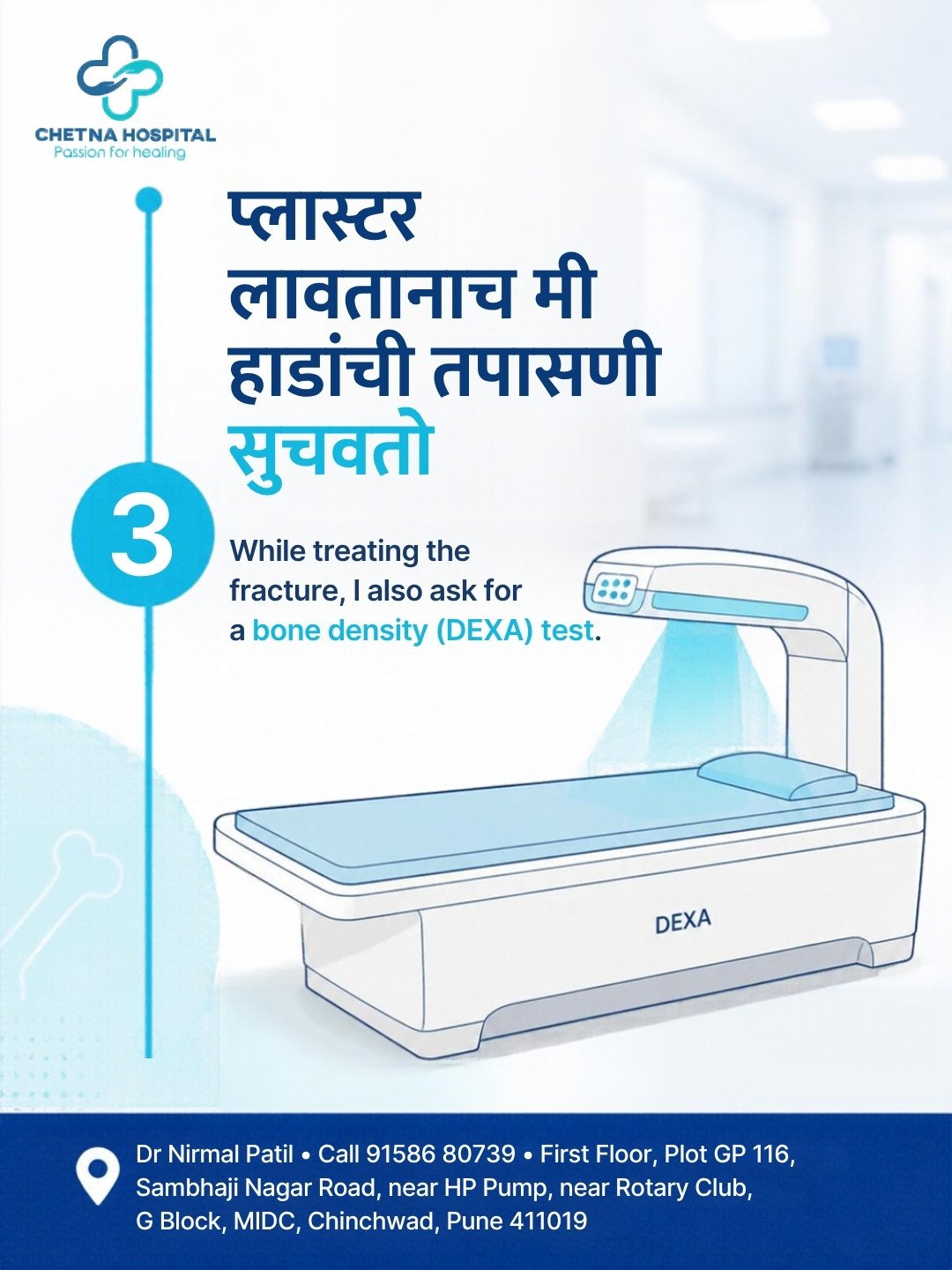
What is a bone density (DEXA) test?
A DEXA scan measures how strong your bones are, usually at the hip and spine. It is quick and painless. In addition, your doctor may ask for blood tests such as vitamin D and calcium. If the results show osteoporosis, treatment can include calcium, vitamin D and bone-strengthening medicines, depending on your reports.
How can you prevent a second wrist fracture after 50?
The International Osteoporosis Foundation warns that one broken bone raises the risk of more breaks. So the weeks after a fracture are the best time to act. These simple steps help:
- Use a stable ladder with a handrail instead of a stool, and ask someone to hold it.
- Put non-slip mats in the bathroom and near the kitchen sink.
- Keep a night light on the way to the toilet.
- Walk and do gentle strength exercises most days, as your doctor advises.
- Get your eyes checked, because poor vision causes falls.
After a wrist fracture after 50, these habits matter more than any single tablet.
Slides to save and share
When is a wrist fracture after 50 an emergency?
Go to a hospital the same day if you notice any of these:
- The wrist looks bent or deformed.
- The fingers are numb, pale or cold.
- Bone is visible or the skin is broken over the injury.
- Pain is severe and the swelling keeps rising.
- The person also hit their head or cannot stand after the fall.
Do not try to pull the wrist straight at home. Instead, support it on a pillow, remove rings and bangles at once, and come in. Our team handles orthopaedic emergencies in PCMC. If back pain started after the fall, also read about spinal fractures.
What patients say
“I consulted Dr. Nirmal Patil for a heel fracture that required surgery. He explained the condition and treatment clearly and handled the operation very well.”
Jyoti H., Google review
“He took the time to understand my symptoms and explained the issue and treatment approach clearly. I appreciated that he answered my questions patiently and did not rush the consultation.”
Rekha G., Google review
Individual experiences vary.
Where can you see Dr Nirmal Patil near you?
Chinchwad: Dr Nirmal Patil, First Floor, Plot GP 116, Sambhaji Nagar Road, near HP Pump, near Rotary Club, G Block, MIDC, Chinchwad, Pune 411019. Call 91586 80739. Directions
Wakad: Dr Nirmal Patil, Unit 401, 4th Floor, MI Commercia Building, Vishnu Dev Nagar, Wakad, Pune 411057. Call 91687 46986. Directions
Patients visit from Chinchwad, Pimpri, Akurdi, Nigdi, Ravet, Wakad, Hinjewadi, Pimple Saudagar, Thergaon, Tathawade, Punawale, Moshi and Bhosari.
Wrist fracture after 50: questions patients ask
Is a wrist fracture after 50 a sign of osteoporosis?
Not always, but often. A break from a fall at standing height suggests the bone may be weak, so a bone density test is worth doing.
How long does a broken wrist take to heal?
The bone usually needs several weeks to join, and stiffness can take longer to settle. Your doctor will guide you with follow-up X-rays and exercises.
Do I need surgery for a broken wrist?
Not always. A plaster or cast is enough when the bone is in a good position. However, surgery may be advised when the pieces have shifted and will not stay in line.
Where can I get a wrist fracture treated in Chinchwad?
Dr Nirmal Patil treats wrist fractures at Chetna Hospital, Chinchwad, and also consults in Wakad. Call 91586 80739 for Chinchwad or 91687 46986 for Wakad.
Can osteoporosis be treated after a fracture?
Yes. After the fracture is treated, calcium, vitamin D, exercise and bone-strengthening medicines can lower the risk of another break, depending on your test results.
Dr Nirmal Patil – Spine & Orthopaedic Surgeon in Chinchwad, PCMC
First Floor, Plot GP 116, Sambhaji Nagar Road, near HP Pump, near Rotary Club, G Block, MIDC, Chinchwad, Pune 411019

Your doctor: Dr Nirmal Patil, Spine & Orthopaedic Surgeon
MS (Ortho) (KEM, Mumbai), MRCS (UK), DNB, MNAMS
International Orthopaedic Diploma (SICOT, Belgium)
Advanced Diploma in Spine Surgery (UK, EUROSPINE)
Clinical Fellowship Trained Spine Surgeon (Germany, Japan, Queen’s Medical Centre and London Bridge Hospital, UK, South Korea)
Sources
- NHS: Osteoporosis
- AAOS OrthoInfo: Distal Radius Fractures (Broken Wrist)
- International Osteoporosis Foundation: About Osteoporosis
Disclaimer: This article is for general awareness and is not a substitute for a medical consultation. Please see a doctor for advice about your own condition.