
Quick Answer
A spinal fracture is a break or crack in one or more bones (vertebrae) of the spine. It can occur because of road traffic accidents, falls, sports injuries, osteoporosis, or other conditions that weaken the bones.
Some spinal fractures are stable and may improve with rest, medication, and supervised rehabilitation. More serious fractures can cause spinal instability or pressure on the spinal cord and nerves and may require surgical treatment.
Early medical evaluation is important, especially after a major injury or when symptoms such as severe back pain, numbness, weakness, or difficulty walking are present.
Medically Reviewed By: Dr. Nirmal Patil
Specialization: Consultant Orthopaedic Spine Surgeon
Hospital: Chetna Hospital, Chinchwad, PCMC, Pune
What Is a Spinal Fracture?
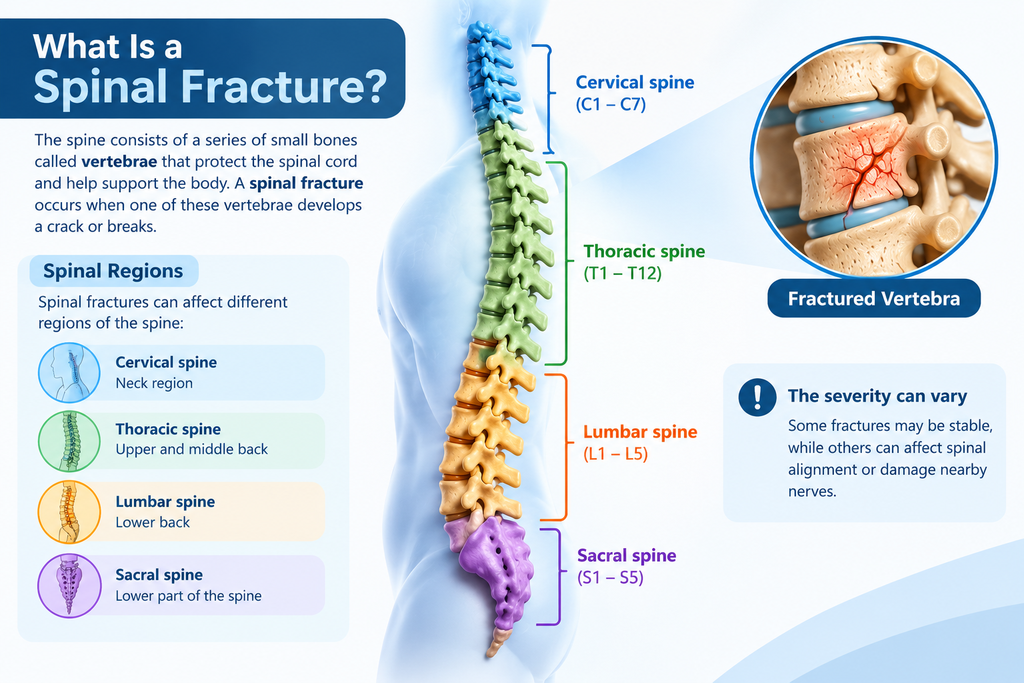
The spine consists of a series of small bones called vertebrae that protect the spinal cord and help support the body. A spinal fracture occurs when one of these vertebrae develops a crack or breaks.
Spinal fractures can affect different regions of the spine:
- Cervical spine: Neck region
- Thoracic spine: Upper and middle back
- Lumbar spine: Lower back
- Sacral spine: Lower part of the spine
The severity of a spinal fracture can vary considerably. Some fractures may be stable, while others can affect spinal alignment or damage nearby nerves.
What Causes Spinal Fractures?
Spinal fractures can develop due to sudden trauma or weakened bones.
1. Road Traffic Accidents
High-impact accidents involving cars, motorcycles, or other vehicles can place significant force on the spine and cause vertebral fractures.
2. Falls
Falls from stairs, rooftops, ladders, or other heights can result in spinal injuries. Even a relatively minor fall can cause a fracture in people with weakened bones.
3. Sports Injuries
Contact sports and activities involving high-speed movement or falls may increase the risk of spinal injury.
4. Osteoporosis
Osteoporosis can weaken the vertebrae and increase the risk of compression fractures. For more information about osteoporosis and fracture risk, see the National Institute of Arthritis and Musculoskeletal and Skin Diseases (NIAMS) osteoporosis resource.
5. Direct Trauma
A strong blow to the back can damage one or more vertebrae.
6. Conditions That Weaken Bones
Certain medical conditions and diseases affecting bone strength may increase the risk of spinal fractures.
Types of Spinal Fractures
Different types of spinal fractures can occur depending on how the injury happens.
Compression Fracture
A compression fracture occurs when the front portion of a vertebra collapses. It is commonly associated with osteoporosis but can also occur after significant trauma.
Burst Fracture
A burst fracture occurs when a vertebra is severely compressed, and fragments of bone may spread outward. Depending on the injury, these fragments can potentially affect nearby nerves or the spinal cord.
Flexion-Distraction Injury
This type of injury occurs when the spine is forced to bend forward suddenly. It can involve damage to the vertebra and supporting ligaments.
Fracture-Dislocation
A fracture-dislocation involves both a broken vertebra and abnormal movement or displacement of the spinal bones. These injuries can be unstable and may require urgent specialist assessment.
Symptoms of a Spinal Fracture
Symptoms can vary depending on the location and severity of the injury.
Common symptoms include:
- Sudden or severe back pain
- Neck pain following an injury
- Pain that becomes worse with movement
- Tenderness over the spine
- Reduced spinal movement
- Muscle stiffness or spasms
- Numbness or tingling
- Weakness in the arms or legs
- Difficulty standing or walking
A person with a spinal fracture may not always have obvious neurological symptoms. Therefore, a significant injury should be medically assessed even if numbness or weakness is not present.
When Is a Spinal Fracture an Emergency?
Seek urgent medical attention after a significant injury if there is:
- Severe neck or back pain
- New weakness in the arms or legs
- Numbness or loss of sensation
- Difficulty walking
- Loss of bladder or bowel control
- Severe pain after a road traffic accident or fall
- Loss of consciousness associated with a major injury
These symptoms can indicate possible involvement of the spinal cord or nerves and require prompt assessment.
How Are Spinal Fractures Diagnosed?
A doctor usually begins with a detailed medical history and physical examination.
Depending on the injury, imaging tests may include:
X-Ray
X-rays can help identify many vertebral fractures and changes in spinal alignment.
CT Scan
A CT scan provides more detailed images of the bones and can help assess the pattern and severity of a fracture.
MRI Scan
MRI may be recommended when there is concern about the spinal cord, nerves, discs, ligaments or other soft tissues.
The choice of imaging depends on the patient’s symptoms, injury mechanism and clinical examination.
Treatment for Spinal Fractures
Treatment depends on factors such as the type of fracture, spinal stability, bone health and whether nerves or the spinal cord are affected.
Conservative Treatment
Stable spinal fractures may sometimes be treated without surgery.
Treatment may include:
- Appropriate pain management
- Activity modification
- Bracing when recommended
- Medical treatment for osteoporosis when appropriate
- Physiotherapy and rehabilitation
- Regular follow-up and imaging when required
Patients should follow their doctor’s instructions regarding movement and activity because returning to normal activities too quickly may worsen certain injuries.
Surgical Treatment
Surgery may be considered when a fracture is unstable, causes significant spinal deformity, compresses nerves or the spinal cord, or does not respond appropriately to non-surgical treatment.
Depending on the injury, surgical procedures may include:
- Spinal decompression
- Spinal fixation
- Vertebral stabilization
- Fusion procedures
- Other fracture-specific surgical techniques
The appropriate procedure depends on the exact location and characteristics of the fracture.
Spinal Fracture Treatment and Recovery
Recovery time varies from person to person. Factors that can influence recovery include:
- Type and severity of the fracture
- Location of the injury
- Bone strength
- Age and general health
- Whether nerves or the spinal cord are affected
- Type of treatment
- Adherence to rehabilitation
After the initial treatment, a structured rehabilitation program may help restore mobility, strength and functional movement when medically appropriate.
Can Spinal Fractures Be Prevented?
Not every spinal fracture can be prevented, particularly those caused by major accidents. However, several measures can help reduce risk:
- Maintain good bone health
- Get appropriate evaluation for osteoporosis when indicated
- Follow fall-prevention measures
- Use appropriate protective equipment during sports
- Follow road safety practices
- Maintain muscle strength and balance
- Follow medical advice for conditions affecting bone health
Frequently Asked Questions About Spinal Fractures
Conclusion
Spinal fractures can range from stable injuries that improve with conservative treatment to complex injuries requiring surgical stabilization. Recognizing warning symptoms and obtaining appropriate medical evaluation after an injury can help determine the right treatment.
If you experience severe back or neck pain, weakness, numbness, difficulty walking, or other symptoms after an accident or fall, seek prompt medical evaluation.
For patients in Chinchwad, PCMC, and Pune, spine-related conditions can be evaluated based on the symptoms, clinical examination, and appropriate imaging. Treatment should be individualized according to the type and severity of the spinal fracture.