








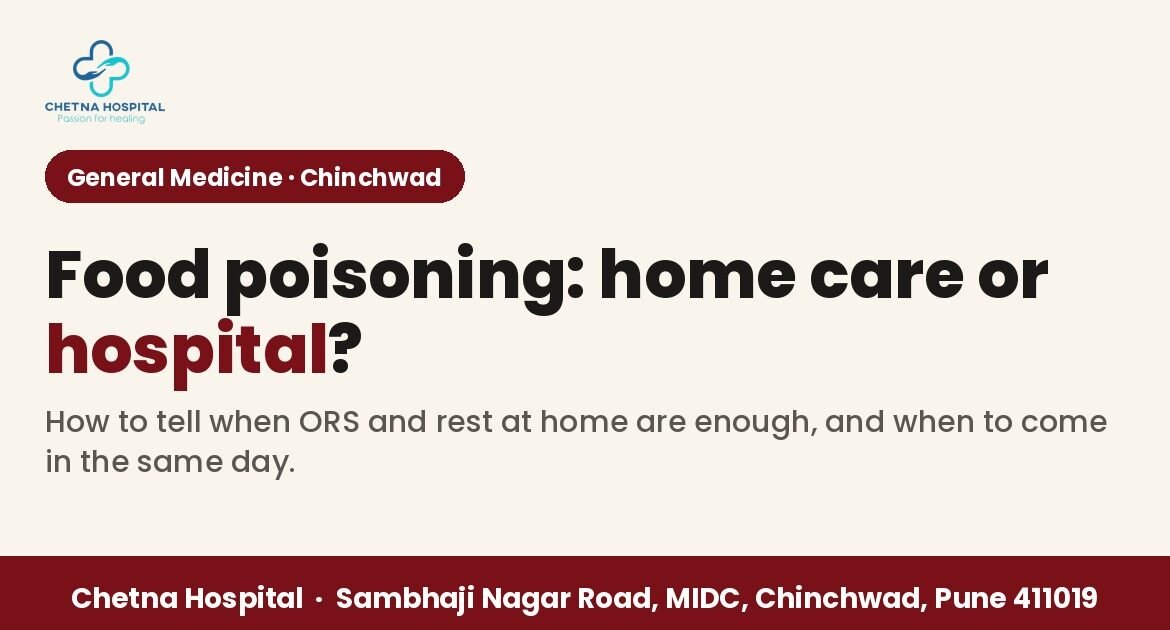
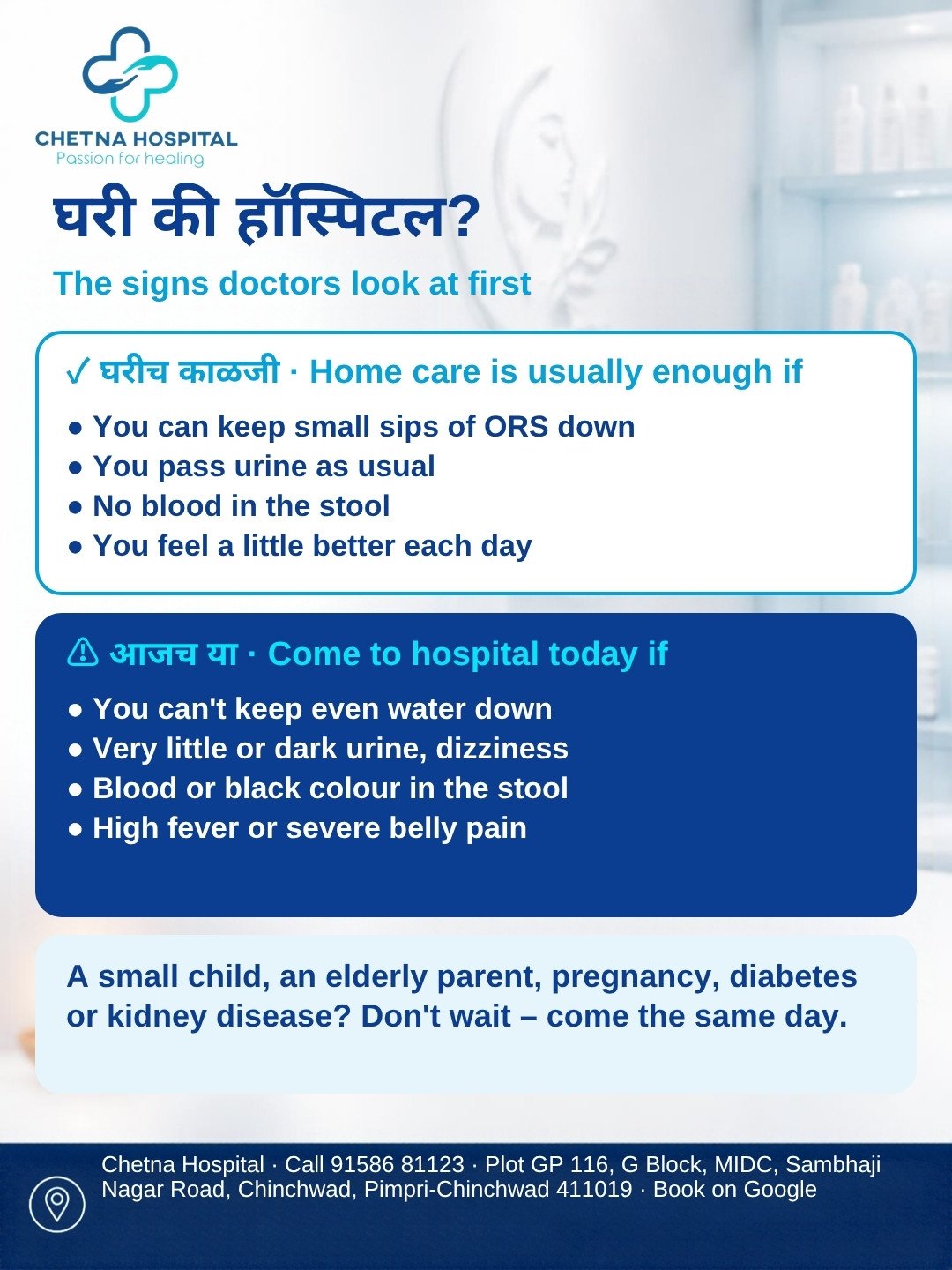
Food poisoning treatment at home is enough for most people: small, frequent sips of ORS, rest and light food. However, the general medicine team at Chetna Hospital, Chinchwad, PCMC, advises coming in the same day if you cannot keep water down, pass very little urine, see blood in the stool or have a high fever. Children, elders and pregnant women need care sooner.
Chetna Hospital, a multispeciality hospital in Chinchwad, PCMC
Chetna Hospital, Plot GP 116, G Block, MIDC, Sambhaji Nagar Road, Chinchwad, Pimpri-Chinchwad 411019
Key takeaways
- Most food poisoning treatment happens at home, with fluids and rest.
- The main risk is losing too much water, not the bug itself.
- Sip ORS often. Skip juice, fizzy drinks and antibiotics bought on your own.
- Come in the same day for no urine, blood in the stool or high fever.
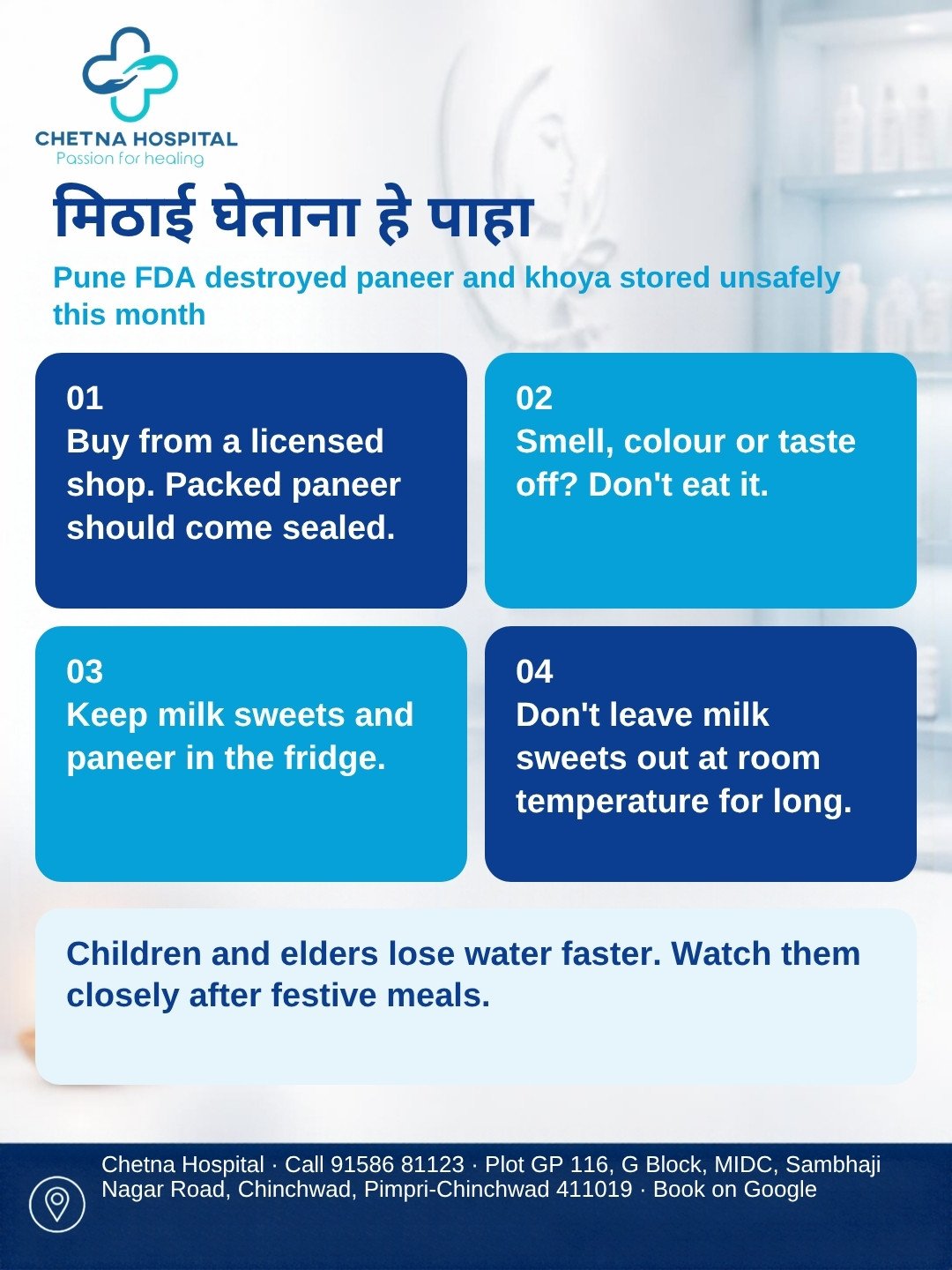
- Buy paneer, khoya and milk sweets from licensed shops, and refrigerate them.
In this article
- When to come to hospital
- What happens in the body
- What helps at home
- How doctors decide
- Slides to save and share
- When it is an emergency
- Where to get care near you
- Questions patients ask
Last updated 5 November 2026
Before Diwali, many families wonder: “Can we manage this at home, or should we come in?”
Below are the signs doctors use to decide. It does not replace a visit, but it can help you spot the signs that mean you should come in.
Diwali falls on 8 November this year, and many homes will cook, buy and store more food than usual, including sweets made with milk, paneer and khoya.
When does food poisoning treatment need a hospital?
Food poisoning treatment moves from home to hospital when the body cannot keep up with the water it is losing. That is the main question doctors ask. For example, an adult who keeps sips down and passes urine every few hours can usually stay home. In contrast, someone who vomits every sip, feels dizzy on standing or has passed little urine all day needs fluids and a check-up the same day.
Age and health change the answer too. Babies, small children, people over 65, pregnant women and anyone with diabetes, kidney disease or heart disease lose water faster, or handle it less well. As a result, they should get checked earlier.
What happens in your body during food poisoning?
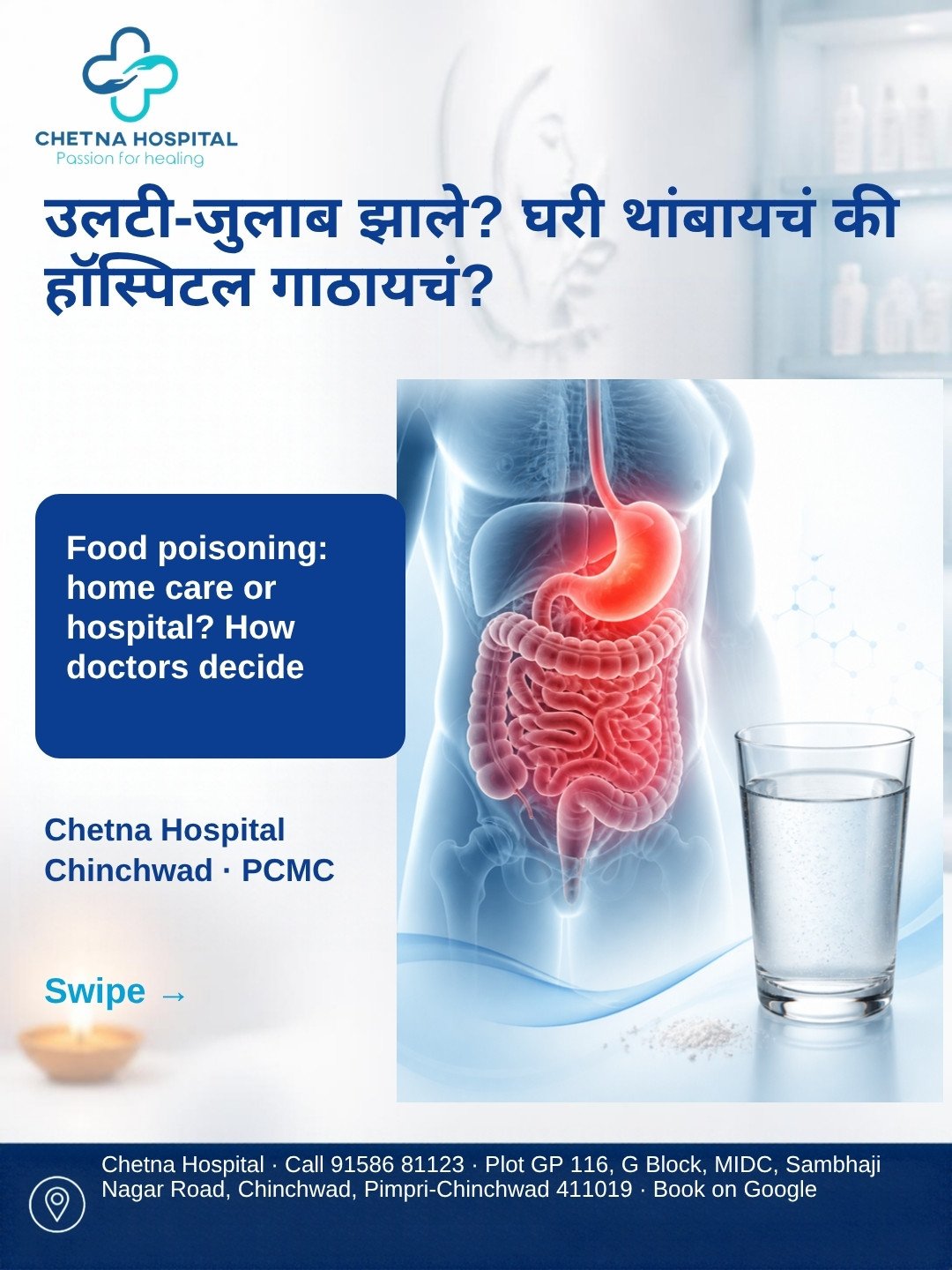
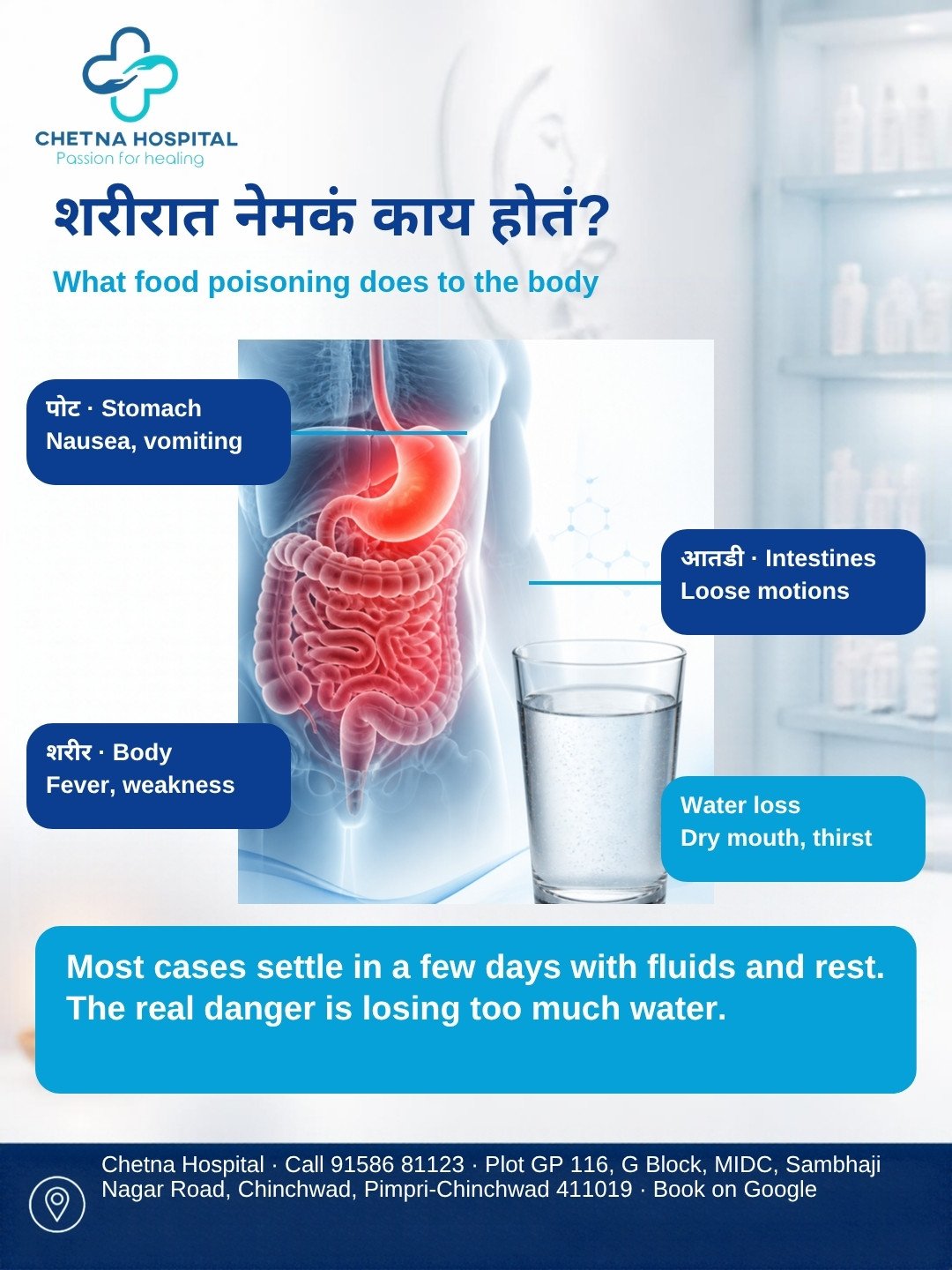
Germs or their toxins in spoiled food irritate the stomach and the intestines. The stomach responds with nausea and vomiting. Then the intestines push out fluid, which causes loose motions and cramps. Some people also get fever, aches and weakness.
The NHS notes that symptoms usually start within hours to a few days of eating, and usually ease within a week. Meanwhile, every bout of vomiting or diarrhoea drains water and salts. That is why dehydration, not the infection itself, is what usually brings people to hospital. MedlinePlus, from the US National Library of Medicine, also lists dehydration as a usual symptom. It says replacing lost fluids and salts is important.
Food poisoning treatment at home: what helps?
- Take small sips of ORS every few minutes, even if you vomit some of it.
- Rest, and eat light home food such as rice, dal or curd rice once the vomiting slows.
- Avoid fruit juice, fizzy drinks, alcohol and very oily or sweet food for a few days.
- Do not start antibiotics or anti-diarrhoea tablets on your own, and never give them to young children without advice.
- Keep feeding babies breast milk or formula, in smaller amounts more often.
Also, wash hands with soap after using the toilet and before cooking, so the rest of the family stays well.
How do doctors decide on food poisoning treatment in hospital?
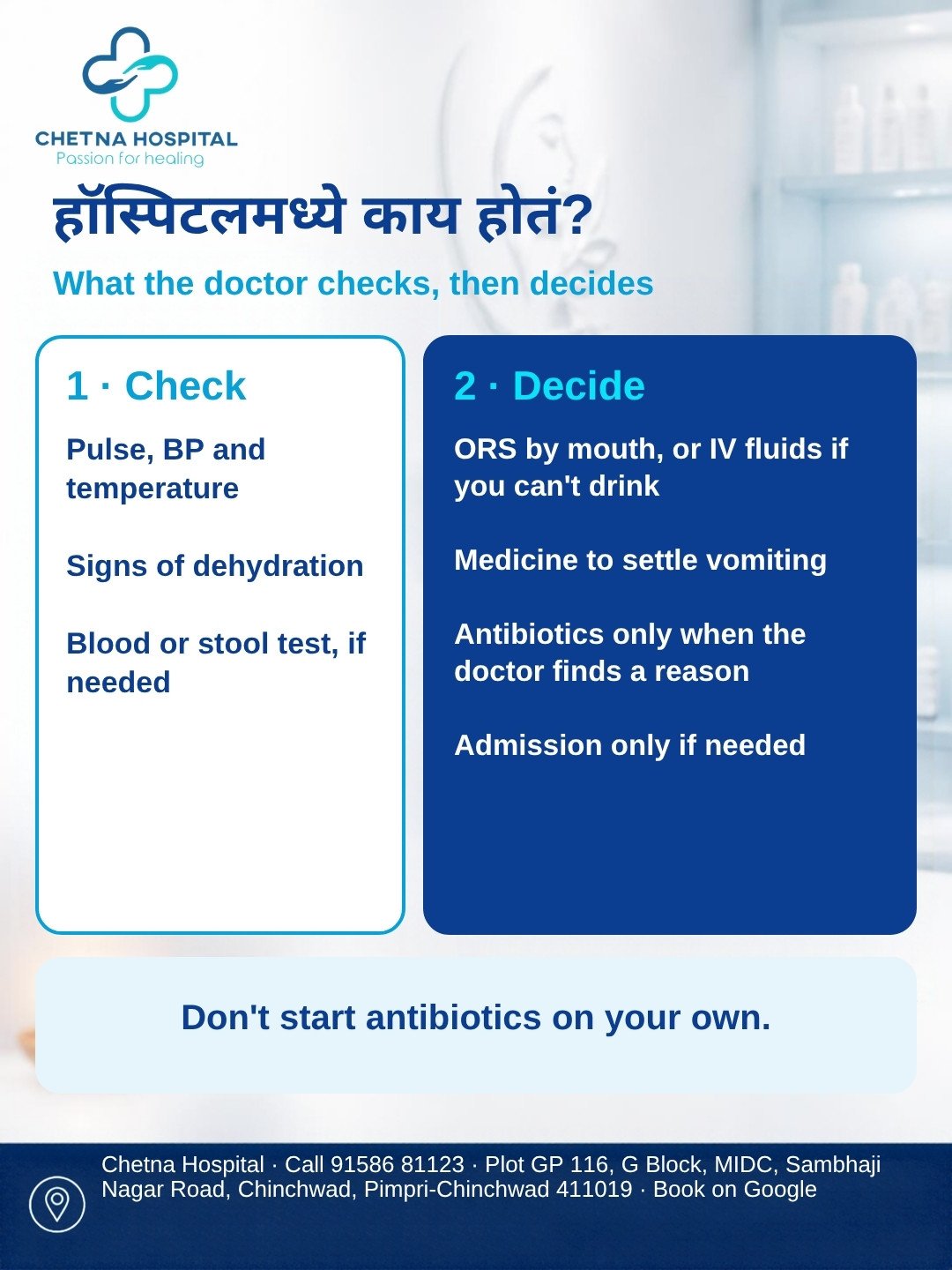
First, the doctor checks pulse, blood pressure, temperature and signs of dehydration, such as a dry mouth and sunken eyes. Then the doctor asks what you ate, when the symptoms began and how much urine you have passed.
Next comes the decision. Most patients go home with ORS and medicine to settle the vomiting. If you cannot drink, our general medicine team gives IV fluids. If the doctor suspects a specific infection, a stool or blood test at our pathology lab in PCMC guides the next step. Antibiotics are used only when there is a clear reason. Admission, and rarely the intensive care unit, is for severe dehydration, kidney strain or very high fever. Children are seen by our paediatric team.
Slides to save and share
When is food poisoning an emergency?
Come to the emergency department straight away if you or a family member has any of these:
- Vomit with blood, or vomit that looks like coffee grounds.
- Severe belly pain, a stiff neck or a sudden, severe headache.
- Confusion, fainting, or pale, cold or blotchy skin.
- Fast, shallow breathing, or no urine for many hours.
Do not drive yourself. Instead, ask someone to bring you, and carry the medicines you take.
Where can you get food poisoning treatment in Chinchwad?
Chinchwad: Chetna Hospital, Plot GP 116, G Block, MIDC, Sambhaji Nagar Road, Chinchwad, Pimpri-Chinchwad 411019. Call 91586 81123. Directions
Patients visit from Chinchwad, Pimpri, Akurdi, Nigdi, Ravet and Wakad. Others come from Hinjewadi, Pimple Saudagar, Thergaon, Tathawade, Punawale, Moshi and Bhosari.
Food poisoning treatment: questions patients ask
Is food poisoning treatment at home safe for children?
Often, yes, if the child drinks small sips of ORS, passes urine and stays alert. However, bring a baby, a child who stops drinking or a child who passes very little urine to a doctor the same day.
How long does food poisoning last?
Most people feel better within a few days, and the NHS says symptoms usually ease within a week. So see a doctor if vomiting lasts more than two days or loose motions last more than a week.
Should I take an antibiotic for food poisoning?
Usually not. Most food poisoning settles with fluids and rest, and antibiotics help only in some cases. Instead, let a doctor decide after an examination and, if needed, a stool or blood test.
Can I eat milk sweets after food poisoning?
Wait until the vomiting stops. Then start with light home food such as rice, dal or curd rice. Also skip rich, oily or milk-heavy sweets for a few days.
Where can I get food poisoning treatment in Chinchwad?
Chetna Hospital on Sambhaji Nagar Road, MIDC, Chinchwad, sees adults and children with vomiting and loose motions. Call 91586 81123 to book or to ask before you come.
Chetna Hospital, a multispeciality hospital in Chinchwad, PCMC
Chetna Hospital, Plot GP 116, G Block, MIDC, Sambhaji Nagar Road, Chinchwad, Pimpri-Chinchwad 411019
Sources
- NHS: Food poisoning
- World Health Organization: Food safety fact sheet
- MedlinePlus (US National Library of Medicine): Food poisoning (foodborne illness)
Disclaimer: This article is for general awareness. It does not replace a medical consultation. Please see a doctor for advice about your own health.
How this article was prepared: Chetna Hospital’s content team wrote it with the help of AI writing tools and checked it against the sources listed. It is general health information, not personal medical advice.