
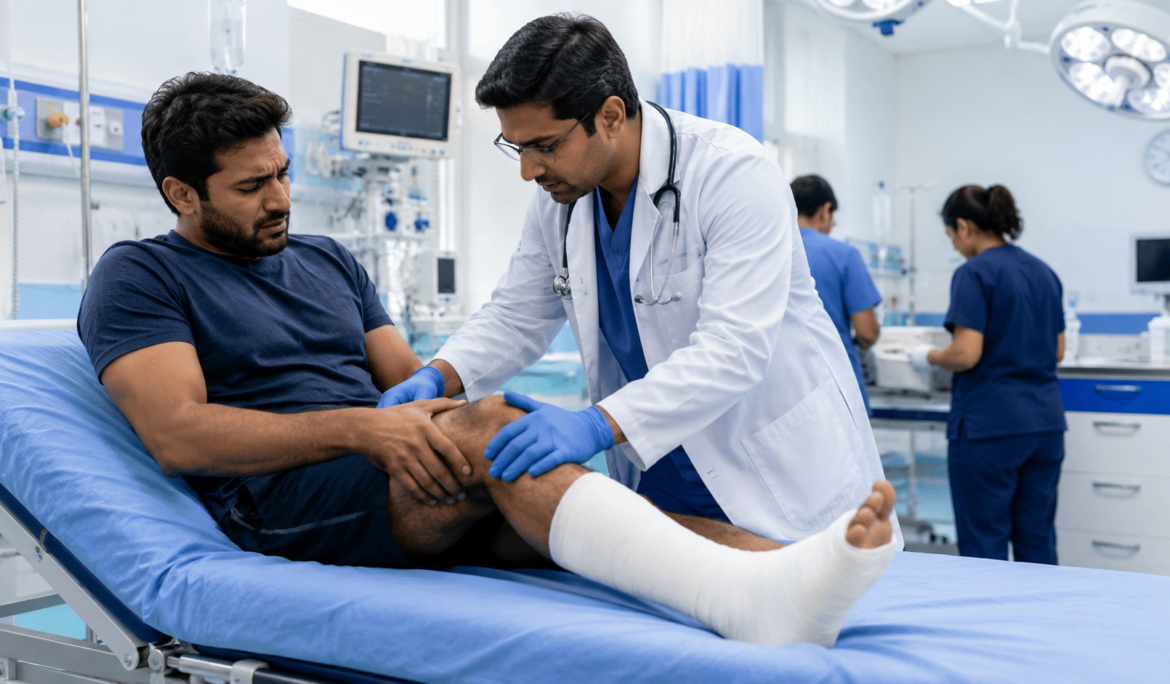
Emergency Orthopedic & Trauma Care in Chinchwad, PCMC: Immediate 24/7 Care by Dr. Nirmal Patil at Chetna Hospital
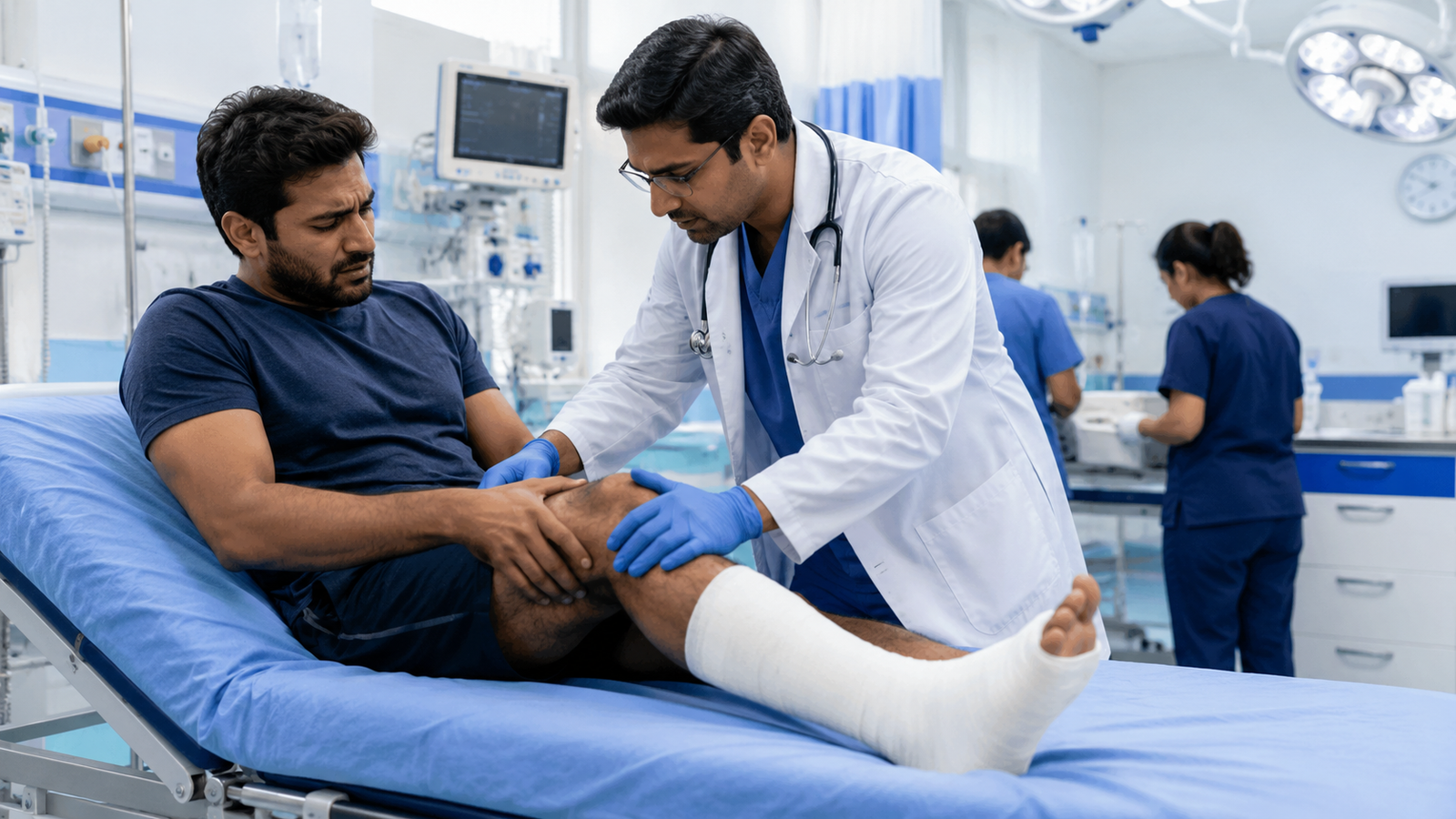
Sudden fractures, joint dislocations, sports injuries, road-traffic accidents and other orthopedic trauma can happen without warning. When a serious injury occurs, timely medical evaluation can help identify the injury and determine the appropriate treatment.
Patients searching for orthopedic emergency care in PCMC should know the warning signs that may require urgent medical attention. Severe pain, visible deformity, significant swelling, inability to use an injured limb, numbness, circulation changes or an open wound can indicate the need for prompt evaluation.
At Chetna Hospital, Chinchwad, patients can seek medical evaluation and orthopedic care based on the severity of their injury. For non-emergency orthopedic and spine concerns, Dr. Nirmal Patil, Consultant Orthopaedic Spine Surgeon, provides consultation according to his available OPD schedule.
Quick Answer: When Should You Seek Orthopedic Emergency Care in PCMC?
A doctor may perform a physical examination and recommend an X-ray or other imaging when clinically appropriate. The appropriate place of care depends on the severity and type of injury.
Seek urgent medical evaluation after an accident, fall or sports injury if you have severe pain, visible deformity, significant swelling, suspected fracture or dislocation, inability to use the injured limb, numbness, circulation changes or an open wound.
What Is an Orthopedic Emergency?
An orthopedic emergency is an injury or musculoskeletal condition that requires prompt medical evaluation.
Orthopedic emergencies can involve the bones, joints, muscles, ligaments, tendons or spine. Some injuries may be treated with immobilization and rehabilitation, while more serious injuries may require a procedure or surgery.
Common orthopedic emergencies include:
- Fractures
- Joint dislocations
- Severe sports injuries
- Road-traffic accident injuries
- Open fractures
- Severe ligament injuries
- Crush injuries
- Major joint trauma
- Certain spinal injuries
The severity of an injury cannot always be determined from pain alone. Professional assessment is important when symptoms are severe or the injury resulted from significant trauma.
Common Orthopedic Emergencies After an Injury
1. Fractures
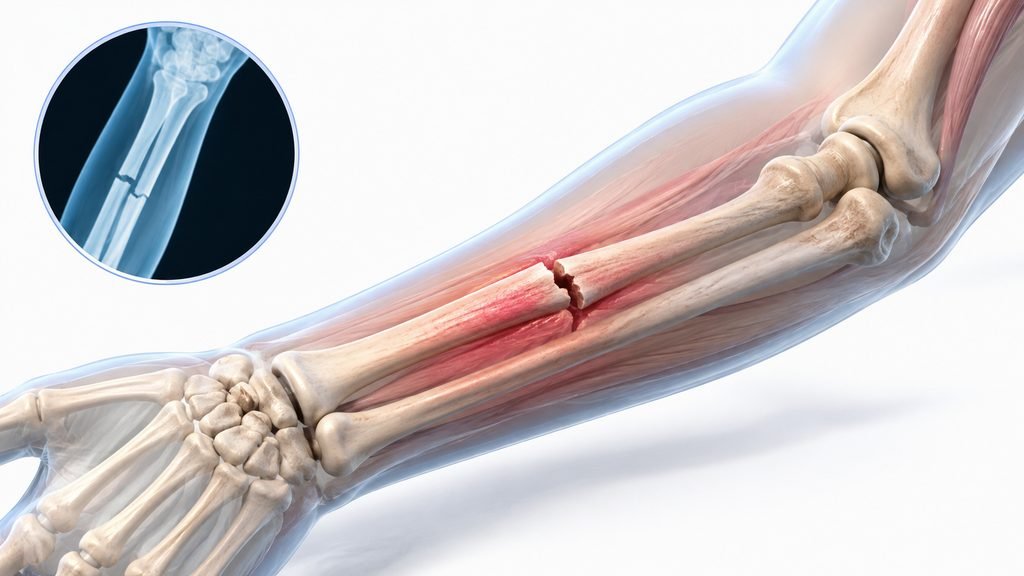
A fracture occurs when a bone partially or completely breaks. Fractures can result from falls, road-traffic accidents, sports injuries or direct trauma. Common symptoms may include pain, swelling, bruising, tenderness, difficulty moving the affected area or visible deformity. An X-ray may be recommended by a doctor when a fracture is suspected.
The type and severity of a fracture determine the appropriate treatment. Depending on the injury, treatment may include immobilization with a cast or brace, fracture reduction or surgical fixation. For reliable patient information about fractures, you can also refer to the American Academy of Orthopaedic Surgeons (AAOS) fracture guide.
Common symptoms include:
- Sudden pain
- Swelling
- Bruising
- Difficulty moving the affected area
- Difficulty bearing weight
- Abnormal shape of the limb
- Tenderness around the injured area
- Numbness or tingling in some cases
- An open wound in severe cases
Treatment depends on the location and type of fracture and may include immobilization, reduction or surgical fixation.
24/7 Emergency Helpline: +91-9158681123
2. Joint Dislocations
A joint dislocation occurs when the bones forming a joint are forced out of their normal position. It may cause severe pain, swelling, an abnormal appearance of the joint, restricted movement or numbness and tingling.
A suspected dislocation should be evaluated by a qualified healthcare professional. Patients should not attempt to put a dislocated joint back into position themselves.
Treatment depends on the affected joint and associated injuries and may include professional reduction, immobilization and follow-up care.
For additional patient education, see the American Academy of Orthopaedic Surgeons (AAOS) information on dislocations.
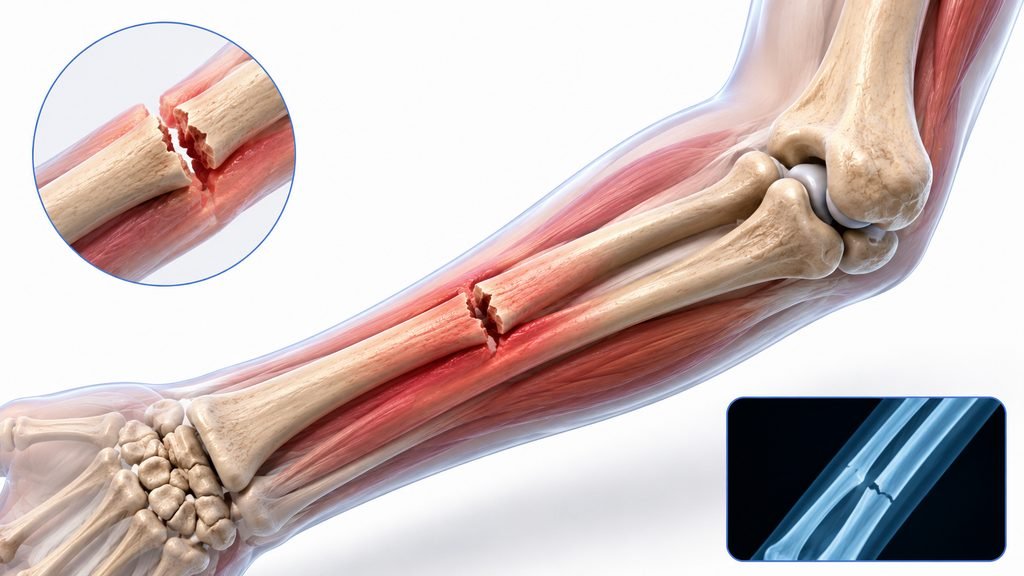
Joint dislocation evaluation and treatment in PCMC
3. Severe Sprains and Ligament Injuries
A sprain involves injury to a ligament. Severe sprains can cause pain, swelling, bruising and difficulty using the affected joint.
Because symptoms of severe sprains can overlap with fractures, medical assessment may be necessary, particularly when the patient cannot bear weight or move the joint normally.
4. Road-Traffic and High-Impact Trauma
Road accidents and other high-impact injuries can cause multiple orthopedic injuries.
Depending on the accident, injuries may affect:
- Shoulder
- Arm
- Wrist
- Hip
- Knee
- Ankle
- Pelvis
- Spine
Patients involved in major trauma may also have injuries affecting other parts of the body, so emergency medical assessment is important.
Rapid-Response Trauma Care Within the 5 km to 15 km Radius
0–5 km Core Zone: Sambhaji Nagar, Akurdi, Nigdi, Thermax Chowk, Chinchwad Gaon, aur Pimpri Colony ke patients ke liye 5-10 minute me pahunchna aasan hai.
5–15 km Extended Catchment: Wakad, Hinjewadi, Bhosari MIDC, Pimple Saudagar, aur Chikhali se emergency cases ke liye Mumbai-Pune Highway aur Spine Road se direct connectivity hai.
Orthopedic Injury Symptoms: What Should You Watch For?
| Symptom | Possible Concern | Recommended Action |
|---|---|---|
| Severe pain | Significant injury | Seek medical evaluation |
| Major swelling | Fracture or soft-tissue injury | Arrange medical assessment |
| Visible deformity | Possible fracture or dislocation | Seek urgent care |
| Unable to bear weight | Possible fracture or serious injury | Avoid putting weight on the limb |
| Numbness or tingling | Possible nerve involvement | Seek prompt medical assessment |
| Open wound near an injury | Possible open fracture | Seek emergency care |
| Cold, pale or blue fingers/toes | Possible circulation problem | Seek emergency medical care |
| Bone visible through skin | Open fracture | Immediate emergency evaluation |
Fracture vs Dislocation vs Severe Sprain
| Feature | Fracture | Dislocation | Severe Sprain |
|---|---|---|---|
| Bone involved | Yes | Joint alignment affected | Usually ligament |
| Pain | Often significant | Often severe | Can range from mild to severe |
| Swelling | Common | Common | Common |
| Deformity | Possible | Possible | Less common |
| Movement | May be difficult | Usually restricted | May be painful |
| Imaging | Often required | Often required | May be required |
| Medical assessment | Depends on severity | Usually necessary | Depends on severity |
Symptoms can overlap, so patients should not rely on symptoms alone to identify the type of injury.
Causes and Risk Factors for Orthopedic Injuries
Orthopedic injuries can happen during everyday activities as well as high-impact events.
Common causes include:
- Road-traffic accidents
- Falls
- Sports injuries
- Workplace accidents
- Direct impact
- Twisting injuries
- Falls from height
- Crush injuries
- High-impact collisions
Older adults may also be more vulnerable to fractures following falls, particularly when bone strength is reduced.
How an Orthopedic Injury Is Evaluated
A typical evaluation may involve:
Injury or accident
↓
Pain, swelling or restricted movement
↓
Physical examination
↓
Imaging if clinically required
↓
Diagnosis
↓
Appropriate treatment
The exact evaluation depends on the injury, symptoms and clinical findings.
What Should You Do Immediately After an Orthopedic Injury?
After an orthopedic injury, avoid unnecessary movement and seek appropriate medical evaluation when symptoms are severe or a fracture, dislocation or major trauma is suspected.
1. Keep the injured area still
Avoid unnecessary movement, particularly when a fracture or serious joint injury is suspected.
2. Do not straighten a deformed limb
Do not attempt to manually straighten a limb that appears deformed after an injury.
3. Do not relocate a dislocated joint yourself
A suspected dislocation should be assessed and treated by a qualified healthcare professional.
4. Avoid putting weight on the injured area
If a lower-limb fracture is suspected, avoid walking on the injured leg until it has been medically assessed.
5. Cover an open wound
If there is an open wound, cover it with a clean dressing or cloth and seek appropriate medical attention. For general first-aid guidance, patients can refer to the NHS First Aid information.
Fracture Treatment in Chinchwad: What Happens After an Injury?
Fracture treatment in Chinchwad depends on the type, location, and severity of the fracture. A doctor may examine the injured area and recommend an X-ray or other imaging when clinically appropriate.
Depending on the diagnosis, treatment may include:
- Splinting or casting
- Bracing or immobilization
- Fracture reduction
- Surgical fixation for selected fractures
- Follow-up evaluation
- Physiotherapy and rehabilitation
Not every fracture requires surgery. The appropriate treatment depends on the individual injury and findings during clinical evaluation.
Can Orthopedic Injuries Be Treated?
Yes. Treatment depends on the type, location and severity of the injury.
Depending on the diagnosis, treatment may include:
- Splinting
- Casting
- Bracing
- Immobilization
- Reduction
- Fracture fixation
- Surgical treatment
- Physiotherapy
- Rehabilitation
Some fractures can be managed without surgery, while complex fractures may require surgical treatment.
The treating orthopedic specialist determines the appropriate approach after evaluating the injury.
Orthopedic Injury Home Care: What Should You Do?
| Do | Avoid |
|---|---|
| Keep the injured area supported | Do not repeatedly move the injury |
| Seek medical assessment when needed | Do not straighten a deformed limb |
| Cover open wounds with a clean dressing | Do not push exposed bone back inside |
| Follow your doctor’s instructions | Do not attempt to relocate a dislocated joint |
| Take prescribed medicines as directed | Do not self-medicate with prescription medicines |
Home care does not replace medical evaluation when there is severe pain, deformity, an open fracture, numbness, circulation problems or major trauma.
When Should You See a Doctor for an Orthopedic Injury?
You should seek medical evaluation if:
- Pain is severe or persistent
- Swelling is significant or worsening
- You cannot move the affected joint normally
- You cannot bear weight
- The injured area appears deformed
- You experience numbness or tingling
- There is an open wound near the injury
- Symptoms continue to interfere with normal activities
- The injury occurred during a major accident
Early assessment can help determine the nature and severity of the injury and whether further treatment is required.
Emergency Warning Signs
Seek emergency medical care immediately if an orthopedic injury is associated with:
- Bone visible through the skin
- Severe bleeding
- Significant limb deformity
- Loss of sensation
- Blue, pale or cold fingers or toes
- Severe or rapidly worsening pain
- Suspected neck or spinal injury
- Suspected pelvic or major hip injury
- Loss of consciousness
- Difficulty breathing
- Major road-traffic or high-impact trauma
If the accident may have caused injuries beyond the bones and joints, emergency medical assessment is particularly important.
An open fracture, where there is an open wound near the broken bone, requires prompt medical evaluation. Patients should not attempt to push exposed bone back into the wound. More information about open fractures is available in the AAOS guide to open fractures.
Does Everyone With an Orthopedic Injury Need an X-Ray?
No. The need for imaging depends on the injury and the findings during the medical examination.
An X-ray is commonly used when a fracture is suspected. Depending on the injury, a doctor may recommend additional imaging or investigations.
The decision may depend on:
- How the injury occurred
- Location of pain
- Swelling
- Deformity
- Ability to move the affected area
- Ability to bear weight
- Nerve and circulation findings
- Previous injuries
Self-diagnosis cannot reliably distinguish a fracture from a severe sprain or other orthopedic injury.
Who May Be at Higher Risk of Serious Orthopedic Injury?
Serious orthopedic injuries can happen to anyone. However, certain situations may increase the risk of significant injury.
These include:
- Older adults, particularly after falls
- Children
- Contact-sport participants
- People exposed to workplace hazards
- People involved in road accidents
- Individuals with reduced bone strength
- People with previous fractures or orthopedic injuries
Appropriate preventive measures depend on the person’s age, activity and individual health circumstances.
Orthopedic Emergency Care in Chinchwad and PCMC
Patients in Chinchwad and surrounding PCMC areas may need urgent orthopedic evaluation following accidents, falls, sports injuries or suspected fractures.
Chetna Hospital is located in Chinchwad, Pimpri-Chinchwad, and provides access to medical care and orthopedic services. Patients from Chinchwad, Pimpri, Akurdi, Nigdi, Bhosari and nearby PCMC areas may seek appropriate medical evaluation based on the severity of their injury.
Patients from Wakad, Tathawade, Ravet, Punawale and surrounding areas may also consider nearby medical facilities depending on the severity and urgency of the injury.
For severe trauma or emergency warning signs, patients should seek appropriate emergency medical attention promptly.
Dr. Nirmal Patil – Orthopaedic Spine Surgeon at Chetna Hospital
For non-emergency orthopedic and spine concerns, patients can consult Dr. Nirmal Patil according to his available OPD schedule. For serious injuries, patients should seek appropriate emergency medical evaluation without waiting for routine OPD hours.
He is an Orthopedic Minimal Invasive Spine Surgeon, with listed areas of expertise including:
- Cervical spine surgery
- Disc replacement surgeries
- Spinal endoscopic surgery
- Deformity surgery
- Tubular/keyhole spine surgery
Qualifications
Dr. Nirmal Patil’s qualifications include:
- MBBS
- MS (Orthopaedics)
- MRCS (UK)
- DNB (Orthopaedics)
- MNAMS
- SICOT Orthopaedics Diploma (Belgium)
- Advanced Diploma in Spine Surgery (UK)
Professional Awards and Achievements
His provided professional achievements include:
- Pandurangi Award for Best Orthopaedic Resident of 2015.
- Selection for the K.S. Masalawala Best Paper Presentation Session at WIROC 2015 for work on the long-term clinico-radiological outcome of cost-effective composite reconstruction in dorsal tuberculosis of the spine.
- 1st Rank in Maharashtra State and 24th in India in the Post Graduate Entrance Examination (DNB) held in 2012.
- Gold Medal in the Football Tournament organized by Pimpri-Chinchwad Municipal Corporation in 2002.
Experience
9 Years
Professional Memberships
Dr. Nirmal Patil is associated with:
- AO Spine
- EuroSpine
- ASSI
OPD Timings
Monday to Saturday:
10:00 AM – 1:00 PM
5:00 PM – 9:00 PM
Sunday: By appointment
For an emergency, patients should contact the hospital/emergency department rather than relying on routine OPD timings.
Consultation at Chetna Hospital, Chinchwad
Patients experiencing persistent back pain, neck pain, spine-related symptoms or orthopedic problems can seek an appropriate clinical evaluation.
For injuries requiring emergency assessment, the priority should be prompt medical care. For non-emergency orthopedic or spine concerns, patients can schedule a consultation with Dr. Nirmal Patil according to the available OPD schedule.
Frequently Asked Questions About Orthopedic Emergency Care in PCMC – Dr. Nirmal Patil, Chetna Hospital
When should I seek orthopedic emergency care after an injury?
How can I tell if an injury is a fracture or a severe sprain?
Can I put a dislocated joint back into position myself?
What should I do if I suspect a fracture?
Do all fractures require surgery?
Can I consult Dr. Nirmal Patil for orthopedic and spine problems at Chetna Hospital?
The Bottom Line for PCMC Residents
Fractures, dislocations, severe joint injuries and trauma can require timely medical evaluation.
If you experience severe pain, significant swelling, deformity, inability to use a limb, numbness, circulation changes or an open wound after an injury, seek appropriate medical attention promptly.
For non-emergency orthopedic and spine concerns in Chinchwad, patients can consult Dr. Nirmal Patil, Consultant Orthopaedic Spine Surgeon, at Chetna Hospital, according to the available OPD schedule.
Medical Disclaimer
This article is provided for general health education and does not replace examination, diagnosis or treatment by a qualified healthcare professional.
The appropriate treatment for an orthopedic injury depends on the individual’s symptoms, medical history, physical examination and, when required, imaging or other investigations. If you have a serious or worsening injury, seek appropriate emergency medical care.