
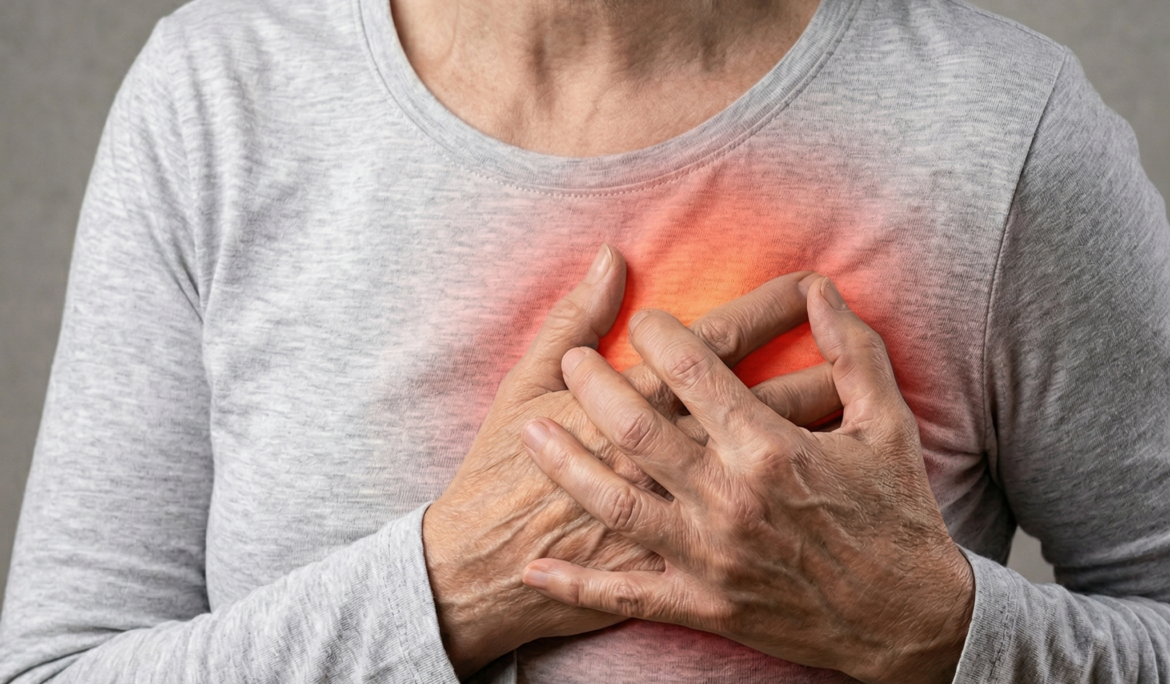
Experiencing pain on the left side of your chest is naturally alarming. While the immediate fear is often a heart attack, there are various causes ranging from muscle strain to digestive issues. However, in a medical emergency, every second counts.
Consequently, if you are in the Chinchwad, Nigdi, Akurdi, or PCMC area and experiencing acute chest distress, Precision Cardiovascular Center at Chetna Hospital provides 24/7 emergency cardiac care.
Quick Summary: Is it a Heart Attack?
Action: If unsure, do not wait. Specifically, visit an emergency room immediately.
Heart Attack: Pressure, squeezing, or fullness; often spreads to the neck, jaw, or left arm.
Non-Cardiac: Sharp, stabbing pain that changes when you breathe or touch the area; often accompanied by bloating or localized tenderness.
How do I know if my left-sided chest pain is a heart attack?
A heart attack occurs when blood flow to the heart muscle is blocked. Therefore, recognizing the signs early is vital for survival.
Common Heart Attack Signs
- Pressure & Tightness: A sensation of an “elephant sitting on your chest.”
- Radiating Pain: Pain traveling to the left arm, jaw, back, or neck.
- Associated Symptoms: Shortness of breath, cold sweats, and nausea.
Furthermore, it is important to note that women often experience “atypical” symptoms. Instead of crushing chest pain, they may feel extreme fatigue or lightheadedness.
| Feature | Heart Attack (Cardiac) | Muscle Strain / Gastric (Non-Cardiac) |
| Sensation | Heavy pressure, crushing, or squeezing (“Elephant on chest”) | Sharp, stabbing, or localized soreness |
| Duration | Persistent (usually >5–10 mins), does not go away with rest | Often fleeting (seconds) or lasts for days (soreness) |
| Trigger | Often triggered by physical exertion or stress | Triggered by movement, deep breaths, or touching the area |
| Location | Diffuse (hard to point to one spot), may radiate to jaw/arm | Point-specific (you can point to the exact pain spot) |
| Other Signs | Cold sweats, nausea, extreme shortness of breath | Bloating, burping, or pain that changes with posture |
| Urgency | Medical Emergency – Visit Chetna Hospital immediately | Urgent Consultation – Schedule a visit with Dr. Pritam Titar |
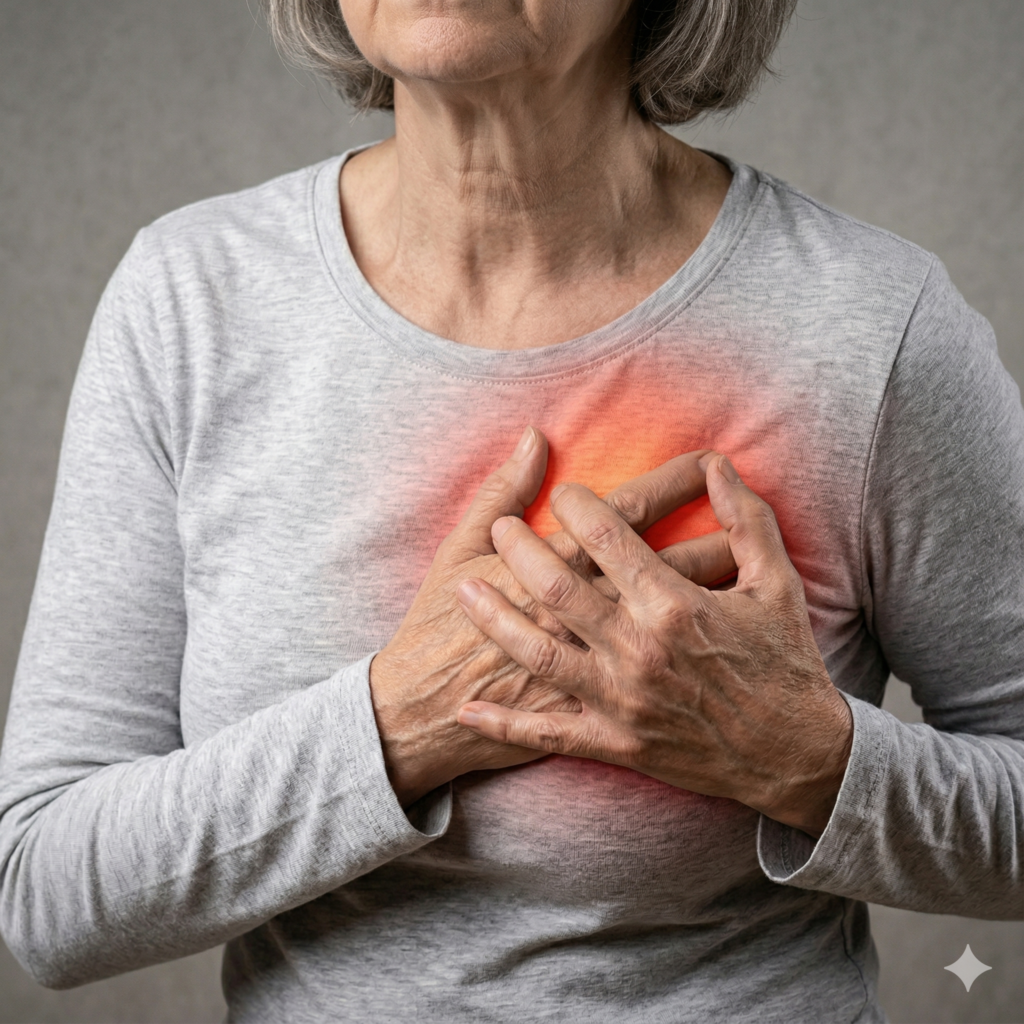
What are the non-heart-related causes of left-sided chest pain?
Not all chest pain originates from the heart. In fact, statistics show that nearly 25% of emergency visits for chest pain are non-cardiac.
Panic Attack vs. Heart Attack
Panic attacks can mimic heart attacks by causing rapid heart rates and chest tightness. However, a panic attack usually peaks within 10 minutes, whereas a heart attack persists and often worsens with exertion.
Left Side Chest Pain Near Armpit: Is it Gas or GERD?
Can gas cause left-sided chest pain? Yes. Acid reflux or trapped gas can cause sharp, stabbing pains. Additionally, this is often accompanied by bloating or a sour taste in the mouth.
Costochondritis and Pleurisy (Lung Lining Inflammation)
Similarly, inflammation of the rib cartilage (Costochondritis) makes the chest sore to the touch. Alternatively, if the pain sharpens specifically when breathing, it may be Pleurisy—an inflammation of the lung lining.
Other Life-Threatening Causes of Left-Sided Chest Pain
While many causes of chest pain are benign, several serious conditions require immediate diagnostic imaging at Chetna Hospital.
1. Pulmonary Embolism (Blood Clot in the Lung)
A pulmonary embolism occurs when a blood clot travels to the lungs. Specifically, if you experience sudden, sharp chest pain along with unexplained shortness of breath and a rapid heart rate, this is a medical emergency.
2. Pericarditis (Inflammation of the Heart Lining)
Pericarditis is the irritation of the thin, sac-like tissue surrounding the heart. In contrast to a heart attack, this pain is often sharp and stabbing. Furthermore, the pain usually improves when you lean forward and worsens when you lie flat.
3. Pneumothorax (Collapsed Lung)
A collapsed lung occurs when air leaks into the space between your lung and chest wall. Consequently, this causes sudden, one-sided chest pain and intense difficulty breathing. This is particularly common in smokers or those with underlying lung disease in the PCMC industrial belt.
4. Aortic Dissection (Emergency Vascular Cause)
This is a rare but life-threatening tear in the body’s main artery (aorta). Patients often describe this as a “tearing” or “ripping” sensation that radiates to the back. Therefore, immediate surgical intervention at a specialized center like ours is critical.
5. Pneumonia and Pleurisy
Infections like pneumonia can cause fluid buildup in the lungs, leading to sharp chest pain when coughing or inhaling deeply. Similarly, if the lining of the lungs becomes inflamed, it results in a condition called pleurisy, which mimics cardiac distress.
Understanding Angina: Stable vs. Unstable
Not all heart-related pain is a full-blown attack; sometimes it is Angina, which serves as a warning sign.
- Stable Angina: Pain that follows a pattern (e.g., occurs during a walk at Durga Tekdi) and stops with rest.
- Unstable Angina: Pain that is unpredictable, occurs at rest, or feels more severe than usual. In other words, unstable angina is a direct precursor to a heart attack and requires an immediate ECG and Troponin test.
Muscle Strain vs. Heart Pain: How to tell the difference?
If you have recently lifted heavy weights, you might have a muscle strain. To distinguish between the two, look for these signs:
Identifying Musculoskeletal Chest Injury
Muscle pain is typically “point-specific.” In other words, you can point to exactly where it hurts, and it feels worse when you move your torso.
Identifying Deep Cardiac Chest Pressure
In contrast, heart pain is “diffuse.” You cannot pinpoint one exact spot, and the sensation feels deep inside the chest cavity.
When should you see a doctor in Chinchwad?
If you are searching for a “cardiologist near me,” visit Chetna Hospital immediately if you experience the following:
Emergency Red Flags for Urgent Medical Consultation
- Pain lasting longer than 5 minutes despite resting.
- Pain accompanied by fainting or profuse sweating.
- A history of high blood pressure or diabetes.
Cardiac Diagnostic Services at Chetna Hospital, PCMC
To ensure accuracy, our specialists use advanced tools:
- ECG & 2D-Echo: To check rhythm and heart structure.
- TMT (Stress Test): To evaluate heart performance under exertion.
- Troponin Test: To detect heart muscle damage.
Conclusion: Don’t Ignore the Signs
Ultimately, whether it is acidity or a cardiac event, left-sided chest pain should never be ignored. Residents of Wakad, Ravet, and Nigdi have access to world-class diagnostics right here in Chinchwad.
Medically Reviewed By:
Dr. Pritam R. Titar,
Interventional Cardiologist at Precision Cardiovascular Center, Chetna Hospital, Pune.
FAQs About Left-Side Chest Pain and Heart Symptoms
A: Left-sided chest pain can happen for many reasons. It may be caused by heart problems, muscle strain, acid reflux, lung issues, or anxiety. While some causes are mild, others can be serious. So, it’s important to pay attention to your symptoms and not ignore them.
A: You can often tell by the type of pain:
Muscle chest pain: Sharp, worsens with movement or touch
Heart-related chest pain: Pressure or tightness, not affected by movement, may include sweating or shortness of breath
If you’re unsure, always treat chest pain as serious and get checked.
A: Yes, heart-related chest pain like angina can last for days or come and go. However, constant pain over several days is often not a heart attack. Still, persistent left-sided chest pain should be evaluated by a doctor.
A: To manage chest pain, stop activity and rest immediately. Sit upright, stay calm, and take prescribed medication if available. In addition, following a heart-healthy lifestyle with proper diet, exercise, and no smoking can help prevent future pain. However, if the pain is severe or unusual, seek medical help right away.
A: You should never ignore left-sided chest pain, even if it feels mild. Sometimes it may signal a serious condition. If the pain is new, severe, or accompanied by symptoms such as breathlessness or sweating, get medical help immediately.
A: Common chest pain causes include heart problems (heart attack, angina), muscle strain, acid reflux (GERD), lung conditions, and anxiety or stress. Understanding these causes helps you take the right action.
Why Your Heart Health and Left-Side Chest Pain Matter
If you’re experiencing left-side chest pain or have concerns about your cardiovascular health, it’s important not to delay seeking professional medical advice. In fact, early detection and timely treatment of heart conditions can greatly improve both outcomes and overall quality of life. Therefore, taking action sooner rather than later can make a significant difference.
📞 Book Your Cardiac Consultation for Chest Pain and Heart Concerns
At Precision Cardiovascular Center, you’ll receive comprehensive cardiac care designed to meet your individual needs. Moreover, the center is equipped with advanced diagnostic technology and supported by experienced cardiologists who are fully committed to protecting and improving your heart health. As a result, you can expect accurate diagnosis and effective treatment plans.
📍 Heart Care Location in Chinchwad for Chest Pain Evaluation
3rd Floor, Chetna Hospital, Nigdi Bhosari Rd, near HP petrol Pump, Sambhajinagar, Chinchwad, Pimpri-Chinchwad, Maharashtra 411019
https://share.google/Mc3jqZJnWfNAEbfaC
📅 Schedule Your Appointment
📞 Call: 9158681123