








Most back pain in people in their 20s and 30s settles within four to six weeks with movement and simple care. See a spine specialist if pain travels below the knee, causes numbness or weakness, wakes you at night, or lasts longer than six weeks. Back pain with loss of bladder or bowel control is an emergency and needs a hospital the same day.
Dr Nirmal Patil – Orthopaedic & Spine Surgeon in Chinchwad & Wakad, Pune
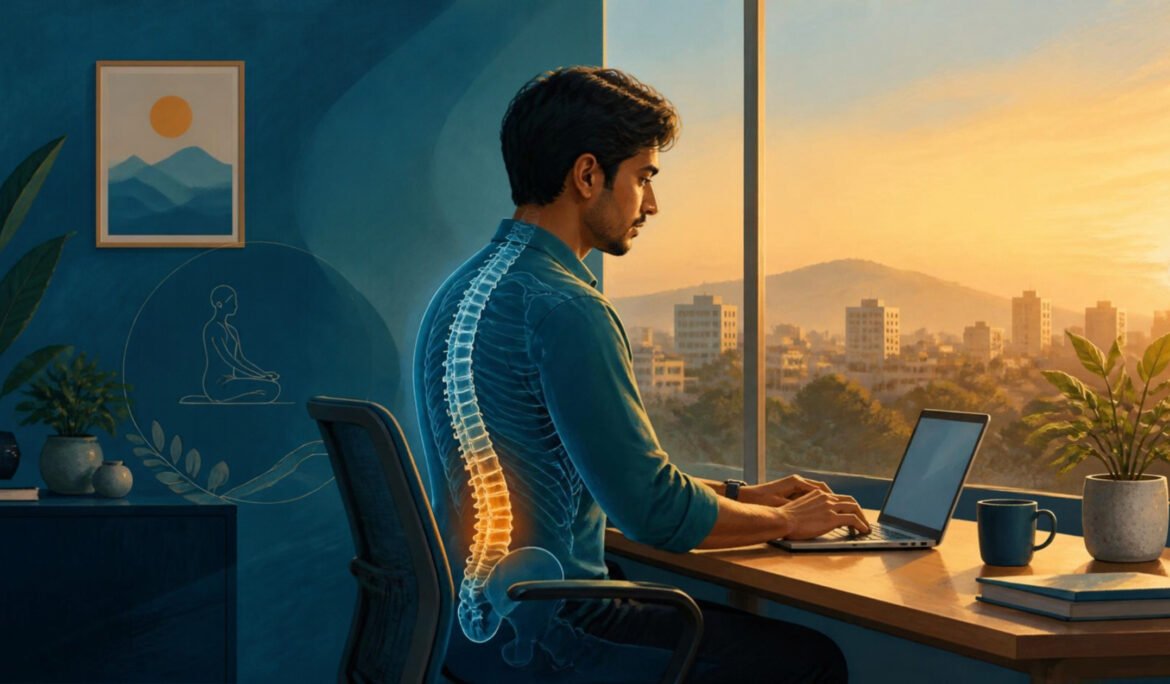
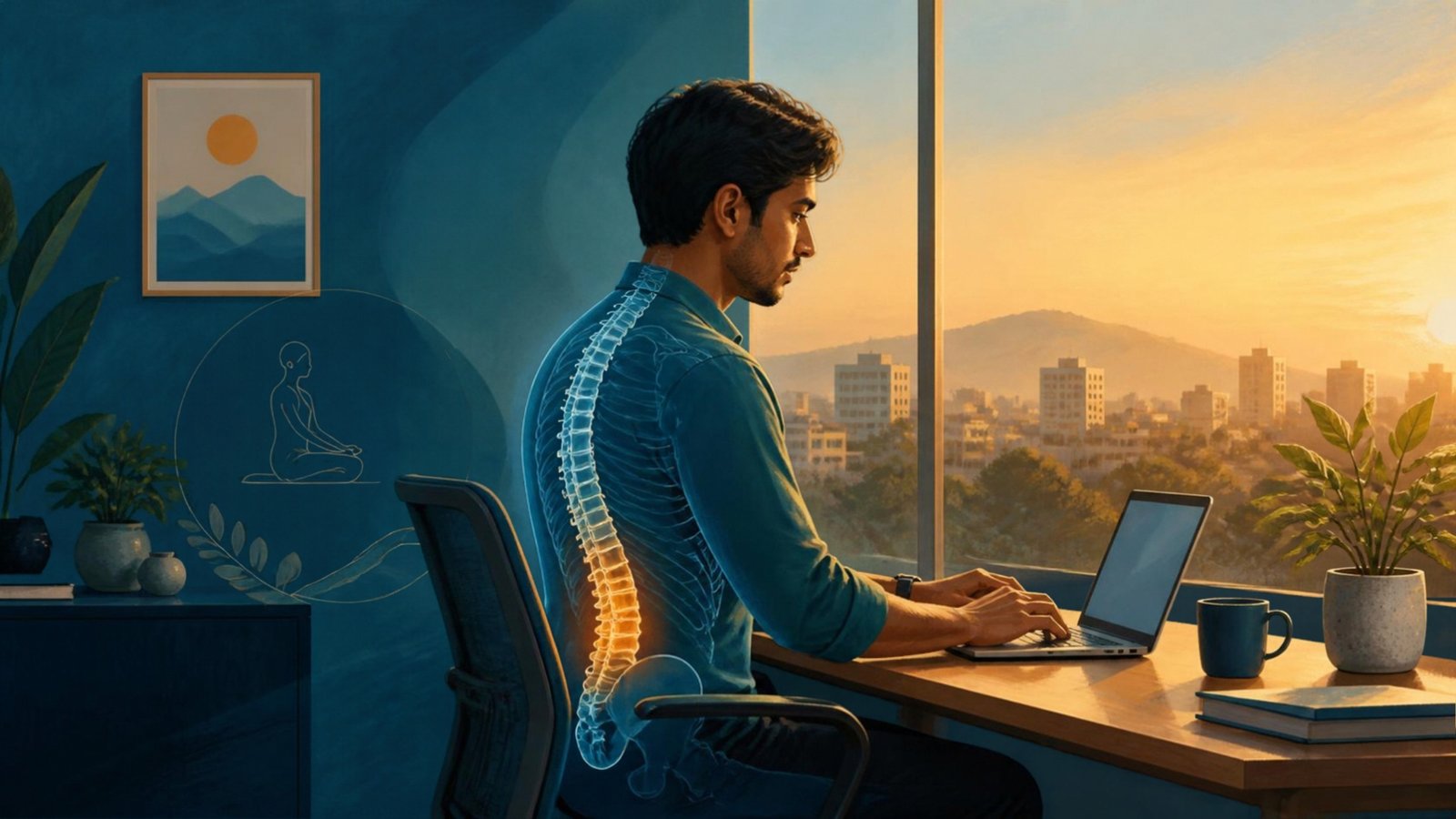
Every October, World Spine Day (16 October) puts back pain back in the news, and this year the conversation in India has a new face: the young desk worker. The patients walking into our clinics in Chinchwad and Wakad are increasingly IT professionals from Hinjewadi, students preparing for exams, and two-wheeler commuters who spend an hour a day on Pune’s roads. Many are told it’s “just posture.” Often that’s true, but not always.
This guide, by Dr Nirmal Patil, Orthopaedic & Spine Surgeon at Chetna Hospital, Chinchwad, explains what is normal and when to get your spine checked.
Why is back pain rising in young adults in India?
Low back pain is the most common musculoskeletal condition worldwide and the leading cause of disability. The World Health Organization estimates it affected 619 million people in 2020, with cases expected to reach 843 million by 2050. The biggest increases are projected in Asia.
Three habits come up again and again in younger patients in Pune:
- Long sitting without breaks. Eight to ten hours at a laptop, often on a sofa or bed while working from home.
- Phone posture. Looking down at a phone for hours loads the neck and upper back.
- Daily two-wheeler travel. Potholes and speed breakers send repeated jolts through the lower spine.
Is it a muscle strain or a slipped disc?
A muscle strain usually causes pain and stiffness across the lower back. It is worse with certain movements and better with rest and gentle activity. A slipped disc (disc herniation) can do the same, but it often adds pain that travels down one leg, because the disc presses on a nerve root. This leg pain is called sciatica. You can read more in our guide on slipped disc treatment in Pune.
Watch: Dr Nirmal Patil explains back pain warning signs
A real case of an L5-S1 disc bulge with leg numbness, treated without surgery.
More videos on Dr Nirmal Patil’s YouTube channel.
Five signs your back pain needs a spine specialist
1. Pain travels below the knee
Pain that shoots past the knee, sometimes into the foot, points to nerve irritation rather than a simple muscle problem. A disc at the L4-L5 or L5-S1 level is the most common cause at this age. See our page on sciatica treatment in Chinchwad.
2. Numbness or tingling in the leg or foot
Pins and needles that keep coming back, or a patch of skin that feels dull, suggest the nerve is being compressed.
3. Pain that wakes you at night
Ordinary mechanical back pain usually eases when you lie down. Pain that gets worse at rest, or comes with fever or weight loss, needs to be investigated.
4. Weakness in the leg
Trouble climbing stairs, a foot that slaps the floor, or tripping more often can mean nerve compression that should not be left to wait.
5. Pain lasting more than six weeks
If pain has not improved after six weeks of sensible care, it is worth finding the cause rather than continuing to manage symptoms.
When is back pain an emergency?
Go to an emergency department the same day if back pain or sciatica comes with any of these:
- Loss of bladder or bowel control, or new difficulty passing urine
- Numbness between the inner thighs, around the genitals or back passage
- Rapidly worsening weakness in one or both legs
These can be signs of cauda equina syndrome, a rare condition where nerves at the bottom of the spine are compressed. The NHS notes that the most common cause is a central disc prolapse, and that delays can lead to permanent bladder, bowel and sexual problems.
How is a slipped disc treated?
Most people get better without surgery
Most disc-related back and leg pain improves with time and non-surgical care. The WHO’s first guideline on chronic low back pain, released in December 2023, recommends education, structured exercise and some physical therapies, and advises against routine use of opioid painkillers and lumbar belts.
At Chetna Hospital, first-line care usually includes:
- Short-term pain relief and anti-inflammatory medicines
- A physiotherapy programme for core strength and flexibility (see orthopaedic rehabilitation in PCMC)
- Advice on sitting, lifting and workstation set-up
- Nerve root or epidural injections for selected patients with severe leg pain
When is surgery considered?
Surgery is considered for a small group of patients: those with progressive weakness, cauda equina syndrome, or severe leg pain that has not settled after adequate non-surgical treatment. For suitable patients, endoscopic spine surgery removes the part of the disc pressing on the nerve through a small incision, with less muscle disruption than open surgery. The decision is always individual. Read more in when spine surgery is needed.
What can desk workers do to protect their back?
- Move every 30 to 40 minutes. Stand, walk to refill water, or stretch for two minutes.
- Raise your screen to eye level. Use a stand or a stack of books under the laptop with a separate keyboard.
- Stay active when it hurts. Bed rest slows recovery. Gentle walking helps.
- Check your two-wheeler. Correct tyre pressure and seat height reduce the jolts your spine absorbs.
What patients with back pain say
Excerpts from Google reviews on Dr Nirmal Patil’s profile:
⭐⭐⭐⭐⭐
“I was suffering from severe lower back pain that was radiating into my left leg, along with tingling, numbness and weakness… What I appreciated most was the focus on early mobilisation after surgery.”
– Abhijit G., Google review, August 2026
⭐⭐⭐⭐⭐
“The doctor was very attentive, patient, and explained the condition and treatment clearly. The treatment was effective, and I felt a significant improvement in my back pain.”
– Ashish S., Google review, August 2026
Read all reviews on Google → Individual results vary.
Spine consultation in Chinchwad, Wakad and PCMC
Dr Nirmal Patil sees patients at Chetna Hospital, Sambhajinagar, MIDC G Block, near Rotary Club, Chinchwad, Pune 411019, and at Precision Spine Clinic, MI Commercial Complex, Wakad, Pune 411057. Patients come from Chinchwad, Pimpri, Akurdi, Nigdi, Thergaon, Kalewadi, Rahatani, Pimple Saudagar, Ravet, Punawale, Tathawade, Wakad, Hinjewadi and across Pimpri-Chinchwad.
Frequently asked questions
Is an MRI needed for every back pain?
No. Most back pain improves within a few weeks without scans. An MRI is advised when there are red-flag symptoms such as leg weakness, numbness or bladder changes, or when pain does not improve after about six weeks of proper treatment. A spine specialist decides after examining you.
Can people in their 20s get a slipped disc?
Yes. Disc herniation is common between the ages of 25 and 45. Long hours of sitting, lifting with poor technique and daily two-wheeler commutes all add strain. Most young patients recover without surgery through physiotherapy, medicines and changes in daily habits.
When is back pain an emergency?
Go to an emergency department the same day if back pain comes with loss of bladder or bowel control, numbness around the groin or inner thighs, or rapidly worsening weakness in the legs. These can be signs of cauda equina syndrome, which needs urgent treatment to prevent permanent damage.
Does a slipped disc always need surgery?
No. Most slipped discs improve with non-surgical care such as physiotherapy, medicines and sometimes injections. Surgery, often endoscopic, is considered when there is progressive weakness, cauda equina syndrome, or severe leg pain that does not settle after adequate treatment.
Where can I see a spine surgeon in Chinchwad or Wakad, Pune?
Dr Nirmal Patil, Orthopaedic and Spine Surgeon, consults at Chetna Hospital in Chinchwad and Precision Spine Clinic in Wakad, Pune, serving patients across Pimpri-Chinchwad. Call 91687 46986 to book an appointment.
Back pain that isn’t settling? Book a spine check.
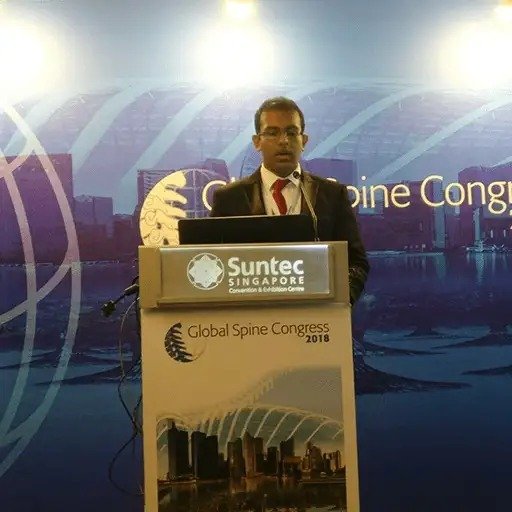
About the author: Dr Nirmal Patil
Orthopaedic & Spine Surgeon | Endoscopic & Minimally Invasive Spine Specialist
MBBS, MS (Orthopaedics), MRCS (UK), DNB (Orthopaedics), MNAMS, SICOT Orthopaedics Diploma (Belgium), Advanced Diploma in Spine Surgery (UK)
Director, Chetna Hospital, Chinchwad, and consultant at Precision Spine Clinic, Wakad. View full profile · spinesurgeoninpune.net
Medically reviewed by Dr Nirmal Patil. Last updated 2 October 2026.
Sources
- World Health Organization. Low back pain fact sheet.
- World Health Organization. WHO releases guidelines on chronic low back pain (December 2023).
- University Hospitals of Derby and Burton NHS Foundation Trust. Cauda equina syndrome.
This article is general health information and does not replace a medical consultation. Every patient’s condition is different.


1 Comment
Cauda Equina Syndrome: Spinal Emergency Red Flags in Pune - Chetna Hospital
[…] Back Pain in Your 20s & 30s: 5 Signs to See a Spine Specialist in Pune […]