
Quick Answer
Female infertility can have several causes, including ovulation problems, polycystic ovary syndrome (PCOS), blocked or damaged fallopian tubes, endometriosis, uterine conditions, age-related decline in egg quality, and hormonal or reproductive health problems. Sometimes, no single cause is identified.
Treatment depends on the underlying cause and may include lifestyle changes, medicines to support ovulation, treatment of specific reproductive conditions, surgery in selected cases, intrauterine insemination (IUI), or in vitro fertilization (IVF). A gynecologist or fertility specialist can recommend appropriate evaluation and treatment based on age, medical history, menstrual pattern, and fertility test results.
For reliable medical information, the World Health Organization (WHO) provides an overview of infertility, its causes, and its impact on reproductive health.
Medically Reviewed By:
Dr. Bharati Patil – Obstetrician & Gynaecologist in Pimpri-Chinchwad, PCMC, Pune
Consultant Obstetrician & Gynaecologist | Female Gynaecologist
About Dr. Bharati Patil
Dr. Bharati Patil is an Obstetrician & Gynaecologist in Pimpri-Chinchwad, PCMC, Pune, providing women’s healthcare and gynecological care.
Clinic: Room 8, First Floor, Plot No. GP 116, Sambhaji Nagar Road, near Rotary Club, G Block, MIDC, Chinchwad, Pimpri-Chinchwad, Maharashtra 411019.
Chetna Hospital:
The article can naturally link to Dr. Bharati Patil’s profile and relevant Chetna Hospital women’s health services for patients seeking further information.
What Is Female Infertility?
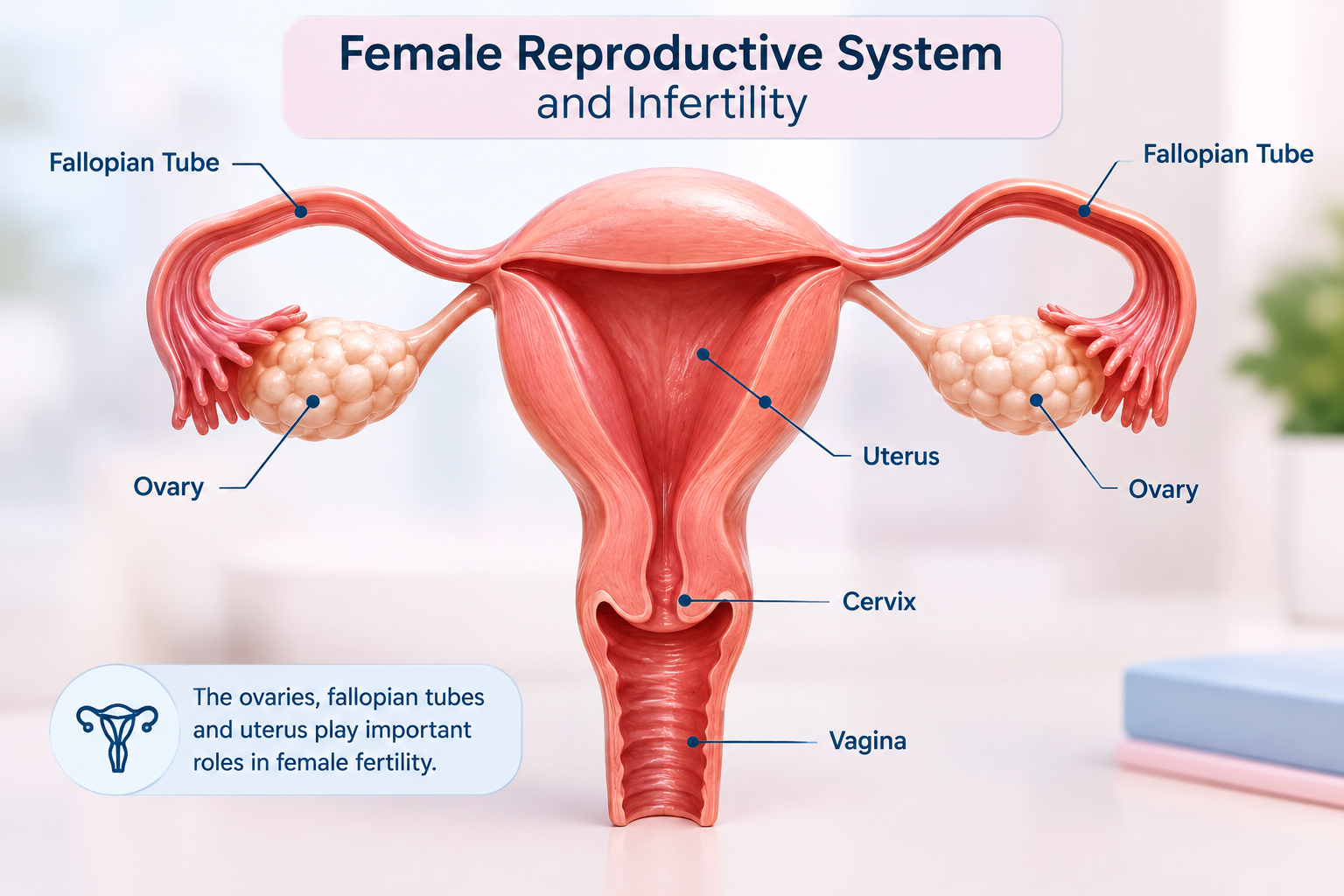
Infertility refers to difficulty achieving pregnancy despite having regular unprotected sexual intercourse. It can involve problems with ovulation, the fallopian tubes, uterus, cervix, or other reproductive factors.
Female fertility can also be influenced by age because both the number and quality of eggs generally decline over time.
Infertility does not necessarily mean that pregnancy is impossible. Identifying the underlying cause can help doctors determine appropriate treatment options.
When Is Infertility Evaluation Recommended?
For many couples, medical evaluation is generally recommended when pregnancy has not occurred after:
- 12 months of regular unprotected intercourse when the woman is under 35
- 6 months when the woman is 35 or older
- Earlier evaluation may be appropriate when there are irregular or absent periods, known reproductive conditions, previous pelvic surgery, recurrent pregnancy loss, or other concerns affecting fertility.
Both partners may need evaluation because infertility can involve female, male, combined, or unexplained factors.
The American College of Obstetricians and Gynecologists (ACOG) also provides patient information about when infertility evaluation may be appropriate.
Common Causes of Infertility in Women
1. Ovulation Problems
Ovulation is the release of an egg from the ovary. If ovulation does not occur regularly, conception can become difficult.
Possible causes include:
- PCOS
- Thyroid disorders
- Elevated prolactin levels
- Significant weight changes
- Excessive exercise
- Certain hormonal disorders
- Reduced ovarian function
Irregular, very long, or absent menstrual cycles can sometimes indicate an ovulation problem.
2. Polycystic Ovary Syndrome (PCOS)
PCOS is a common hormonal condition that can affect ovulation.
Women with PCOS may experience:
- Irregular periods
- Infrequent ovulation
- Acne
- Excess facial or body hair
- Weight-related metabolic problems
- Difficulty conceiving
Treatment is individualized. Depending on the person’s circumstances, management may include lifestyle measures, medicines to induce ovulation, or fertility treatments.
3. Blocked or Damaged Fallopian Tubes
The fallopian tubes provide a pathway for the egg and sperm to meet. Blocked or damaged tubes can interfere with fertilization.
Possible causes include:
- Previous pelvic infections
- Pelvic inflammatory disease
- Endometriosis
- Previous pelvic or abdominal surgery
- Certain infections
Doctors may recommend tests such as hysterosalpingography (HSG) or other imaging procedures to assess the fallopian tubes.
4. Endometriosis
Endometriosis occurs when tissue similar to the lining of the uterus grows outside the uterus.
It may be associated with:
- Painful periods
- Pelvic pain
- Pain during intercourse
- Pain during bowel movements or urination during menstruation
- Difficulty becoming pregnant
Endometriosis can affect fertility in different ways, including through inflammation, scar tissue, and changes involving the reproductive organs.
Treatment depends on symptoms, severity, age, and pregnancy goals.
5. Uterine Conditions
Conditions affecting the uterus can sometimes interfere with implantation or pregnancy.
These may include:
- Uterine fibroids
- Endometrial polyps
- Adenomyosis
- Certain uterine structural abnormalities
- Intrauterine scar tissue
Not every uterine condition causes infertility. A gynecologist evaluates whether the condition is actually affecting fertility before recommending treatment.
6. Age-Related Changes in Fertility
Female fertility generally declines with age, particularly because ovarian reserve and egg quality decrease over time.
Age can also increase the risk of miscarriage and certain pregnancy complications.
For this reason, women who are older than 35 and are experiencing difficulty conceiving may benefit from seeking fertility evaluation earlier rather than waiting a full year.
7. Hormonal and Thyroid Problems
Hormonal changes can affect menstrual cycles and ovulation.
Conditions involving:
- Thyroid hormones
- Prolactin
- Reproductive hormones
- Ovarian function
may contribute to difficulty conceiving.
Blood tests and other investigations may help identify hormonal causes.
8. Reduced Ovarian Reserve
Ovarian reserve refers to the remaining supply of eggs in the ovaries.
Tests such as AMH (anti-Müllerian hormone) and an ultrasound assessment of antral follicle count may provide information about ovarian reserve.
However, ovarian reserve testing does not by itself determine whether a woman can or cannot become pregnant. Results need to be interpreted alongside age, medical history, and other fertility factors.
9. Unexplained Infertility
Sometimes fertility testing does not identify a clear reason for difficulty conceiving. This is commonly referred to as unexplained infertility.
Even when standard tests are normal, pregnancy may still occur naturally or with appropriate fertility treatment depending on the individual situation.
Symptoms That May Be Associated With Infertility
Infertility itself may not cause noticeable symptoms. However, some underlying conditions can cause signs such as:
- Irregular or absent periods
- Very painful periods
- Pelvic pain
- Pain during intercourse
- Unusual menstrual bleeding
- Symptoms associated with PCOS
- Previous pelvic infection
- Difficulty becoming pregnant despite regular attempts
Having one of these symptoms does not automatically mean a woman is infertile, but it may be a reason to discuss fertility with a gynecologist.
How Is Female Infertility Diagnosed?
A fertility evaluation usually begins with a detailed medical and menstrual history.
Depending on the situation, investigations may include:
Medical and Menstrual History
The doctor may ask about:
- Menstrual cycle length and regularity
- Previous pregnancies
- Previous miscarriages
- Pelvic infections
- Surgeries
- Medical conditions
- Medications
- Duration of trying to conceive
Blood Tests
Hormonal blood tests may be recommended depending on symptoms and menstrual patterns.
Pelvic Ultrasound
Ultrasound can help evaluate the uterus, ovaries, endometrium, and other pelvic structures.
Fallopian Tube Assessment
Tests such as HSG may be used to determine whether the fallopian tubes are open.
Evaluation of the Male Partner
Since infertility can involve either partner, semen analysis is commonly an important part of the fertility evaluation.
Treatment Options for Female Infertility
Treatment depends on the underlying cause, age, duration of infertility and the results of fertility testing.
1. Lifestyle and Health Measures
Depending on the individual situation, doctors may discuss:
- Maintaining a healthy weight
- Regular physical activity
- Balanced nutrition
- Avoiding tobacco
- Limiting alcohol
- Managing underlying medical conditions
- Taking recommended prenatal vitamins, particularly folic acid when planning pregnancy
Lifestyle changes alone may not resolve every cause of infertility, but they can support overall reproductive health.
2. Medicines to Support Ovulation
When infertility is related to ovulation problems, doctors may prescribe medicines that help stimulate ovulation.
The appropriate medicine depends on the underlying condition. Ovulation-inducing medicines should be used under medical supervision because monitoring may sometimes be necessary.
3. Treatment of Underlying Conditions
If infertility is associated with conditions such as PCOS, thyroid disorders, endometriosis or certain uterine problems, treating or managing the underlying condition may form part of the fertility plan.
4. Surgery
Surgery may be considered in selected cases, such as:
- Fibroids
- Endometrial polyps
- Endometriosis
- Tubal problems
- Structural abnormalities
Surgery is not appropriate for every patient, and the potential benefits and risks should be discussed with a gynecologist.
5. Intrauterine Insemination (IUI)
IUI involves placing prepared sperm directly into the uterus around the time of ovulation.
It may be considered in selected fertility situations, depending on factors such as ovulation, sperm parameters, age, and the condition of the fallopian tubes.
6. In-Vitro Fertilization (IVF)
During IVF, eggs are collected from the ovaries and fertilized with sperm in a laboratory. An embryo may then be transferred into the uterus.
IVF may be considered for certain causes of infertility, including some cases involving:
- Tubal blockage
- Severe endometriosis
- Certain male-factor fertility problems
- Reduced ovarian reserve
- Unexplained infertility
- Previous unsuccessful fertility treatments
The decision to pursue IVF should be individualized after fertility evaluation.
Can Infertility Be Prevented?
Not all causes of infertility can be prevented. However, maintaining reproductive and general health may help reduce certain risks.
Women can discuss fertility concerns with a gynecologist, especially if they have:
- Irregular periods
- Severe menstrual pain
- A history of pelvic infection
- Previous reproductive surgery
- Endometriosis
- PCOS
- Concerns related to age and fertility
Early evaluation can help identify potentially treatable problems.
When Should You See a Gynaecologist?
Consider consulting an obstetrician-gynaecologist or fertility specialist if:
- You have been trying to conceive for 12 months and are under 35
- You have been trying for 6 months and are 35 or older
- Your periods are irregular or absent
- You have severe pelvic or menstrual pain
- You have a history of endometriosis or PCOS
- You have previously had pelvic surgery or infection
- You have experienced recurrent pregnancy loss
- You have concerns about your fertility
Earlier evaluation may be appropriate depending on your individual medical history.
Frequently Asked Questions About Female Infertility
There is no single cause that applies to every woman. Ovulation disorders, PCOS, fallopian tube problems, endometriosis, uterine conditions, age-related fertility changes, and other factors can contribute to infertility.
Yes. PCOS can interfere with regular ovulation and may make it more difficult to conceive. However, many women with PCOS can become pregnant with appropriate management and fertility treatment when needed.
Treatment depends on where and how severely the tubes are blocked and the individual’s fertility circumstances. In selected cases, surgery may be considered, while IVF may be an option when tubal function is significantly affected.
Yes. IVF is not required for every woman experiencing infertility. Depending on the cause, treatment may include lifestyle measures, medicines, treatment of an underlying condition, surgery, or IUI.
Not necessarily. Irregular periods can indicate an ovulation or hormonal problem that may affect fertility, but they do not automatically mean that pregnancy is impossible.
Generally, evaluation is recommended after 12 months of trying to conceive if the woman is under 35, or after 6 months if she is 35 or older. Earlier evaluation may be appropriate when there are irregular periods, pelvic conditions or other fertility concerns.
Yes. Female fertility generally declines with age because ovarian reserve and egg quality decrease over time. Age can also affect miscarriage risk and pregnancy outcomes.
No. Fertility difficulties can involve the female partner, male partner, both partners, or sometimes no clear cause is identified. Evaluation of both partners may therefore be recommended.
Conclusion
Infertility in women can have many different causes, from ovulation problems and PCOS to fallopian tube blockage, endometriosis, uterine conditions, and age-related changes in fertility. The appropriate treatment depends on the cause and the individual’s reproductive goals.
If you are having difficulty conceiving or have symptoms such as irregular periods, severe menstrual pain, or a history of reproductive health problems, consulting an obstetrician-gynaecologist can help determine whether fertility evaluation is appropriate.