
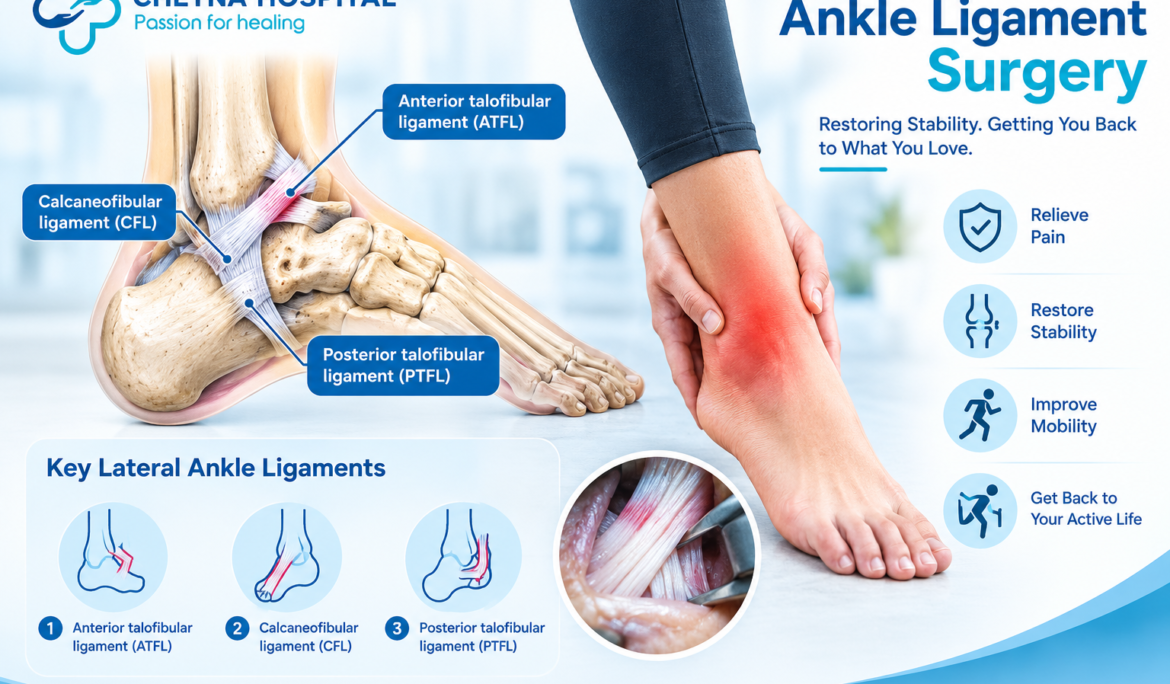
Ankle ligament injuries are common, especially after sports injuries, falls, sudden twisting of the ankle, or walking on uneven surfaces. While many ankle ligament injuries can improve with non-surgical treatment, some severe injuries or persistent ankle instability may require surgical treatment.
Dr. Nirmal Patil, Orthopaedic Surgeon, evaluates and treats orthopedic conditions involving the ankle, joints, bones, and musculoskeletal system at Chetna Hospital, Chinchwad, Pimpri-Chinchwad.
Quick Answer
Ankle ligament surgery is performed to repair or reconstruct damaged ankle ligaments when significant instability, repeated ankle sprains, or persistent symptoms do not improve with appropriate non-surgical treatment.
Depending on the severity of the injury, treatment may include rest, ankle support, physiotherapy, rehabilitation, or surgery. A detailed orthopedic examination and appropriate imaging can help determine the most suitable treatment.
What Are Ankle Ligaments?
Ankle ligaments are strong bands of connective tissue that connect bones and help keep the ankle joint stable.
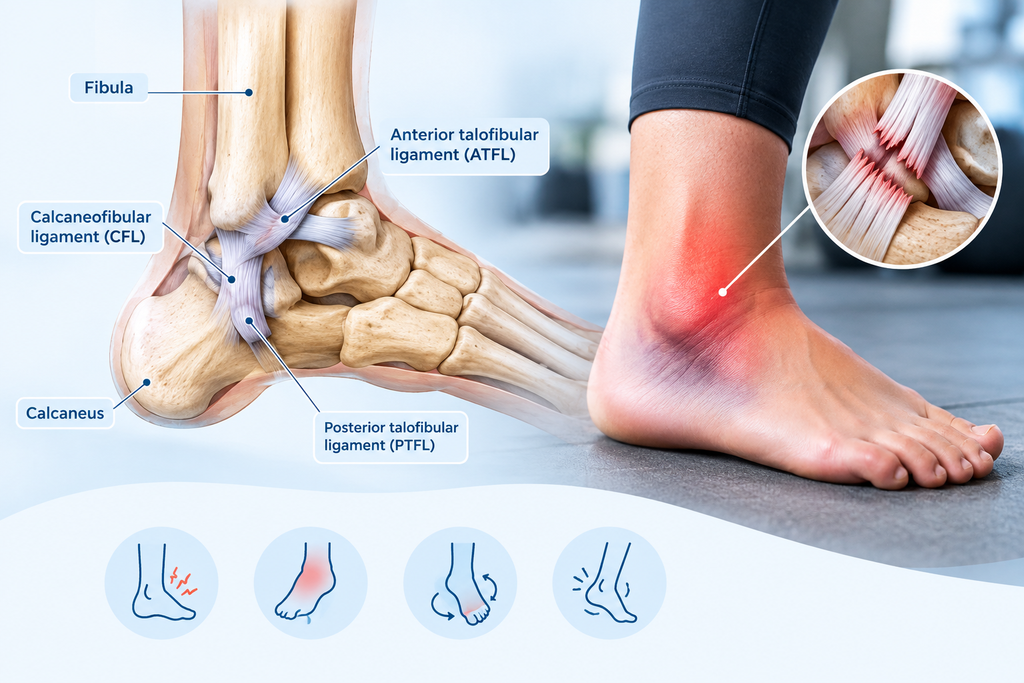
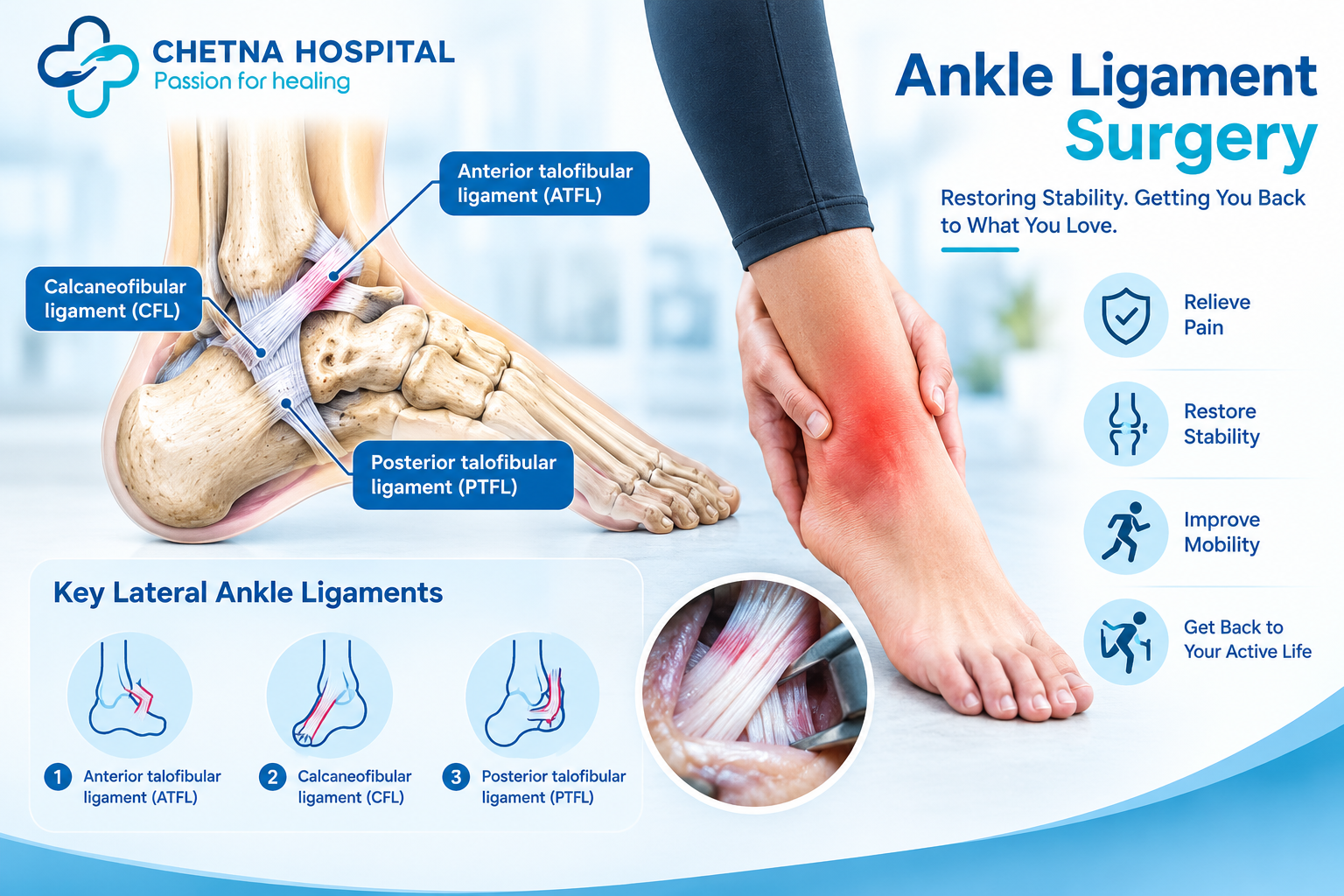
The outer side of the ankle contains three important ligaments:
- Anterior talofibular ligament (ATFL)
- Calcaneofibular ligament (CFL)
- Posterior talofibular ligament (PTFL)
These ligaments help control excessive movement of the ankle during walking, running, jumping, and other activities.
When an ankle suddenly twists or rolls, one or more ligaments can become stretched, partially torn, or completely torn.
What Causes an Ankle Ligament Tear?
Ankle ligament injuries can happen during everyday activities or sports.
Common causes include:
- Sports injuries
- Running and jumping
- Sudden changes in direction
- Twisting or rolling the ankle
- Falls
- Walking on uneven surfaces
- Road traffic accidents
- Previous ankle sprains
- Repeated ankle injuries
A previous ankle injury can sometimes contribute to ongoing ankle instability if the ligament does not heal adequately.
Symptoms of a Torn Ankle Ligament
The symptoms depend on the severity of the ligament injury.
Common symptoms include:
- Ankle pain
- Swelling
- Bruising
- Tenderness
- Difficulty walking
- Difficulty putting weight on the affected foot
- Reduced ankle movement
- Feeling that the ankle is unstable
- Repeated ankle sprains
- Feeling that the ankle may give way
Severe injuries may cause significant pain and difficulty using the affected leg.
When Is Ankle Ligament Surgery Required?
Not every ankle ligament tear requires surgery.
Many ankle ligament injuries can initially be treated with non-surgical methods such as ankle support, activity modification, physiotherapy, and rehabilitation.
Ankle ligament surgery may be considered when:
- There is significant ligament damage
- The ankle remains unstable after appropriate treatment
- The patient experiences repeated ankle sprains
- Persistent pain or functional problems continue
- Conservative treatment does not restore adequate ankle stability
- Certain sports-related injuries require surgical management
- There are associated structural injuries that require treatment
The decision to undergo surgery should be based on a detailed orthopedic assessment.
How Is an Ankle Ligament Injury Diagnosed?
An orthopaedic surgeon may perform a physical examination and assess the ankle’s movement and stability.
Depending on the symptoms, investigations may include:
Physical Examination
The examination may assess:
- Pain and tenderness
- Swelling
- Range of motion
- Ankle stability
- Walking pattern
- Previous injury history
X-Ray
An X-ray may be recommended when there is concern about a fracture or other bone-related injury.
MRI Scan
An MRI can provide detailed information about soft tissues and may help identify ligament tears, tendon injuries, cartilage problems, or other associated conditions.
The appropriate investigation depends on the individual patient’s symptoms and examination findings.
What Is Ankle Ligament Surgery?
Ankle ligament surgery aims to restore stability by repairing or reconstructing damaged ligaments.
The surgical approach depends on:
- Type of ligament injury
- Severity of the tear
- Ligament quality
- Degree of ankle instability
- Previous ankle injuries
- Activity and functional requirements
Ligament Repair
In selected cases, surgeons can repair and strengthen the damaged ligament to improve ankle stability.
Ligament Reconstruction
When a ligament cannot be adequately repaired, reconstruction may be considered. The surgeon reconstructs or reinforces the damaged ligament using appropriate tissue to help restore stability.
The specific surgical technique is selected by the orthopedic surgeon based on the patient’s condition.
How Is Ankle Ligament Surgery Performed?
The procedure is performed under appropriate anesthesia.
In general, the surgeon:
- Evaluates the damaged ligament and surrounding structures.
- Makes a carefully planned surgical incision.
- Repairs or reconstructs the damaged ligament.
- Reinforces the ankle when required.
- Checks ankle stability.
- Closes the surgical wound and applies appropriate dressing or support.
The exact procedure varies depending on the injury and surgical plan.
Recovery After Ankle Ligament Surgery
Recovery after ankle ligament surgery is gradual.
Initially, the ankle may require protection with a splint, brace, or walking boot. Depending on the procedure, weight-bearing may be restricted for a period of time.
Recovery may involve:
- Pain management
- Swelling control
- Elevation of the leg
- Ankle support
- Gradual weight-bearing
- Range-of-motion exercises
- Muscle strengthening
- Balance exercises
- Physiotherapy
- Gradual return to normal activities
Following the recommended rehabilitation plan is important for recovery.
How Long Does Ankle Ligament Surgery Recovery Take?
Recovery time varies depending on:
- Severity of the injury
- Type of surgery
- Overall health
- Healing progress
- Rehabilitation
- Activity requirements
Some patients can gradually return to normal daily activities over several weeks, while returning to running, jumping, or competitive sports may take longer.
Your orthopedic surgeon and physiotherapy team can provide an individualized recovery plan.
Physiotherapy After Ankle Ligament Surgery
Physiotherapy is an important part of rehabilitation for many patients after ankle ligament surgery.
A rehabilitation program may focus on:
- Restoring ankle movement
- Improving muscle strength
- Reducing stiffness
- Improving balance
- Improving coordination
- Restoring ankle stability
- Improving walking ability
- Gradually returning to physical activity
Exercises should be progressed according to the stage of healing and the individual’s condition.
Can Ankle Ligament Tears Heal Without Surgery?
Yes. Many ankle ligament injuries can be treated without surgery.
Depending on the severity of the injury, non-surgical treatment may include:
- Rest and activity modification
- Ankle support or brace
- Compression
- Elevation
- Physiotherapy
- Strengthening exercises
- Balance training
- Gradual return to activity
However, persistent instability, repeated ankle sprains, or significant ligament damage may require further orthopedic evaluation.
Risks of Ankle Ligament Surgery
As with any surgical procedure, ankle ligament surgery may have potential risks.
These can include:
- Infection
- Bleeding
- Swelling
- Pain
- Stiffness
- Nerve irritation or injury
- Scar-related discomfort
- Blood clots
- Persistent instability
- Reinjury
- Delayed recovery
Your orthopedic surgeon will discuss the potential benefits, risks, and alternatives before surgery.
How Can Ankle Ligament Injuries Be Prevented?
Although every ankle injury cannot be prevented, some measures may help reduce the risk.
These include:
- Warming up before exercise
- Strengthening the ankle and lower-leg muscles
- Improving balance and coordination
- Wearing appropriate footwear
- Taking care on uneven surfaces
- Avoiding premature return to sports after an ankle injury
- Completing recommended rehabilitation after a sprain
When Should You See an Orthopaedic Surgeon?
An orthopedic evaluation may be appropriate if you experience:
- Persistent ankle pain
- Significant swelling after an injury
- Difficulty walking
- Repeated ankle sprains
- Ankle instability
- A feeling that the ankle gives way
- Persistent symptoms after an ankle sprain
- Difficulty returning to normal activities
- Symptoms that do not improve with appropriate rehabilitation
An orthopedic specialist can evaluate the injury and determine whether non-surgical treatment or further intervention may be appropriate.
Ankle Ligament Treatment in PCMC, Chinchwad
If you are looking for an orthopedic doctor near me for an ankle ligament injury, an orthopedic evaluation can help identify the cause of ankle pain or instability.
Dr. Nirmal Patil is an Orthopaedic Surgeon in PCMC, providing orthopedic evaluation and treatment at Chetna Hospital in Sambhajinagar, Chinchwad.
Patients from areas including:
- Sambhaji Nagar
- Akurdi
- Nigdi
- Yamuna Nagar
- Shahu Nagar
- Bhosari MIDC
- Kalewadi
- Triveni Nagar
- Mohan Nagar
- Pimpri Colony
- Thermax Chowk
May consider an orthopedic evaluation in Chinchwad, PCMC for persistent ankle pain, ligament injuries, instability, and other orthopedic concerns.
If you are searching for an orthopedic doctor in PCMC or an orthopedic clinic in PCMC, a proper clinical evaluation is important before deciding on treatment.
About Dr. Nirmal Patil
Dr. Nirmal Patil is a Consultant Orthopaedic Spine Surgeon practicing at Chetna Hospital, Chinchwad, Pimpri-Chinchwad.
He evaluates and treats various orthopedic and musculoskeletal conditions. Treatment recommendations are based on the patient’s symptoms, clinical examination, diagnosis, and individual requirements.
Clinic Location
Room No. 3, First Floor, Chetna Hospital
Near HP Petrol Pump,
Sambhajinagar, Chinchwad,
Pimpri-Chinchwad, Maharashtra – 411019
Frequently Asked Questions About Ankle Ligament Surgery
Conclusion
Ankle ligament injuries can range from mild sprains to significant ligament damage associated with persistent ankle instability. While many injuries can be managed without surgery, selected patients may require ligament repair or reconstruction.
Early evaluation, appropriate treatment, and structured rehabilitation can help support recovery and restore ankle function.
If you have persistent ankle pain, recurrent ankle sprains, or ankle instability, consult an Orthopaedic Surgeon in PCMC for an appropriate evaluation and treatment plan.
Medical Disclaimer
This article is intended for general educational purposes only and should not be considered a substitute for personalized medical advice, diagnosis, or treatment. Treatment decisions depend on the individual’s symptoms, examination findings, imaging results, medical history, and overall health. Consult a qualified orthopedic specialist for an appropriate evaluation.