A meniscus tear is a common knee injury that can cause pain, swelling, clicking, stiffness, or a feeling that the knee is locking. Meniscus tear treatment depends on the type and severity of the injury, symptoms, activity level, and overall knee condition. Some tears improve with non-surgical treatment, while selected cases may require arthroscopic treatment.
When symptoms continue or interfere with walking and daily activities, an orthopaedic evaluation is important. Depending on the type and severity of the tear, treatment may include rest and physiotherapy or, in selected cases, knee arthroscopy.
At Chetna Hospital, Chinchwad, Pune, patients with persistent knee pain and suspected meniscus injuries can undergo clinical assessment and appropriate imaging to determine the most suitable treatment.
Quick Answer
A meniscus tear is an injury to the rubbery cartilage that cushions and stabilizes the knee joint. Common symptoms include knee pain, swelling, clicking, and knee locking, especially after twisting the knee. Mild tears may improve with activity modification, medication, and physiotherapy. Some displaced or persistent tears may require arthroscopic meniscus surgery, a minimally invasive procedure performed through small incisions using a camera and specialized instruments.
Medically Reviewed By
Dr. Nirmal Patil
Consultant Orthopaedic Spine Surgeon
Chetna Hospital, Chinchwad, Pune
Dr. Nirmal Patil is an orthopaedic surgeon associated with Chetna Hospital, Chinchwad, Pune. His clinical practice includes orthopaedic and spine-related conditions, with an emphasis on appropriate diagnosis and patient-specific treatment planning.
What Is a Meniscus Tear?
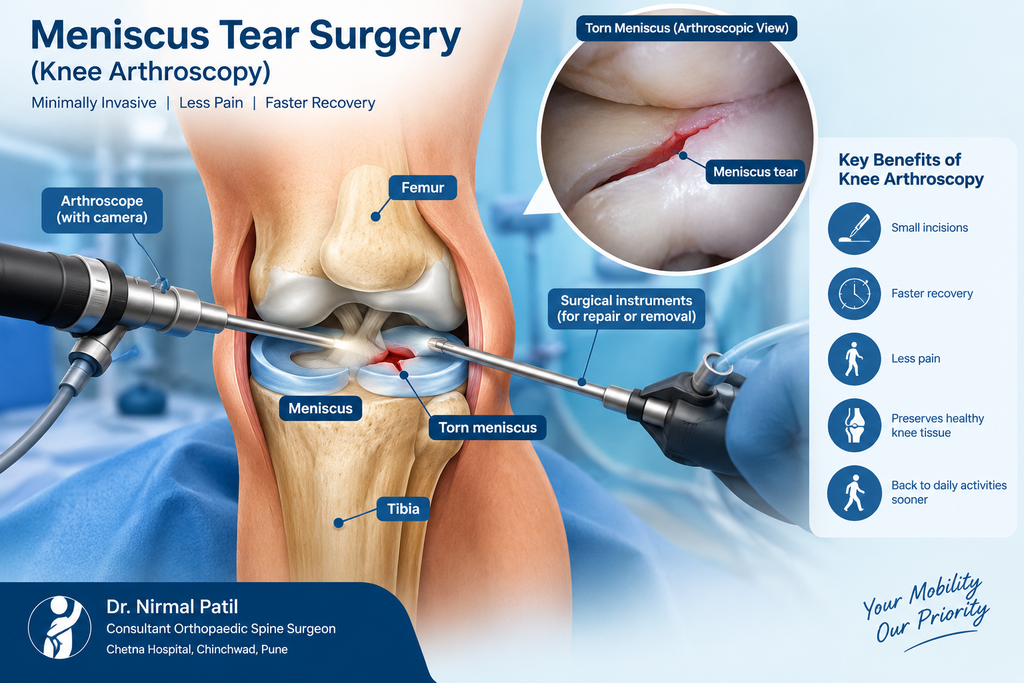
The knee has two menisci — the medial meniscus on the inner side and the lateral meniscus on the outer side. These C-shaped pieces of cartilage act as shock absorbers between the thigh bone (femur) and shin bone (tibia).
A meniscus can tear when the knee is forcefully twisted or rotated, particularly while the foot is planted on the ground. Meniscus injuries may also occur due to gradual cartilage degeneration with age.
The symptoms and treatment depend on factors such as:
- Location of the tear
- Size and pattern of the tear
- Whether the tear is displaced
- Patient’s age and activity level
- Associated ligament or cartilage injuries
- Duration and severity of symptoms
What Causes a Meniscus Tear?
Meniscus tears can result from either an acute injury or gradual degeneration.
Common causes include:
- Sudden twisting of the knee
- Sports injuries
- Awkward landing after a jump
- Squatting or kneeling
- Road traffic or other accidents
- Direct trauma to the knee
- Age-related weakening of the meniscus
Athletes involved in football, cricket, basketball, and other sports that involve sudden changes in direction may have a higher risk of meniscus injuries.
Meniscus Tear Symptoms
The symptoms can vary depending on the severity and location of the tear.
Common symptoms include:
1. Knee pain
Pain may occur along the inner or outer side of the knee and may become worse with twisting, squatting, or climbing stairs.
2. Knee swelling
Swelling may develop after the injury or gradually over time.
3. Knee locking
A torn or displaced piece of meniscus can sometimes interfere with normal knee movement, causing the knee to feel stuck or “locked.”
4. Clicking or catching
Some patients notice clicking, catching, or a sensation of something moving inside the knee.
5. Stiffness
The knee may feel stiff, particularly after sitting or resting for a prolonged period.
6. Difficulty bending or straightening the knee
A significant tear may restrict the normal range of knee movement.
Why Does a Meniscus Tear Cause Knee Locking?
Knee locking is an important symptom that should not be ignored.
In some meniscus tears, a portion of the torn cartilage can become displaced and interfere with the normal movement of the knee joint. This may produce a mechanical locking or catching sensation.
Not every episode of knee locking is caused by a meniscus tear. Other knee conditions can also produce similar symptoms. Therefore, persistent or true mechanical locking should be evaluated by an orthopaedic specialist.
How Is a Meniscus Tear Diagnosed?
Diagnosis usually begins with a detailed medical history and physical examination.
An orthopaedic specialist may assess:
- Location of knee pain
- Knee swelling
- Range of motion
- Tenderness along the joint line
- Stability of the knee
- Clicking or catching
- History of injury or twisting
Imaging Tests
An X-ray may be recommended to assess the bones and identify conditions such as arthritis. However, an X-ray does not directly show a meniscus tear.
An MRI scan can provide detailed images of the soft tissues of the knee and may help identify meniscus tears along with associated ligament or cartilage injuries.
The need for imaging depends on the patient’s symptoms and clinical examination.
Meniscus Tear Treatment
Treatment depends on the type of tear, symptoms, age, activity level and presence of other knee problems.
1. Non-Surgical Treatment
Some meniscus tears can be managed without surgery.
Treatment may include:
- Temporary activity modification
- Ice application when appropriate
- Pain-relieving medication as advised by a doctor
- Physiotherapy
- Exercises to improve knee movement and strength
- Gradual return to normal activities
Small or stable tears without significant mechanical symptoms may sometimes improve with conservative treatment.
2. Arthroscopic Meniscus Surgery
If a meniscus tear causes persistent symptoms, recurrent locking, significant catching or does not improve with appropriate non-surgical treatment, an orthopaedic surgeon may consider knee arthroscopy.
Knee arthroscopy is a minimally invasive surgical procedure in which a small camera is inserted into the knee through a small incision. Specialized instruments can then be used to assess and treat the damaged meniscus.
Depending on the tear, the surgeon may consider:
- Meniscus repair – repairing the torn meniscus when it is suitable for healing.
- Partial meniscectomy – carefully removing the damaged portion when repair is not appropriate.
The goal is generally to preserve as much healthy meniscus tissue as possible.
What Happens During Knee Arthroscopy?
During arthroscopic treatment:
- The patient is prepared for surgery and appropriate anaesthesia is administered.
- Small incisions are made around the knee.
- A small camera is inserted to visualize the inside of the joint.
- The surgeon examines the meniscus and other structures.
- The appropriate treatment, such as meniscus repair or removal of the damaged portion, is performed.
- The instruments are removed and the small incisions are closed.
The exact procedure varies according to the type and location of the meniscus injury.
Recovery After Meniscus Arthroscopy
Recovery depends on whether the meniscus was repaired or the damaged portion was removed, as well as the patient’s overall condition.
After surgery, rehabilitation may include:
- Gradual weight-bearing as advised
- Knee mobility exercises
- Strengthening exercises
- Physiotherapy
- Activity modification during recovery
- Gradual return to work, exercise or sports
Recovery after meniscus repair can take longer than recovery after partial meniscectomy because the repaired tissue needs time to heal.
Your orthopaedic surgeon and physiotherapist will provide an individualized rehabilitation plan.
When Should You See an Orthopaedic Specialist?
Consider an orthopaedic evaluation if you have:
- Persistent knee pain after an injury
- Repeated knee swelling
- Knee locking or getting stuck
- Clicking with pain
- Difficulty fully bending or straightening the knee
- Difficulty walking or climbing stairs
- Recurrent knee symptoms during sports
- Symptoms that do not improve with rest and appropriate care
A knee that suddenly becomes locked and cannot be properly straightened should be evaluated promptly.
Can a Meniscus Tear Heal on Its Own?
Some meniscus tears may improve without surgery, particularly when the tear is small, stable and located in an area with better blood supply.
However, the healing potential depends on the location and pattern of the tear. Tears in areas with limited blood supply may have less capacity to heal naturally.
Because every meniscus tear is different, treatment should be decided after clinical evaluation and, when required, imaging.
Can You Prevent a Meniscus Tear?
Not every meniscus injury can be prevented, but maintaining good knee strength and movement can help reduce injury risk.
Helpful measures may include:
- Strengthening the quadriceps and hamstring muscles
- Maintaining flexibility
- Warming up before sports
- Using appropriate sports techniques
- Avoiding sudden increases in training intensity
- Maintaining a healthy body weight
- Taking appropriate precautions during activities involving twisting or jumping
Meniscus Tear Treatment in Chinchwad, Pune
If you are experiencing knee pain, knee locking, clicking, swelling or difficulty moving the knee, an orthopaedic evaluation can help identify the underlying cause.
At Chetna Hospital, Chinchwad, Pune, patients can seek evaluation for knee and orthopaedic conditions and discuss appropriate treatment options based on their symptoms and diagnosis.
For persistent knee symptoms or suspected meniscus injury, consult an experienced orthopaedic specialist for an individualized assessment.
Medical Disclaimer: This article is for general educational purposes only and should not be considered a substitute for an in-person medical consultation. Knee pain and locking can have multiple causes. Diagnosis and treatment should be determined by a qualified healthcare professional after appropriate clinical evaluation.
Frequently Asked Questions
A meniscus tear is a tear in one of the two C-shaped cartilage structures that cushion the knee joint between the femur and tibia. It may occur due to twisting injuries, sports activities, accidents or age-related degeneration.
Yes. Certain types of meniscus tears, particularly displaced tears, can interfere with normal knee movement and cause locking or catching. Persistent mechanical locking should be assessed by an orthopaedic specialist.
No. Some meniscus tears can be treated with activity modification, medication when appropriate, physiotherapy and strengthening exercises. Surgery may be considered when symptoms persist or when there is significant mechanical locking or a tear that is suitable for surgical treatment.
Knee arthroscopy is a minimally invasive procedure in which a small camera and specialized instruments are inserted through small incisions to examine and treat the damaged meniscus.
When technically suitable, preserving and repairing the meniscus is generally preferred because the meniscus plays an important role in knee function. However, not every tear can be repaired. The appropriate procedure depends on the tear’s location, pattern, tissue quality and other patient factors.
Recovery varies according to the procedure. Recovery after meniscus repair generally takes longer than after partial meniscectomy because the repaired tissue needs time to heal. Rehabilitation and return to activities should follow the surgeon’s recommendations.
Some tears may improve without surgery, depending on their location, size, stability and blood supply. An orthopaedic assessment is useful to determine whether conservative treatment is appropriate.
If your knee repeatedly locks, gets stuck, becomes significantly swollen, or you cannot fully bend or straighten it, seek an orthopaedic evaluation. Sudden inability to properly straighten the knee warrants prompt medical assessment.
Conclusion
A meniscus tear can cause knee pain, swelling, clicking, catching, and knee locking. While some injuries can improve with non-surgical treatment and rehabilitation, persistent symptoms or mechanical locking may require further evaluation and, in selected cases, arthroscopic meniscus treatment.
Early assessment can help determine the injury type and the most appropriate treatment approach.
If you have ongoing knee pain or locking, consult an orthopaedic specialist for a proper diagnosis and personalized treatment plan.