What Happens to the Body After Surgery
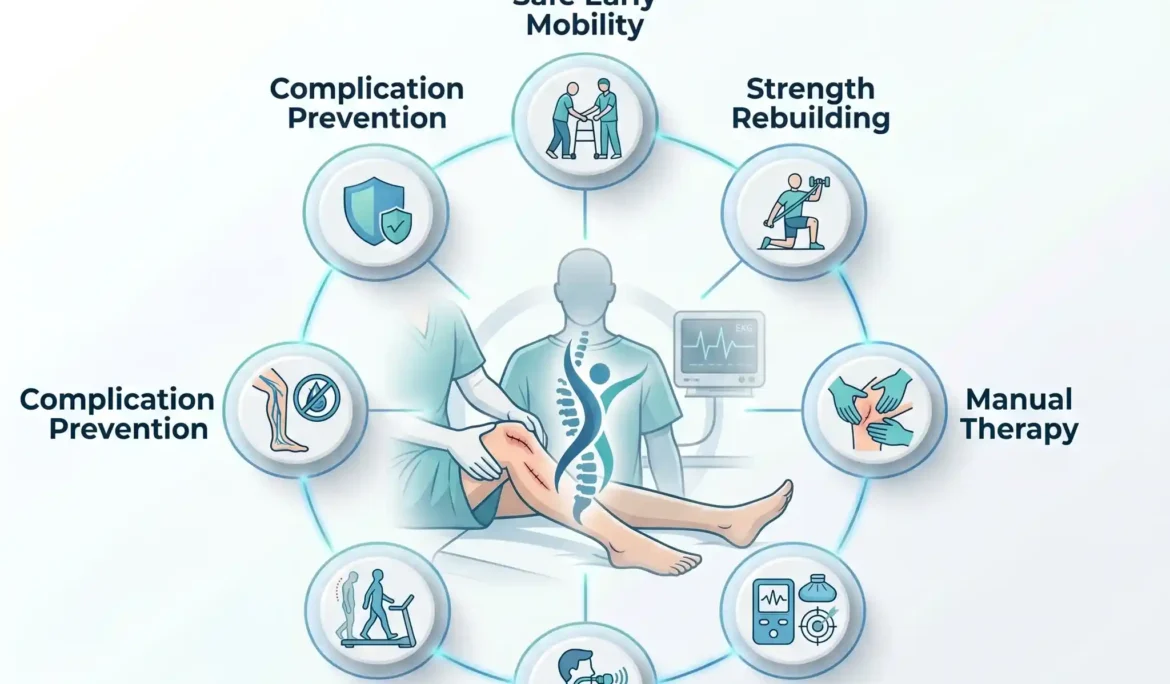
Physiotherapy after Surgery might fix the underlying medical problem, but it often leaves the body temporarily weaker, stiffer, and more vulnerable. Think of your body like a machine that has just undergone major repairs—everything needs recalibration before it runs smoothly again. After surgery, tissues go through inflammation, healing, and remodeling phases, which can significantly impact mobility and function. During this time, muscles may weaken due to inactivity, joints may stiffen, and circulation may slow, increasing the risk of complications.
One of the biggest challenges after surgery is immobilization. When you stop moving—even for a few days—your muscles begin to lose strength rapidly. Studies show that muscle strength can decrease by up to 3–5% per day of inactivity, which adds up quickly. This loss doesn’t just affect movement; it also delays recovery and increases dependency on others for daily tasks. Additionally, lack of movement can lead to deep vein thrombosis (DVT), a potentially dangerous condition where blood clots form in the legs.
Post-surgical complications are not rare. Patients often experience pain, swelling, reduced flexibility, and poor circulation. In some cases, respiratory complications like chest infections can develop, especially after abdominal or thoracic surgeries. These complications can prolong hospital stays and make recovery more difficult than expected. This is where physiotherapy steps in—not as an optional add-on, but as a critical component of recovery.
At Next Gen Rehab & Physi Centre, located within Chetna Hospital, our post-surgical protocols are rooted in Evidence-Based Practice (EBP). We specialize in early mobilization and pain management for complex cases, including total knee replacements (TKR), hip arthroplasty, and spine surgeries. By combining clinical expertise with advanced electrotherapy, we ensure patients regain their range of motion (ROM) safely and significantly faster.
Why Specialized Post-Surgical Rehab is Essential at Chetna Hospital, Chinchwad
Physiotherapy after surgery is not just about exercises; it’s about restoring your independence and quality of life. After surgery, your body is in a fragile state, and proper guidance is crucial to ensure safe recovery. Physiotherapy provides a structured approach that helps patients regain mobility, reduce pain, and return to normal activities faster.
One of the most important benefits is pain management without over-reliance on medication. Techniques like manual therapy, guided exercises, and electrotherapy help reduce pain naturally. This is particularly important in today’s healthcare landscape, where minimizing opioid use is a priority. Instead of masking pain, physiotherapy addresses its root cause, leading to long-term relief.
Another key advantage is the prevention of complications. Early movement, even simple exercises, improves blood circulation and reduces the risk of blood clots and infections. For example, breathing exercises are commonly used after surgery to prevent lung complications. These small but powerful interventions can significantly improve recovery outcomes.
Physiotherapy also accelerates wound healing. Improved blood circulation delivers oxygen and nutrients to the surgical site, promoting faster tissue repair. Patients who engage in guided rehabilitation often experience quicker recovery times compared to those who remain inactive. This means getting back to work, hobbies, and daily life sooner.
Ultimately, physiotherapy empowers patients. It teaches them how to move safely, avoid re-injury, and maintain long-term health. It’s not just about recovery—it’s about building a stronger, more resilient body.
The 7 Pillars of Modern Physiotherapy
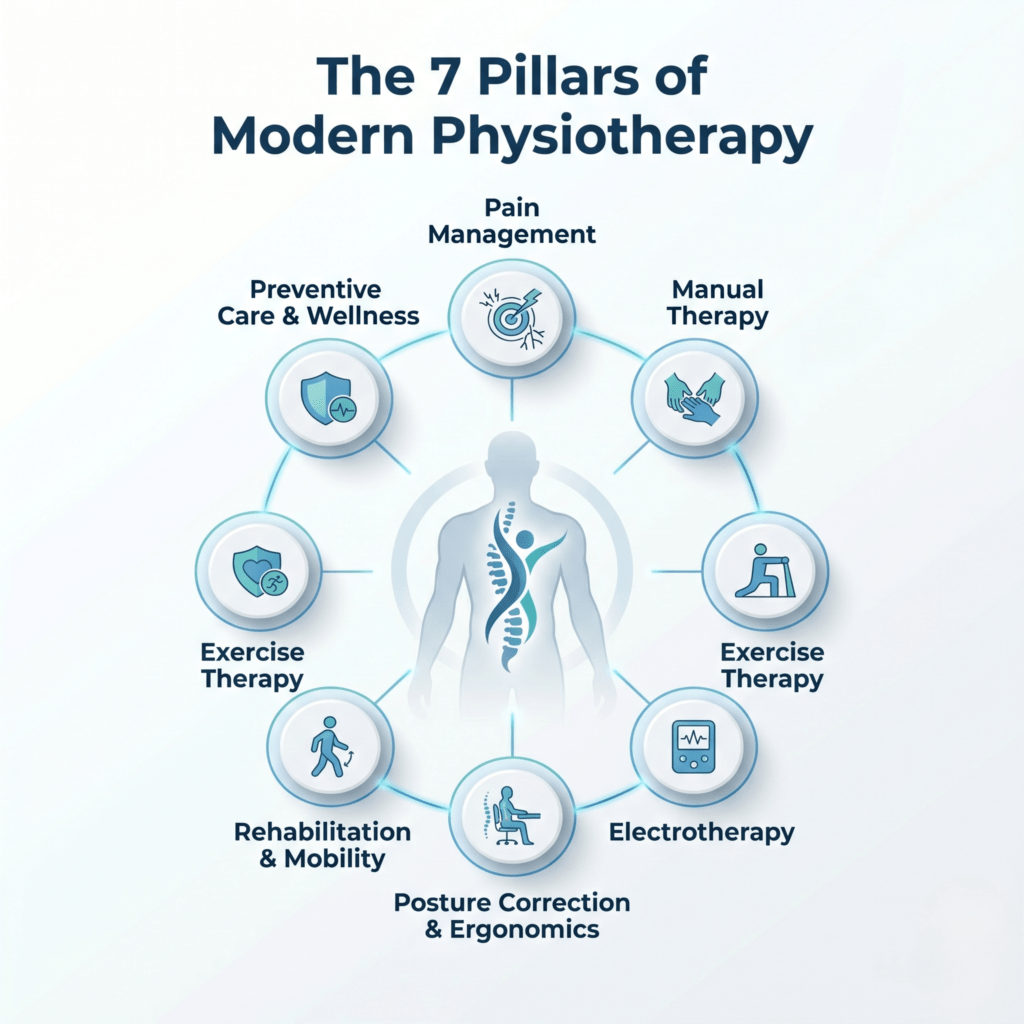
Modern physiotherapy is built on a strong foundation of seven core pillars, each playing a vital role in recovery. These pillars work together like a well-coordinated system, ensuring that no aspect of rehabilitation is overlooked.
Pain Management
Pain is often the first barrier to recovery. Physiotherapy uses techniques like manual therapy, electrotherapy, and guided movement to reduce pain effectively. Instead of relying solely on medication, these methods target the source of discomfort, helping patients feel better and move more confidently.
Mobility Restoration
After surgery, joints can become stiff and restricted. Mobility exercises aim to restore the range of motion, allowing patients to move freely again. This is crucial for preventing long-term stiffness and ensuring proper joint function.
Strength Training
Muscle weakness is a common issue after surgery. Strength training helps rebuild muscle mass and improve overall stability. This not only supports recovery but also reduces the risk of future injuries.
Functional Rehabilitation
Recovery isn’t complete until you can perform daily activities independently. Functional rehabilitation focuses on tasks like walking, climbing stairs, and lifting objects, making it highly practical and relevant.
Neuromuscular Control
Balance and coordination are often affected after surgery. Neuromuscular training helps restore these abilities, reducing the risk of falls and improving overall movement efficiency.
Prevention of Re-injury
Physiotherapy teaches proper movement patterns and techniques, helping patients avoid re-injury. This includes posture correction and ergonomic advice.
Patient Education
Knowledge is power. Patients are taught home exercises, lifestyle modifications, and self-care strategies, enabling them to take control of their recovery.
Post-Operative Rehabilitation Stages
Recovery doesn’t happen overnight—it follows a structured process divided into stages. Each stage has specific goals and interventions tailored to the patient’s condition.
Acute Phase
This stage focuses on pain and swelling control. Gentle movements and breathing exercises are introduced to prevent complications.
Early Mobilization
As the patient stabilizes, light activities begin. Early mobilization is crucial for improving circulation and preventing stiffness.
Strength & Endurance Training
Once basic mobility is restored, the focus shifts to building strength and endurance. Exercises become more challenging and targeted.
Functional Recovery
The final stage aims to restore full function. Patients work on returning to normal activities, including work and sports.
Key Medical Rules & Concepts in Physiotherapy
Understanding key principles can make a huge difference in recovery outcomes.
| Concept | Explanation |
|---|---|
| 80/20 Rule | 80% of recovery comes from consistent basic exercises |
| 5 D’s | Warning signs like dizziness, double vision, and speech issues |
| 5 P’s | Pain, pallor, pulselessness, paresthesia, paralysis (emergency signs) |
| 8-Minute Rule | Used for therapy billing and session tracking |
The 80/20 rule is particularly powerful. It emphasizes consistency over complexity. Simple exercises done regularly often yield better results than advanced techniques performed inconsistently.
Our Specialized Protocols for Orthopedic and Spine Recovery
Physiotherapy after surgery is not one-size-fits-all. Different types are designed to address specific conditions. Orthopedic physiotherapy is commonly used after surgeries like knee or hip replacements, focusing on restoring joint function and strength. Neurological physiotherapy is essential for patients recovering from strokes or spinal injuries, helping them regain coordination and movement control.
Cardiorespiratory physiotherapy plays a crucial role after heart or lung surgeries, improving breathing efficiency and endurance. Sports physiotherapy is tailored for athletes, focusing on performance and injury prevention. There are also specialized areas like pediatric and geriatric physiotherapy, addressing the unique needs of children and older adults.
The choice of physiotherapy depends entirely on the patient’s condition. For example, someone recovering from knee surgery will benefit most from orthopedic rehabilitation, while a stroke patient requires neurological therapy. This targeted approach ensures optimal recovery outcomes.
Role of a Physiotherapist in Recovery
A physiotherapist wears many hats. They are not just therapists but also educators, motivators, and rehabilitation planners. Their primary role is to assess the patient’s condition and develop a personalized treatment plan. This plan evolves, adapting to the patient’s progress.
Communication is a key skill. A good physiotherapist explains exercises clearly, provides feedback, and encourages patients to stay consistent. Recovery can be challenging, and having someone to guide and motivate you makes a significant difference.
Physiotherapists also play a critical role in pain management and functional training. They ensure that patients perform exercises correctly, reducing the risk of injury. Their expertise helps patients regain confidence and independence.
Red Flags After Surgery
Not all symptoms during recovery are normal. Some require immediate medical attention. These include:
- Sudden severe pain
- Loss of sensation
- Fever with swelling
- Chest pain or breathlessness
- Severe dizziness
Recognizing these red flags can be life-saving. Physiotherapy is safe, but it must be paused if any of these symptoms occur.
Exercises After Surgery & Recovery Timeline
Recovery timelines vary depending on the type of physiotherapy after surgery. Minor procedures may require 5–10 sessions, while major surgeries like joint replacements can take 20–40 sessions or more. Exercises typically start with gentle movements and progress to strength training and functional activities.
Consistency is key. Even simple exercises, when performed regularly, can significantly improve outcomes. Patients are often given home exercise programs to complement in-clinic sessions.
Next Gen Rehab & Physi Centre is the preferred choice for patients seeking expert care near Chinchwad Railway Station, Chaphekar Chowk, and Sambhaji Nagar. While we are centrally located in Chinchwad (5km focus), we provide specialized rehabilitation for patients traveling from a 15km radius, including Wakad, Ravet, Nigdi Pradhikaran, Akurdi, Hinjewadi, and Bhosari. Our proximity to major transit points makes high-quality recovery accessible for all of PCMC.
Conclusion
Physiotherapy after surgery is not just an optional step after surgery—it is a critical component of recovery. It helps restore movement, reduce pain, and prevent complications, ensuring that patients regain their independence and quality of life. With a structured approach based on proven principles and stages, physiotherapy transforms recovery from a passive process into an active journey.
Next Gen Rehab & Physi Centre – Trusted Physiotherapy in Pimpri-Chinchwad
Located at Room 1, Chetna Hospital, Nigdi Bhosari Rd, Near HP Petrol Pump, Sambhajinagar, Chinchwad, Pimpri-Chinchwad, Maharashtra 411019, Next Gen Rehab & Physi Centre is a dedicated rehabilitation clinic offering expert care in post-operative physiotherapy and pain management.
Serving patients across a 5–15 km radius, including Nigdi, Bhosari, Akurdi, Wakad, Ravet, and Pimpri, the clinic is known for its personalized treatment plans and evidence-based approach. The center specializes in helping patients recover faster, safer, and more effectively after surgery.
Don’t let post-surgical stiffness delay your recovery. Visit Next Gen Rehab & Physi Centre at Chetna Hospital, Chinchwad, for a personalized assessment.
📍 Location: Room No. 1, Chetna Hospital, Chinchwad, Pune.
📞 Book an Appointment: +919168690448
With a strong focus on patient education, mobility restoration, and long-term recovery, Next Gen Rehab & Physi Centre ensures every patient receives the care and guidance needed to return to normal life with confidence.
FAQs
Most patients begin their rehabilitation within 24 to 48 hours of surgery, depending on the surgeon’s recommendation and the procedure type.
Yes. Next Gen Rehab provides specific protocols for laminectomy, discectomy, and spinal fusion patients to ensure nerve safety and core stability.
Absolutely. Being situated within Chetna Hospital, Chinchwad, we offer full ramp access, elevators, and a hospital-grade environment for safe patient transfer.
Recovery varies from a few weeks to several months, depending on the surgery.
Skipping physiotherapy can lead to complications, delayed recovery, and reduced function.