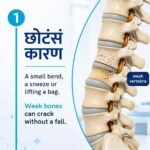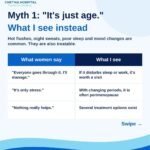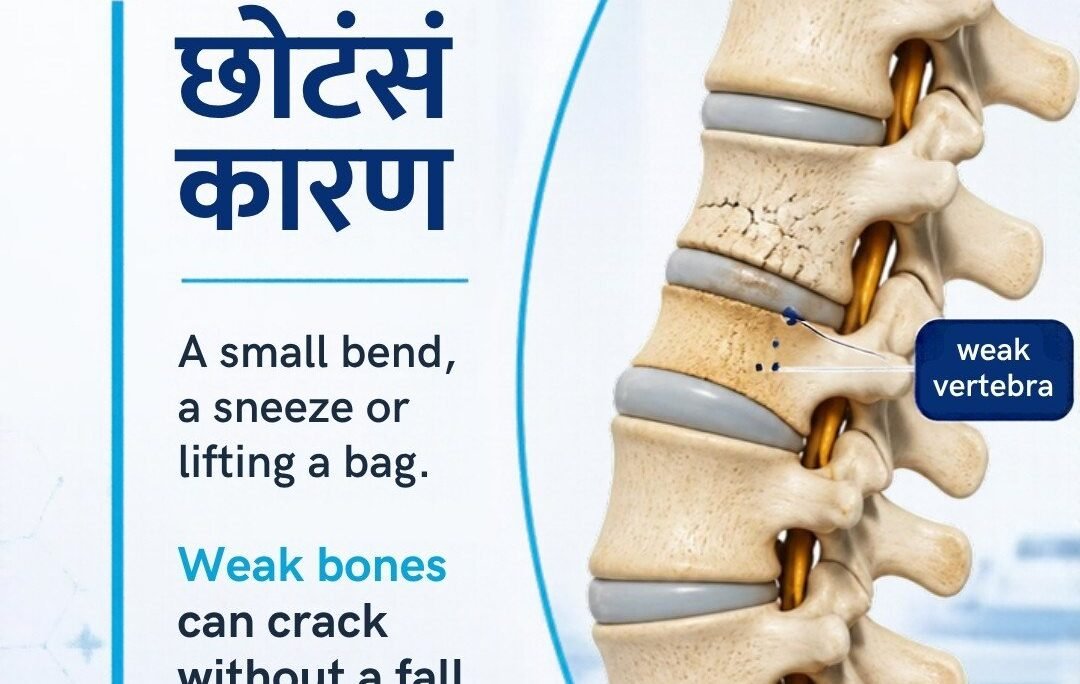
Losing height after 50 is not always just ageing. It can be a silent spine fracture caused by weak bones (osteoporosis). Doctors usually advise a spine check-up if you or a parent has become shorter, has a new stoop, or had sudden back pain after a small bend or cough.
Spine & Orthopaedics, Chetna Hospital, Chinchwad and Wakad, PCMC
Call 91586 80739 (Chinchwad)
Call 91687 46986 (Wakad)
Get Directions
WhatsApp
First Floor, Plot GP 116, Sambhaji Nagar Road, near HP Pump, near Rotary Club, G Block, MIDC, Chinchwad, Pune 411019
Key takeaways
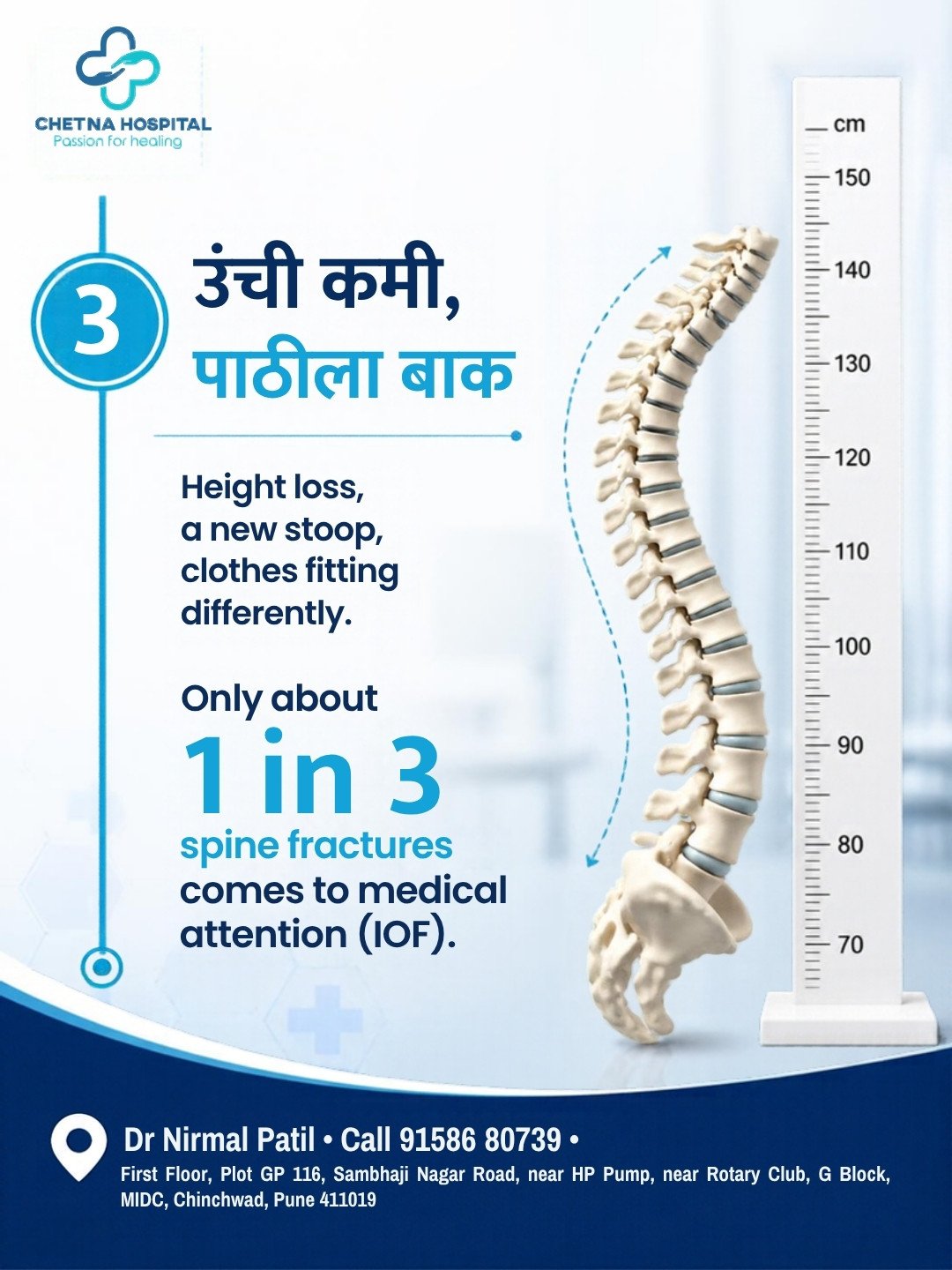
- Losing height after 50 can mean a spine bone has cracked and settled.
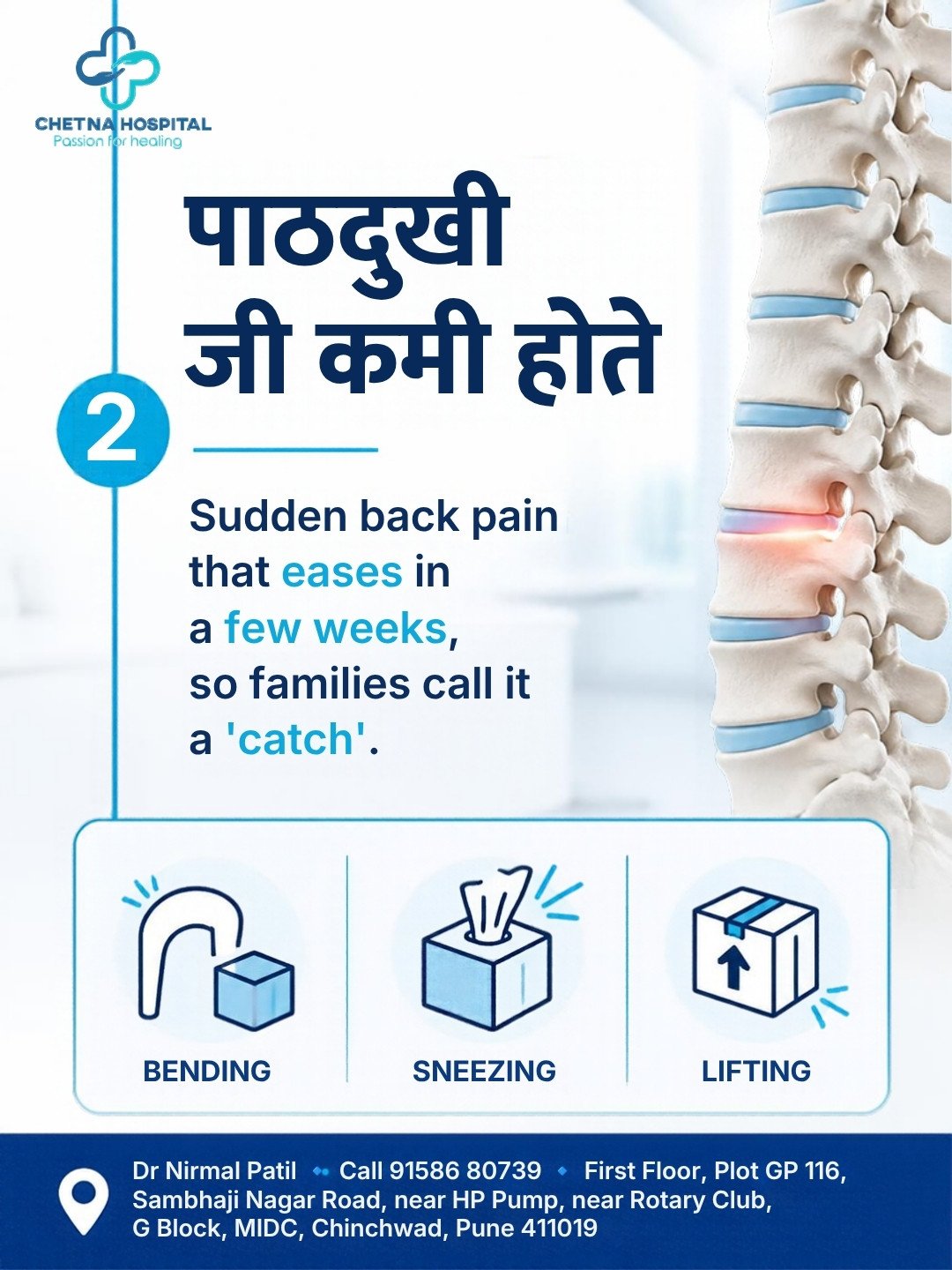
- Weak bones can break with a bend, a lift or a sneeze, so there may be no fall.
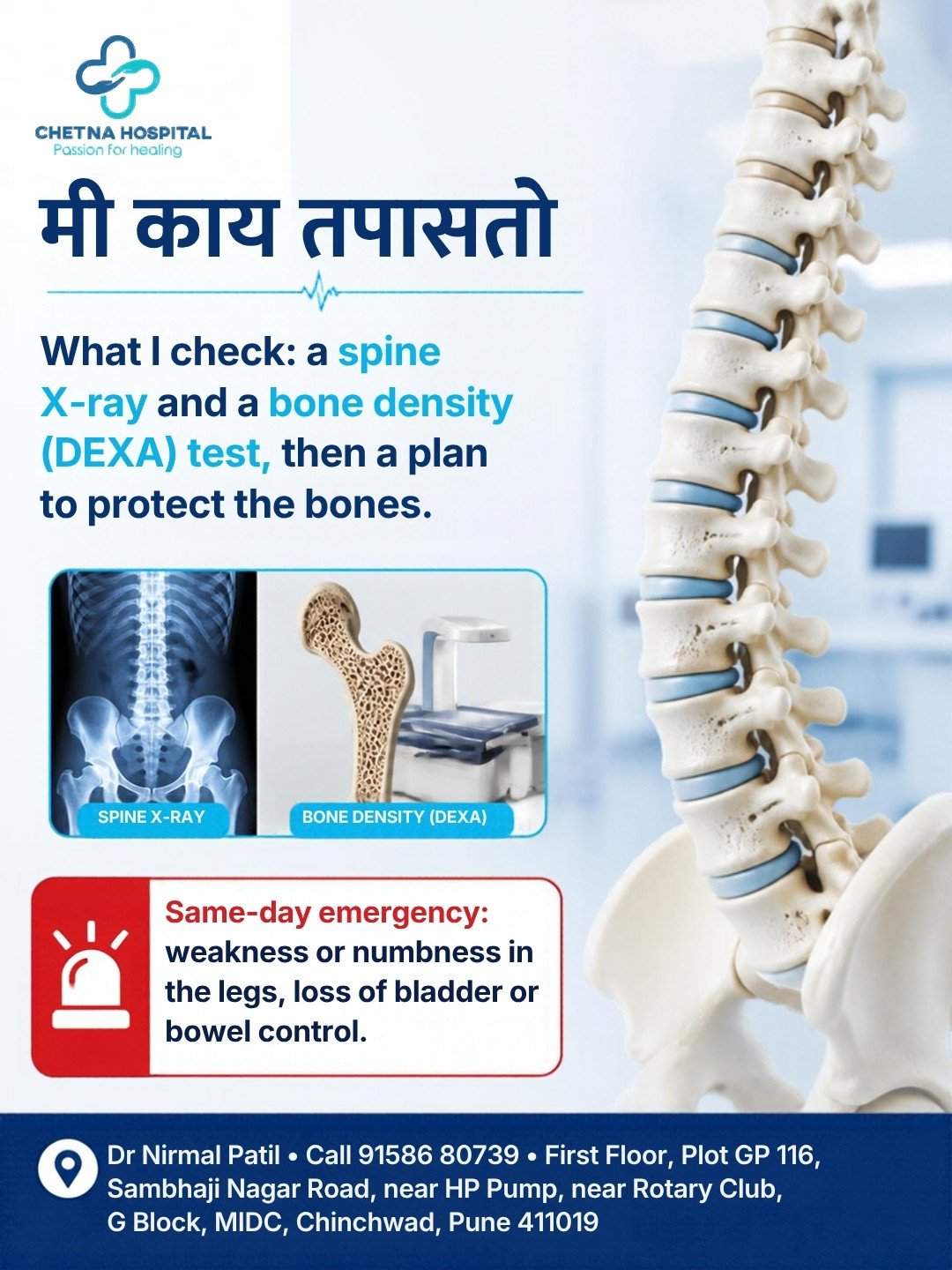
- A spine X-ray and a bone density (DEXA) test usually come first.
- Leg weakness, numbness or loss of bladder control needs emergency care.
In this article
- Is it just ageing?
- How the spine breaks without a fall
- Signs that need a check-up
- What doctors check
- The carousel, slide by slide
- When back pain is an emergency
- Consultation near you
- Questions patients ask
Doctors often hear it from families almost as a joke: a parent has “shrunk a little” over the past few years. They say it with a smile, as if it were a normal part of getting old. However, in such cases a spine X-ray can show one or more bones in the mid-back that have collapsed into a wedge shape, even though the person never fell.
So here is a simple step for families: treat a parent’s height as something to measure. Losing height after 50 is a clue, not just a fact of life.
Is losing height after 50 just ageing?
Partly, yes, because the discs between our spine bones lose some water with age, and posture changes too. So a small change over many years is expected.
However, a clear drop, or a stoop that appears within a year or two, is different. In that case, doctors want to rule out a vertebral compression fracture. This means a spine bone has cracked and squashed down, usually at the front. As a result, the back curves forward and the person becomes shorter.
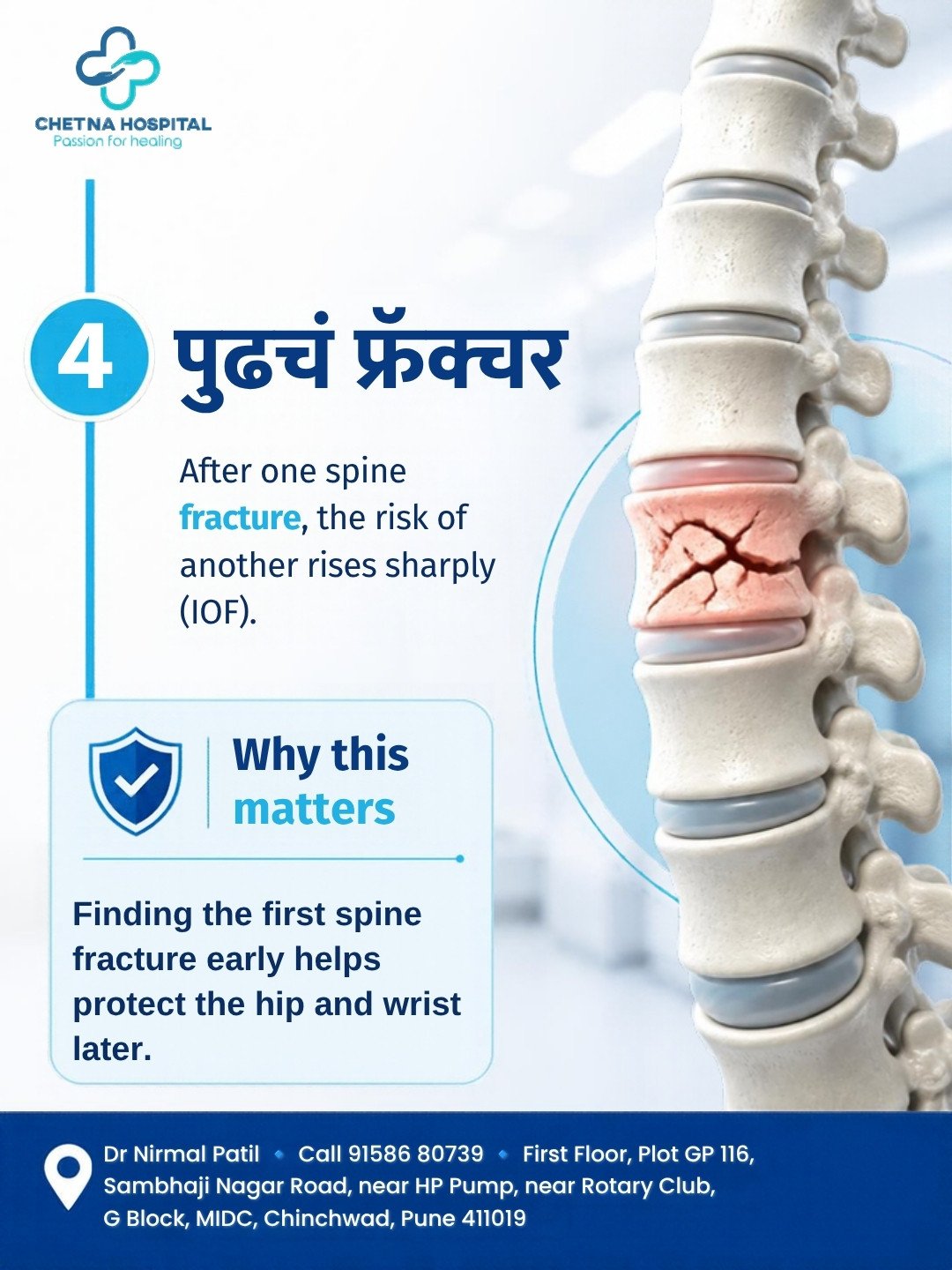
Also, according to the International Osteoporosis Foundation, the risk of another fracture rises sharply after one spine fracture. So finding the first one early helps protect the hip and wrist later.
How does a spine bone break without a fall?
Healthy bone is strong. However, osteoporosis makes the inside of the bone thin and porous, like a sponge with bigger holes. Then everyday strain is enough to crack it.
For example, patients often describe:
- Bending to pick up a bucket or a grandchild
- Lifting a gas cylinder or a heavy bag
- A strong sneeze or a bout of coughing
- Sitting down hard on a chair
The NHS notes that even a cough or sneeze can partly collapse a spine bone. The pain is often sudden and sits in the mid or lower back. It usually eases over several weeks. Because it settles, families call it a “catch” and move on.
Which signs with losing height after 50 need a check-up?
So book a spine check-up if you notice any of these:
- Clothes or sari blouses fitting differently at the back
- A new rounded upper back or a forward stoop
- Sudden back pain after a minor bend, lift or sneeze
- Back pain that worsens on standing and eases lying down
- A past fracture of the wrist or hip after a small fall
If a parent has had a wrist break, read our page on wrist fracture after 50, because one such fracture is a reason to check the spine too.
What do doctors check for losing height after 50?
A check-up usually starts with measuring height and looking at the posture. Then the doctor examines the back for tender spots and checks the leg nerves.
A spine X-ray shows whether a bone has collapsed, while a bone density (DEXA) scan shows how weak the bones are. MedlinePlus explains that a bone density test is the main way to find osteoporosis. Also, blood tests for calcium and vitamin D are often added. Sometimes an MRI helps, for example when a fracture looks recent or the nerves may be pressed.
After that, the plan has two parts: easing the pain and protecting the bones. For example, it can include bone-strengthening treatment, enough protein, calcium and vitamin D, and guided exercise. Our team at orthopaedic rehabilitation and physiotherapy helps with safe movement and balance.
Does losing height after 50 always mean surgery?
No. Most osteoporotic spine fractures heal with time, pain control, short-term support and bone treatment. A procedure is usually discussed only when pain does not settle, the bone keeps collapsing, or the nerves are at risk. In that case, kyphoplasty or vertebroplasty (bone cement through a small cut) is one option, shown in the video below. Our spinal fractures guide explains the other types of fracture.
The carousel, slide by slide
So save these slides, or send them to a parent who says “it’s just age”.
When is back pain an emergency?
Go to the emergency department the same day if back pain comes with:
- Weakness or numbness in one or both legs
- Loss of bladder or bowel control, or numbness around the private parts
- Severe pain after a real fall or an accident
- Fever, unexplained weight loss, or a history of cancer
Consultation near you in Chinchwad and Wakad
Chinchwad: Spine & Orthopaedics, First Floor, Plot GP 116, Sambhaji Nagar Road, near HP Pump, near Rotary Club, G Block, MIDC, Chinchwad, Pune 411019. Call 91586 80739.
Wakad: Unit 401–402, 4th Floor, MI Commercia Building, Wakad, Pune 411057. Call 91687 46986.
Patients come to us from Chinchwad, Pimpri, Akurdi, Nigdi, Ravet, Wakad, Hinjewadi, Pimple Saudagar, Thergaon, Tathawade, Punawale, Moshi and Bhosari. See our endoscopic spine surgery in Chinchwad page.
Losing height after 50: questions patients ask
Is losing height after 50 normal?
A small change over many years is common. However, a clear drop in height or a new stoop within a year or two should be checked for a spine fracture.
Can a spine fracture happen without a fall?
Yes. When bones are weak, a spine bone can crack while bending, lifting or even sneezing. Because the pain often settles, the fracture is easily missed.
Which test shows weak bones?
A bone density (DEXA) scan measures bone strength, while a spine X-ray shows whether a bone has already collapsed.
Where can you see a spine specialist for height loss in Chinchwad?
The Spine & Orthopaedics team sees patients at First Floor, Plot GP 116, Sambhaji Nagar Road, Chinchwad, Pune 411019 (call 91586 80739) and at Unit 401–402, MI Commercia Building, Wakad, Pune 411057 (call 91687 46986).
When is back pain in older adults an emergency?
Go to emergency the same day for leg weakness or numbness, loss of bladder or bowel control, or back pain with fever.
Measure, don’t guess. Book a spine check-up.
Call 91586 80739 (Chinchwad)
Call 91687 46986 (Wakad)
WhatsApp
Sources
- International Osteoporosis Foundation. World Osteoporosis Day 2026 toolkit.
- NHS. Osteoporosis.
- MedlinePlus (US National Library of Medicine). Osteoporosis.
This article is general information, not a substitute for a consultation.