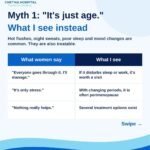
Menopause symptoms such as hot flushes, night sweats, poor sleep and changing periods are common, but you do not have to put up with them. Book a visit with a gynaecologist if symptoms disturb your sleep or work, or if bleeding is very heavy or comes after menopause.
Obstetrics & Gynaecology, Chetna Hospital, Chinchwad, PCMC
Doctors often hear women in their mid-40s begin with an apology. “It’s probably nothing, just age,” they say, and then describe months of broken sleep, sudden heat in the face and neck, and periods that no longer follow any pattern. By the time they see a doctor, many have already decided that this is something to quietly put up with. It usually isn’t.
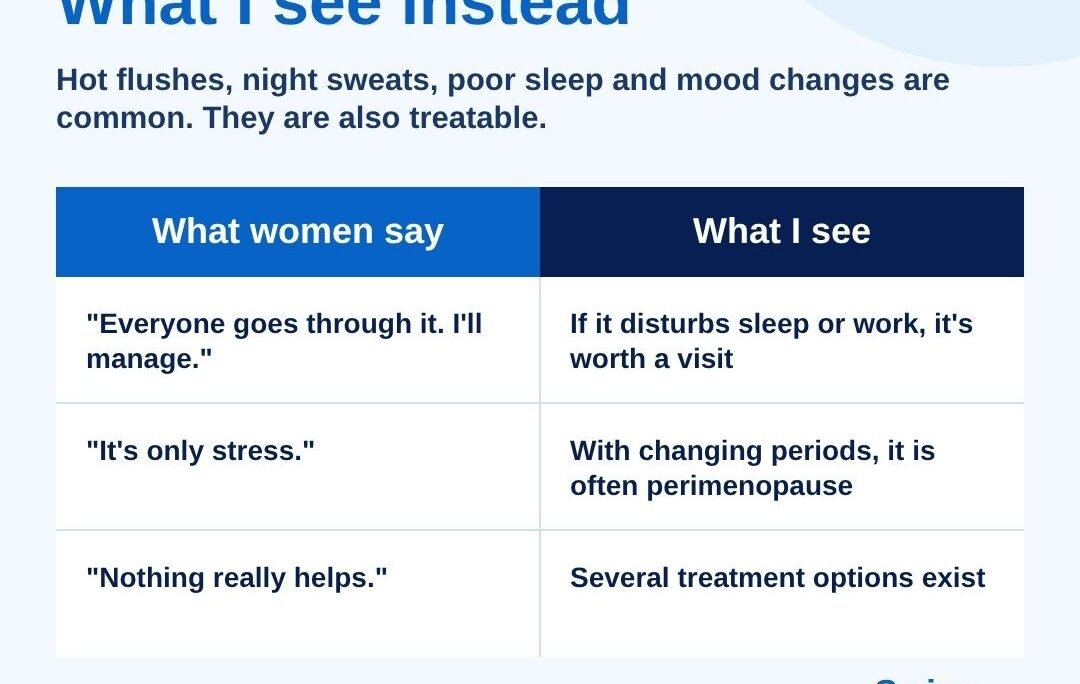
Myth 1: “It’s just age. Everyone goes through it.”
Everyone does go through menopause. That doesn’t mean everyone has to suffer through it. Menopause is the point when periods have stopped for 12 months, and for most women it happens between 45 and 55. The years before it, called perimenopause, are often when symptoms are strongest: hot flushes, night sweats, trouble sleeping, low mood or irritability, joint aches, vaginal dryness and a drop in sex drive.
Many women treat these symptoms as a character test. They push through work on four hours of sleep, or stop going out because a hot flush might start mid-conversation. A simple question helps: is this affecting your sleep, your work or your relationships? If the answer is yes, it is worth treating.
What can actually help
There is no single answer for every woman. Depending on your symptoms, age and medical history, the options include lifestyle changes (regular exercise, cutting down on caffeine and alcohol, a cooler bedroom), non-hormonal medicines, and hormone replacement therapy (HRT). HRT isn’t right for everyone, and the decision is made after the doctor goes through your health history with you.
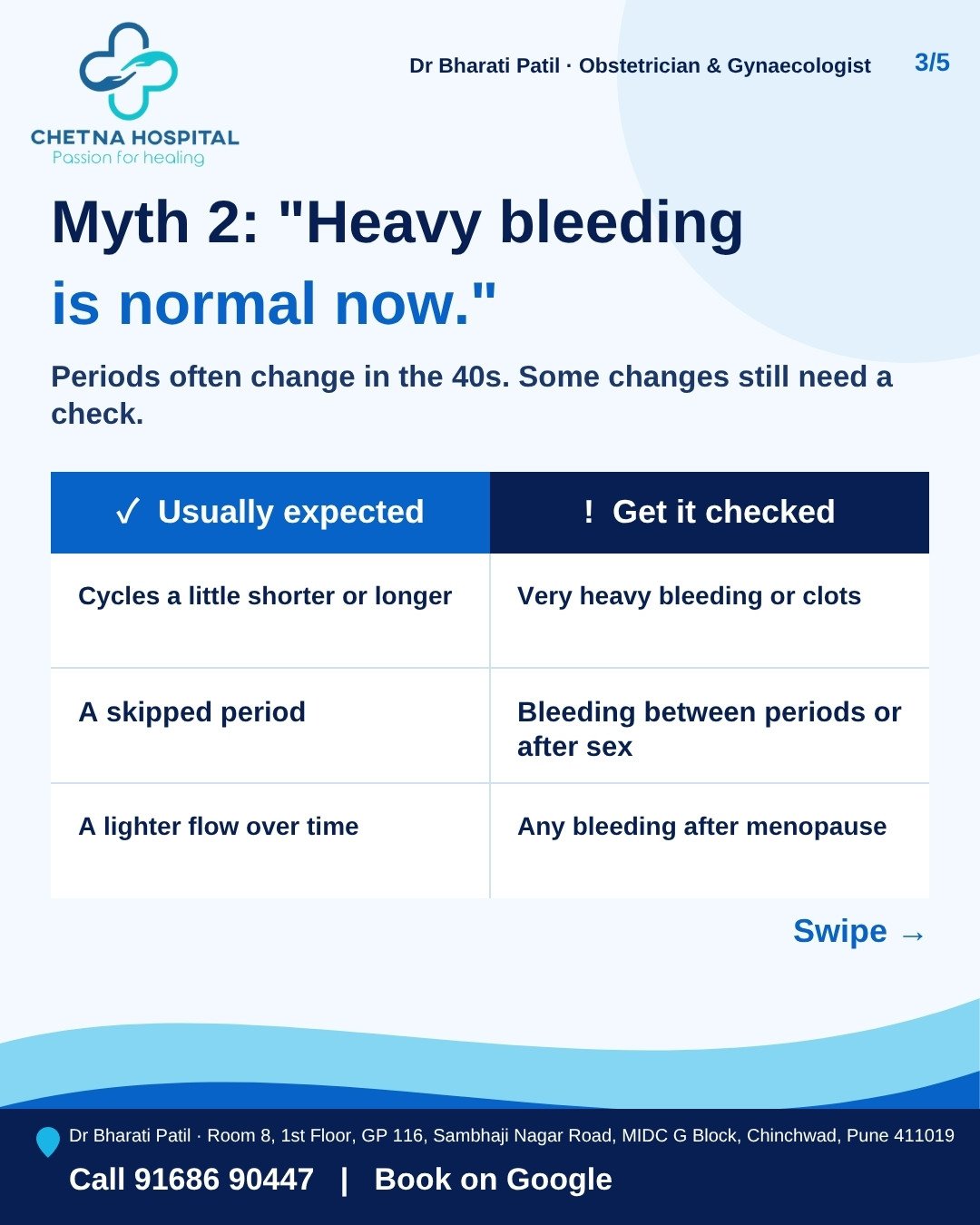
Myth 2: “Heavy or irregular bleeding is normal now.”
Some change is expected. In perimenopause, cycles often get a little shorter or longer, a period may be skipped, and the flow may become lighter over time. That part is usually normal.
Other patterns need a check, whatever your age:
- Very heavy bleeding, flooding or passing large clots
- Bleeding between periods or after sex
- Periods that come much more often than every three weeks
- Any bleeding after your periods have stopped for a year
The last one is a sign no woman should ignore. Our separate article on bleeding after menopause explains it in more detail. A check usually starts with an examination and a pelvic ultrasound, and most of the time the cause turns out to be simple and treatable.
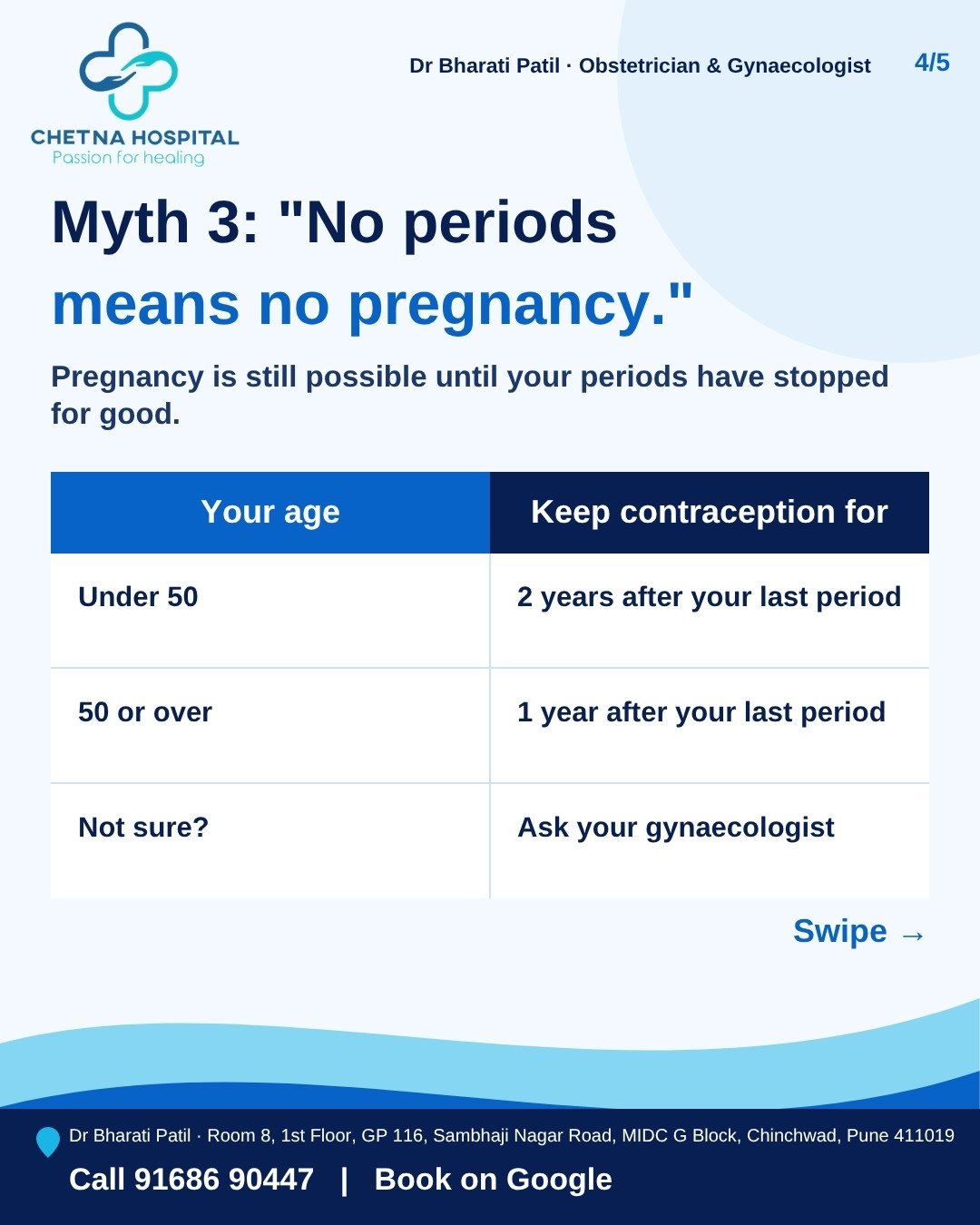
Myth 3: “No periods for a few months means I can’t get pregnant.”
This one surprises women the most. While periods are irregular, you can still ovulate now and then, so pregnancy is still possible. The NHS advises using contraception until you have had no periods for two years if you are under 50, or for one year if you are 50 or over.
If you have been using period-delay tablets or other hormone tablets, or you are not sure which phase you are in, bring that up at your visit. Our article on period-delay tablets covers a related question many women ask.
What a menopause consultation covers
A first visit is mostly a conversation. The doctor goes through your periods over the last year, your symptoms and how much they affect daily life, your past illnesses and medicines, and any family history of breast cancer, heart disease, clots or osteoporosis. Then the doctor examines you and, if needed, advises tests. These may include a pelvic ultrasound, blood tests, or a bone density (DEXA) scan, depending on your age and risk. MedlinePlus has more on what to expect.
Ask about your bones as well. Oestrogen helps protect bone, and bone loss speeds up in the years after menopause, as the World Health Organization notes. If you have broken a wrist or hip after a minor fall, read our page on wrist fracture after 50 and mention it when you come in.
When to book sooner
- Symptoms that stop you sleeping or working normally
- Very heavy, very frequent or painful bleeding
- Any bleeding after menopause
- Low mood that has lasted more than two weeks
- Periods stopping before 40, which needs its own check
If your symptoms started in your early 40s, our guide to early perimenopause symptoms explains what to look out for.
The three myths, slide by slide
These are the slides from our Instagram post. Save them, or send them to a sister or friend who keeps saying “it’s just age”.
Consultation near you in Chinchwad, PCMC
The gynaecology team consults at Room 8, First Floor, Plot No. GP 116, Sambhaji Nagar Road, near Rotary Club, G Block, MIDC, Chinchwad, Pune 411019 (Chetna Hospital). OPD hours are Monday to Saturday, 10 am to 1 pm and 4 pm to 8:30 pm. Women come from Chinchwad, Pimpri, Akurdi, Nigdi, Ravet, Wakad, Hinjewadi, Pimple Saudagar, Thergaon, Tathawade, Punawale, Moshi and Bhosari.
See our gynaecology and maternity services.
Questions women ask about menopause
Where can you see a gynaecologist for menopause symptoms in Chinchwad?
The obstetrics and gynaecology team at Chetna Hospital sees women for menopause and perimenopause symptoms at Room 8, First Floor, GP 116, Sambhaji Nagar Road, near Rotary Club, MIDC G Block, Chinchwad, Pune 411019. Call or WhatsApp 91686 90447.
At what age does menopause start?
For most women, menopause happens between 45 and 55. Symptoms of perimenopause can begin a few years before periods stop. Periods stopping before 40 needs a separate check with a doctor.
Are hot flushes and night sweats treatable?
Yes. Depending on your symptoms and health history, options include lifestyle changes, non-hormonal medicines and hormone replacement therapy. A gynaecologist will help you choose what suits you.
Can I get pregnant during perimenopause?
Yes. Pregnancy is still possible while periods are irregular. The NHS advises contraception until you have had no periods for two years if you are under 50, or one year if you are 50 or over.
When should you see a doctor about bleeding around menopause?
See a doctor for very heavy bleeding, bleeding between periods or after sex, periods more often than every three weeks, or any bleeding after your periods have stopped for a year.
Have a question about your health? Talk to a gynaecologist.
Sources
- NHS. Menopause.
- World Health Organization. Menopause fact sheet.
- MedlinePlus (US National Library of Medicine). Menopause.
This article is general health information and does not replace a consultation. Which treatment or tests you need is decided after an examination.