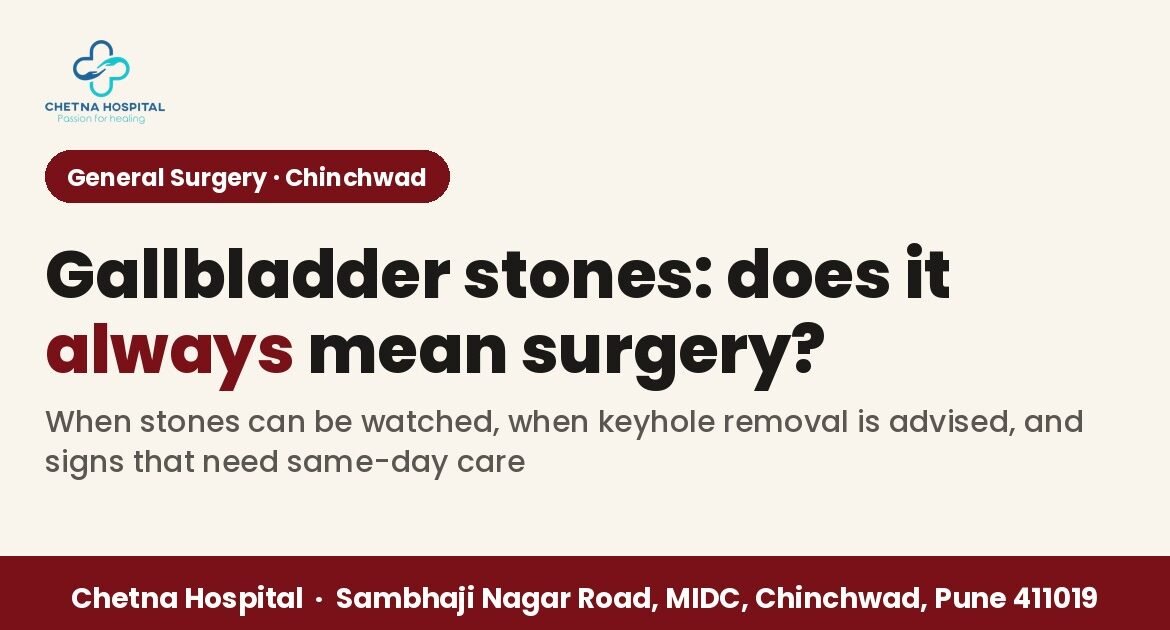
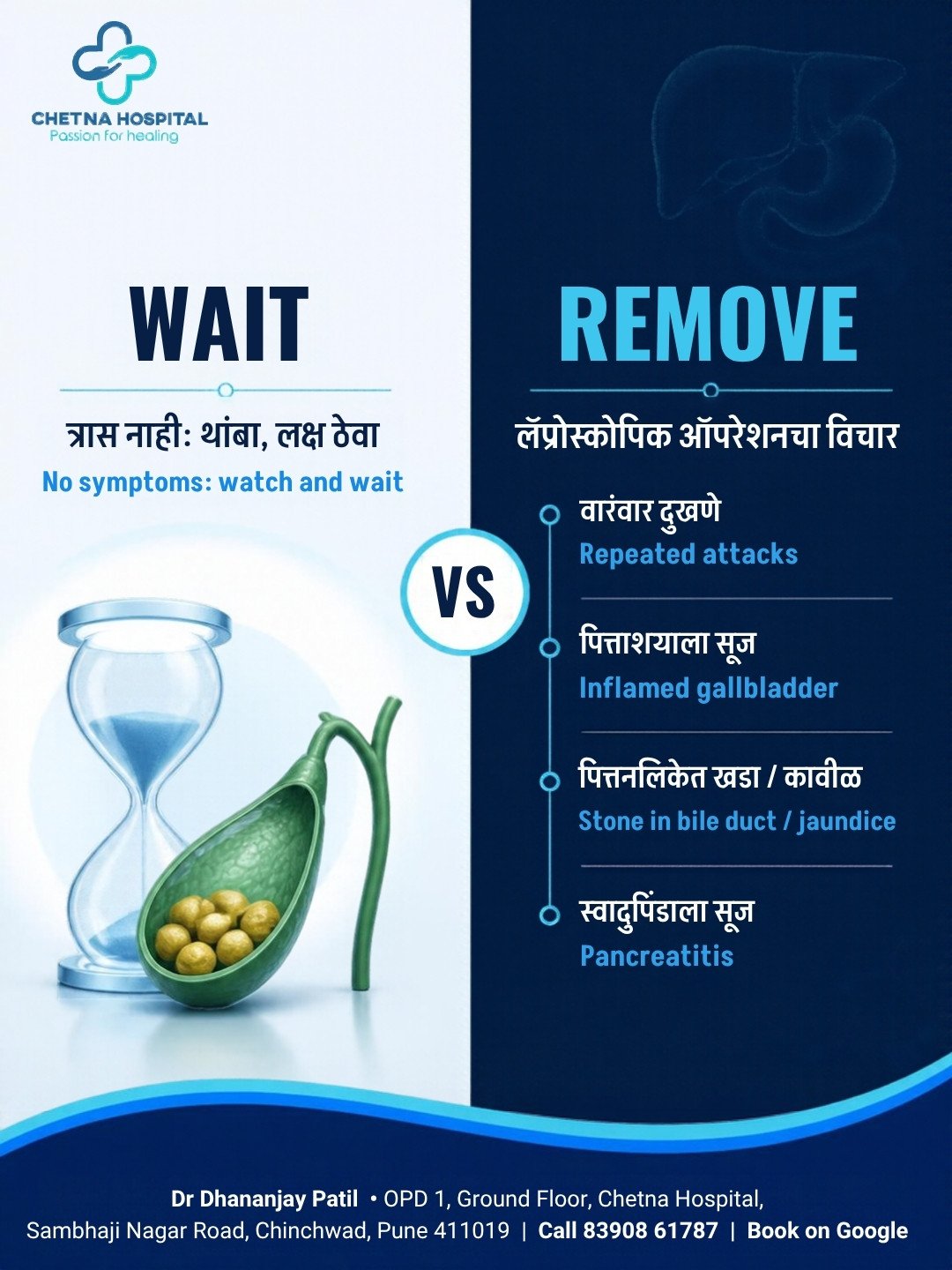
Gallbladder stones found on a scan do not always need an operation. Doctors usually watch stones that have never caused pain, and advise keyhole (laparoscopic) removal once they cause repeated pain or complications. Severe pain that won’t settle, fever or yellow eyes need same-day care.
General, Laser & Laparoscopic Surgery, Chetna Hospital, Chinchwad, PCMC
OPD 1, Ground Floor, Chetna Hospital, Sambhaji Nagar Road, next to Pimpri Chinchwad Sahakari Bank, Sambhajinagar, Chinchwad, Pune 411019
Two people can have the same sonography report, both saying “stones in the gallbladder”, and get different advice. One goes home with nothing more than a follow-up plan. The other is booked for surgery. The scan is the same. What decides it is what the stones have been doing.
Families often ask: “The report says stones. Does that mean an operation?” This guide explains how doctors usually make that decision. To discuss your own report, see the general surgery team at Chetna Hospital.
Gallbladder stones: what the report is telling you
The gallbladder is a small pouch under the liver that stores bile, the fluid that helps digest fat. After a meal, especially a fatty one, it squeezes bile into the gut. Stones form when bile hardens into small pebbles, sometimes one, sometimes dozens.
The stones are not dangerous just by being there. They cause trouble when one blocks the outlet of the gallbladder or slips into the bile duct. The NHS notes that most people with gallstones have no symptoms at all. Many find out only because a scan was done for something else.
When doctors usually wait
Stones found by chance, never any pain
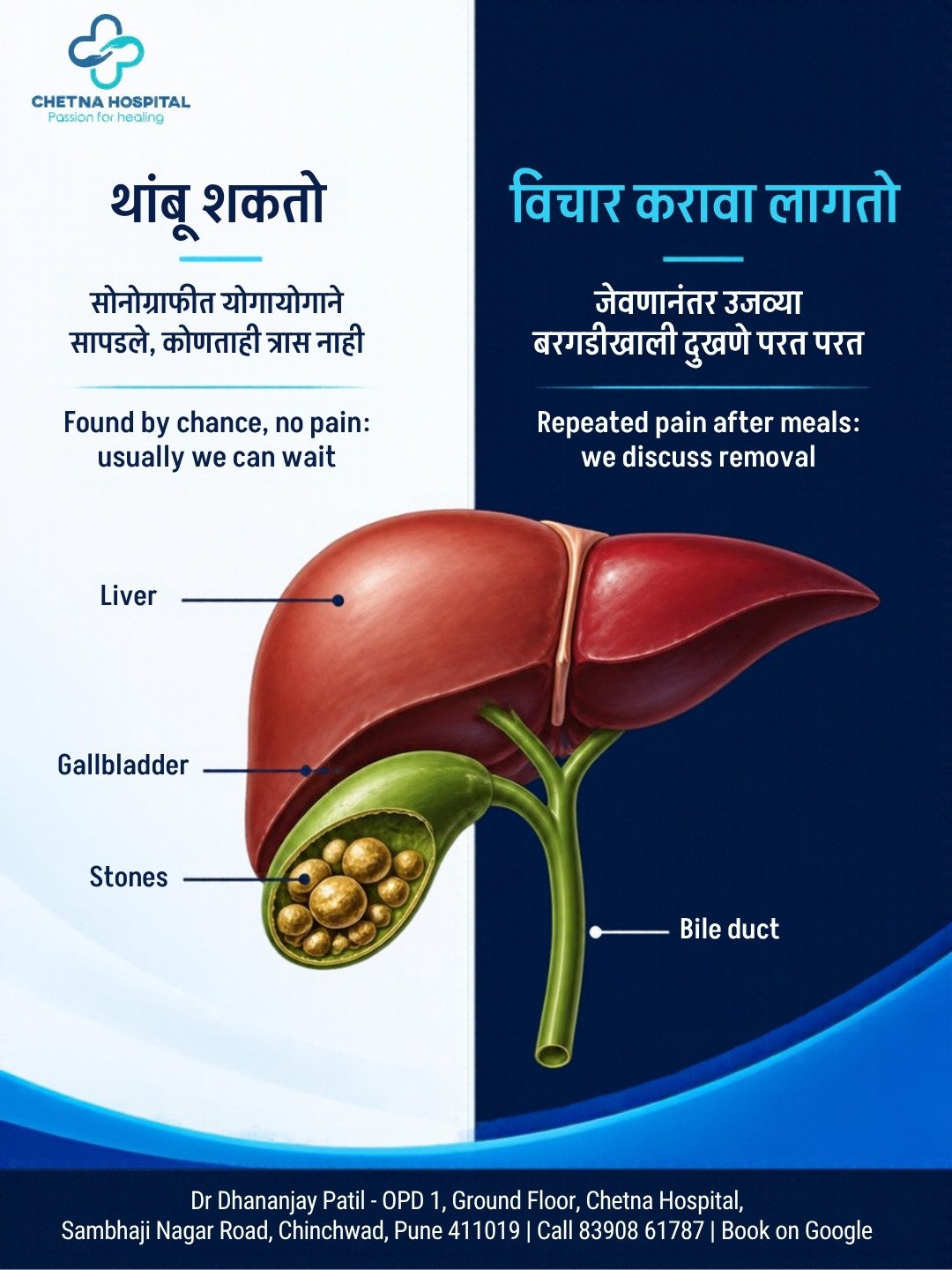
If you have never had pain from your stones, you usually don’t need treatment. Both the NHS and the US National Institute of Diabetes and Digestive and Kidney Diseases say the same. Your doctor can explain what an attack feels like, so you know what to watch for, and agree with you when to review.
When removal may be discussed without symptoms
In a few situations, a surgeon may discuss surgery even when the stones are quiet. Ask your surgeon whether this applies to your report.
When removal is usually advised
Once stones have caused pain, the next attack is likely, and some attacks bring complications. Doctors usually advise removing the gallbladder when there is:
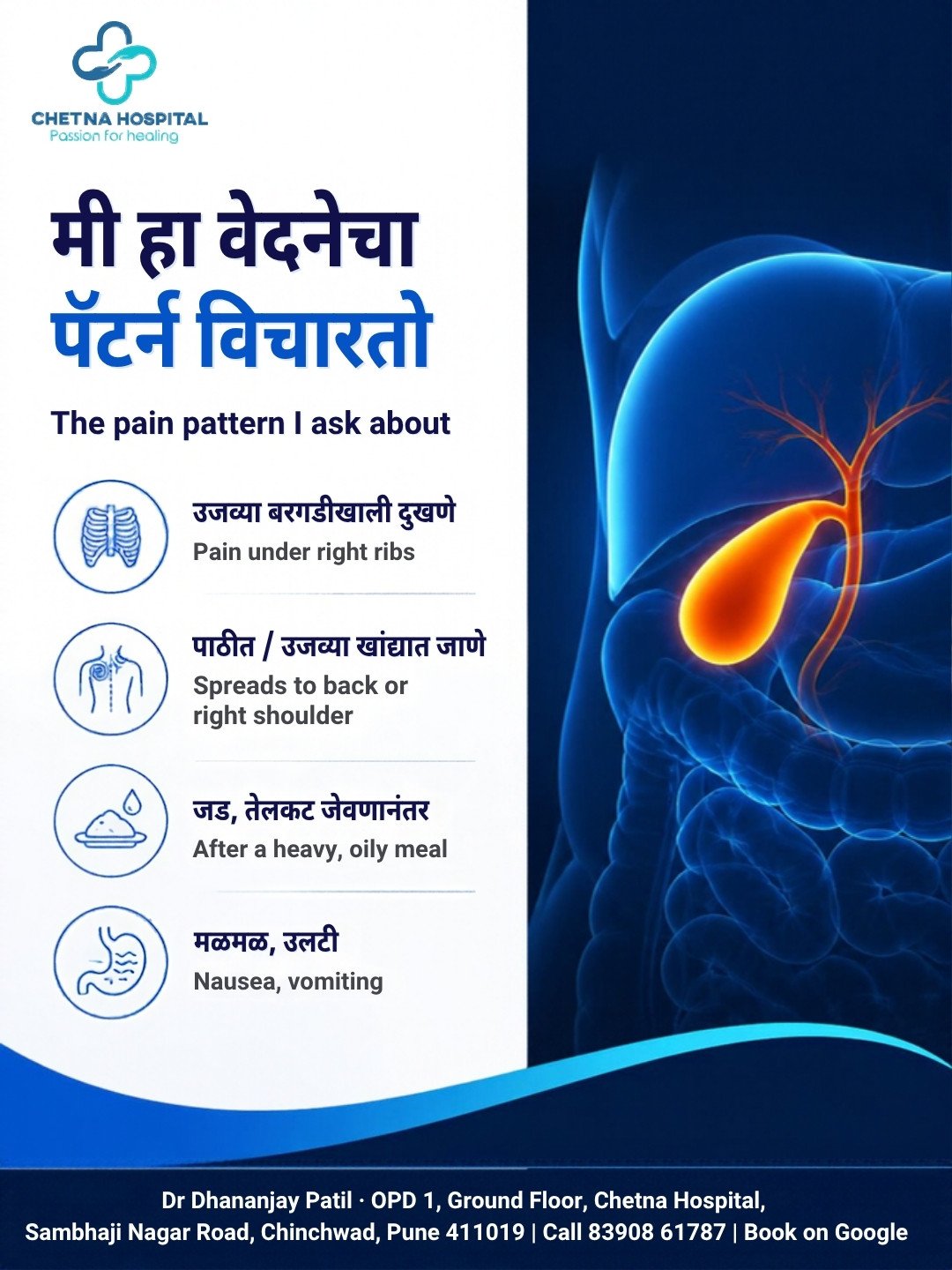
- Repeated pain attacks under the right ribs or in the upper middle of the abdomen, often spreading to the back or right shoulder, sometimes with nausea or vomiting
- Inflammation of the gallbladder (cholecystitis), with pain, fever and tenderness
- A stone in the bile duct, which can cause jaundice: yellow eyes or skin and dark urine
- Pancreatitis caused by a stone, which needs hospital care
Removing the stones alone does not work, because the gallbladder keeps forming new ones. The operation removes the gallbladder itself, a procedure called cholecystectomy. Read more about laparoscopic surgery in Chinchwad at Chetna Hospital.
What the keyhole operation involves
Most gallbladder operations today are done laparoscopically, through a few small cuts, using a camera. According to the NIDDK, most people return to normal activity in about a week, and the gallbladder is not an essential organ: bile flows straight from the liver into the gut instead. A small number of people notice softer stools for a while.
Fried food, fasting and gallstones: what diet can and can’t do
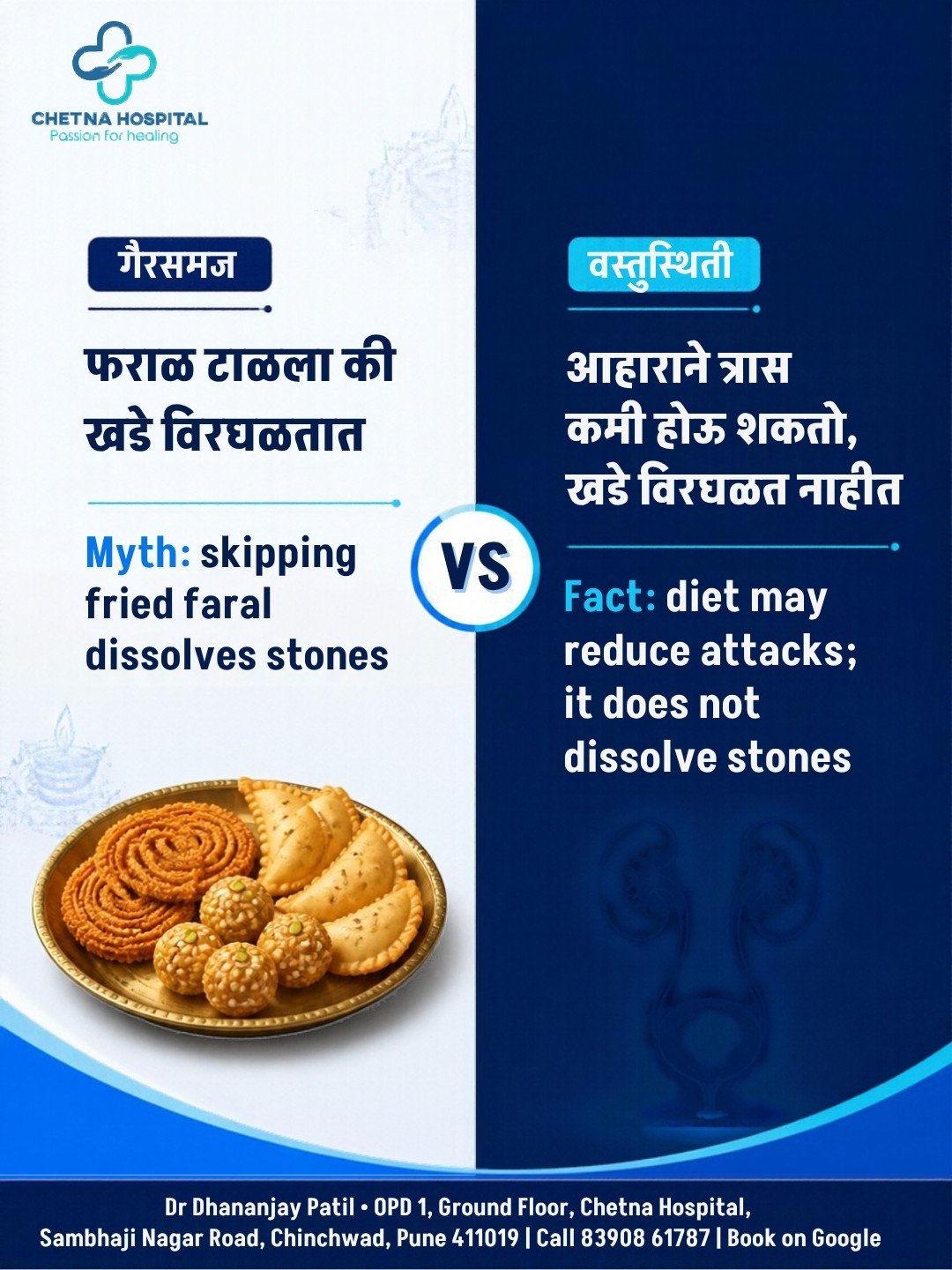
Cutting down on fried and fatty food can reduce attacks, because fat is what makes the gallbladder squeeze. But no diet dissolves stones that are already there. If you have had attacks, eating carefully during the wedding season helps; it does not replace treatment. Skipping meals for long periods and then eating a large, rich meal is a common trigger. Our earlier article on piles and fissure during festival fasting covers another problem that festive eating can bring on.
Gallbladder stones are also different from kidney stones, though people often mix them up. Kidney stones cause pain in the side or back that travels towards the groin; see our guide on when a kidney stone needs a procedure. MedlinePlus also explains how gallstones are found and treated.
Signs that can’t wait for an appointment
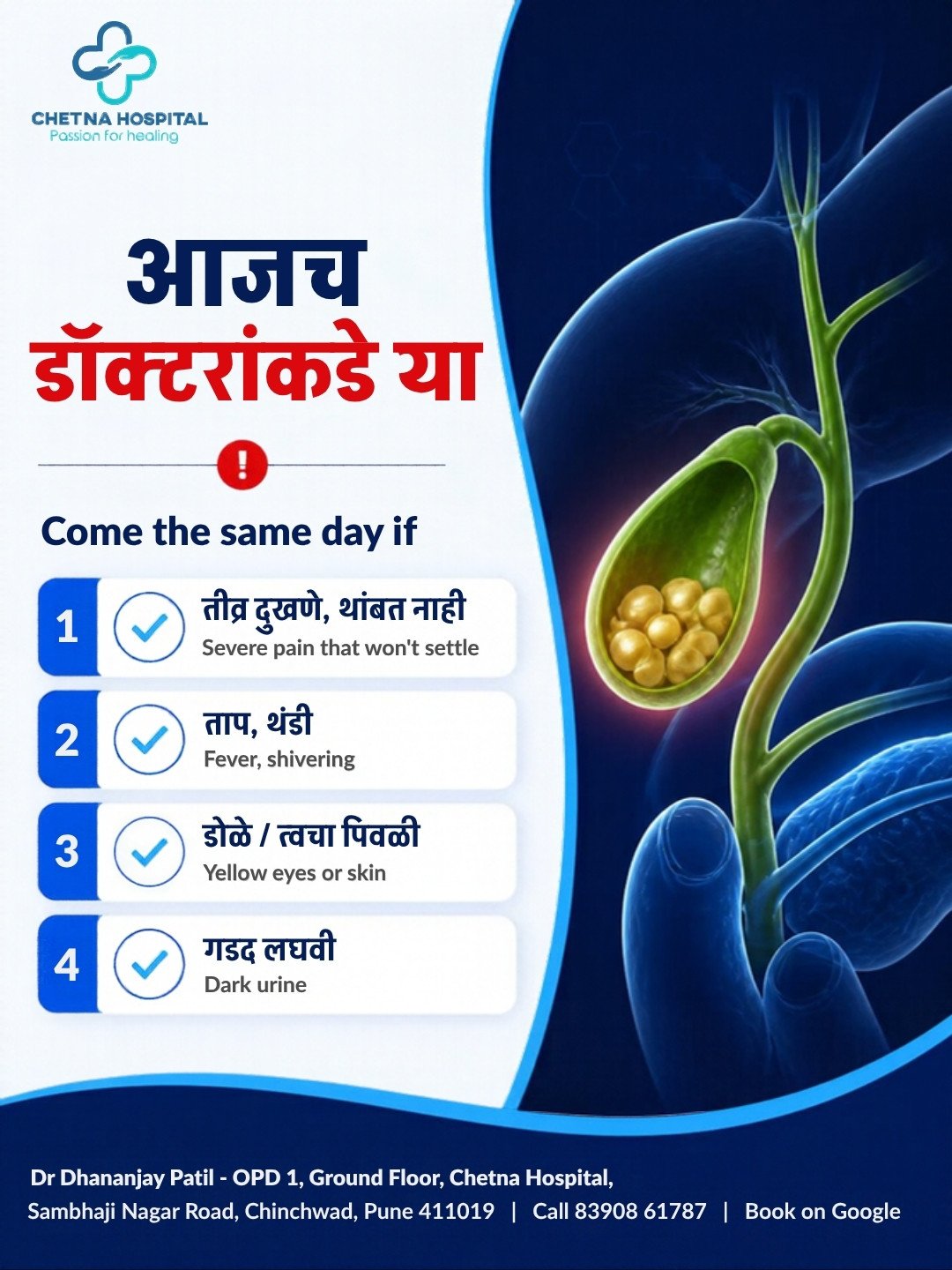
Go to hospital the same day if you have:
- Sudden, severe abdominal pain, or pain that does not settle
- Pain spreading to the back with vomiting
- Fever, or feeling hot, cold and shivery
- Yellow skin or yellow whites of the eyes, or dark urine
These can mean an inflamed gallbladder or a blocked bile duct, as the NHS lists. Pain that lasts more than half an hour needs a doctor’s review soon. See also when abdominal pain needs a surgical evaluation.
The carousel, slide by slide
These slides are from our Instagram post, in Marathi. Save them or forward them to someone whose report says “gallbladder stones”.
Gallstone check-up in Chinchwad, PCMC
The general surgery team sees patients at OPD 1, Ground Floor, Chetna Hospital, Sambhaji Nagar Road, next to Pimpri Chinchwad Sahakari Bank, Sambhajinagar, Chinchwad, Pune 411019. Bring your sonography report and any earlier blood tests. Patients come from Chinchwad, Pimpri, Akurdi, Nigdi, Ravet, Wakad, Hinjewadi, Pimple Saudagar, Thergaon, Tathawade, Punawale, Moshi and Bhosari. More on our general surgery services.
Frequently asked questions
Do gallbladder stones always need surgery?
No. Stones that have never caused pain usually don’t need treatment. Surgery is advised when stones cause repeated pain or complications such as inflammation, jaundice or pancreatitis.
Can gallstones dissolve with diet or medicine?
Diet cannot dissolve gallstones. Eating less fried and fatty food may reduce attacks. Medicines that dissolve stones work only in a few people, take a long time, and the stones often return.
Can I live normally without a gallbladder?
Yes. The gallbladder only stores bile. After it is removed, bile flows directly from the liver into the gut. A few people have softer stools for a while.
What does gallbladder pain feel like?
A strong, gripping pain under the right ribs or in the upper middle of the abdomen, often after a heavy meal, that can spread to the back or right shoulder and may come with nausea or vomiting.
Where can I get gallbladder stone treatment in Chinchwad, PCMC?
The general, laser and laparoscopic surgery team at Chetna Hospital sees patients with gallbladder stones at OPD 1, Ground Floor, Chetna Hospital, Sambhaji Nagar Road, Chinchwad, Pune 411019. Call or WhatsApp 83908 61787.
Stones on your report? Bring the scan and ask before you decide.
OPD 1, Ground Floor, Chetna Hospital, Sambhaji Nagar Road, next to Pimpri Chinchwad Sahakari Bank, Chinchwad, Pune 411019
Sources
- NHS. Gallstones.
- National Institute of Diabetes and Digestive and Kidney Diseases (NIDDK). Treatment for gallstones.
- MedlinePlus (US National Library of Medicine). Gallstones.
This article is general health information and does not replace a consultation. Severe abdominal pain, fever or yellow eyes need prompt medical care.