








Piles and fissure often flare up during Navratri fasting because a vrat diet tends to be low in fibre and water and high in fried food, which causes constipation. Straining to pass hard stools makes piles swell and bleed, or tears the skin and causes a fissure. Most flare-ups settle with more fluids, more fibre and better toilet habits. Bleeding that lasts more than a few days, severe pain, or a lump that does not go back in should be examined by a surgeon.
Dr Dhananjay Patil – General Surgeon for Piles, Fissure & Fistula in Chinchwad, PCMC
OPD 1, Ground Floor, Chetna Hospital, Sambhaji Nagar Road, next to Pimpri Chinchwad Sahakari Bank, Chinchwad, Pune 411019
Every Navratri, around the third or fourth day of the fast, the same complaint walks into my OPD in Chinchwad. Patients say it quietly: “Doctor, there is blood when I go to the toilet.” Or: “It hurts so much that I am afraid to go.” Most of them are embarrassed, and most have waited longer than they should have.
This guide by Dr Dhananjay Patil, Consultant General Surgeon at Chetna Hospital, explains why the fast sets these problems off, how to tell piles from a fissure, and what you can change on your plate without breaking the vrat.
Why this is in the news now: Shardiya Navratri began on 11 October 2026, and Pune is in its October heat, with daytime temperatures touching 34°C. Nine days of fasting food and less water in hot weather is a common recipe for constipation.
Why do piles and fissure flare up during Navratri fasting?
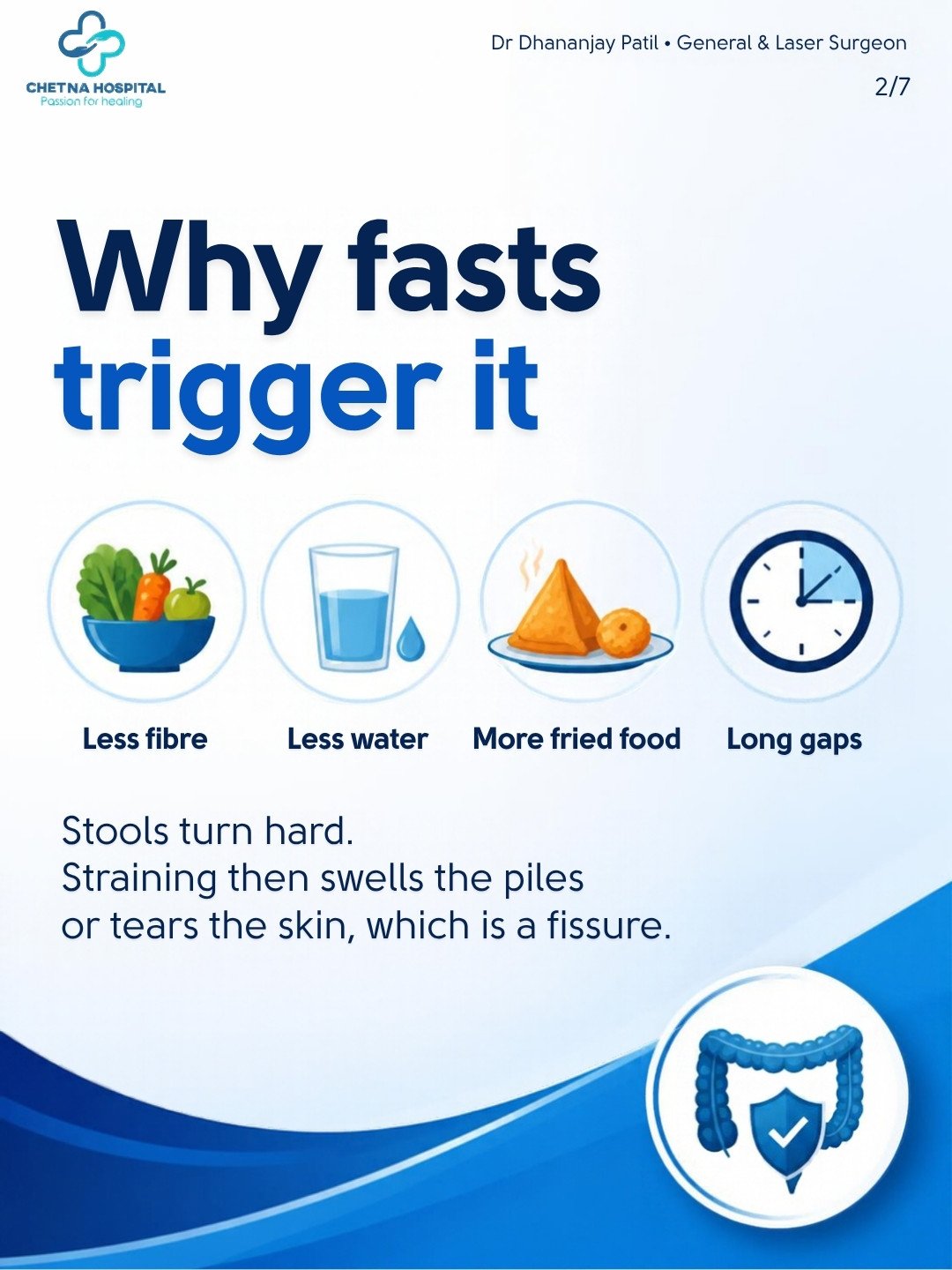
The fast is not the problem. The plate is. A typical vrat day in Pimpri-Chinchwad looks like this: sabudana khichdi or vada, potatoes, peanuts, fried chips, sweet tea, and long gaps between meals. Four things happen together:
- Less fibre. Wheat, dals and most vegetables go off the menu. Sabudana is almost pure starch.
- Less water. People drink less while fasting, and lose more in the October heat and on the garba ground.
- More fried food. Oily, low-fibre snacks slow the bowel down.
- A changed routine. Late nights and irregular meals upset the body’s usual timing.
The result is hard stools and straining. The US National Institute of Diabetes and Digestive and Kidney Diseases (NIDDK) advises people with piles to limit foods with little or no fibre, such as chips and processed snacks, for exactly this reason.
Piles or fissure: how do I tell the difference?
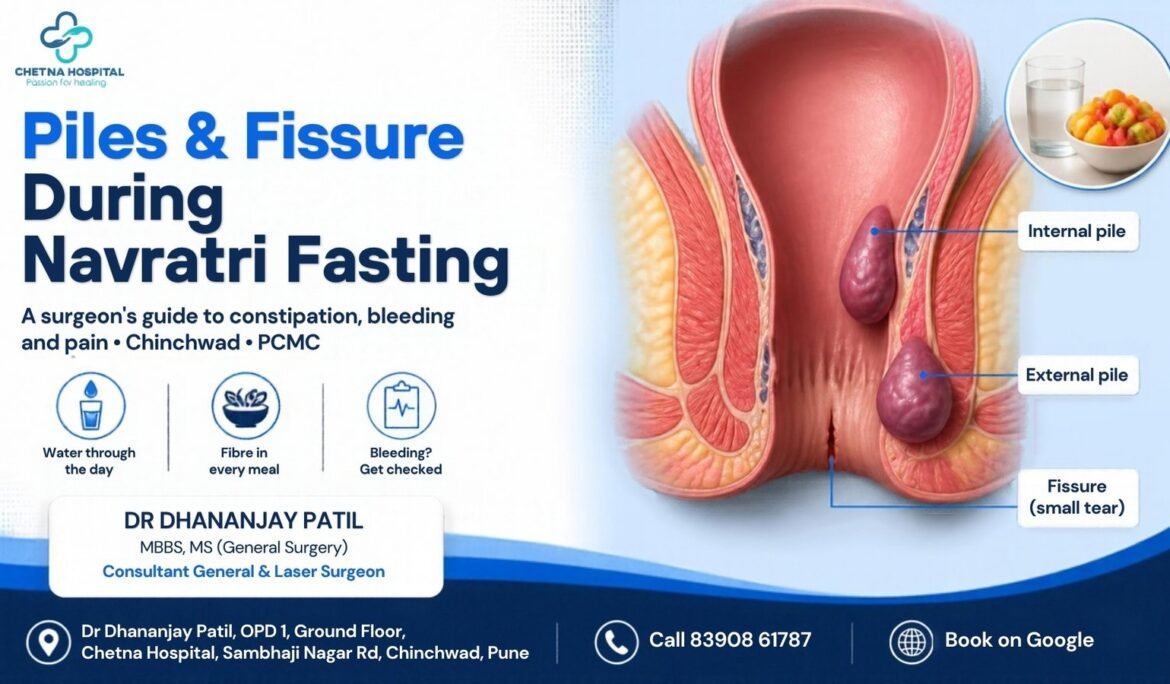
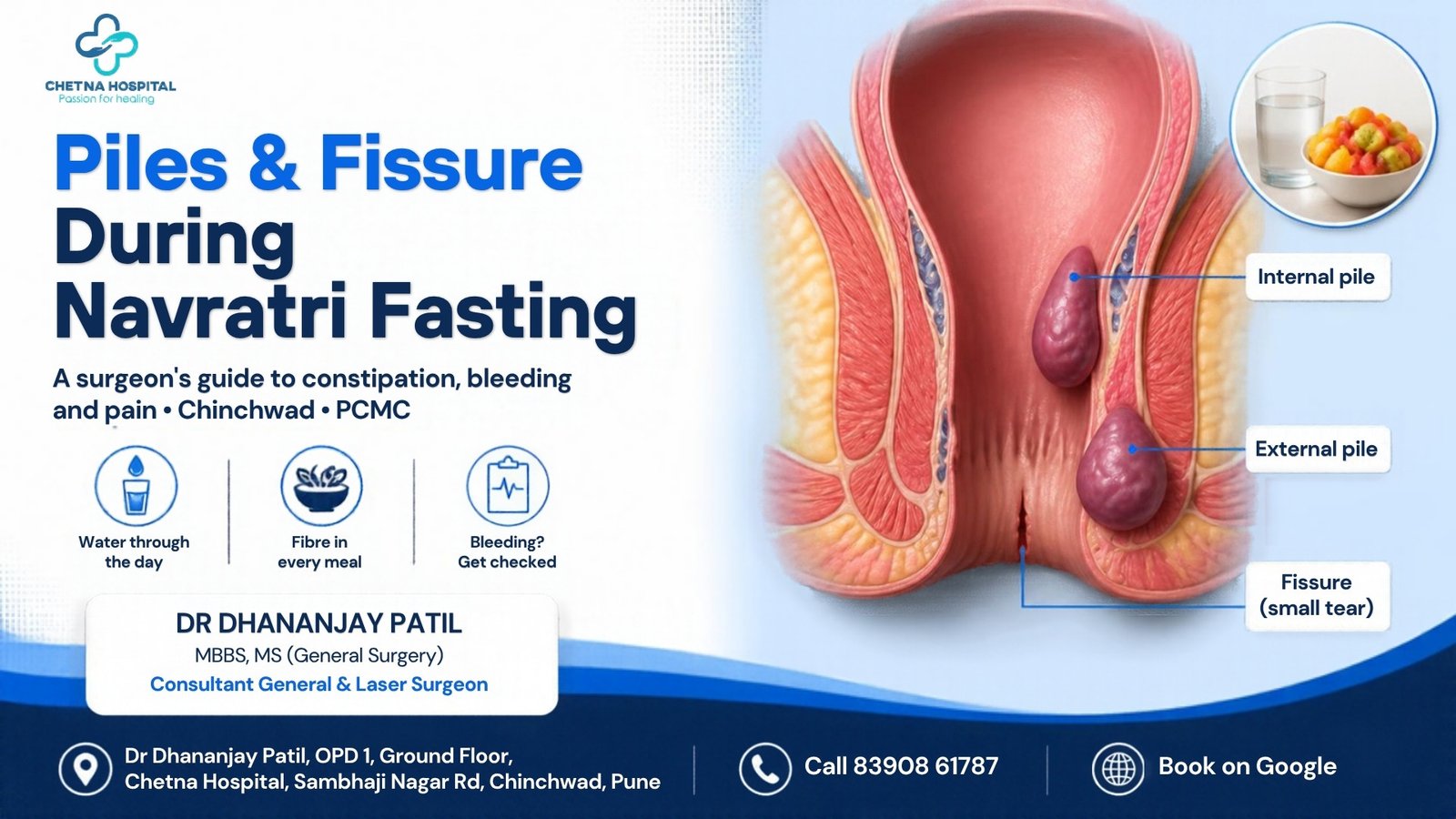
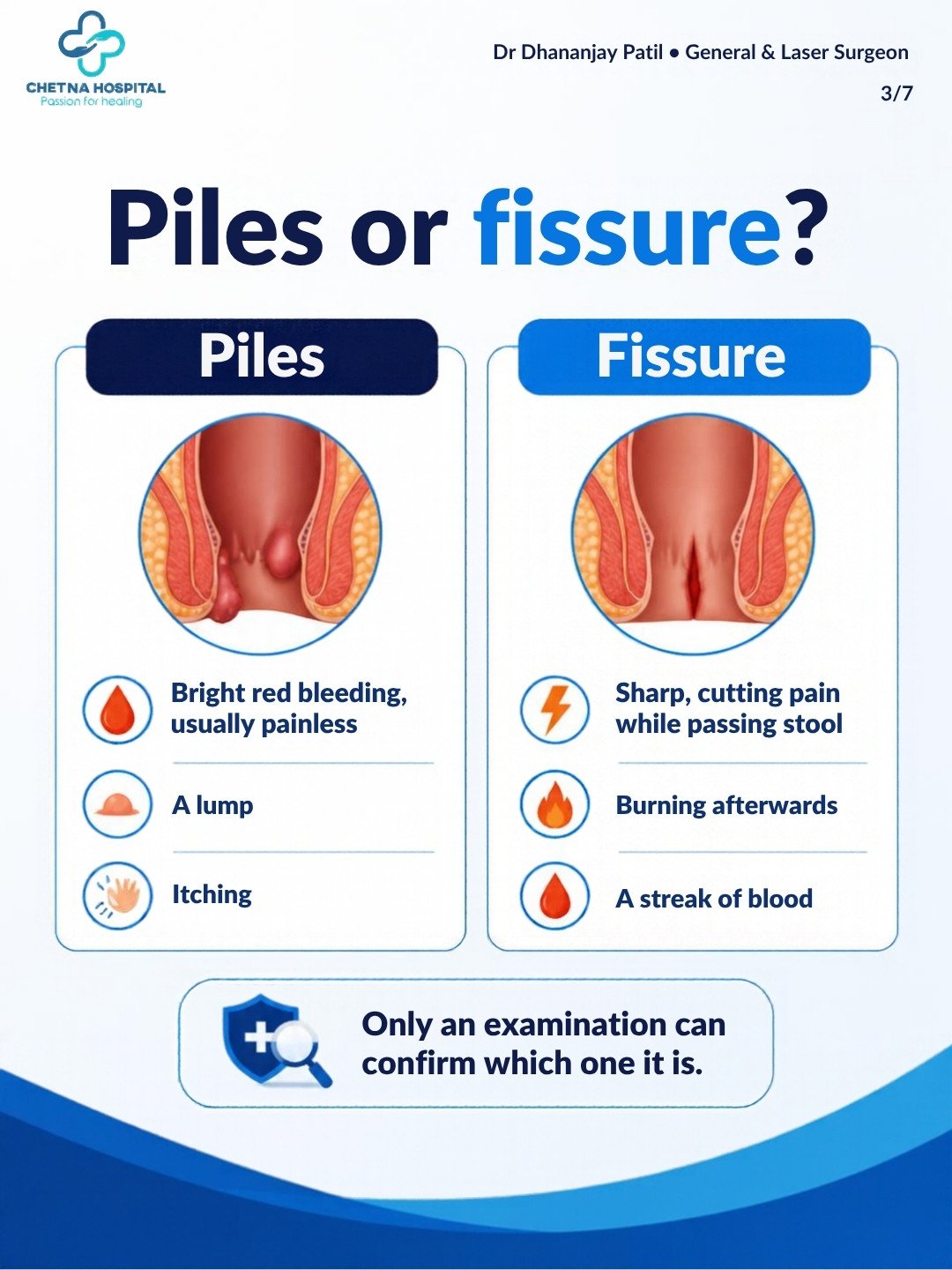
Piles (haemorrhoids)
Piles are swollen blood vessels in and around the anus. The NHS lists the usual symptoms as bright red blood after passing stool, itching, a lump around the anus, mucus, and a feeling that the bowel has not emptied fully. Bleeding from piles is often painless.
Anal fissure
A fissure is a small tear in the skin of the anus, most often caused by passing a hard stool. The NHS describes a severe, sharp pain while passing stool, a burning pain that can last for hours afterwards, and a streak of bright red blood. Patients often tell me it feels like passing glass.
In short: painless bleeding points towards piles, and sharp pain points towards a fissure. Many patients have both, and neither can be confirmed without an examination.
How can I prevent constipation during the fast?
You do not have to give up the vrat. You have to rebuild the plate.
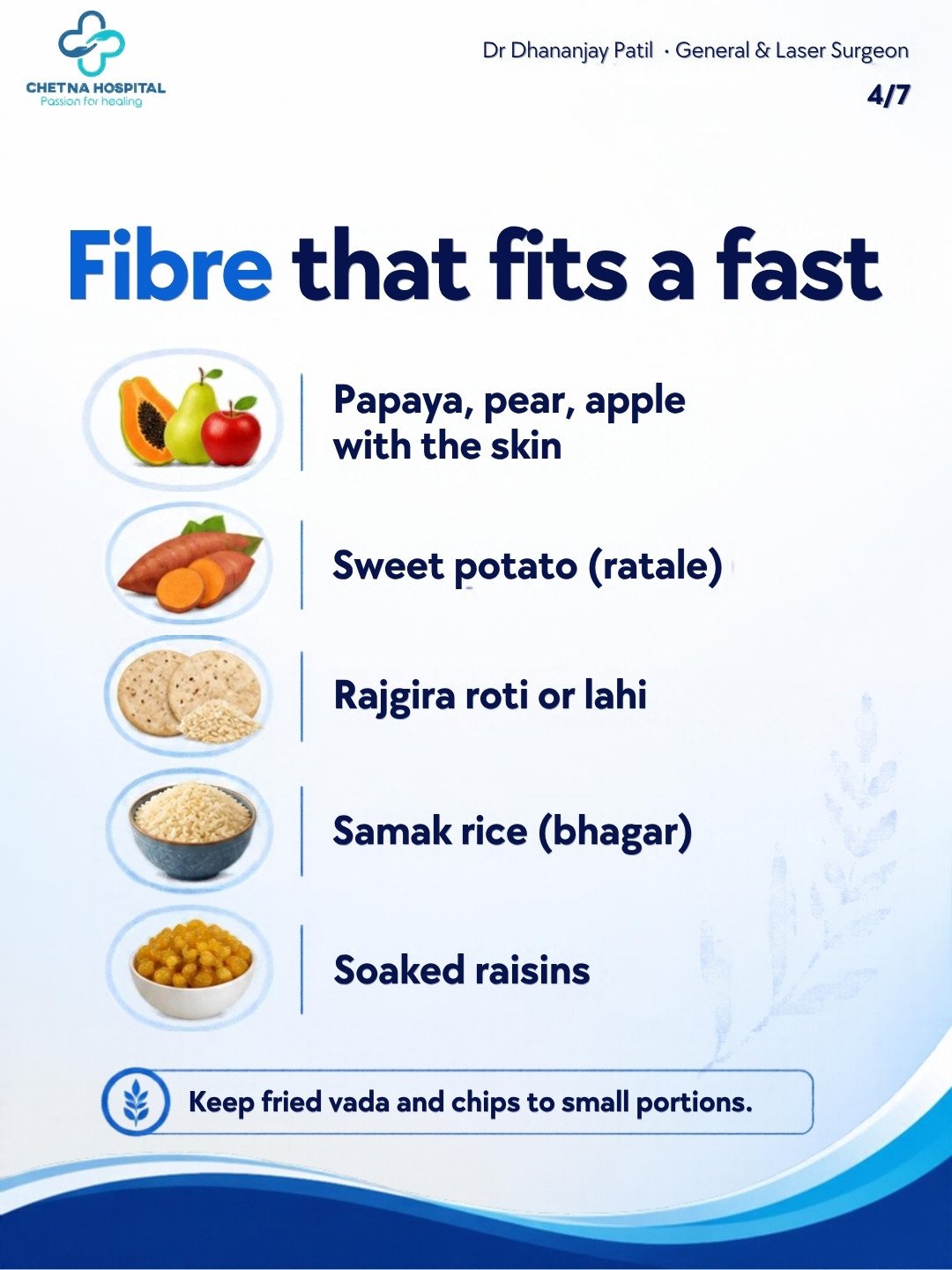
Add fibre that fits a fast
- Fruit with every meal: papaya, pear, apple with the skin, guava.
- Sweet potato (ratale) in place of some of the regular potato.
- Rajgira (amaranth) roti or lahi, and samak rice (bhagar), not only sabudana.
- A few soaked raisins or dates in the morning.
- Keep sabudana vada, chips and other fried items to small portions.
NIDDK notes that general dietary guidelines suggest about 28 grams of fibre a day on a 2,000-calorie diet. Most fasting plates fall far short of that.
Drink through the day
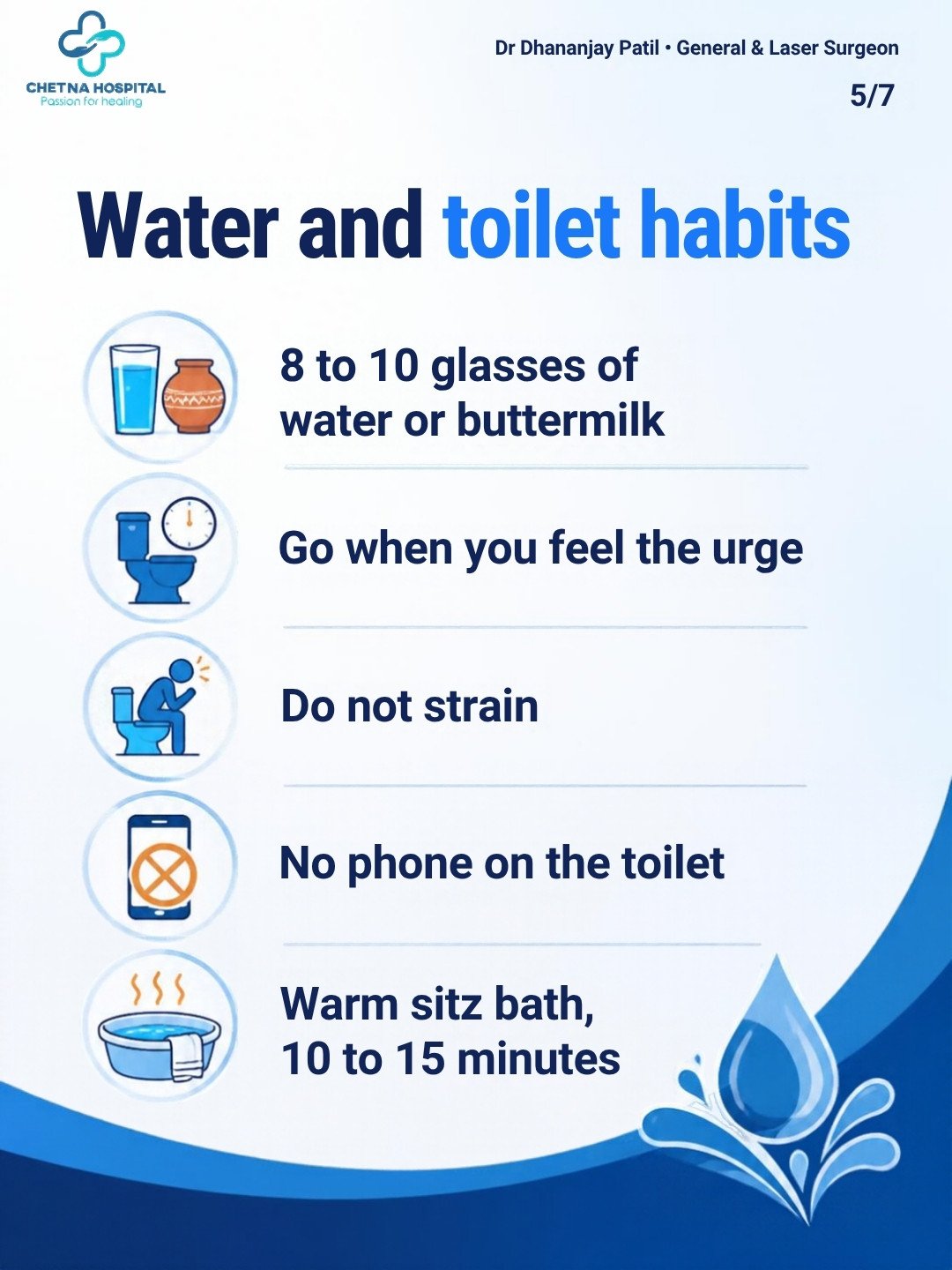
Aim for 8 to 10 glasses of fluid: water, buttermilk, lemon water or thin soups. Fibre without water makes constipation worse, not better. If you have heart or kidney disease and a fluid limit, follow your own doctor’s advice.
Fix the toilet habits
- Go when you feel the urge. Do not hold it through the aarti or the garba.
- Do not strain, and do not sit for long. Leave the phone outside.
- A warm sitz bath for 10 to 15 minutes eases pain and itching.
- Clean gently and pat dry.
If you already have piles, the NHS also advises against painkillers that contain codeine, because they cause constipation.
When should I see a surgeon?
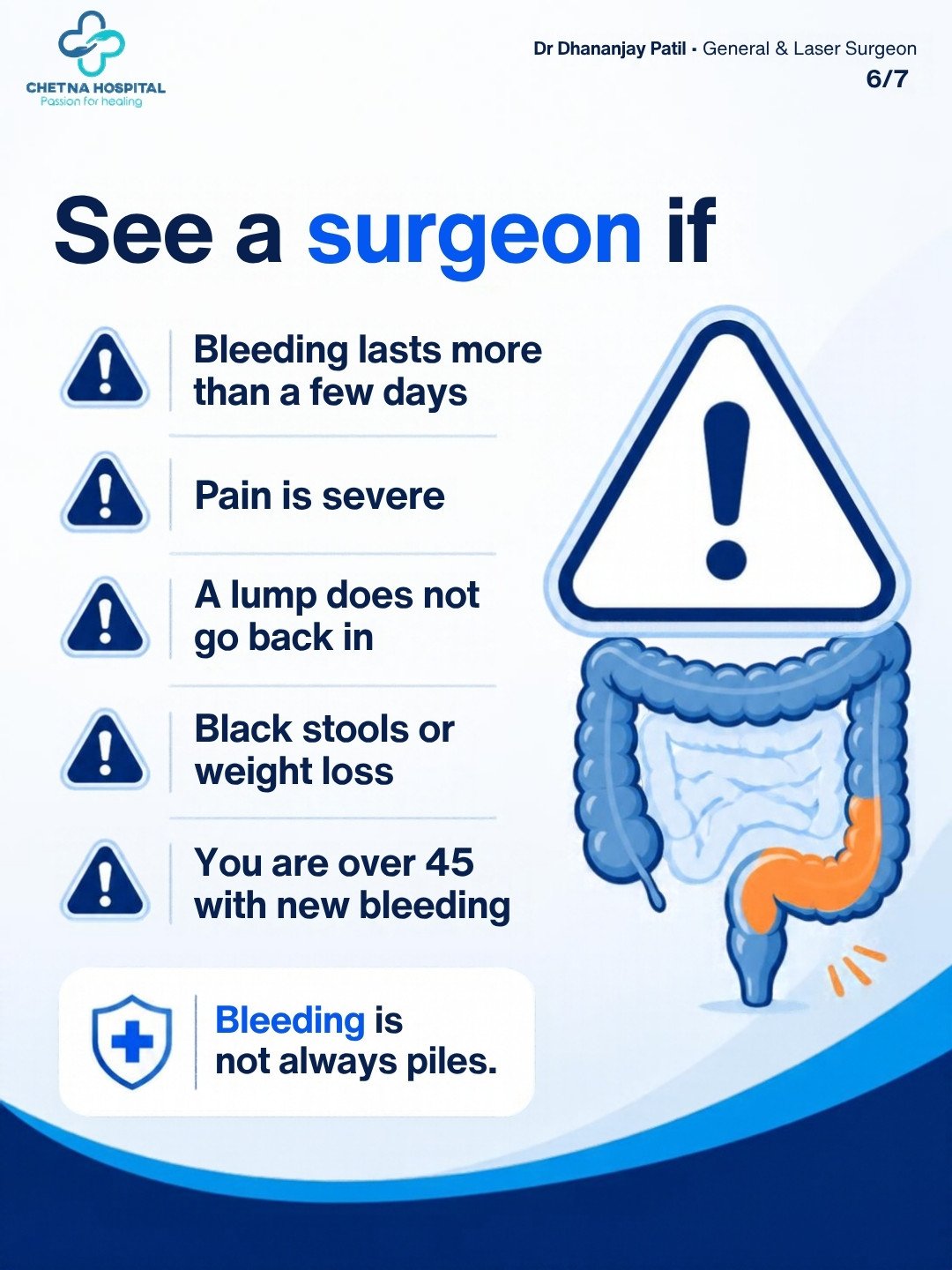
Please do not treat bleeding at home for weeks. Get examined if:
- Bleeding lasts more than a few days, or keeps coming back.
- Pain is not improving after a week of home care.
- A lump comes out and does not go back in.
- You notice black stools, weight loss, a change in bowel habit, or you are over 45 with new bleeding.
- There is fever, pus, or swelling near the anus. This may be an abscess or a fistula.
Heavy bleeding that does not stop, large clots or severe pain need emergency care. Bleeding from the back passage is not always piles, and a simple examination tells us which it is. If your pain is higher up in the abdomen, read our guide on when abdominal pain needs a surgical evaluation.
How are piles and fissure treated?
Most early piles and new fissures heal without surgery. Treatment starts with stool softeners, fibre, fluids, sitz baths and creams prescribed after examination. When piles do not settle, the NHS lists options such as rubber band ligation and sclerotherapy, and surgery such as haemorrhoidectomy for larger piles. A fissure that does not heal may need a procedure to relax the anal muscle.
[Dr Dhananjay: confirm which piles and fissure procedures you offer at Chetna Hospital, including laser, and the usual hospital stay, before publishing.]
Which treatment suits you depends on the grade of the piles and on your general health. That is decided in the clinic, not from a price list. You can read about our wider general surgery services and laparoscopic surgery at Chetna Hospital.
Save this: the Navratri gut-care checklist
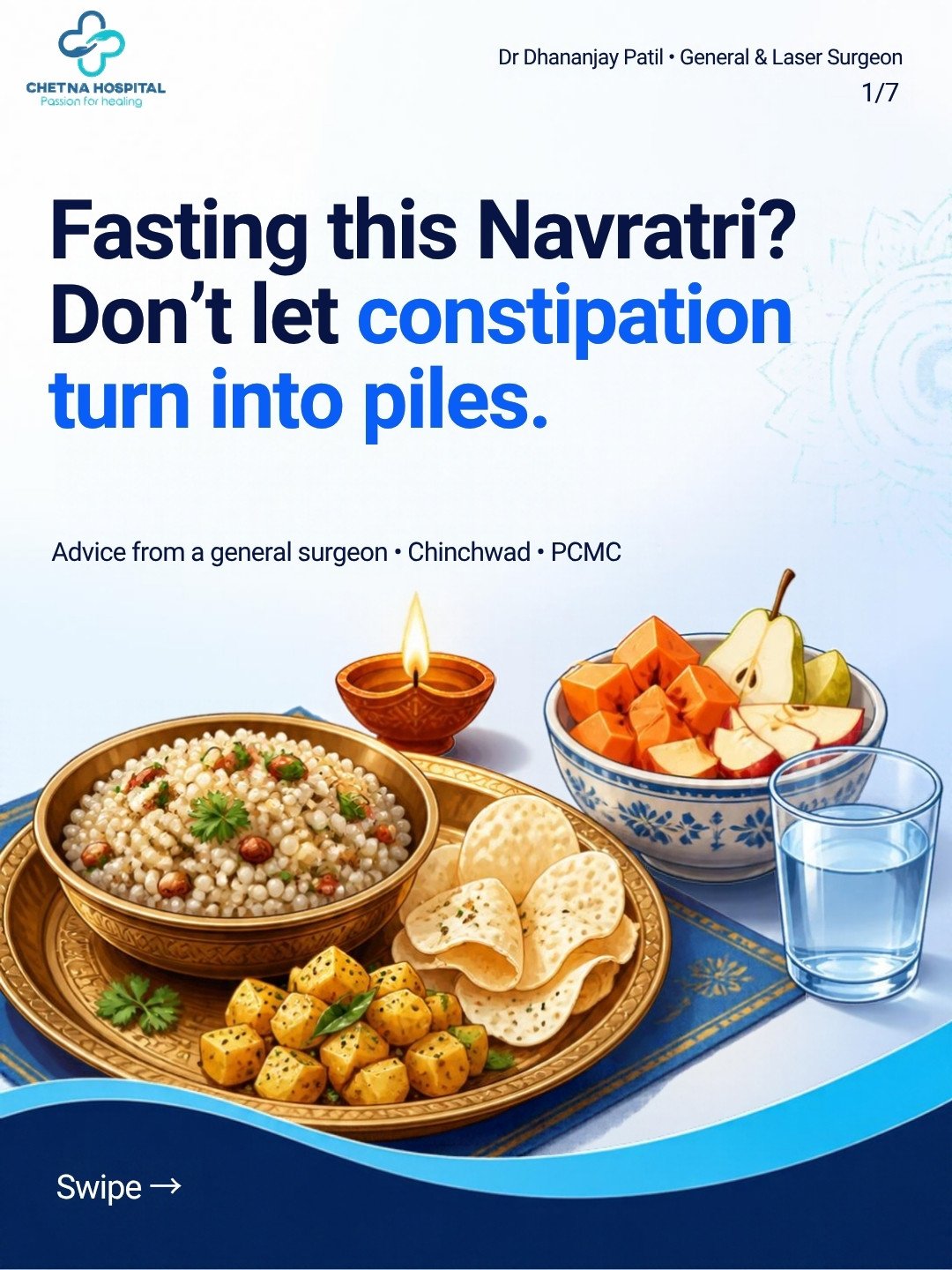
These slides are from our Instagram carousel. Save them for the nine days.
What patients say
Excerpts from Google reviews on Dr Dhananjay Patil’s profile:
⭐⭐⭐⭐⭐
“My father was suffering from severe piles with bleeding. Dr. Dhananjay Patil Sir guided us step by step through the treatment process with great patience and care.”
– Imran, about his father, Google review, November 2025
⭐⭐⭐⭐⭐
“He listened to my concerns patiently and explained the condition and treatment options clearly. I liked his straightforward and calm approach.”
– Rekha, Google review, September 2026
Read all reviews on Google → Individual experiences vary.
Consultation near you: piles and fissure care in Chinchwad, PCMC
Dr Dhananjay Patil sees patients at OPD 1, Ground Floor, Chetna Hospital, Sambhaji Nagar Road, next to Pimpri Chinchwad Sahakari Bank, Sambhajinagar, Chinchwad, Pune 411019. OPD hours are Monday to Saturday, 10 am to 1 pm and 5 pm to 9 pm. Patients come from Chinchwad, Pimpri, Akurdi, Nigdi, Ravet, Wakad, Hinjewadi, Pimple Saudagar, Thergaon, Tathawade, Punawale, Moshi and Bhosari. He also treats hernia, and you can read his guide to hernia symptoms, causes and surgery.
Frequently asked questions
Can fasting cause piles?
Fasting does not cause piles directly. A fasting diet that is low in fibre and water and high in fried food can cause constipation, and straining to pass hard stools can make existing piles swell and bleed. Drinking enough water and adding fruit and other fibre to vrat meals lowers the risk.
How do I know if it is piles or a fissure?
Piles usually cause bright red bleeding that is painless, along with a lump or itching around the anus. A fissure is a small tear that causes sharp, cutting pain while passing stool and a burning pain that can last for hours afterwards. Only an examination can confirm which one you have.
Which vrat foods help prevent constipation?
Fruits such as papaya, pear and apple with the skin, sweet potato, rajgira (amaranth) and soaked raisins add fibre to a fasting diet. Have them with 8 to 10 glasses of fluid such as water, buttermilk or lemon water. Keep fried sabudana vada, chips and other fried snacks for small portions.
When should I see a doctor for bleeding while passing stool?
See a doctor if bleeding lasts more than a few days, keeps coming back, or comes with severe pain, a lump that does not go back in, black stools, weight loss or a change in bowel habit. Heavy bleeding that does not stop needs emergency care. Bleeding is not always from piles, so it should be examined.
Where can I get piles or fissure treatment in Chinchwad, PCMC?
Dr Dhananjay Patil, Consultant General Surgeon (MBBS, MS General Surgery), sees patients with piles, fissure and fistula at OPD 1, Ground Floor, Chetna Hospital, Sambhaji Nagar Road, Chinchwad, Pune 411019. Call or WhatsApp 83908 61787 to book a consultation.
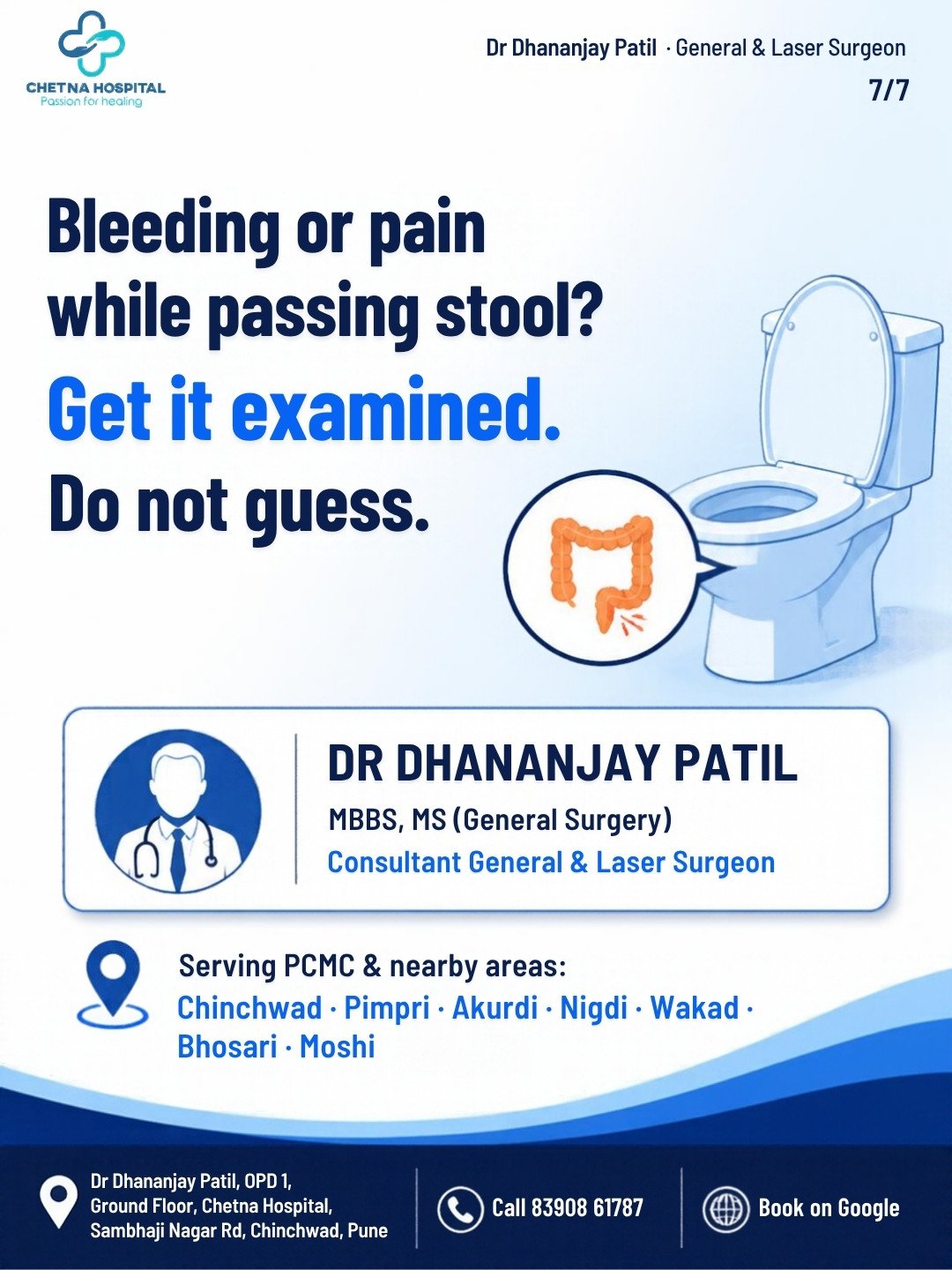
Bleeding or pain while passing stool? Get it examined. Do not guess.
OPD 1, Ground Floor, Chetna Hospital, Sambhaji Nagar Road, next to Pimpri Chinchwad Sahakari Bank, Chinchwad, Pune 411019
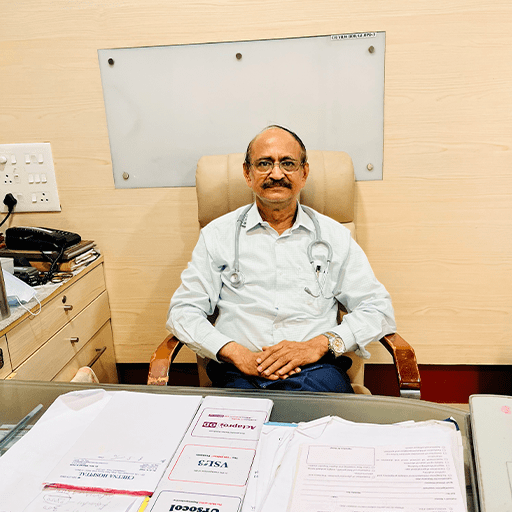
About the author: Dr Dhananjay Patil
Consultant General Surgeon
MBBS, MS (General Surgery)
Piles, fissure, fistula, hernia, gallbladder and general surgery at Chetna Hospital, Chinchwad. View full profile
Medically reviewed by Dr Dhananjay Patil. Last updated 11 October 2026.
Sources
- NHS. Piles (haemorrhoids).
- NHS. Anal fissure.
- National Institute of Diabetes and Digestive and Kidney Diseases (NIDDK). Eating, diet and nutrition for hemorrhoids.
This article is general health information and does not replace a consultation. Bleeding or pain while passing stool should be examined by a doctor.