Scoliosis Treatment in Pimpri Chinchwad
What is Scoliosis?
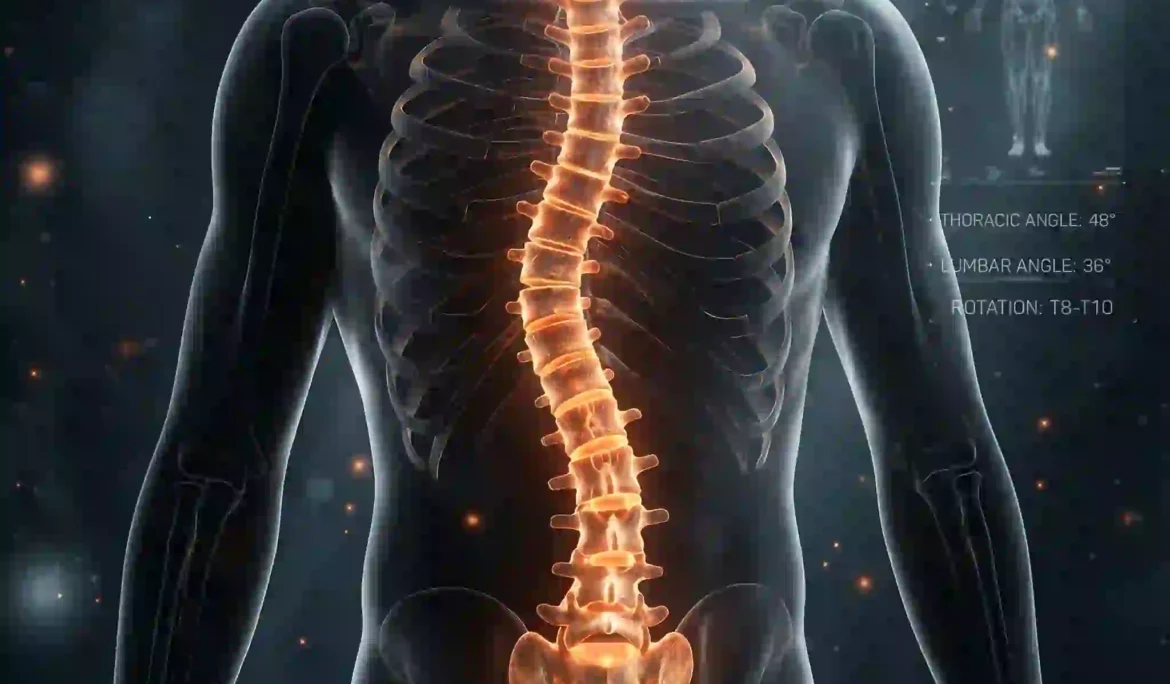
A spine specialist in Pimpri Chinchwad for Scoliosis is a condition where the spine curves sideways, often forming an “S” or “C” shape instead of remaining straight. But this isn’t just a simple bend—it’s a complex, three-dimensional spinal deformity that can also involve rotation of the vertebrae. This rotation can affect posture, balance, and in severe cases, even lung and heart function. Globally, scoliosis affects about 2–3% of people, and awareness is steadily increasing in urban regions like Pimpri Chinchwad due to better diagnostics and healthcare access.
In its early stages, scoliosis may not cause pain, which makes it easy to ignore. A child may continue normal activities without realizing anything is wrong, while subtle signs like uneven shoulders or a tilted waist go unnoticed. Over time, however, the curvature can worsen, leading to visible deformity and discomfort. That’s why early detection is key—it’s like spotting a crack in a wall before it spreads.
When it comes to accurate diagnosis and treatment, consulting a spine specialist in Pimpri Chinchwad is essential. Dr. Nirmal Patil, a highly trained orthopedic and minimally invasive spine surgeon, provides comprehensive evaluation and patient-centered care. His Experience-driven approach, combined with advanced surgical expertise, ensures precise diagnosis and effective treatment planning, building trust among patients across PCMC.
“Chetna Hospital is centrally located in Chinchwad, making us the preferred spine clinic for patients in Nigdi, Akurdi, and Sambhaji Nagar (within 5 km). For those traveling from Wakad, Hinjewadi, Ravet, or Bhosari, our facility is easily accessible via the Old Pune-Mumbai Highway, offering specialized scoliosis screening and non-surgical management.
Types of Scoliosis
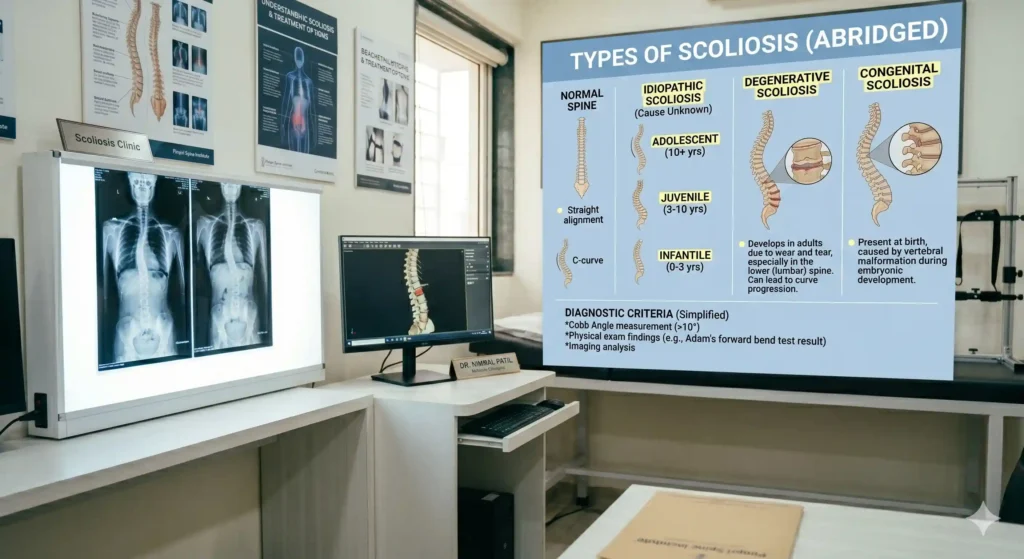
Common and Rare Forms
Scoliosis comes in several forms, each with its own cause and progression pattern. The most common type is idiopathic scoliosis, which accounts for nearly 80% of cases. It typically develops during adolescence, especially during growth spurts, and its exact cause remains unknown.
Other types include congenital scoliosis, present at birth due to spinal abnormalities, and neuromuscular scoliosis, which develops in individuals with conditions like cerebral palsy. Adults often experience degenerative scoliosis, which occurs due to aging, disc degeneration, and spinal wear and tear—something increasingly seen in people with sedentary lifestyles.
A more complex form is rotoscoliosis, where the spine not only curves but also rotates. This can lead to pain and nerve compression, making it more challenging to treat. Identifying the exact type of scoliosis is crucial because each requires a different treatment approach.
At Chetna Hospital, Chinchwad, patients benefit from evidence-based diagnosis and customized treatment plans. Dr. Nirmal Patil’s Authoritative clinical practice, supported by international fellowships and modern techniques, reflects strong medical credibility and patient trust, which are essential pillars of effective spine care.
Located at Chetna Superspeciality Hospital near Sahakari Bank, MIDC, Sambhajinagar, Chinchwad, the clinic of Dr. Nirmal Patil – Spine Specialist in Pimpri Chinchwad is strategically accessible within a 5 km radius, covering key nearby areas like Pimpri, Chinchwad Gaon, Ajmera Colony, Kalewadi, and Thergaon. Patients from these localities benefit from quick access to advanced scoliosis and spine care without the hassle of long-distance travel. This proximity ensures timely consultations, faster diagnosis, and continuity of care, which is especially important for conditions like scoliosis that require regular monitoring.
| Feature | Scoliosis Treatment at Chetna Hospital |
| Lead Specialist | Dr. Nirmal Patil (MBBS, MS, MRCS UK) |
| Primary Location | Chinchwad, Pimpri-Chinchwad (PCMC) |
| Diagnostic Tools | Digital X-Ray, Posture Analysis |
| Treatment Types | Bracing, Physical Therapy, Spinal Fusion Surgery |
| Radius Served | 15 km (Nigdi, Akurdi, Wakad, Sangvi, Ravet) |
Why Does Scoliosis Happen?
Root Causes and Risk Factors
The causes of scoliosis can vary depending on the type. In idiopathic scoliosis, the exact cause is still unknown, but genetic factors are believed to play a role. If someone in your family has scoliosis, your chances of developing it increase significantly. Growth spurts during adolescence are another major trigger, as the spine grows rapidly and may develop unevenly.
Lifestyle factors also contribute indirectly. Poor posture, long hours of sitting, lack of physical activity, and improper ergonomics can worsen spinal alignment over time. While these may not directly cause scoliosis, they can accelerate its progression.
Risk factors include age (especially 10–15 years), female gender (higher risk of progression), and underlying neuromuscular conditions. In severe cases, scoliosis can affect organs such as the lungs by restricting chest space, leading to breathing difficulties.
Signs and Symptoms of Scoliosis
Early Signs to know about scoliosis and find a spine specialist in Pimpri Chinchwad
Early detection of scoliosis can prevent long-term complications. Common signs include uneven shoulders, one hip higher than the other, and a noticeable tilt in posture. Clothes may not fit evenly, and the body may lean slightly to one side.
A simple forward bend test can reveal asymmetry in the back or rib cage. These signs are often subtle but should not be ignored, especially in growing children.
Severe and Stage 4 Symptoms
In advanced stages, such as Stage 4 scoliosis, the curvature exceeds 40 degrees. This can lead to chronic back pain, reduced mobility, and nerve-related symptoms like numbness or tingling. Severe scoliosis may also affect breathing due to reduced lung capacity.
Diagnosis of Scoliosis
Diagnosing scoliosis starts with a detailed physical examination, where the doctor checks posture, spinal alignment, and visible asymmetry. Doctors then use imaging tests like X-rays to confirm the diagnosis and measure the spinal curve accurately. They calculate the Cobb angle to determine the severity of the condition and guide treatment decisions. In more complex cases, specialists may recommend MRI or CT scans to evaluate nerve involvement or underlying structural issues.
At advanced centers like Chetna Hospital, Chinchwad, modern imaging ensures accurate diagnosis. Dr. Nirmal Patil’s Trustworthy patient care approach, combined with transparent communication and precise surgical planning, ensures patients feel confident and informed throughout their treatment journey, which is essential for long-term outcomes.
Expanding to a 10 km radius, the clinic serves a wider population across Wakad, Hinjewadi Phase 1, Tathawade, Ravet, Nigdi, Akurdi, and Pimple Saudagar. These rapidly developing residential and IT hub areas often see lifestyle-related spine issues due to prolonged sitting and the work-from-home culture. Having a highly qualified spine specialist in Chinchwad within this distance allows working professionals and families to access expert care conveniently. The connectivity via major roads like the Mumbai-Pune Highway further enhances ease of travel for patients seeking specialized spine treatment.
Stages and Severity
5 Stages Explained
| Stage | Cobb Angle | Severity |
|---|---|---|
| Stage 1 | 0–10° | Minimal |
| Stage 2 | 10–25° | Mild |
| Stage 3 | 25–40° | Moderate |
| Stage 4 | 40–50° | Severe |
| Stage 5 | >50° | Very Severe |
Each stage requires a tailored treatment approach, ranging from observation to surgery.
Is Scoliosis Curable?
Truth About Cure
Scoliosis is not always fully curable, especially structural types. However, it is highly manageable. Early treatment can prevent progression and significantly improve quality of life. Non-structural scoliosis may be reversible with proper therapy.
Treatment Options
Non-Surgical Care
Non-surgical treatments include physiotherapy, bracing, and posture correction exercises. These methods are effective for mild to moderate cases and focus on strengthening muscles and improving alignment.
Minimally Invasive Surgery
For severe cases, surgery may be required. Techniques like ALIF, XLIF, and disc arthroplasty offer advanced solutions with smaller incisions and faster recovery. These procedures are performed by experienced specialists like Dr. Nirmal Patil in PCMC.
Living with Scoliosis
Lifestyle Adjustments
Living with scoliosis involves maintaining an active lifestyle, practicing good posture, and avoiding prolonged sitting. Regular exercise and core strengthening can help manage symptoms effectively.
Best Sleeping Positions
Sleeping on your back or side with proper support helps maintain spinal alignment. Avoid soft mattresses that can worsen curvature.
Prevention
While not all cases can be prevented, early detection and healthy habits can reduce progression risk. Regular screenings are especially important for children.
Why Choose Dr. Nirmal Patil in PCMC?
Dr. Nirmal Patil is a leading spine specialist in Pimpri Chinchwad, offering advanced care at Chetna Superspeciality Hospital. With international training and expertise in minimally invasive spine surgery, he provides effective and patient-focused treatment.
Book a Scoliosis Consultation in Chinchwad: Call 9158680739 or Click here for Directions from Nigdi/Wakad.
- Chetna Hospital, Chinchwad –
9158680739 / 9158681123 - Website: www.chetnahospital.co.in
Within a broader 15 km radius of PCMC, patients from Baner, Balewadi, Punawale, Talawade, Chikhali, Moshi, Bhosari, and Dapodi can also reach Chetna Hospital comfortably. This extended coverage ensures that advanced spine and scoliosis treatment is not limited to central Pimpri-Chinchwad but is accessible across surrounding urban and semi-urban areas. With growing awareness and demand for minimally invasive spine surgery, patients across this radius increasingly prefer consulting Dr. Nirmal Patil for his expertise, precision-based treatment approach, and trusted care in managing complex spinal conditions.
Conclusion
Scoliosis may seem complex, but with early diagnosis and expert care, it can be effectively managed. Whether through non-surgical methods or advanced minimally invasive procedures, the right treatment approach can significantly improve quality of life. Consulting a trusted spine specialist ensures better outcomes and long-term spinal health.
FAQs
There is no single cure, but early treatment provides the best results.
No, but it can be effectively managed.
Dr. Nirmal Patil at Chetna Hospital, Chinchwad, is a highly-rated spine specialist with expertise in both pediatric and adult scoliosis treatments.
Severe scoliosis can affect the lungs and heart.
Sleeping on the back or side with proper support is recommended.
Residents of Nigdi and Akurdi can visit Chetna Hospital in Chinchwad (less than 10 mins away) for a comprehensive clinical evaluation.
Yes, we offer bracing and specialized physiotherapy for early-stage scoliosis at our Chinchwad center.