








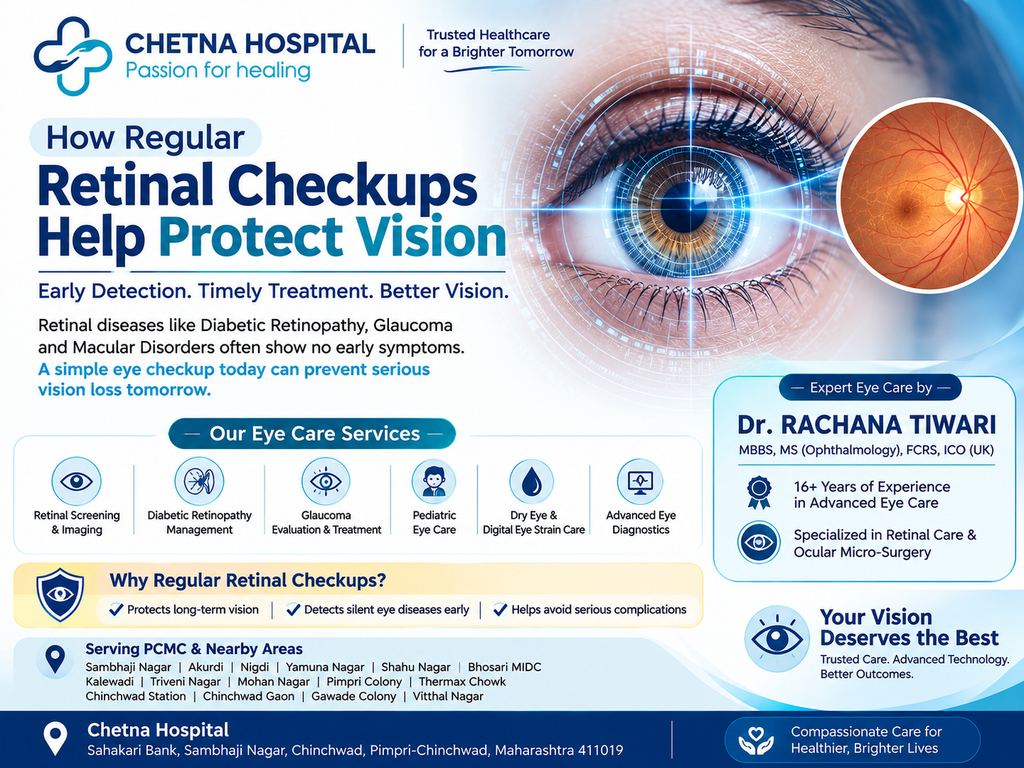
Your eyes play an important role in your daily life, but some eye conditions can develop gradually without causing noticeable symptoms in the early stages. Regular eye examinations and retinal evaluations, when recommended by an ophthalmologist, can help identify changes affecting the retina and support timely medical care.
The retina is a light-sensitive layer at the back of the eye that plays an essential role in vision. Conditions such as diabetic retinopathy, retinal disorders, and age-related eye changes can affect retinal health and may require regular monitoring.
For people living in Chinchwad, Pimpri-Chinchwad and nearby areas of Pune, regular eye checkups with an ophthalmologist can help identify vision concerns and determine whether additional retinal testing is required.
Quick Answer
Regular retinal checkups allow an ophthalmologist to examine the retina for abnormalities that may not cause noticeable symptoms in the early stages. Retinal evaluation can be particularly important for people with diabetes, high blood pressure, increasing age, a family history of certain eye diseases, or existing eye problems.
If you experience sudden flashes of light, a sudden increase in floaters, a curtain-like shadow over your vision, or sudden vision loss, seek prompt ophthalmic assessment.
For patients looking for an eye specialist in Chinchwad, Pune, Dr. Rachana Tiwari provides ophthalmic consultation at Chetna Hospital.
Medically Reviewed By
Dr. Rachana Tiwari
Consultant Ophthalmologist & Phaco-Refractive Surgeon
Chetna Hospital, Chinchwad, Pune
Qualifications: MBBS, MS Ophthalmology, FCRS, ICO (UK)
Dr. Rachana Tiwari provides ophthalmic care for various eye-health concerns, including comprehensive eye evaluation, cataract-related care, refractive eye care, dry eye, glaucoma and diabetic eye-related evaluation.
This article is for general educational purposes and does not replace an individual eye examination, diagnosis or medical advice from a qualified ophthalmologist.
What Is a Retinal Checkup?
A retinal checkup is an eye examination that focuses on the retina and other structures located at the back of the eye.
The retina receives light and converts it into signals that are transmitted to the brain through the optic nerve. Changes affecting the retina can sometimes cause blurred vision, distorted vision, blind spots or vision loss.
During a retinal examination, an ophthalmologist may use specialized instruments to examine the inside of the eye. Depending on your symptoms and risk factors, additional tests such as retinal photography or optical coherence tomography (OCT) may be recommended.
Why Are Regular Retinal Checkups Important?
Regular eye examinations can help identify changes in eye health and determine whether further investigation or monitoring is required.
Some Retinal Problems May Have Few Early Symptoms
Certain retinal conditions can develop before a person notices significant vision changes. Regular examinations can help an ophthalmologist identify abnormalities and decide whether further evaluation is necessary.
Retinal Health Can Be Affected by Diabetes
Diabetes can affect the small blood vessels supplying the retina and may lead to diabetic retinopathy.
People with diabetes should follow the eye-screening schedule recommended by their healthcare professional, even when their vision appears normal.
Retinal Changes Can Occur With Increasing Age
The risk of several eye conditions increases with age. Regular eye examinations can help monitor age-related changes and identify conditions that may require further assessment.
High Blood Pressure Can Affect Retinal Blood Vessels
Long-term high blood pressure can affect blood vessels throughout the body, including those supplying the retina.
An ophthalmologist may identify retinal vascular changes during an eye examination and recommend appropriate medical follow-up when required.
What Can a Retinal Examination Help Detect?
A retinal examination can help an ophthalmologist assess the retina and identify changes associated with various eye conditions.
Diabetic Retinopathy
Diabetic retinopathy is a diabetes-related eye condition that can damage blood vessels in the retina. It may affect vision as the condition progresses.
Regular eye examinations are an important part of diabetes-related eye care.
Age-Related Macular Degeneration
Age-related macular degeneration affects the macula, the central area of the retina responsible for detailed central vision.
It can cause changes in activities such as reading, recognizing faces and seeing fine details.
Retinal Detachment
Retinal detachment occurs when the retina separates from its normal position.
Symptoms can include sudden flashes, a sudden increase in floaters or a curtain-like shadow across the field of vision. Retinal detachment requires urgent medical assessment.
Retinal Blood Vessel Changes
Changes in retinal blood vessels can occur in association with conditions such as diabetes and high blood pressure.
An ophthalmologist can assess these changes and determine whether additional investigation or follow-up is needed.
Macular Disorders
The macula is responsible for sharp central vision. Conditions affecting the macula may cause distorted or reduced central vision.
Who Should Consider Regular Retinal Checkups?
Regular retinal evaluation may be particularly important for:
- People with diabetes
- People with high blood pressure
- Older adults
- People with certain family histories of eye disease
- People experiencing changes in vision
- People with existing retinal or macular conditions
- People who have experienced significant eye trauma
- Patients who have been advised by an ophthalmologist to undergo periodic retinal monitoring
The appropriate frequency of eye examinations varies from person to person. Your ophthalmologist can recommend an examination schedule based on your age, medical history, symptoms and individual risk factors.
What Symptoms Should Not Be Ignored?
Certain changes in vision require prompt medical assessment.
Watch for:
- Sudden blurred vision
- Sudden loss of vision
- New flashes of light
- A sudden increase in floaters
- A dark curtain or shadow across your vision
- Distorted central vision
- Difficulty reading
- Difficulty recognizing faces
- New or unexplained changes in one or both eyes
Sudden Vision Changes Need Urgent Attention
Sudden flashes, a sudden increase in floaters, a curtain-like shadow or sudden vision loss can be warning signs of a retinal problem.
Do not wait for a routine eye appointment if these symptoms develop suddenly. Seek urgent ophthalmic assessment.
What Happens During a Retinal Checkup?
The exact examination depends on your symptoms, age, medical history and risk factors.
Vision Assessment
The ophthalmologist may first assess your visual acuity and ask questions about your vision and any recent changes.
Eye Examination
The doctor may examine the front and internal structures of the eye using specialized ophthalmic instruments.
Pupil Dilation When Required
Eye drops may be used to dilate the pupils when a more detailed view of the retina is required.
Retinal Imaging and Additional Tests
Depending on the findings, the ophthalmologist may recommend retinal photographs, OCT or other diagnostic tests.
These tests help the doctor evaluate specific structures of the eye and determine whether monitoring or treatment is needed.
How Often Should You Have a Retinal Checkup?
There is no single retinal examination schedule that is suitable for everyone.
The recommended frequency may depend on:
- Age
- Diabetes
- Blood pressure
- Family history
- Existing eye conditions
- Previous eye surgery or injury
- Current vision symptoms
- Findings from previous examinations
Your ophthalmologist can recommend an appropriate schedule based on your individual eye health and risk factors.
Why Are Retinal Checkups Important for People With Diabetes?
Diabetes is an important risk factor for retinal disease.
Over time, high blood glucose levels can damage the small blood vessels in the retina and contribute to diabetic retinopathy.
Importantly, diabetic eye disease may not cause obvious vision changes in its early stages. Following recommended eye examinations can therefore be an important part of diabetes care.
People with diabetes should discuss their eye-screening schedule with their healthcare professional.
How Can You Help Protect Your Retinal Health?
Regular eye examinations are one part of maintaining good eye health.
Manage Diabetes and Blood Pressure
If you have diabetes or high blood pressure, follow your healthcare professional’s recommendations for managing these conditions.
Avoid Smoking
Smoking is associated with an increased risk of several serious eye conditions. If you smoke, speak with a healthcare professional about quitting.
Follow Your Ophthalmologist’s Recommendations
If your ophthalmologist recommends follow-up examinations, diagnostic tests or treatment, follow the recommended schedule.
Pay Attention to Vision Changes
Do not ignore sudden or unexplained changes in your vision. Prompt evaluation can help determine the cause.
When Should You See an Eye Specialist?
Arrange an eye examination if you experience persistent, unexplained or changing vision symptoms.
You should seek urgent ophthalmic care for sudden vision loss, sudden flashes of light, a sudden increase in floaters or a curtain-like shadow across your vision.
For routine eye screening and retinal monitoring, an ophthalmologist can determine which examinations are appropriate based on your individual needs.
Retinal Checkup in Chinchwad, Pune
If you are searching for an eye specialist in Chinchwad or Pimpri-Chinchwad, a comprehensive eye examination can help assess your vision and determine whether retinal evaluation is required.
Dr. Rachana Tiwari is a Consultant Ophthalmologist & Phaco-Refractive Surgeon consulting at Chetna Hospital in Chinchwad.
Patients can consult an ophthalmologist for concerns related to vision, cataracts, refractive problems, dry eye, glaucoma, diabetic eye concerns and other eye-health issues.
Chetna Multispeciality Hospital in Chinchwad
Address: Consulting 1, Chetna Hospital, Plot No. GP 116, Sambhaji Nagar Road, near Rotary Club, G Block, MIDC, Chinchwad, Pimpri-Chinchwad, Maharashtra 411019.
If you have concerns about your vision or have been advised to undergo retinal monitoring, consult an ophthalmologist for an appropriate eye evaluation.
Frequently Asked Questions About Retinal Checkups
A retinal checkup is an eye examination that evaluates the retina and other structures at the back of the eye for abnormalities or signs of disease.
Some eye conditions may have few noticeable symptoms in their early stages. Your ophthalmologist can determine whether a retinal examination is appropriate based on your age, health history, and risk factors.
People with diabetes, high blood pressure, increasing age, certain family histories of eye disease, existing retinal conditions or vision changes may require regular retinal monitoring.
Flashes and floaters can have different causes. However, sudden flashes or a sudden increase in floaters can sometimes indicate a retinal problem and should be evaluated promptly.
Yes. Diabetes can damage retinal blood vessels and may lead to diabetic retinopathy.
The recommended frequency varies depending on your age, medical history, risk factors, and previous eye examination findings. An ophthalmologist can recommend an appropriate schedule.
Depending on the clinical situation, an ophthalmologist may use a dilated eye examination, retinal photography, OCT, or other diagnostic tests.
Treatment depends on the specific retinal condition, its severity, and the individual patient’s circumstances. An ophthalmologist can determine the appropriate management after examination.
Conclusion
Protecting your vision involves more than waiting until you notice a problem. Regular eye examinations and retinal evaluations when recommended by an ophthalmologist can help monitor retinal health and identify changes that may require further attention.
People with diabetes, high blood pressure, increasing age, certain family histories or existing eye conditions may benefit from regular eye monitoring.
If you experience sudden vision loss, flashes of light, a sudden increase in floaters or a curtain-like shadow over your vision, seek urgent ophthalmic assessment.
For routine eye care and retinal evaluation in Chinchwad and Pimpri-Chinchwad, Pune, consult an ophthalmologist to understand which examinations are appropriate for your eye health.
Dr. Rachana Tiwari is available for ophthalmic consultation at Chetna Hospital, Chinchwad, Pune.
Book Your Eye Consultation With Dr. Rachana Tiwari
Concerned about your vision or due for a retinal checkup?
📞 Call now: 091686 90442
Book your eye consultation today and discuss your vision concerns with an ophthalmologist.
Appointment form: https://docs.google.com/forms/d/e/1FAIpQLScB89s7otEMPfh99Cg9ikgWytj-04dKi_1dqD_nLrb38-z0WQ/viewform


1 Comment
Wavy Lines in Vision: When I Advise an OCT Scan | Chinchwad - Chetna Hospital
[…] After all, these signs can mean bleeding or a retinal detachment, so do not wait for a routine slot. To learn more, read about retina problems and when to see a retina specialist and why regular retinal check-ups protect your vision. […]