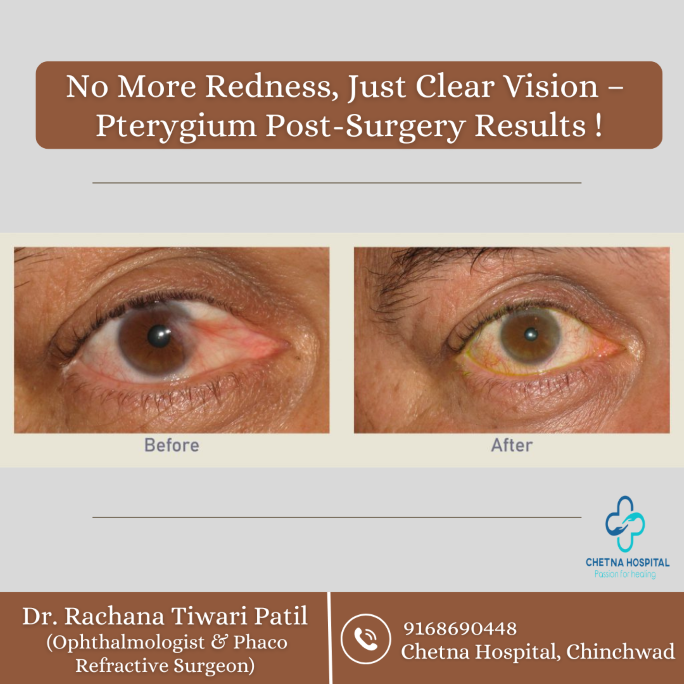
Pterygium, often referred to as “surfer’s eye,” is a common eye condition in which a non-cancerous growth of tissue forms on the conjunctiva (the thin, clear tissue covering the white part of the eye). Many cause no symptoms. Some cause irritation or concerns about appearance, and a large one can blur vision. This guide explains pterygium, its symptoms, treatment options and what to expect from surgery.
What is Pterygium?
Pterygium appears as a fleshy, wedge-shaped growth that typically starts on the nasal side of the eye and extends toward the cornea. It is most often linked to long-term exposure to sunlight (UV light), wind, dust and dry climates. Though it can occur in one or both eyes, it is more common in people who spend a lot of time outdoors.
Symptoms of Pterygium
Many people have no symptoms. When symptoms happen, they may include:
- Redness and inflammation.
- Persistent irritation or a gritty feeling in the eye.
- Dryness due to tear film instability.
- Blurred or distorted vision if the growth spreads onto the cornea or changes its shape (astigmatism).
- Aesthetic concerns as the growth becomes more noticeable.
Causes and Risk Factors
The exact cause of pterygium remains unclear, but several factors contribute to its development, including:
- UV Exposure: Prolonged exposure to sunlight, particularly UV-A and UV-B rays.
- Environmental Irritants: Wind, dust and sand are linked to it.
- Genetics: A family history of pterygium may increase susceptibility.
- Dry Eye Syndrome: Long-term dryness of the eyes can make symptoms worse.
When is Surgery Needed?
Mild pterygium is often managed with lubricating eye drops, or with anti-inflammatory drops prescribed by an eye doctor. Because a pterygium can come back after surgery, surgery is usually considered only when:
- The growth keeps growing over the cornea and affects or may soon affect vision.
- Persistent discomfort that does not improve with medical treatment.
- Its appearance is a major concern.
- Recurring inflammation that disrupts daily activities.
What to Expect During Pterygium Surgery
Pterygium surgery is usually a day-case operation done under local anaesthetic, so you are awake. The steps include:
- Removal of the Growth: The surgeon removes the pterygium tissue.
- Conjunctival Autograft: A small piece of healthy conjunctival tissue, usually from the same eye, is grafted onto the affected area. This lowers the chance of the pterygium coming back.
- Suture or Glue Application: The graft is secured using fine sutures or tissue glue.
The operation usually takes around 30 to 60 minutes. A pterygium that has come back may need a longer operation.
Benefits of Pterygium Surgery
- Vision: Removing a growth that covers the cornea can help vision, though some blur or astigmatism may remain.
- Comfort: Irritation from the growth usually eases once the eye has healed.
- Appearance: The eye usually looks less red once healed, though a faint scar may remain.
- Lower Chance of Return: Using a tissue graft lowers the chance of the pterygium coming back compared with removal alone.
Recovery and Post-Surgical Care
Recovery takes a few weeks. Following the aftercare instructions helps healing.
What to Expect After Surgery:
- Discomfort or a gritty feeling, usually worst in the first 1 to 2 days.
- Redness, which can take several weeks, sometimes months, to settle fully.
- Blurred vision at first, which usually improves as the surface heals.
Tips for a Speedy Recovery:
- Use Your Drops as Prescribed: Use the eye drops your eye doctor prescribes, for as long as advised.
- Protect Your Eyes: Avoid exposure to dust, wind, and sunlight by wearing sunglasses.
- Avoid Rubbing Your Eyes: This can dislodge the graft and delay healing.
- Attend Follow-Up Appointments: Check-ups let your ophthalmologist check healing and look for early regrowth.
Potential Risks and Complications
As with any operation, pterygium surgery carries some risks. Serious complications are rare. Risks include:
- The growth coming back. This happens in roughly 1 in 6 to 1 in 20 people after a first operation, usually within the first year.
- Infection or inflammation.
- Graft displacement.
- Scarring, double vision or vision changes (uncommon).
After surgery, contact the eye team promptly if pain or redness gets worse, your eyesight gets worse, or you see signs of infection such as discharge.
Preventing Pterygium
Protecting your eyes from sunlight is the main way to lower the risk, especially if you spend a lot of time outdoors.
- Wear Sunglasses: Choose UV-protective eyewear when outdoors.
- Use Protective Gear: Goggles can shield your eyes from wind and dust.
- Keep Your Eyes Moisturized: Use artificial tears if you experience dry eyes.
- Limit Sun Exposure: Seek shade during peak sunlight hours.
For a consultation, call the eye care (ophthalmology) department at Chetna Hospital on 91686 90442.
Website – www.chetnahospital.co.in
Address – Chetna Hospital, Sambhajinagar, MIDC, G Block, Near Rotary Club, Chinchwad 411019
General health information, not a diagnosis. Reviewed and updated by Chetna Hospital’s content team with the help of AI writing tools, November 2026.