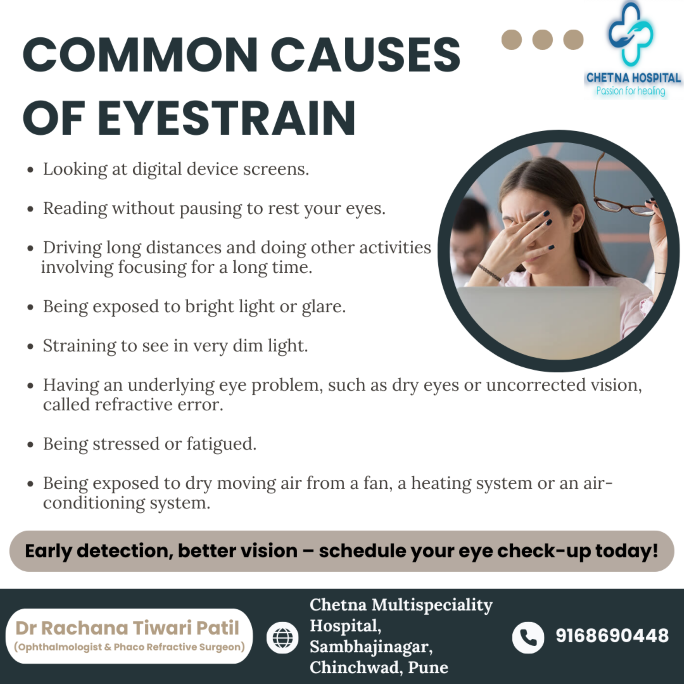
Eye strain is a common problem today. Long hours on a computer, phone or tablet, or even reading books, keep our eyes focused for long periods. Eye strain, also known as asthenopia, refers to the discomfort that results from intensive use of the eyes. Eye strain is not usually serious and does not cause lasting damage, but it can be uncomfortable and get in the way of daily activities. Knowing the causes, symptoms and ways to ease it can help.
What is Eye Strain?
Eye strain occurs when your eyes get tired from intense use, especially when focusing on objects up close for extended periods. The focusing muscles of the eyes get tired, which causes temporary discomfort. Today this is often due to long use of digital devices, reading or other tasks that need close focus. It usually goes away once you rest your eyes.
Causes of Eye Strain
- Excessive Screen Time A major cause of eye strain today is the use of digital screens. Whether it’s working on a computer, using smartphones, or watching television, people spend hours staring at digital screens. This leads to a condition commonly known as digital eye strain or computer vision syndrome. When looking at a screen, we tend to blink less often, which dries the eyes and makes the discomfort worse.
- Poor Lighting Lighting plays a significant role in how our eyes react to visual tasks. Working in low light or with harsh lighting can contribute to eye strain. If the screen brightness doesn’t match the ambient light, or if you’re working under dim lighting, your eyes have to work harder to focus. Harsh overhead lights, glare from windows or a screen much brighter than the room can make your eyes tire more quickly.
- Improper Posture Poor posture while working, reading, or using devices is another cause of eye strain. Leaning forward or hunching over a computer, or viewing a screen at a poor angle, can add to eye strain. It can also cause aches in the neck, shoulders and back.
- Uncorrected Vision Problems People who have uncorrected vision problems, such as nearsightedness (myopia), farsightedness (hyperopia), or astigmatism, are more likely to get eye strain. If your prescription glasses or contact lenses are outdated or you have undiagnosed vision problems, your eyes must work harder to focus, which can lead to strain and discomfort.
- Dry Eyes Dry eyes can cause irritation and discomfort when you are working at a computer or looking at a screen. Dryness can occur when the eyes don’t produce enough tears to keep the surface lubricated. This can be due to air conditioning, fans, long screen time or certain medicines. Without enough moisture, the eyes become irritated and feel strained.
- Lack of Sleep Tiredness and stress can make eye strain more likely. When you are tired, you may notice more blurring, dryness and discomfort.
- Overuse of Near Vision Staring at objects up close for too long, such as reading a book, looking at a smartphone, or working on a computer, can also strain the eyes. This is because the eye’s focusing muscles work harder to see nearby objects. Prolonged use of near vision without taking breaks can contribute to eye strain.
Symptoms of Eye Strain
The symptoms of eye strain can vary from person to person, but some of the most common signs include:
- Eye discomfort: A feeling of tired, heavy, or sore eyes after prolonged use.
- Dryness or watering: Your eyes may feel dry or irritated, or you may experience excessive tearing as your eyes try to compensate for dryness.
- Blurred or double vision: Difficulty focusing, especially after long periods of reading or using screens.
- Headaches: A common symptom of eye strain, particularly after using a computer or digital device for long hours.
- Neck, shoulder or back pain: Poor posture and long screen use can cause discomfort in the neck, shoulders and back.
- Difficulty focusing: After long periods of reading or screen use, you may find it hard to refocus your vision, even when you look away from the screen.
How to Prevent and Relieve Eye Strain
It may be hard to avoid digital devices, but these steps can reduce eye strain.
- Follow the 20-20-20 Rule Taking regular breaks helps prevent eye strain. The 20-20-20 rule states that every 20 minutes, you should look at something 20 feet away for at least 20 seconds. This gives your focusing muscles a rest.
- Adjust Your Screen Place your computer screen about an arm’s length (around 25 inches) away, with the top of the screen at or slightly below eye level so you look slightly down. The screen should also be positioned to avoid glare from windows or overhead lighting. Match the screen brightness to the room and increase the contrast to make the screen easier on your eyes.
- Use Proper Lighting Make sure your work area is well-lit to prevent glare. Use a desk lamp that illuminates the work surface without creating reflections on the screen. Avoid harsh, very bright lighting.
- Blink Regularly When staring at screens, people tend to blink less often, which leads to dryness and discomfort. Make an effort to blink more often to keep your eyes moist.
- Wear Corrective Eyewear If you have vision problems, make sure you’re wearing the correct prescription glasses or contact lenses. Regular eye tests make sure your glasses are up to date. Some people find glasses made for computer distance helpful; these are not the same as blue-light glasses.
- Use Artificial Tears If your eyes feel dry, lubricating eye drops (artificial tears) can help. A humidifier can help in a dry room.
- Practice Good Posture Pay attention to your posture while sitting and working. Sit straight, keep your shoulders relaxed, and avoid slouching. Position your screen so you don’t have to strain your neck or eyes.
- Get Enough Sleep Good sleep helps you feel less tired, which can ease eye strain. Most adults need 7 to 9 hours a night.
When to See an Eye Specialist
If you experience persistent or severe eye strain, it’s important to consult an eye specialist. Eye strain can sometimes be a sign of an underlying vision problem, such as needing new glasses, or another eye condition. An eye exam can find the cause. See an eye doctor if your eyes are often red, blurry or watery, or become painful or sensitive to light. For sudden vision loss or severe eye pain, go to an emergency department straight away or call 108 or 112.
Conclusion
Eye strain is common, especially with today’s screen use. Simple steps can reduce it. Take breaks, set up your screen and lighting well, sit comfortably, and have regular eye check-ups.
For a consultation, call the eye care (ophthalmology) department at Chetna Hospital on 91686 90442.
Website – www.chetnahospital.co.in
Address – Chetna Hospital, Sambhajinagar, MIDC, G Block, Near Rotary Club, Chinchwad 411019
General health information, not a diagnosis. Reviewed and updated by Chetna Hospital’s content team with the help of AI writing tools, November 2026.