
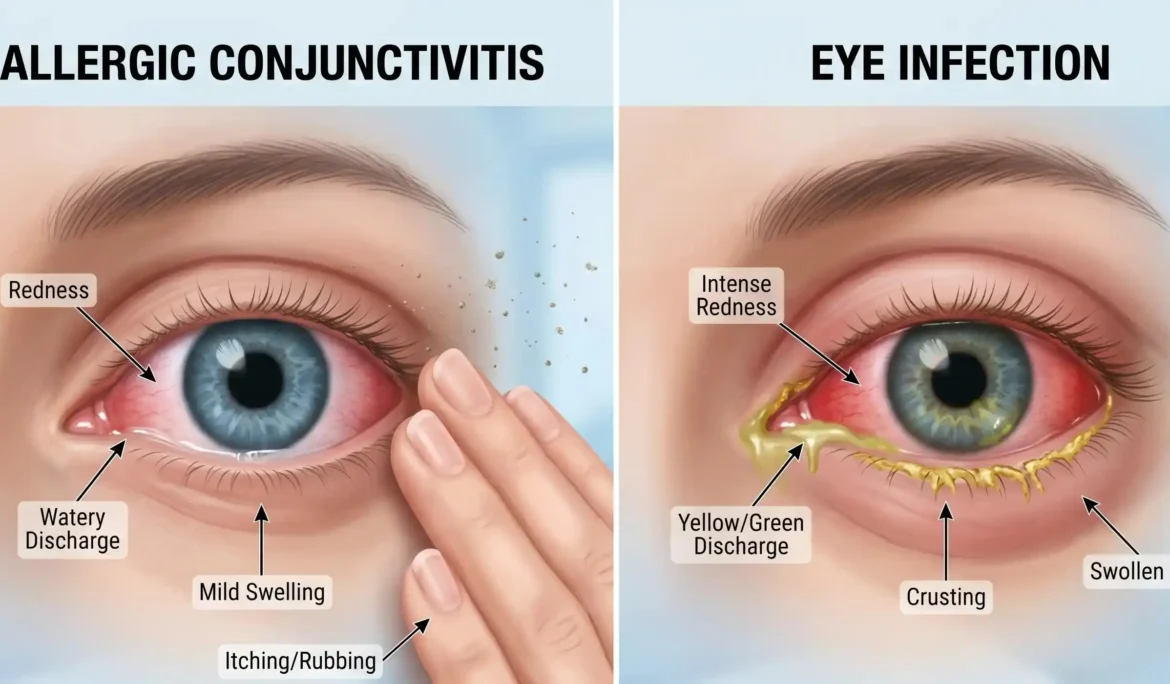
Why Eye Allergies Feel Worse in Summer
eye allergies in summer Nobody searches for complicated medical terms when their eyes are burning and itchy—they search for relief. That’s why phrases like “itchy eyes in summer,” “why are my eyes watering outside,” or “burning eyes in AC” dominate search engines. These are real, raw descriptions of discomfort, not textbook diagnoses. And honestly, that makes sense. When your eyes feel like they’re filled with dust or constantly tearing up, the last thing you care about is terminology—you just want it to stop.
Looking for eye allergy relief in Chinchwad? Summer heat and dust in the PCMC area can trigger severe redness and itching. Dr. Rachana Tiwari-Patil at Chetna Hospital specializes in treating seasonal conjunctivitis and allergies for patients in Chinchwad, Akurdi, and Ravet.
This is exactly how eye allergies in summer show up in real life. It starts subtly—maybe a slight itch or redness—but quickly turns into a cycle of irritation. You rub your eyes for relief, but that only worsens the inflammation. Soon, you’re dealing with watery eyes, blurry vision, and sensitivity to light. It’s frustrating because it interferes with everyday activities like driving, working on screens, or even enjoying time outdoors.
Understanding this real-world experience is critical. Eye allergies are not just a “condition”—they are a daily discomfort that affects productivity, mood, and quality of life. The more we align solutions with what people actually feel, the easier it becomes to treat and prevent them effectively.
Eye Allergy Relief in PCMC
- Common Triggers: High pollen, PCMC industrial dust, and dry summer heat.
- Immediate Relief: Use cold compresses and preservative-free artificial tears.
- Professional Treatment: Medicated antihistamine drops or allergy shots.
- Local Expert: Dr. Rachana Tiwari-Patil (Chetna Hospital, Chinchwad) specializes in seasonal ocular care for patients in Pune and PCMC.
Common Triggers: Pollen, Dust, Pollution, and AC
Summer is practically designed to trigger eye allergies. The biggest offender is pollen, which is released in massive amounts by trees, grasses, and weeds. These microscopic particles float in the air and easily come into contact with your eyes, triggering an allergic reaction almost instantly.
But pollen isn’t alone. Dust and air pollution play a major role, especially in urban areas like Pune and Pimpri-Chinchwad. Construction dust, vehicle emissions, and environmental pollutants can irritate the eyes even if you’re not traditionally “allergic.” Add to that dry heat and air conditioning, and things get worse.
Air conditioners reduce humidity, which dries out the eyes and weakens their natural defense system—the tear film. Once that protective layer is compromised, allergens can penetrate more easily, leading to inflammation. It’s like removing a shield and inviting irritants in. This combination of outdoor and indoor triggers is why so many people suddenly experience eye irritation during summer.
What Do Eye Allergies Actually Feel Like?
Most Searched Symptoms Explained
People describe eye allergies in ways that are vivid and relatable. The most common symptoms include itching, redness, watering, burning, and swelling. Some even say their eyes feel “gritty” or like there’s sand stuck inside. These descriptions might sound simple, but they reflect a deeper immune response happening in your body.
When allergens enter the eye, your immune system releases histamines, which cause inflammation. This leads to itching (the most common symptom), followed by redness and excessive tearing. Ironically, even though your eyes water, they can still feel dry because the quality of tears is poor.
One important thing to remember is that rubbing your eyes—although tempting—makes everything worse. It increases inflammation and can even damage the surface of your eye over time. That’s why controlling the urge to rub is one of the simplest yet most effective steps in managing symptoms.
What an Allergic Eye Looks Like
Visually, allergic eyes are easy to पहचान once you know what to look for. They often appear red, slightly swollen, and watery. The eyelids may puff up, especially in the morning, and the inner lining of the eyelid can look inflamed.
Unlike infections, the discharge is usually clear. Both eyes are typically affected at the same time, which is a key distinguishing factor. If your eyes look irritated but not severely painful, and you’re dealing with itching, allergies are the most likely cause.
Eye Allergy vs Infection: How to Tell the Difference
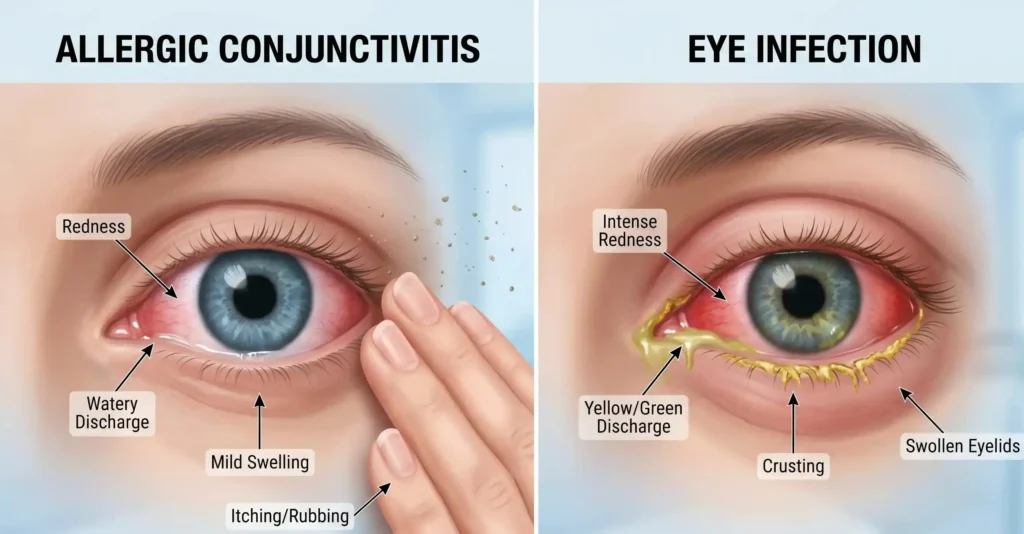
Key Differences in Symptoms
| Feature | Eye Allergy | Eye Infection |
|---|---|---|
| Itching | Very common | Rare |
| Discharge | Clear, watery | Thick, yellow/green |
| Redness | Mild to moderate | Severe |
| Affects both eyes | Usually | Often one eye first |
| Pain | Minimal | Moderate to severe |
This comparison helps answer a common concern: “Is this an allergy or something more serious?” Allergies tend to be irritating but not painful, while infections often involve discomfort, discharge, and sometimes vision issues.
Why Eye Allergies are High in Chinchwad & PCMC: The industrial environment and the dry, windy summers in the Pimpri-Chinchwad area often increase airborne allergens. If you are near Chinchwad Station, Akurdi, or Ravet and are experiencing redness or itching, immediate clinical care is available nearby at Chetna Hospital.
When You Should Be Concerned
If symptoms include severe pain, vision changes, or thick discharge, it’s time to seek medical attention. Delaying treatment can lead to complications, especially in infections.
Why Your Eyes Get Itchy and Watery in Summer
Environmental Causes
Summer brings higher pollen counts, increased outdoor exposure, and stronger sunlight—all of which stress your eyes. Even wind can carry allergens directly into your eyes, making symptoms worse.
Hidden Causes Like Dry Air and Screens
Spending long hours on screens reduces blinking, which dries out your eyes. Combine that with AC exposure, and your eyes become more sensitive to allergens. Modern lifestyles are silently contributing to the problem.
Fast Relief for Itchy, Burning Eyes
Instant Home Remedies That Work
Quick relief is possible with simple steps. A cold compress can reduce itching and swelling almost instantly. Washing your eyes with clean water helps remove allergens, while avoiding rubbing prevents further irritation.
Best Over-the-Counter Eye Drops
Artificial tears and antihistamine eye drops are effective for immediate relief. These are designed specifically for allergies and can significantly reduce symptoms within minutes.
Convenient Care for PCMC Residents”:
“Chetna Hospital is centrally located for those seeking an eye specialist near Chinchwad Station, Walhekarwadi, or Thergaon. If you are within 5km of the hospital, our clinic provides immediate relief for acute summer eye irritation.”
Medical Treatments for Eye Allergies
Antihistamines and Prescription Drops
Doctors may prescribe stronger medications like antihistamine drops or mast cell stabilizers. These not only relieve symptoms but also prevent future reactions.
When to See a Doctor
If symptoms persist despite treatment, consulting an expert is essential. Chronic allergies require personalized care.
How to Prevent Eye Allergies in Summer
Daily Habits That Protect Your Eyes
Simple habits like washing your face after coming indoors, avoiding touching your eyes, and keeping your environment clean can make a huge difference.
Sunglasses, Hygiene, and Environment Control
Wearing sunglasses outdoors protects your eyes from pollen and dust. Clean pillowcases and controlled indoor environments further reduce exposure.
Diet and Nutrition for Eye Allergy Relief
Foods That Reduce Eye Inflammation
Foods rich in omega-3 fatty acids, antioxidants, and vitamin C help reduce inflammation and support eye health.
Vitamins and Supplements That Help
Vitamins like A, D, and B12 play a crucial role in maintaining eye health. Deficiencies can worsen symptoms like dryness and irritation.
Expert Eye Care in PCMC: When You Need Specialist Help
Meet Dr. Rachana Tiwari Patil – Trusted Ophthalmologist in PCMC
When home remedies and over-the-counter solutions aren’t enough, expert care becomes essential. Dr. Rachana Tiwari Patil, a highly experienced Consultant Ophthalmologist and Phaco-Refractive Surgeon at Chetna Hospital, Pimpri-Chinchwad, is known for delivering advanced, patient-centered eye care.
With over 10 years of clinical experience, she combines precision with compassion, ensuring each patient receives tailored treatment. Her qualifications include MBBS and MS in Ophthalmology, along with specialized fellowships in Glaucoma (HV Desai Eye Institute, Pune) and Phaco-Refractive Surgery (Wavikar Eye Institute, Mumbai).
Her expertise spans a wide range of services, including:
- Cataract surgery (Phacoemulsification with advanced IOLs)
- LASIK and refractive procedures
- Glaucoma diagnosis and management
- Retina care and diabetic eye disease treatment
- Dry eye and corneal therapies
- Pediatric eye care and squint correction
Patients trust her not just for surgical skill but for her ability to explain conditions clearly and guide them through recovery. Whether it’s managing chronic eye allergies or performing advanced vision correction procedures, she stands out as a leading ophthalmologist, eye surgeon, and LASIK expert in Pune and PCMC.
Take the First Step Toward Clearer Vision
Experiencing vision problems or considering advanced eye care solutions? Consult Dr. Rachana Tiwari-Patil, an experienced Consultant Ophthalmologist and Phaco-Refractive Surgeon.
Persistent eye irritation? Visit the leading eye clinic in Chinchwad.
Book Your Appointment at Chetna Hospital Today— Conveniently located for patients across PCMC.
📞 Call now: 9168690448 / 9158681123
📍 Visit: Chetna Hospital, Sambhaji Nagar, Chinchwad
Book your appointment today and see the world more clearly.
Can Eye Allergies Become Serious?
Long-Term Risks If Ignored
Eye allergies may seem minor, but ignoring them can lead to complications like chronic dryness, corneal damage, or increased sensitivity. Persistent rubbing can worsen the condition and even lead to infections.
Conclusion
Eye allergies in summer are more than just a seasonal annoyance—they’re a real challenge that affects daily life. By understanding what triggers them, recognizing symptoms early, and taking proactive steps, you can keep your eyes comfortable and healthy. And when symptoms persist, seeking expert care ensures long-term relief and protection for your vision.
About the Author: Dr. Rachana Tiwari-Patil. Dr. Rachana is a highly experienced eye specialist at Chetna Hospital, Chinchwad. With over [Insert Years] years of experience in ophthalmology, she focuses on providing advanced eye care solutions to the Pune community, ensuring that seasonal allergies don’t affect your vision or quality of life.
FAQs
Use a cold compress, rinse your eyes, and apply antihistamine eye drops for quick relief.
AC reduces humidity, which can cause dryness and make your eyes more sensitive to allergens.
Dr. Rachana Tiwari-Patil at Chetna Hospital is a highly recommended specialist for seasonal eye allergies and ocular health in the Chinchwad and PCMC area.
A combination of eye drops, lifestyle changes, and medical consultation works best.
If symptoms persist, worsen, or affect vision, consult an ophthalmologist immediately.
Dr. Rachana Tiwari-Patil offers specialized treatment for eye allergies at Chetna Hospital, located in Chinchwad, Pune, serving a 5km radius including Akurdi and Nigdi.
You can call +919168690448 or visit our clinic in Chinchwad, Pune, to schedule a consultation with our eye care experts.