








If you have gestational diabetes, “sugar-free” mithai still raises blood sugar because of its khoya, besan, flour and ghee, so it is not automatically safe. How much sweet fits depends on your sugar readings and your plan, so ask your doctor or diabetes dietitian before Diwali. Keep taking your medicines, and call your gynaecologist the same day if readings stay above target.
Gynaecology and maternity, Chetna Hospital, Chinchwad
Diwali falls on 8 November this year, and many sweet shops in Pimpri Chinchwad stock “sugar-free” boxes. Here is what that label does and does not mean if you have gestational diabetes.
Why “sugar-free” mithai still raises your sugar
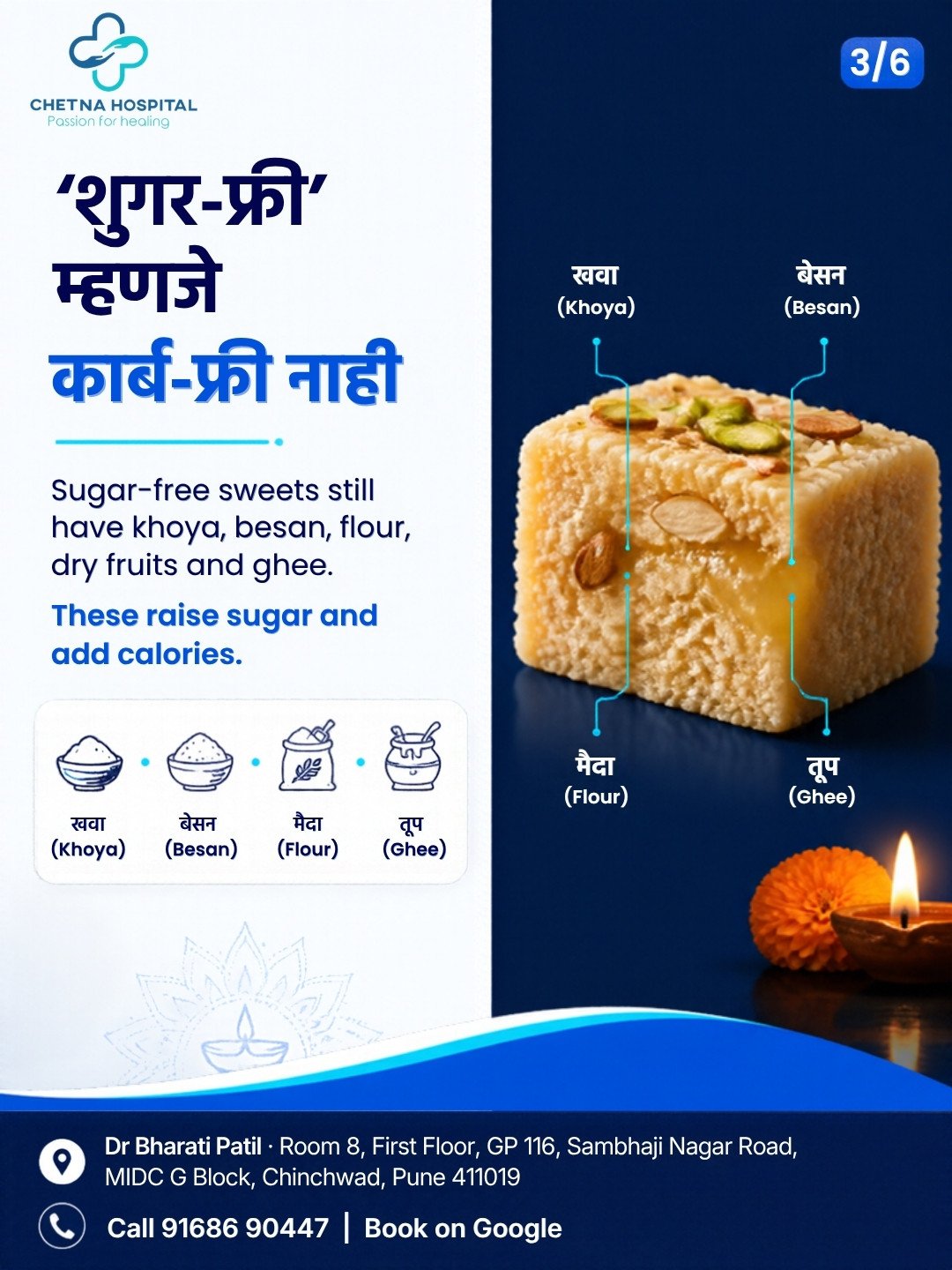
“Sugar-free” usually means the white sugar has been swapped for a sweetener. The rest of the sweet is the same. Khoya (mawa) carries milk sugar, besan and flour are starch, and dry fruits and ghee add a lot of calories. Starch turns into glucose in the blood, so the sweet still pushes your reading up, just a little more slowly.
NHS maternity teams give the same warning about specially made “diabetic” foods. They say these can still affect blood glucose because they often contain starchy carbohydrate even when they are sugar free, and they do not recommend them (University Hospitals Sussex NHS).
| What is in the sweet | What it does |
|---|---|
| Khoya, milk powder, paneer base | Milk sugar and fat; raises sugar and calories |
| Besan, maida, rava | Starch that turns into glucose |
| Dry fruits, ghee | Many calories in a small piece |
| Sweetener (in place of sugar) | Removes the white sugar only; large amounts can upset the stomach |
How to enjoy Diwali sweets with gestational diabetes
You do not need a completely sugar-free diet. The NHS advice for gestational diabetes is to eat regular meals, choose slow-release starches and swap sugary snacks for fruit, nuts or seeds (NHS). In practice, this usually means:
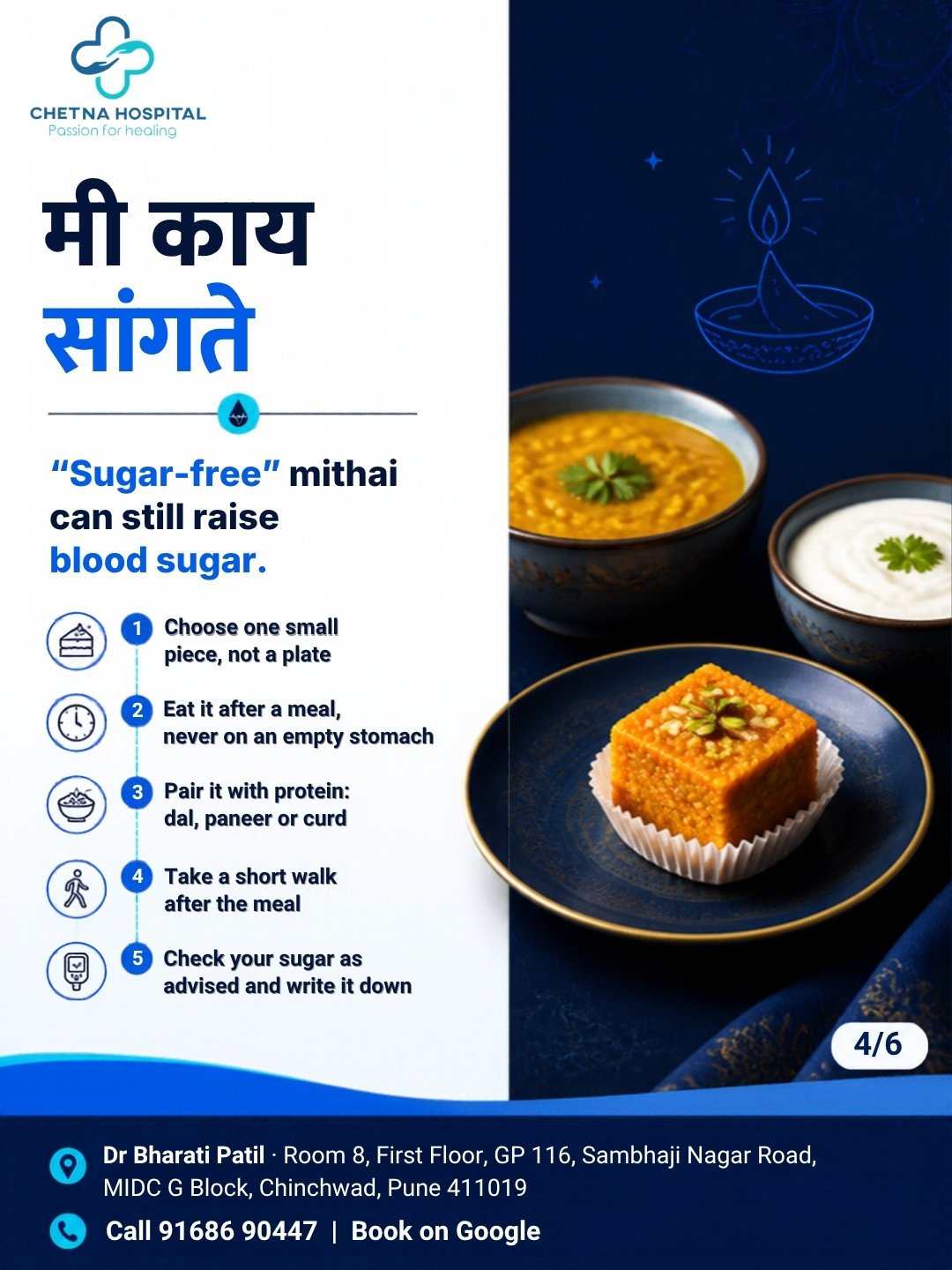
- Ask about amounts before Diwali. How much sweet fits depends on your sugar readings and your plan, so check with your doctor or diabetes dietitian first.
- After a meal, never on an empty stomach. A sweet eaten alone with tea at 5 pm pushes the sugar up faster.
- Pair it with protein. Dal, paneer, curd or a handful of roasted chana slow the rise. Protein and fat have little effect on blood glucose on their own.
- Take a short walk after the meal, if your pregnancy allows it.
- Check your sugar as you have been advised and write it in your diary, with a note of what you ate. That note tells your doctor much more than the number alone.
Women often ask whether a piece of jaggery-based chikki or an anjeer roll is “safer”. Jaggery and dates are still sugar, so they are not automatically safe either.
If you feel hungry all the time or your weight is a worry, bring your sugar diary to your next visit at Chetna Hospital and plan the festive week with your doctor.
Two things never to do
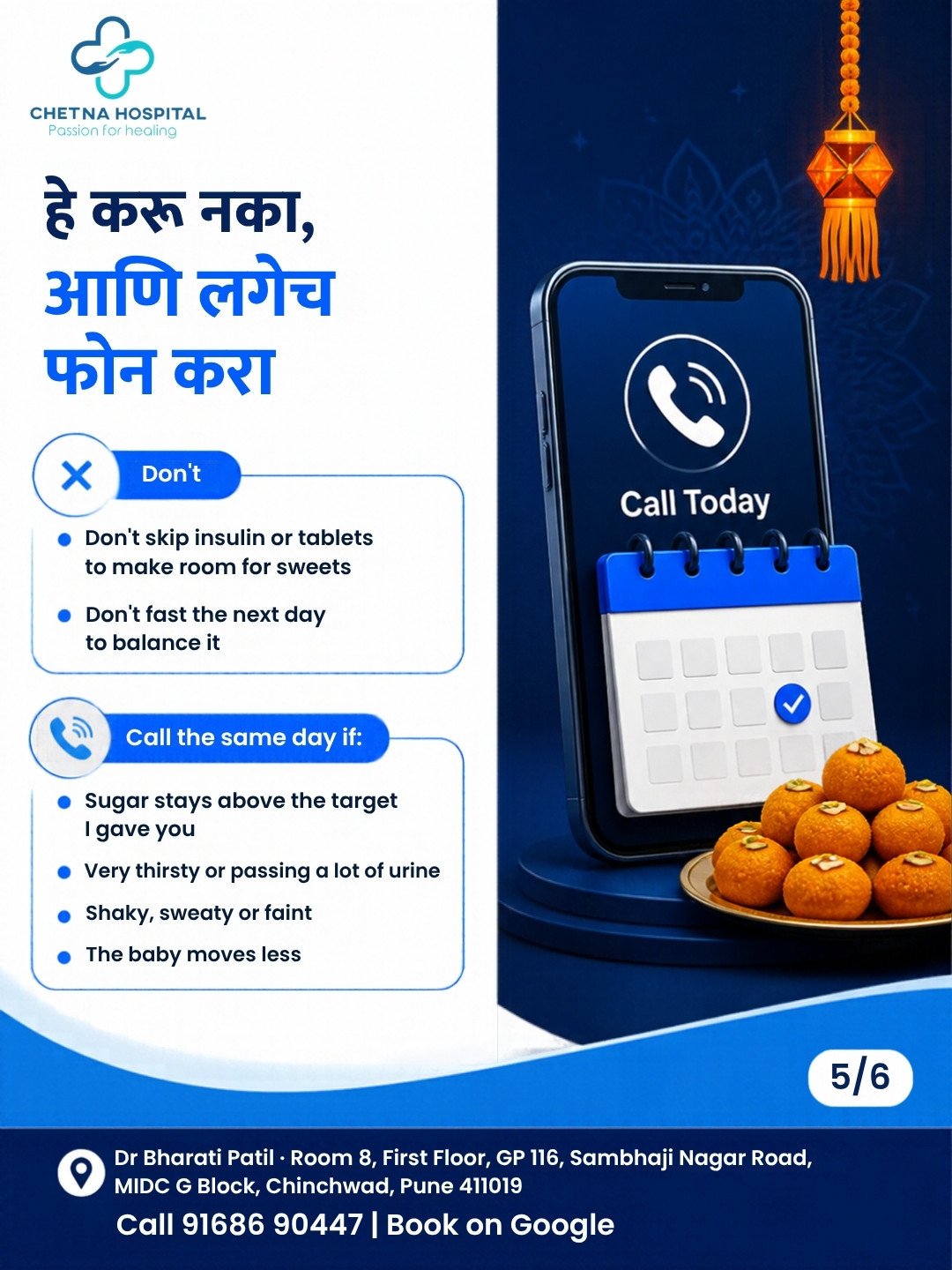
- Do not skip insulin or tablets to “make room” for sweets, and do not change the dose on your own.
- Do not fast the next day to balance the extra sweets. Long gaps without food can upset your readings and, if you are on insulin, can drop your sugar too low.
Call your gynaecologist the same day if
- Your readings stay above your target for more than a day
- You feel very thirsty or are passing much more urine than usual
- You feel shaky, sweaty, faint or suddenly very hungry (this can be low sugar if you take insulin)
- The baby is moving less than usual
Low sugar on insulin needs quick treatment, so test straight away if you feel shaky or sweaty (NHS). If the baby is moving less, do not wait until the next morning.
Festivals bring other questions too. Women who plan travel or a puja in the same week often ask about delaying a period with tablets; see our guide to period-delay tablets.
The slides from our post
Save these, or send them to someone with gestational diabetes this Diwali.
Consultation near you
The gynaecology and maternity department sees women at Room 8, First Floor, Plot No. GP 116, Sambhaji Nagar Road, near Rotary Club, G Block, MIDC, Chinchwad, Pune 411019 (Chetna Hospital). Women come from Chinchwad, Pimpri, Akurdi, Nigdi, Ravet, Wakad, Hinjewadi, Pimple Saudagar, Thergaon, Tathawade, Punawale, Moshi and Bhosari.
Read more about our gynaecology and maternity services, and why many women look for a lady gynaecologist in Pimpri Chinchwad.
Questions women ask about gestational diabetes and Diwali sweets
Can I eat sugar-free sweets with gestational diabetes?
Sugar-free sweets are not automatically safe. Sugar-free mithai still has khoya, besan, flour, dry fruits and ghee, which raise blood sugar and add calories. How much fits depends on your sugar readings and your plan, so ask your doctor or diabetes dietitian before Diwali and check your reading as advised.
Is gestational diabetes treatment available in Chinchwad?
Yes. The gynaecology and maternity department at Chetna Hospital sees women with gestational diabetes at Room 8, First Floor, GP 116, Sambhaji Nagar Road, MIDC G Block, Chinchwad, Pune 411019. Call or WhatsApp 91686 90447.
Should I skip my insulin or tablets if I eat less on a festival day?
No. Do not stop or change your insulin or tablets on your own. If you plan to eat very differently on a festival day, ask your gynaecologist in advance how to adjust safely.
Is jaggery or dates better than sugar in pregnancy diabetes?
Jaggery, dates and honey are still sugar and raise blood glucose, so they are not automatically safe. Ask your doctor or diabetes dietitian how they fit into your plan.
When should I call the doctor about high sugar in pregnancy?
Call the same day if your readings stay above your target for more than a day, if you are very thirsty or passing a lot of urine, or if you feel shaky or faint on insulin. If the baby moves less than usual, call straight away.
Have a question about your health? Talk to a gynaecologist.
Sources
- NHS. Gestational diabetes.
- NHS. Gestational diabetes – treatment.
- University Hospitals Sussex NHS Foundation Trust. Healthy eating with gestational diabetes.
This article is general health information and does not replace a consultation. Advice on diet and medicines in gestational diabetes depends on your own readings and your doctor’s examination.
How this article was prepared: Chetna Hospital’s content team wrote it with the help of AI writing tools and checked it against the sources listed. It is general health information, not personal medical advice.