Diabetic retinopathy is a serious complication of diabetes that affects the eyes. It can lead to sight loss if it is not found and treated early. It occurs when high blood sugar levels damage the blood vessels in the retina, the light-sensitive tissue at the back of the eye. It often causes no symptoms at first, so many people with diabetes do not know they have it until it has progressed. This blog will explore the symptoms, stages, and the importance of regular eye check-ups in managing diabetic retinopathy.
What is Diabetic Retinopathy?
Diabetic retinopathy is mainly caused by blood sugar levels that stay high over a long time. It can affect both type 1 and type 2 diabetes patients. The condition generally progresses through two main stages: non-proliferative diabetic retinopathy (NPDR) and proliferative diabetic retinopathy (PDR). Swelling of the central retina (diabetic macular oedema) can happen at either stage and is a common cause of sight loss in diabetes. Early detection and treatment help protect sight.
Stages of Diabetic Retinopathy
- Non-Proliferative Diabetic Retinopathy (NPDR):
- This is the initial stage where the retina’s blood vessels weaken and may leak fluid or blood. NPDR is further categorized into mild, moderate, and severe stages, depending on the degree of retinal damage.
- Proliferative Diabetic Retinopathy (PDR):
- In this later stage, new, abnormal blood vessels grow on the retina (neovascularisation). These vessels are fragile and can bleed into the eye. Scar tissue can also pull the retina away (retinal detachment). Without treatment, this can cause serious, permanent sight loss.
Common Symptoms of Diabetic Retinopathy
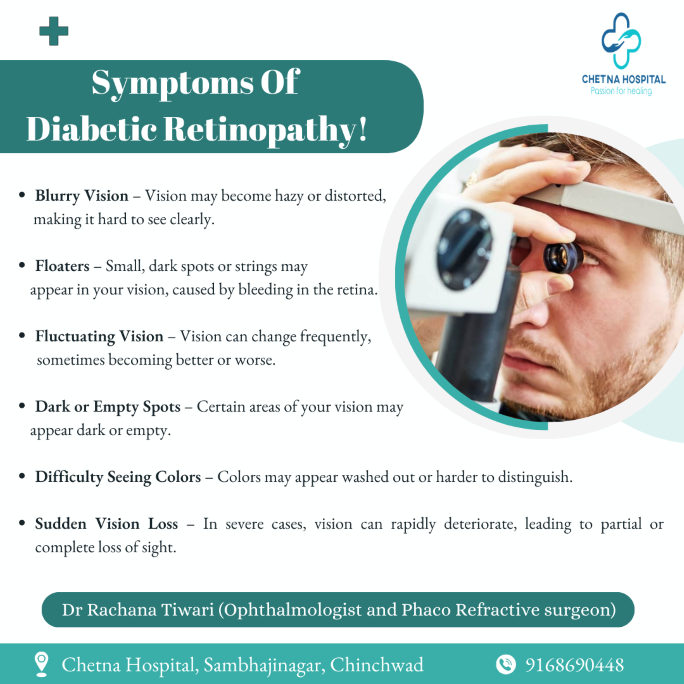
Most people have no symptoms in the early stages. As the condition gets worse, these signs may appear:
- Blurry or Distorted Vision:
- Vision may become blurry or distorted, which can make reading or focusing harder.
- Floaters:
- Floaters are small dark spots, specks, or strings that drift across the field of vision. They occur when blood leaks into the vitreous gel of the eye due to damaged blood vessels. Many people have a few floaters. A sudden shower of new floaters, flashes of light or a shadow over your vision needs checking straight away: go to an emergency department or call 108 or 112.
- Fluctuating Vision:
- Individuals may notice changes in their vision throughout the day. Vision can vary from day to day or during the day, especially when blood sugar levels go up and down.
- Dark or Empty Areas in Vision:
- As the disease advances, patients might see dark or empty spots in their vision. This can make it difficult to see certain areas clearly and may affect overall visual clarity.
- Difficulty Seeing Colors:
- Patients may find it challenging to distinguish between colors or notice that colors appear washed out. This can affect daily activities.
- Night Vision Problems:
- Some people with diabetic retinopathy find it harder to see in low light. Night vision may become impaired, making it harder to navigate in dimly lit environments.
- Sudden Vision Loss:
- In later stages of diabetic retinopathy, sudden vision loss can happen. This can happen if there is bleeding inside the eye or if the retina detaches. Sudden loss of vision is an emergency: go to an emergency department straight away or call 108 or 112.
Importance of Early Detection
Diabetic retinopathy often develops slowly and can cause no symptoms for years. This makes regular eye exams essential for individuals with diabetes. The American Academy of Ophthalmology recommends that people with type 1 diabetes have their first eye exam within five years of diagnosis, while those with type 2 diabetes should get examined as soon as they are diagnosed.
Regular Eye Check-Ups
During an eye exam, an eye care professional can identify early signs of diabetic retinopathy, even before symptoms appear. Comprehensive eye exams typically include:
- Visual Acuity Test: Measures how well you can see at different distances.
- Dilated Eye Exam: Drops are placed in the eyes to widen the pupils, allowing the doctor to examine the retina and optic nerve for any signs of damage.
- Optical Coherence Tomography (OCT): A non-invasive imaging test that provides cross-sectional images of the retina, helping to identify any swelling or damage.
Risk Factors
Several factors can increase the likelihood of developing diabetic retinopathy, including:
- Duration of Diabetes: The longer a person has diabetes, the higher the risk of developing retinopathy.
- Blood Sugar Control: Poorly controlled blood sugar levels significantly increase the risk of retinopathy and its progression.
- High Blood Pressure: Hypertension can exacerbate the damage to blood vessels in the retina.
- Cholesterol Levels: High cholesterol is linked to a higher risk.
- Pregnancy: Retinopathy can get worse during pregnancy, so pregnant women with diabetes need extra eye checks.
Managing and Treating Diabetic Retinopathy
While diabetic retinopathy can be serious, several treatment options can help manage the condition:
- Laser Treatment: This is often used for proliferative diabetic retinopathy. Laser can seal leaking blood vessels and reduce abnormal vessel growth. More than one session may be needed.
- Eye Injections: Anti-VEGF medicines, or sometimes steroids, injected into the eye can reduce swelling in the retina and slow the growth of new blood vessels. They are usually repeated.
- Vitrectomy: In severe cases, surgery may be required to remove blood from the vitreous gel and repair any retinal detachment.
- Blood Sugar and Blood Pressure Control: Keeping blood sugar, blood pressure and cholesterol under control, and not smoking, can slow diabetic retinopathy.
- Regular Monitoring: People with diabetes need regular eye checks, usually every 1 to 2 years, or more often if retinopathy is found.
Conclusion
Diabetic retinopathy is a serious condition that can lead to sight loss, but early detection and treatment lower the risk. Treatment cannot bring back sight that is already lost, so regular eye checks matter even if your vision seems fine. Managing blood sugar, blood pressure and cholesterol helps protect your eyes. If you notice changes in your vision, see an eye doctor promptly. For sudden vision loss, go to an emergency department straight away or call 108 or 112.
For a consultation, call the eye care (ophthalmology) department at Chetna Hospital on 91686 90442.
Website – www.chetnahospital.co.in
Address – Chetna Hospital, Sambhajinagar, MIDC, G Block, Near Rotary Club, Chinchwad 411019
General health information, not a diagnosis. Reviewed and updated by Chetna Hospital’s content team with the help of AI writing tools, November 2026.