Specialist: Dr. Nirmal Patil (Best Spine Surgeon in PCMC) Cauda Equina Syndrome Surgery
Hospital: Chetna Hospital, Chinchwad, Pune.
Emergency Window: 24–48 Hours.
Areas Served: Chinchwad, Pimpri, Wakad, Nigdi, Akurdi, Ravet.
Emergency Contact: +919158680739
Emergency Cauda Equina Surgery in Chinchwad, Pune: Dr. Nirmal Patil (Chetna Hospital)
Cauda equina syndrome surgery is among the most urgent procedures in spinal medicine. When the nerve bundle located at the base of the spinal cord becomes compressed, emergency spinal decompression surgery for cauda equina syndrome is often required to prevent irreversible neurological damage. These delicate nerves regulate bladder control, bowel function, sexual sensation, and leg movement. Therefore, rapid surgical intervention is critical to preserving these essential bodily functions.
The term cauda equina, meaning “horse’s tail,” describes the appearance of the nerve roots extending downward from the spinal cord. However, when these nerves are compressed by conditions such as a large herniated disc, tumor, trauma, or severe spinal stenosis, the resulting neurological disruption can escalate rapidly.
Consequently, early diagnosis followed by prompt cauda equina decompression surgery dramatically improves recovery outcomes. According to Dr. Nirmal Patil, recognized as the best spine surgeon in PCMC and a leading orthopedic spine specialist in Chinchwad, Pune, performing surgery within 24–48 hours of symptom onset provides the highest chance of neurological recovery.
Providing rapid response for spinal emergencies, Dr. Nirmal Patil offers 24/7 decompression surgery at Chetna Hospital, strategically located for patients in Chinchwad, Pimpri, Wakad, Akurdi, and Nigdi. Our facility is equipped to handle emergency spine cases within the critical 24-hour window for the entire PCMC region.
Condition: Cauda Equina Syndrome (Medical Emergency)
Best Time for Surgery: Within 24–48 hours.
Top Spine Surgeon in Chinchwad: Dr. Nirmal Patil. MS (Ortho), Spine & Orthopaedic Surgeon
Hospital: Chetna Hospital, Pimpri-Chinchwad (PCMC).
Understanding Cauda Equina Syndrome and the Need for Emergency Spine Surgery
Cauda equina syndrome occurs when the nerve roots in the lower spinal canal become severely compressed. Because these nerves are responsible for several vital functions, the condition quickly becomes a surgical emergency.
When compression persists, nerve signals traveling between the brain and lower body become disrupted. As a result, patients may experience sudden neurological symptoms that require immediate attention.
Therefore, emergency cauda equina syndrome surgery is performed to relieve pressure on the affected nerves and restore normal communication within the nervous system.
Causes That May Require Cauda Equina Decompression Surgery
Several spinal conditions can lead to severe nerve compression requiring urgent surgical treatment.
Common causes include:
- Large lumbar disc herniation pressing on the nerve roots
- Severe spinal stenosis, narrowing the spinal canal
- Spinal tumors or infections affecting nerve structures
- Traumatic injury to the lower spine
- Complications following previous spinal surgery
Regardless of the cause, the ultimate goal of treatment remains the same—rapid spinal decompression to protect nerve function.
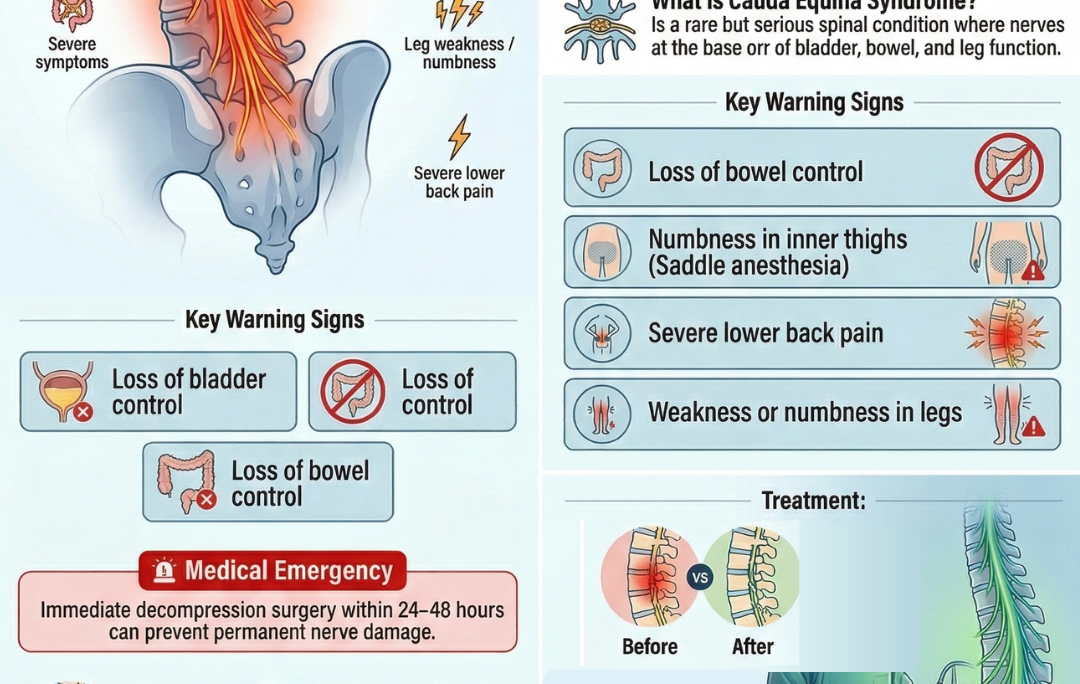
Warning Signs That Indicate Possible Cauda Equina Nerve Compression
Recognizing the early symptoms of nerve compression in the lower spine is essential. In many cases, patients initially mistake the condition for typical back pain. However, certain symptoms suggest possible cauda equina syndrome requiring urgent spinal surgery.
Major Symptoms of Cauda Equina Nerve Root Compression
Saddle Anesthesia
Numbness develops in the region that would contact a saddle—specifically the inner thighs, buttocks, and perineal area.
Bladder Dysfunction
Patients may suddenly lose the ability to urinate or experience loss of bladder control.
Bowel Control Changes
Loss of bowel sensation or inability to control bowel movements may occur.
Severe Lower Back Pain with Sciatica
Intense lumbar pain may radiate down both legs due to nerve irritation.
Progressive Leg Weakness
Muscle weakness in one or both legs may worsen rapidly, affecting mobility.
Sexual Sensory Changes
Reduced genital sensation may develop as nerve signals become impaired.
Additional Symptoms Suggesting Spinal Nerve Compression
In addition to the major warning signs, patients may experience:
- Difficulty walking or maintaining balance
- Reduced reflexes in the lower limbs
- Persistent tingling or numbness in the legs
- Pain that worsens while lying down
Importantly, if several symptoms occur simultaneously, immediate evaluation by a spine specialist is essential.
Why Urgent Spinal Decompression Surgery Is Critical
Unlike many elective spinal procedures, emergency decompression surgery for cauda equina syndrome is performed to prevent permanent neurological injury.
Timing of Cauda Equina Surgical Treatment
Clinical research consistently shows that patients who undergo surgery within 24 hours have significantly better neurological outcomes. Conversely, delays beyond 48 hours may reduce the likelihood of restoring bladder and bowel function.
Therefore, once cauda equina syndrome is suspected, rapid imaging and emergency spine surgery become essential.
Goals of Surgical Decompression for Cauda Equina Syndrome
The primary objectives of treatment include:
- Relieving pressure on the compressed nerve roots
- Restoring blood circulation to the affected nerves
- Preventing additional neurological damage
- Preserving existing motor and sensory function
- Promoting long-term nerve recovery
Surgical Techniques Used for Cauda Equina Decompression
The type of operation depends on the cause of nerve compression.
Common procedures include:
Lumbar Discectomy for Herniated Disc Compression
Removal of herniated disc fragments pressing on the cauda equina nerves.
Laminectomy to Widen the Spinal Canal
Removal of part of the vertebral bone to create additional space around the nerves.
Foraminotomy to Expand Nerve Exit Pathways
Widening the openings where nerve roots leave the spinal canal.
Spinal Fusion for Structural Stability
Stabilization of the spine if vertebral instability is present.
The Cauda Equina Surgical Procedure: What Patients Should Expect
Understanding how cauda equina syndrome surgery is performed can help reduce anxiety and prepare patients for the procedure.
Preoperative Evaluation Before Emergency Spine Surgery
First, doctors perform a rapid neurological examination. At the same time, imaging tests such as MRI or CT scans identify the precise location of nerve compression.
Next, a brief medical evaluation ensures the patient can safely receive anesthesia. Because the situation is urgent, these steps are completed quickly.
Finally, the surgeon explains the procedure, risks, and expected outcomes.
Steps Involved in Cauda Equina Decompression Surgery
Most operations last between one and three hours, depending on complexity.
Typical surgical steps include:
- Positioning the patient under general anesthesia
- Creating a small incision over the affected spinal level
- Gently moving the surrounding muscles aside
- Removing the compressing structure (disc, bone spur, or tumor)
- Confirming complete nerve decompression
- Closing the incision carefully
Minimally Invasive Surgery for Cauda Equina Syndrome
When appropriate, minimally invasive spine surgery may be used for cauda equina decompression.
Advantages include:
- Smaller surgical incisions
- Less muscle disruption
- Reduced blood loss
- Faster recovery
- Lower infection risk
However, the surgical approach depends on the underlying spinal condition.
Recovery After Cauda Equina Syndrome Surgery
Healing after cauda equina decompression surgery varies depending on the severity of nerve damage and how quickly treatment occurred.
Immediate Postoperative Care After Spinal Decompression
During the first 24–48 hours, patients remain in the hospital for close monitoring. Doctors evaluate nerve function, bladder control, and pain levels.
Early movement and physiotherapy are introduced to prevent complications.
Early Rehabilitation Following Cauda Equina Surgery
During the first six weeks:
- Patients gradually regain mobility
- Physical therapy begins
- Surgical wounds heal
- Doctors monitor neurological recovery
Long-Term Nerve Recovery After Cauda Equina Treatment
Because nerve healing occurs slowly, improvement may continue for months or even years. Regular follow-ups help track neurological progress.
Long-Term Outcomes After Cauda Equina Decompression Surgery
Recovery outcomes vary depending on several important factors.
Factors That Influence Recovery After Cauda Equina Syndrome
These include:
- Timing of surgical decompression
- Age and overall health of the patient
- Severity of nerve compression
- Commitment to rehabilitation therapy
Expected Functional Recovery After Spine Surgery
Motor Function
Most patients experience improvement in leg strength and walking ability.
Sensation
Numbness in the saddle region may gradually improve.
Bladder and Bowel Function
Recovery varies, and some patients may require long-term management.
Sexual Function
Neurological recovery differs depending on the degree of nerve damage.
Best Spine Surgeon for Cauda Equina Surgery Near Me (Chinchwad & PCMC)Best Spine Surgeon for Cauda Equina Surgery Near Me (Chinchwad & PCMC)
Patients seeking specialized care for cauda equina syndrome surgery in PCMC can consult Dr. Nirmal Patil, a highly experienced orthopedic spine surgeon practicing in Chinchwad, Pune.
Dr. Patil provides comprehensive care for complex spinal conditions, including herniated discs, spinal stenosis, and emergency nerve compression disorders.
Why Patients Choose Dr. Nirmal Patil for Emergency Spine Surgery
Patients trust Dr. Patil because he offers:
- Rapid response for spinal emergencies
- Advanced surgical techniques, including minimally invasive spine surgery
- Comprehensive post-surgical rehabilitation planning
- Collaboration with neurologists and physiotherapists
- Modern surgical facilities
Risk Factors and Prevention of Cauda Equina Syndrome
Although cauda equina syndrome may develop suddenly, certain risk factors increase the likelihood of the condition.
Medical Conditions That Increase Risk of Nerve Compression
Common risk factors include:
- Large lumbar disc herniation
- Severe spinal stenosis
- Spinal tumors or infections
- Lower back trauma
- Previous spinal surgery complications
- Inflammatory spinal disorders
Protecting Your Spine and Reducing the Risk of Nerve Injury
Preventive steps include:
- Strengthening core muscles through regular exercise
- Maintaining a healthy body weight
- Practicing proper lifting techniques
- Maintaining ergonomic posture at work
- Seeking early treatment for persistent back pain
(FAQs) About Cauda Equina Syndrome Surgery
Cauda Equina Syndrome Surgery is an emergency spinal procedure performed by experts like
Dr. Nirmal Patil at Chetna Hospital, Pune, to relieve pressure on compressed nerve bundles. As the leading spine surgery center in Chinchwad and the wider PCMC area, we specialize in rapid decompression to prevent permanent damage to bladder and bowel functions.
Doctors recommend Cauda Equina Syndrome Surgery when severe nerve compression causes symptoms such as loss of bladder control, numbness in the groin area, severe lower back pain, or weakness in the legs. Because these symptoms can worsen quickly, surgery is usually performed as soon as possible.
Dr. Nirmal Patil at Chetna Hospital (Chinchwad) provides 24/7 emergency spinal decompression and Cauda Equina surgery. Our facility is the primary emergency spine center for residents in Wakad, Nigdi, Akurdi, Ravet, Pimpri, and Bhosari, ensuring patients within a 5–15 km radius receive treatment within the critical “golden hours.”
Dr. Nirmal Patil in Chinchwad advises performing surgery within 24–48 hours after symptoms begin. Because Chetna Hospital is centrally located in PCMC, we can provide immediate diagnostics and surgical intervention for patients arriving from nearby areas like Thergaon, Kalewadi, and Moshi, significantly increasing the chances of a full recovery.
Recovery after Cauda Equina Syndrome Surgery varies from patient to patient. Many people begin walking within a few days, but full nerve recovery may take several weeks or months, depending on the severity of nerve damage.
Best Spine Surgeon for Emergency Decompression Near Me (PCMC/Pune)
If you are searching for an emergency spine surgeon near Chinchwad or a spine specialist in PCMC, Chetna Hospital provides immediate diagnostics (MRI) and surgical intervention. We serve a 15km radius including Ravet, Sangvi, Bhosari, and Moshi, ensuring that ‘every minute matters’ is backed by proximity and speed.
Call for Emergency Spine Consultation
If you experience symptoms suggesting cauda equina syndrome, seek medical attention immediately.
Dr. Nirmal Patil – Best Spine & Ortho Surgeon in PCMC
Orthopedic Surgeon | Back Pain | Neck Pain | Spine Specialist
Final Thoughts
Cauda equina syndrome surgery represents a true medical emergency in spine care. Because nerve damage progresses rapidly, early recognition of symptoms followed by urgent spinal decompression surgery is essential.
With prompt treatment and expert surgical care from specialists such as Dr. Nirmal Patil, many patients can achieve meaningful neurological recovery and regain quality of life.