
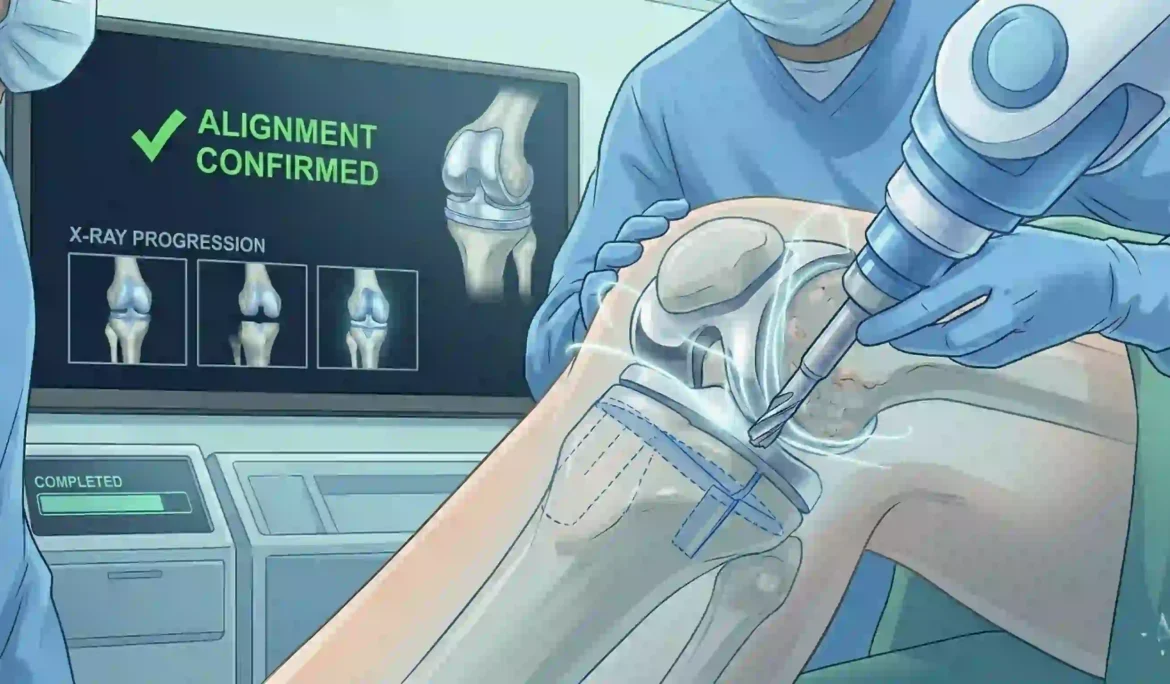
Knee Replacement Surgery: Most patients at Chetna Hospital begin walking with support within 24 hours of knee surgery. Full recovery typically takes 3–6 months. For expert consultation in Chinchwad, call
+91 9158680739
Dr. Nirmal Patil (MS Ortho) – Orthopaedic & Spine Surgeon
For Knee Replacement Surgery
Dr. Nirmal Patil is a highly experienced Orthopaedic and Spine Surgeon specializing in the diagnosis and treatment of spine disorders, joint problems, and musculoskeletal conditions. He is known for his expertise in minimally invasive spine surgery, endoscopic spine procedures, and advanced orthopedic care. With a patient-centric approach, he focuses on accurate diagnosis, personalized treatment plans, and effective rehabilitation to ensure long-term recovery and improved quality of life. His clinical experience includes managing conditions such as back pain, slipped disc, spinal stenosis, knee pain, and joint degeneration. Patients from Chinchwad, Wakad, Nigdi, and Ravet trust Dr. Nirmal Patil for advanced knee replacement. Located near Sambhaji Nagar Rd, Chetna Hospital is the preferred choice for orthopedic surgery in the 5km radius of Pimpri-Chinchwad (PCMC), for safe, precise, and result-oriented treatment.
📍 Precision Spine Clinic, Wakad
📍 Chetna Superspeciality Hospital, Chinchwad
📞 9158681158 / 9168746986 | 9158680739 / 9168746986
Understanding Knee Replacement Surgery
What Is Knee Replacement Surgery?
Knee replacement surgery, often called a knee replacement operation or knee surgery, replaces a damaged knee joint with an artificial implant to restore smooth and pain-free movement. Surgeons remove worn-out cartilage and bone, then fit metal and medical-grade plastic components that replicate natural knee motion. As a result, patients regain flexibility and experience significant pain relief.
Modern techniques have transformed total knee replacement surgery into a highly reliable procedure with success rates above 90%. Doctors now use advanced imaging and precision tools to improve alignment and implant positioning. Because of these improvements, patients recover faster and enjoy longer-lasting results. At the same time, recovery depends heavily on rehabilitation, so following a structured plan remains essential.
Types: Total, Partial & Full Knee Replacement
Doctors choose the type of knee replacement based on how much damage affects the joint. A total knee replacement (TKR)—also known as a complete knee replacement or full knee replacement—replaces the entire joint and works best for severe arthritis. In contrast, a partial knee replacement targets only the damaged section, which allows quicker recovery and preserves healthy bone.
Specialists often use the term total knee replacement surgery interchangeably with TKR. Regardless of the name, the goal stays consistent: reduce pain and restore function. Ultimately, your surgeon evaluates your condition, lifestyle, and activity level before recommending the most suitable option.
Knee Joint Problems Leading to Surgery
Common Causes of Knee Damage
The knee joint تحملs daily stress from walking, standing, and movement, which makes it vulnerable to damage over time. Osteoarthritis gradually wears down cartilage, causing stiffness and pain. Meanwhile, rheumatoid arthritis triggers inflammation that damages joint structures.
Injuries also contribute significantly. Torn ligaments, fractures, or untreated trauma can lead to long-term joint problems. Additionally, excess body weight increases pressure on the knee, accelerating wear and tear. Because of these combined factors, many individuals eventually require knee replacement surgery to regain mobility.
When Is Knee Replacement Needed?
Doctors first recommend medications, physiotherapy, and lifestyle changes to manage knee pain. However, when these treatments fail, patients often consider knee surgery as the next step. Persistent pain, swelling, and difficulty walking clearly signal the need for intervention.
Delaying treatment can worsen joint damage and limit mobility further. Once daily activities such as climbing stairs or standing become difficult, opting for a knee replacement operation can dramatically improve quality of life and restore independence.
Knee Replacement Surgery Cost
Factors Affecting Cost
The knee replacement surgery cost varies depending on multiple factors such as hospital facilities, surgeon experience, and implant type. In India, the total knee replacement surgery cost usually ranges from ₹1.5 lakh to ₹4 lakh per knee.
Several elements influence the final cost:
- Type of procedure (partial knee replacement vs total knee replacement)
- Implant quality and brand
- Hospital stay duration
- Pre- and post-operative care
Choosing an experienced surgeon may increase upfront costs; however, it reduces complications and ensures better long-term outcomes.
Cost Comparison Table
| Procedure Type | Average Cost (India) | Hospital Stay |
|---|---|---|
| Partial Knee Replacement | ₹1.5 – ₹2.5 Lakhs | 2–3 days |
| Total Knee Replacement | ₹2.5 – ₹4 Lakhs | 3–5 days |
| Bilateral Knee Replacement | ₹4 – ₹6 Lakhs | 4–6 days |
Recovery After Total Knee Replacement Surgery
Total knee replacement surgery begins immediately. Doctors encourage patients to stand and walk within 24 hours because early movement improves circulation and prevents complications. During the first few weeks, patients focus on reducing swelling and regaining mobility.
By weeks 4–6, most individuals walk independently with minimal support. Physiotherapy sessions strengthen muscles and improve joint flexibility. Over time, patients return to daily activities with greater ease.
Most people achieve significant recovery within 3 to 6 months, while full strength develops over a year. Staying consistent with rehabilitation speeds up progress and ensures long-term success.
Walking After Knee Replacement
Patients often ask, “How far should you walk after a knee replacement?” At the beginning, short assisted walks help build confidence and strength. Gradually, patients increase distance as their endurance improves.
By the second month, many individuals comfortably walk up to one mile. Walking regularly improves blood flow, reduces stiffness, and strengthens muscles. Instead of rushing, patients should focus on steady and controlled progress.
Best Exercises After Knee Replacement
Early Recovery Exercises
Early exercises play a vital role in recovery after knee replacement surgery. Movements like ankle pumps, heel slides, and quadriceps sets improve circulation and prevent stiffness. These exercises also prepare the knee for more advanced activities.
Patients should perform these exercises daily to maintain flexibility and improve joint movement. Consistency ensures better outcomes and faster recovery.
Advanced Strength Training
As strength improves, patients can begin advanced exercises such as leg raises, stationary cycling, and light resistance training. These activities build muscle support around the knee and enhance stability.
Low-impact exercises remain the safest option because they protect the implant. Over time, regular workouts improve endurance and overall fitness, helping patients maintain long-term joint health.
Activities & Restrictions After Surgery
What You Can Never Do
A full knee replacement restores mobility, but patients must avoid high-impact activities. Running, jumping, and contact sports place excessive stress on the implant and can shorten its lifespan.
Can You Run After Knee Replacement?
Many patients want to return to running after total knee replacement surgery. However, doctors strongly discourage this activity because repetitive impact damages the artificial joint. Instead, patients should choose safer options like walking, cycling, or swimming.
Permanent Restrictions After Knee Replacement
Lifestyle Adjustments
Patients need to adopt healthy habits after surgery. Maintaining a proper weight reduces stress on the knee joint. Wearing supportive footwear and avoiding prolonged kneeling also improves comfort and stability.
Protecting Your Artificial Joint
Patients must protect their implant by avoiding sudden twisting movements and heavy lifting. Regular check-ups help monitor joint health and detect issues early. With proper care, a knee replacement can last for decades.
Life After Knee Replacement Operation
Daily Life Improvements
After recovery, patients experience significant improvements in mobility and comfort. Activities like walking, climbing stairs, and traveling become easier. As a result, patients regain independence and confidence.
Long-Term Care Tips
Patients should stay active, eat a balanced diet, and follow medical advice to maintain joint health. These habits ensure the long-term success of a knee replacement operation.
Choosing the Right Specialist
Importance of Expert Care
Choosing a skilled surgeon directly impacts the success of knee replacement surgery. Experienced specialists perform precise procedures and guide patients through effective recovery plans.
Dr. Nirmal Patil – Orthopaedic Expert
Dr. Nirmal Patil (MS Ortho) offers advanced orthopaedic and spine care with a patient-focused approach.
📍 Precision Spine Clinic, Wakad
📍 Chetna Superspeciality Hospital, Chinchwad
Serving: Wakad, Ravet, Punawale, Bhosari, Moshi & surrounding areas.
Conclusion
Knee replacement surgery provides a reliable solution for chronic knee pain and mobility issues. Patients who follow proper rehabilitation, stay active, and protect their joints often enjoy long-lasting results. With the right care and guidance, a total knee replacement can truly transform daily life.
FAQs
Patients must avoid high-impact activities like running, jumping, and heavy lifting, as these can damage the artificial joint and reduce its lifespan.
Most patients recover within 3–6 months, while full healing may take up to a year.
Patients should start with short distances and gradually increase, so that most can walk 1–2 miles within a few months.
Doctors do not recommend running because it stresses the implant.
The best exercises include walking, cycling, and physiotherapy, as they improve mobility while protecting the knee joint.
Dr. Nirmal Patil (MS Ortho) is a trusted spine and orthopedic surgeon in Pimpri Chinchwad, known for advanced spine and joint care, minimally invasive treatments, and effective patient-focused outcomes.