By Dr. Nirmal Patil – Orthopaedic & Spine Specialist, Pune
Knee pain is one of the most common orthopaedic complaints seen across all age groups. However, the causes, symptoms, and treatment of knee pain vary significantly between young and elderly patients. Ignoring these differences can delay recovery and sometimes worsen the condition.
As an orthopaedic and spine specialist, Dr. Nirmal Patil—widely regarded as one of the best spine surgeons in Pune—emphasizes early diagnosis and age-appropriate treatment to preserve joint health and mobility.
This blog explains why knee pain occurs in young vs elderly patients, how to identify warning signs, and when to consult an orthopaedic or spine specialist.
Understanding Knee Pain: Why Age Matters
The knee is a complex joint made of bones, cartilage, ligaments, tendons, and muscles.
With age, the stress on these structures changes:
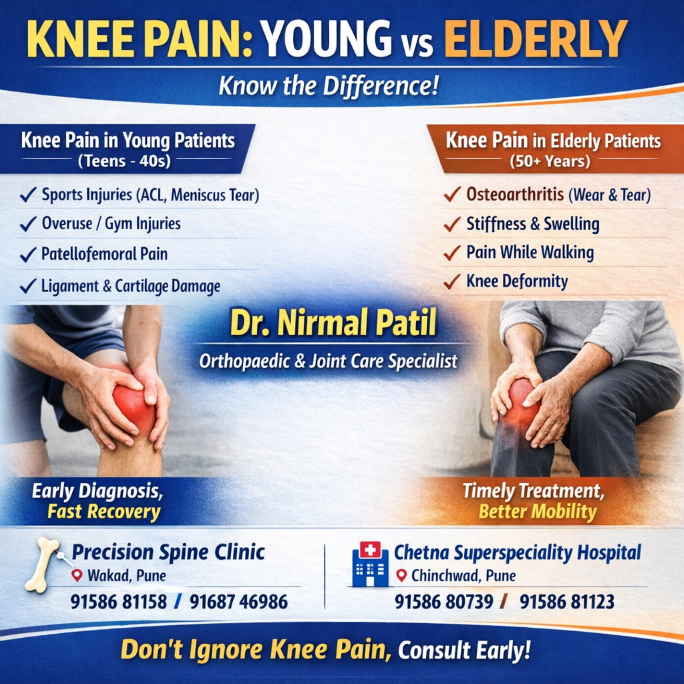
- In young patients, knee pain is usually related to injury or overuse
- In elderly patients, knee pain is most often due to degeneration or arthritis
Recognizing this distinction is crucial for correct treatment.
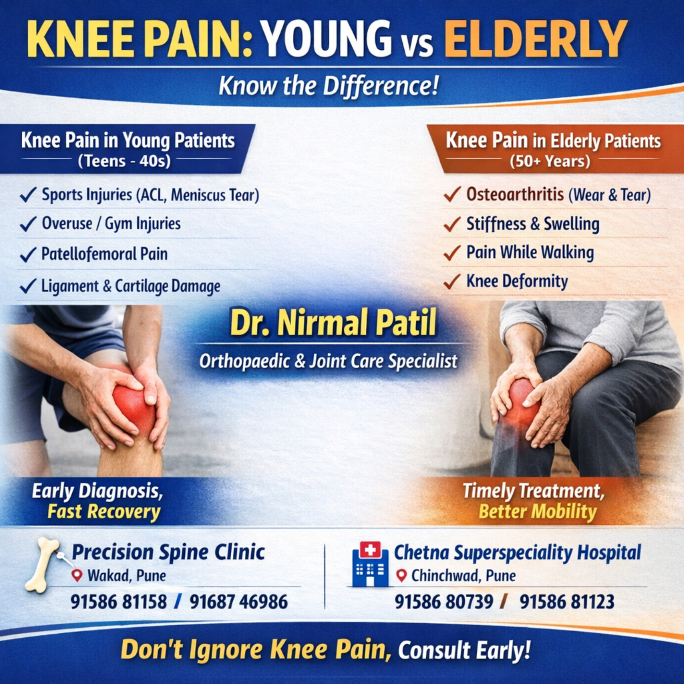
Knee Pain in Young Patients (Teens to 40s)
Common Causes of Knee Pain in Young Adults
- Sports Injuries
Young and active individuals are prone to sports-related knee injuries such as:
- ACL (Anterior Cruciate Ligament) tear
- Meniscus tear
- Ligament sprains
These injuries often occur due to sudden twisting, jumping, or impact.
- Overuse and Gym Injuries
Excessive running, improper workout techniques, or lack of rest can cause:
- Tendinitis
- Patellar tendon pain
- Muscle imbalance
- Patellofemoral Pain Syndrome (Runner’s Knee)
This condition causes pain around the kneecap, especially while climbing stairs, squatting, or sitting for long periods. - Trauma or Accidents
Road traffic accidents or falls can lead to fractures, ligament injuries, or cartilage damage.
Symptoms of Knee Pain in Young Patients
- Sudden pain after injury
- Swelling or instability
- Difficulty running or bending
- Locking or clicking sensation
- Pain during physical activity
Treatment Approach for Young Patients
Early and accurate diagnosis is key. Treatment may include:
- Rest and activity modification
- Physiotherapy and strengthening exercises
- Bracing or support
- Medications for pain and inflammation
- Arthroscopic or minimally invasive surgery (if required)
Dr. Nirmal Patil focuses on joint preservation and faster return to activity, avoiding unnecessary surgery whenever possible.
Knee Pain in Elderly Patients (50+ Years)
Common Causes of Knee Pain in Elderly
- Osteoarthritis (Wear and Tear Arthritis)
The most common cause of knee pain in elderly patients. It occurs due to gradual loss of cartilage, leading to:
- Bone friction
- Pain and stiffness
- Reduced joint space
- Age-Related Degeneration
With aging, muscles weaken, ligaments lose elasticity, and joints become less stable. - Inflammatory Conditions
Rheumatoid arthritis and other inflammatory joint diseases can cause chronic pain and swelling. - Previous Injuries
Old untreated injuries may accelerate arthritis in later years.
Symptoms of Knee Pain in Elderly Patients
- Pain while walking or climbing stairs
- Morning stiffness
- Swelling around the knee
- Difficulty standing up from sitting
- Bowing or deformity of the knee in advanced cases
Treatment Approach for Elderly Patients
Treatment aims to reduce pain, improve mobility, and delay surgery:
- Lifestyle modification and weight management
- Physiotherapy to strengthen muscles
- Pain-relieving and cartilage-supporting medications
- Injections (viscosupplementation or PRP, where suitable)
- Knee replacement surgery in advanced arthritis cases
Early consultation with an orthopaedic specialist can significantly improve outcomes.
How Knee Pain Is Connected to Spine Health
Many patients are surprised to learn that knee pain can sometimes originate from the spine.
Conditions like:
- Slip disc
- Sciatica
- Nerve compression
can cause referred pain to the knee.
As one of the best spine surgeons in Pune, Dr. Nirmal Patil ensures a holistic evaluation, examining both knee and spine before finalizing treatment.
When Should You See an Orthopaedic or Spine Specialist?
Do not ignore knee pain if you experience:
- Pain lasting more than 1–2 weeks
- Swelling or instability
- Difficulty walking or standing
- Night pain or increasing stiffness
- Pain associated with back or leg symptoms
Early diagnosis prevents long-term joint damage and unnecessary surgery.
Why Choose Dr. Nirmal Patil?
Dr. Nirmal Patil is a highly trusted orthopaedic and spine specialist in Pune, known for:
- Accurate diagnosis
- Conservative and ethical treatment
- Expertise in spine and joint conditions
- Patient-centered care
He is widely recognized as one of the best spine surgeons in Pune, offering advanced care for back pain, knee pain, arthritis, slip disc, and sports injuries.