When a patient is advised surgery, the focus often remains on the procedure itself. However, one of the most critical steps in ensuring a safe surgery and smooth recovery happens before entering the operation theatre — pre-surgery tests. These tests play a vital role in evaluating a patient’s overall health, identifying hidden risks, and helping the surgeon and anesthetist plan the safest approach.
At Chetna Hospital, Chinchwad, pre-operative evaluation is an essential part of surgical care under the guidance of Dr. Dhananjay Patil, General Surgeon. Patients from Chinchwad, Pimpri, Nigdi, Akurdi, Wakad, Ravet, and nearby areas of Pune trust the hospital for ethical, systematic, and patient-focused surgical treatment.
What Are Pre-Surgery Tests?
Pre-surgery tests, also known as pre-operative investigations, are a set of medical examinations conducted before any surgical procedure. These tests help assess the functioning of vital organs such as the heart, lungs, kidneys, liver, and blood system.
For a general surgeon, these tests are essential to:
- Determine if the patient is fit for surgery
- Identify medical conditions that may complicate surgery
- Plan anesthesia safely
- Reduce post-operative complications
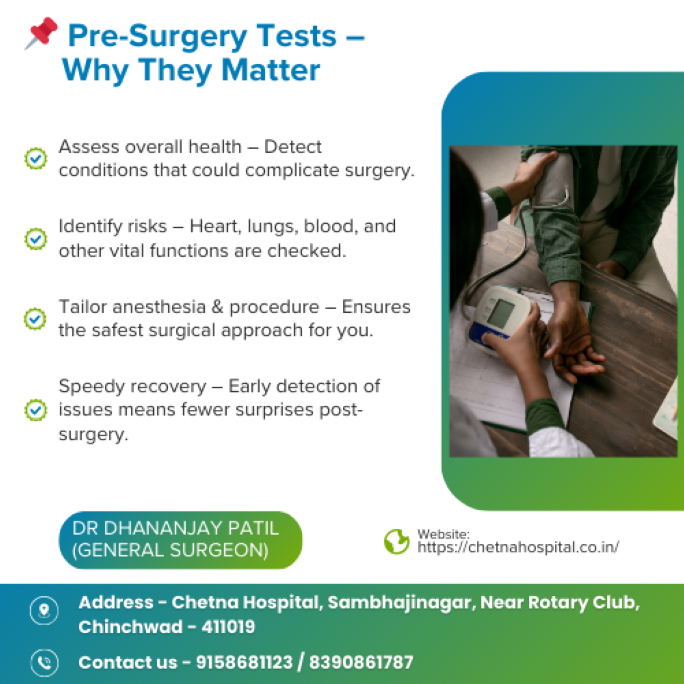
Why Pre-Surgery Tests Are Important
1. Assess Overall Health Status
Many patients may appear healthy but still have underlying conditions such as:
- High blood pressure
- Diabetes
- Anemia
- Heart or lung disorders
Pre-surgery tests help Dr. Dhananjay Patil, an experienced general surgeon in Chinchwad, understand the patient’s baseline health and take precautions accordingly.
2. Identify Surgical & Anesthesia Risks Early
Anesthesia affects the heart, lungs, and nervous system. Tests like ECG, chest X-ray, and blood investigations help anesthetists determine:
- Type of anesthesia required
- Dosage adjustments
- Risk of complications during surgery
This risk identification is especially important for elderly patients, patients with chronic illnesses, or those undergoing major general surgery.
3. Personalized Surgical Planning
Every patient is different. Pre-operative tests allow surgeons to:
- Customize the surgical approach
- Decide the timing of surgery
- Prepare for any emergency support if required
At Chetna Hospital, individualized surgical planning ensures patient safety and better outcomes.
4. Reduce Post-Surgery Complications
Complications such as infections, delayed wound healing, excessive bleeding, or breathing problems can often be prevented through proper pre-surgery evaluation. Early detection of abnormalities helps manage them before surgery, leading to:
- Faster recovery
- Shorter hospital stay
- Better surgical success rate
Common Pre-Surgery Tests Recommended by General Surgeons
Depending on the patient’s age, medical history, and type of surgery, the following tests may be advised:
Blood Tests
- Complete Blood Count (CBC)
- Blood sugar levels
- Kidney function tests
- Liver function tests
- Blood clotting profile
Heart & Lung Tests
- ECG (Electrocardiogram)
- Chest X-ray
- 2D Echo (if required)
Urine Tests
- Routine urine examination
- Infection screening
Additional Tests (If Needed)
- Thyroid profile
- COVID-related screening (if applicable)
- Specialist clearance for high-risk patients
These investigations help general surgeons in Pune ensure that surgery proceeds safely.
Importance of Pre-Surgery Tests in General Surgery
General surgery covers a wide range of procedures such as:
- Hernia surgery
- Appendectomy
- Gallbladder surgery
- Piles, fissure, and fistula treatment
- Minor and major abdominal surgeries
Each of these procedures requires a thorough pre-operative assessment. As a trusted general surgeon near Pimpri-Chinchwad, Dr. Dhananjay Patil emphasizes evidence-based evaluation before surgery.
Pre-Surgery Testing for Elderly Patients
Patients above 50 years of age are more likely to have:
- Hypertension
- Diabetes
- Cardiac conditions
For such patients, pre-surgery tests become even more important. Proper evaluation helps reduce anesthesia-related risks and improves surgical outcomes.
How Pre-Surgery Tests Improve Patient Confidence
Many patients feel anxious before surgery. When tests are done systematically and explained clearly, patients feel:
- More confident
- Better informed
- Mentally prepared
At Chetna Hospital, Chinchwad, patient education is given importance, helping patients and families understand the purpose of each test.
Role of a General Surgeon in Pre-Operative Care
A general surgeon does more than perform surgery. Their role includes:
- Reviewing investigation reports
- Coordinating with anesthetists and physicians
- Deciding surgical fitness
- Managing co-existing medical conditions
Dr. Dhananjay Patil, a well-known general surgeon in Chinchwad, follows a holistic approach that prioritizes patient safety at every stage.
Why Choose Chetna Hospital for Surgical Care?
Patients from Chinchwad, Akurdi, Nigdi, Ravet, Wakad, and Pimpri choose Chetna Hospital for:
- Experienced general surgeon
- Structured pre-surgery evaluation
- Ethical medical practices
- Hygienic infrastructure
- Personalized patient care
The hospital follows standard medical protocols to ensure safe surgery and optimal recovery.
Pre-Surgery Tests and Faster Recovery
Patients who undergo proper pre-operative evaluation often experience:
- Fewer surgical complications
- Better pain management
- Faster wound healing
- Early return to daily activities
This highlights why skipping or delaying pre-surgery tests can increase surgical risks.
When Should You Get Pre-Surgery Tests Done?
Ideally, tests should be done:
- A few days before surgery
- As advised by the surgeon
- With proper follow-up for abnormal reports
Timely testing allows enough time to correct medical issues before surgery.