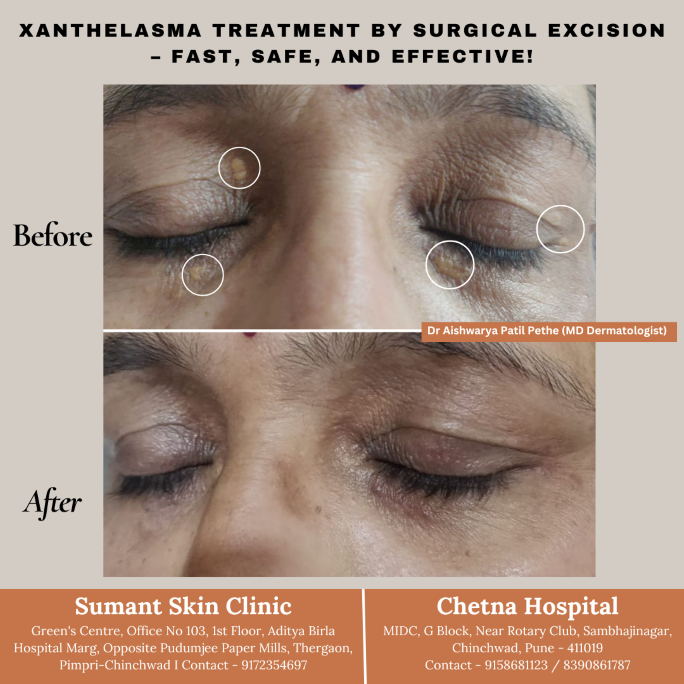
Xanthelasma is a common yet cosmetically concerning condition that appears as yellowish, flat or slightly raised plaques on the eyelids, usually near the inner corners of the eyes. Though medically harmless in most cases, xanthelasma can affect facial appearance and confidence. The most effective and permanent solution for this condition is xanthelasma treatment by surgical excision, especially when performed by an experienced eye specialist.
At Chetna Superspeciality Hospital, Sambhajinagar, Chinchwad, expert evaluation and advanced surgical care for xanthelasma are provided by **Dr.
dr aishwarya patil pethe md dermatologist
Xanthelasma Treatment by Surgical Excision in Pimpri-Chinchwad
Expert Dermatology Care by Dr. Aishwarya Patil Pethe (MD Dermatologist)
Xanthelasma is a common dermatological condition that appears as yellowish or pale plaques around the eyelids, especially near the inner corners of the eyes. While it is usually painless and non-cancerous, xanthelasma can significantly affect facial appearance and self-confidence. Many patients seek treatment not only for cosmetic reasons but also to rule out underlying health concerns such as high cholesterol levels.
If you are searching for effective xanthelasma treatment in Pimpri-Chinchwad, surgical excision remains one of the most reliable and permanent treatment options. At Chetna Superspeciality Hospital, Sambhajinagar, Chinchwad, advanced xanthelasma treatment is offered under the expert care of Dr. Aishwarya Patil Pethe, MD Dermatologist, ensuring safe, precise, and aesthetically pleasing results.
What Is Xanthelasma?
Xanthelasma palpebrarum is a condition characterized by cholesterol-rich deposits under the skin, most commonly seen on the upper or lower eyelids. These deposits are soft, flat, or slightly raised and yellowish in color.
Although xanthelasma itself is harmless, it may sometimes be associated with:
- High cholesterol or lipid disorders
- Diabetes
- Thyroid problems
- Obesity
- Genetic predisposition
Because the eyelid skin is delicate and highly visible, treatment should always be performed by a qualified dermatologist experienced in facial and eyelid procedures.
Causes and Risk Factors of Xanthelasma
Understanding the cause of xanthelasma helps in preventing recurrence and managing overall health.
Common causes include:
- High cholesterol or triglyceride levels
- Family history of lipid disorders
- Diabetes mellitus
- Hypothyroidism
- Liver disorders
- Increasing age
- Smoking and unhealthy lifestyle habits
Dr. Aishwarya Patil Pethe, MD Dermatologist at Chetna Hospital, often recommends blood investigations along with treatment to address both cosmetic and medical aspects of the condition.
Symptoms of Xanthelasma
Xanthelasma usually develops gradually and may increase in size over time.
Common symptoms:
- Yellow or cream-colored patches on eyelids
- Soft or semi-firm texture
- Symmetrical appearance on both eyes
- No pain or itching in most cases
- Cosmetic concern and reduced confidence
If you notice such changes around your eyes, early consultation with a dermatologist in Chinchwad or Pimpri-Chinchwad is advised.
Why Surgical Excision Is the Best Treatment for Xanthelasma
There are multiple treatment options for xanthelasma, including laser treatment, chemical cautery, and radiofrequency. However, surgical excision remains the gold standard, especially for larger, deeper, or recurrent lesions.
Benefits of Surgical Excision:
- Complete removal of xanthelasma deposits
- Lower recurrence rate compared to other methods
- Immediate and visible results
- Ideal for thick or long-standing lesions
- Performed under local anesthesia
At Chetna Superspeciality Hospital, surgical excision is performed with utmost precision to ensure minimal scarring and excellent cosmetic outcomes.
Xanthelasma Surgical Excision Procedure – Step by Step
Under the care of Dr. Aishwarya Patil Pethe, the procedure is safe, quick, and well-tolerated.
Step 1: Dermatological Evaluation
A detailed examination of eyelid lesions is done along with medical history and blood tests if required.
Step 2: Local Anesthesia
The area is numbed using local anesthesia to ensure a painless procedure.
Step 3: Precise Surgical Removal
The xanthelasma plaque is carefully excised without damaging surrounding eyelid skin.
Step 4: Wound Closure
Fine sutures are placed to promote proper healing and reduce scarring.
Step 5: Post-Procedure Care
Patients are advised on wound care, medications, and follow-up visits.
The entire procedure usually takes 30–45 minutes, and patients can go home the same day.
Recovery After Xanthelasma Surgery
Recovery is usually smooth and uncomplicated when performed by an experienced dermatologist.
What to expect after surgery:
- Mild swelling or redness for a few days
- Sutures removed within 5–7 days
- Gradual healing with minimal scarring
- Visible cosmetic improvement within 1–2 weeks
Dr. Aishwarya Patil Pethe provides personalized aftercare instructions to ensure optimal healing and results.
Can Xanthelasma Recur After Treatment?
Although surgical excision offers the lowest recurrence rate, xanthelasma can return if underlying causes such as high cholesterol are not managed.
Prevention tips:
- Regular lipid profile check-ups
- Healthy diet and exercise
- Managing diabetes and thyroid disorders
- Avoid smoking
- Periodic dermatology follow-ups
At Chetna Hospital, Chinchwad, patients receive holistic care focusing on both treatment and prevention.
Why Choose Dr. Aishwarya Patil Pethe for Xanthelasma Treatment?
Choosing the right dermatologist is crucial, especially for delicate areas like the eyelids.
About Dr. Aishwarya Patil Pethe:
- MD Dermatologist
- Expertise in cosmetic and clinical dermatology
- Skilled in minor dermatological surgeries
- Focus on safe, aesthetic, and patient-centric care
She is widely trusted for xanthelasma treatment in Pimpri-Chinchwad, Chinchwad, Wakad, Thergaon, Akurdi, Nigdi, Ravet, Punawale, and PCMC areas.
Why Choose Chetna Superspeciality Hospital?
Chetna Superspeciality Hospital, Sambhajinagar, Chinchwad, is known for advanced dermatology care with modern infrastructure.
Hospital highlights:
- Experienced dermatology department
- Sterile operation setup
- Advanced surgical techniques
- Comprehensive patient support
- Easy accessibility for PCMC residents
Who Should Consider Xanthelasma Surgical Excision?
You should consult a dermatologist if:
- Xanthelasma is increasing in size
- Lesions are thick or recurrent
- You want permanent cosmetic improvement
- Laser or medicines have not worked
- You are concerned about eyelid appearance
Early treatment ensures better cosmetic results and prevents further progression.
Xanthelasma Treatment in Pimpri-Chinchwad – Frequently Asked Questions
Is xanthelasma dangerous?
No, it is usually harmless but may indicate high cholesterol.
Is surgery painful?
No, the procedure is done under local anesthesia and is painless.
Will there be scars?
When performed by an expert dermatologist, scarring is minimal and usually fades with time.
How long does the result last?
Surgical excision provides long-lasting results, especially with lifestyle modifications.
Book Your Xanthelasma Consultation Today
If you are looking for safe and effective xanthelasma treatment by surgical excision in Chinchwad or Pimpri-Chinchwad, consult Dr. Aishwarya Patil Pethe, MD Dermatologist, at Chetna Superspeciality Hospital.
✨ Restore your confidence
✨ Achieve clear, healthy-looking eyelids
✨ Get expert dermatology care close to home
📍 Chetna Superspeciality Hospital, Sambhajinagar, Chinchwad, Pimpri-Chinchwad