Table of Contents
- Understanding allergies, blockages and dry eye syndrome
- When allergies turn the tap on and cause watery eyes
- Why blockages occur: a common cause of watery eyes
- How dry eye triggers excess tearing and watery eyes
- When professional care is necessary
- Treatment matched to the cause
- Eye care at Chetna Hospital
Why Do You Have Watery Eyes? Allergies, Blockages and Dry Eye Explained
Eyes that will not stop watering can be frustrating. One moment your vision feels normal; the next, tears spill over as if someone flicked a switch. You dab, blink and apologise. Persistently watery eyes are common. What is less well known is how often their cause is misunderstood.
Excess tearing can have very different causes. Sometimes it is an allergic reaction to harmless particles. Sometimes it is a blockage in the eye’s drainage system. And sometimes, strangely, it is dryness itself that sets off the flood. Other causes include wind, cold or smoke, something in the eye, an infection, or an eyelid that turns outwards. Knowing which one is at play helps you get the right relief.
Below, we look at three common causes of constant tearing and how to tell them apart.
How Tears Normally Work
Tear production is continuous, not occasional. Lacrimal glands above each eye make fluid that lubricates, cleans and protects the surface of the eye. These tears spread with each blink, forming a protective layer over the cornea.
Tears then drain through tiny openings at the inner corners of the eyelids, called puncta. They pass through small channels and empty into the nose. When this system works well, you never notice it. When the balance is lost, tears build up and spill over.
The balance can be upset in three main ways: too many tears, poor drainage, or poor tear quality. The result looks the same in the mirror, but the causes are quite different.
When Allergies Turn the Tap On and Cause Watery Eyes
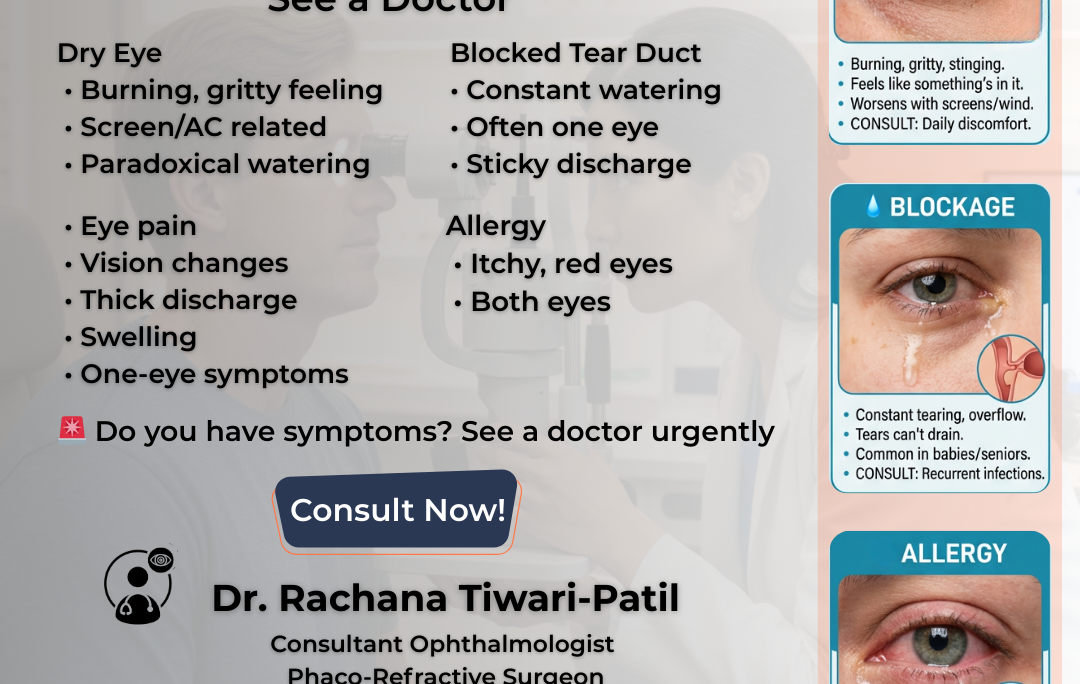
Allergic conjunctivitis is a common cause of watery eyes. If your symptoms come and go with your surroundings, or get worse in certain seasons, allergens are a likely cause.
Signs of Eye Allergies
Allergy-related tearing usually comes with other symptoms:
- Tearing that comes and goes, sometimes heavily
- Strong itching that makes you want to rub
- Redness in both eyes
- Puffiness, particularly of the eyelids
- Stinging or burning
- Clear, thin discharge
Allergic reactions tend to be predictable. The eyes react when exposed to particular triggers rather than at random.
Common triggers include pollen, dust mites in bedding and soft furnishings, animal dander, mould in damp spaces, and some cosmetics or eye products.
Seasonal Patterns vs. Year-Round Triggers
Many people notice their symptoms follow a pattern. Pollen from trees, grasses and weeds peaks at different times of year, depending on where you live. Indoor allergens such as dust mites and pets can cause symptoms all year round.
If your eyes react more in certain places or seasons, allergies are a likely cause. Once you know your triggers, you can often reduce contact with them and manage symptoms more easily.
When Tear Ducts Fail to Drain
Imagine a sink with a blocked outlet. Water keeps flowing in but cannot escape. A blocked tear duct works the same way. Tears are made as usual, but they have nowhere to go.
A blocked tear duct (nasolacrimal duct obstruction) can happen at any age, but it is especially common in babies and older adults.
How Tear Drainage Becomes Blocked
The tear drainage route is narrow. Tears move from the puncta into small channels (canaliculi), collect in a small sac, and then pass down the nasolacrimal duct into the nose. A blockage anywhere along this route causes overflow.
Typical signs include:
- Constant tearing from one or both eyes
- Tears running down the cheek for no clear reason
- Sticky discharge or crusty lashes, particularly after sleep
- Discomfort or pressure near the inner corner of the eye
- Swelling near the inner corner of the eye
- Eye infections that keep coming back
Unlike allergies, tearing from a blockage tends to be steady rather than on and off. Painful redness and swelling near the inner corner of the eye, especially with a fever, can mean the tear sac is infected and needs prompt medical care.
Why Blockages Occur: A Common Cause of Watery Eyes
Several things can narrow or close the drainage system. Age-related changes can narrow the ducts. A past injury, such as a broken nose, or surgery can leave scar tissue. Long-term sinus inflammation or nasal polyps can block drainage. Some medicines and cancer treatments can also play a part.
In newborns, blocked tear ducts are often present from birth because the duct has not fully opened. Many clear on their own within the first months of life. If watering continues, a doctor can advise on treatment.
The Dry Eye Paradox
One of the most surprising causes of watery eyes is dry eye syndrome. Here, the eyes overflow not because they are well lubricated, but because they are poorly protected.
How Dry Eye Triggers Excess Tearing and Watery Eyes
Healthy tears are a mix of water, oils and mucus. When there are too few tears or the mix is poor, the surface of the eye becomes irritated. In response, the eye makes extra “reflex” tears.
These reflex tears are like a sudden downpour: plentiful and watery, but not good at protecting the eye. They wash over the surface briefly, then evaporate or drain away, and the dryness remains.
This creates a loop: irritation causes tearing, tearing does not soothe, and the irritation continues.
Signs Pointing to Dry Eye Syndrome
Symptoms of dry eye often include:
- A gritty or sandy feeling
- Watering that gets worse outdoors or in the wind
- Burning or stinging
- Sensitivity to light
- Discomfort with contact lenses
- Blurry or changing vision that improves with blinking
- Tired eyes after long periods of focusing
- Stringy mucus
This mix of dryness and too many tears is a useful clue.
Who Is Most at Risk
Dry eye becomes more common with age as tear production falls. Hormonal changes, particularly in women around menopause, also play a role. Dry air, heating or air conditioning, and wind can make symptoms worse.
Modern habits add to the problem. Long screen use reduces blinking, so tears evaporate faster. Some medicines, including some allergy, cold and mood medicines, can reduce tears. Contact lenses can also upset the tear film. Do not stop a prescribed medicine on your own; ask your doctor.
Finding the Real Cause
Because symptoms overlap, finding the right cause matters. Small details help: when tearing happens, what triggers it, whether it is constant, and what other symptoms come with it.
Keeping a short symptom diary for one or two weeks can help. Note when tearing happens, what you were doing, the conditions around you, and anything that helped or did not. Take it with you to your eye appointment.
When Professional Care Is Necessary
Occasional tearing is usually nothing to worry about. Persistent or troublesome symptoms should be checked. See an eye doctor if you notice:
- Ongoing tearing that interferes with daily tasks
- Watering from one eye only that does not settle
- Thick yellow or green discharge
- An eyelid that turns in or droops away from the eye, or a lump or swelling around the eye
- Symptoms that do not improve with pharmacy treatments
See an eye doctor the same day if you have eye pain or any change in your vision. Go to an emergency department straight away, or call 108 or 112, if you have sudden loss of vision, severe eye pain, a chemical in the eye or an eye injury.
Eye doctors and optometrists can check how many tears you make, look at the drainage system, assess tear quality, and help identify allergy triggers.
Treatment Matched to the Cause
Treatment needs to match the cause.
Eye allergies often improve by avoiding triggers, using cool compresses, and using allergy eye drops or medicines that a pharmacist or doctor recommends.
In babies, a doctor may show parents how to gently massage the tear duct. In adults, a blocked tear duct that keeps causing problems may need a small procedure or operation to make a new drainage path. Infections are treated by a doctor.
Dry eye care aims to keep the tear film stable. Lubricating eye drops, treatments your eye doctor prescribes, and steps that slow tear loss are common options. Changes to your surroundings, such as a humidifier and regular screen breaks, also help.
Watery eyes may seem minor, but they can affect comfort, work and confidence. Whether the cause is allergies, a blockage or dry eye, knowing the difference is the first step to relief. If symptoms last or get worse, get your eyes checked.
Eye Care at Chetna Hospital
The eye care (ophthalmology) department at Chetna Hospital sees people with watering eyes, dry eye, eye allergies and tear duct problems. Each person is examined to find the cause, and treatment is planned around their eyes and daily life. Call 91686 90442 to book a check-up.
General health information, not a diagnosis. Reviewed and updated by Chetna Hospital’s content team with the help of AI writing tools, November 2026.