In today’s fast-paced medical environment, critical care plays a vital role in saving lives. For patients with severe illnesses, injuries, or organ failures, timely intervention in the Intensive Care Unit (ICU) can mean the difference between recovery and complications. Dr. Ashpak Bangi, a renowned Consultant Physician and Intensivist at Chetna Hospital, Chinchwad, Pune, has extensive experience in ICU management, ventilator support, and sepsis care, helping patients navigate some of the most challenging moments of their lives.
In this blog, we explore the essentials of critical care, the differences between ICU, Emergency, and Ward care, common challenges in intensive care, and how expert guidance from an intensivist in Pune can make a life-saving difference.
What is Critical Care?
Critical care, also known as intensive care, is a specialized branch of medicine that focuses on patients with life-threatening conditions requiring constant monitoring, advanced interventions, and comprehensive medical support. The ICU is equipped with state-of-the-art technology such as ventilators, monitors, dialysis units, and other life-saving devices.
Dr. Ashpak Bangi emphasizes that critical care is not just about equipment—it’s about timely decision-making, expertise, and coordinated care. From patients with severe sepsis to those requiring mechanical ventilation, the role of an experienced ICU doctor in Pune is indispensable.
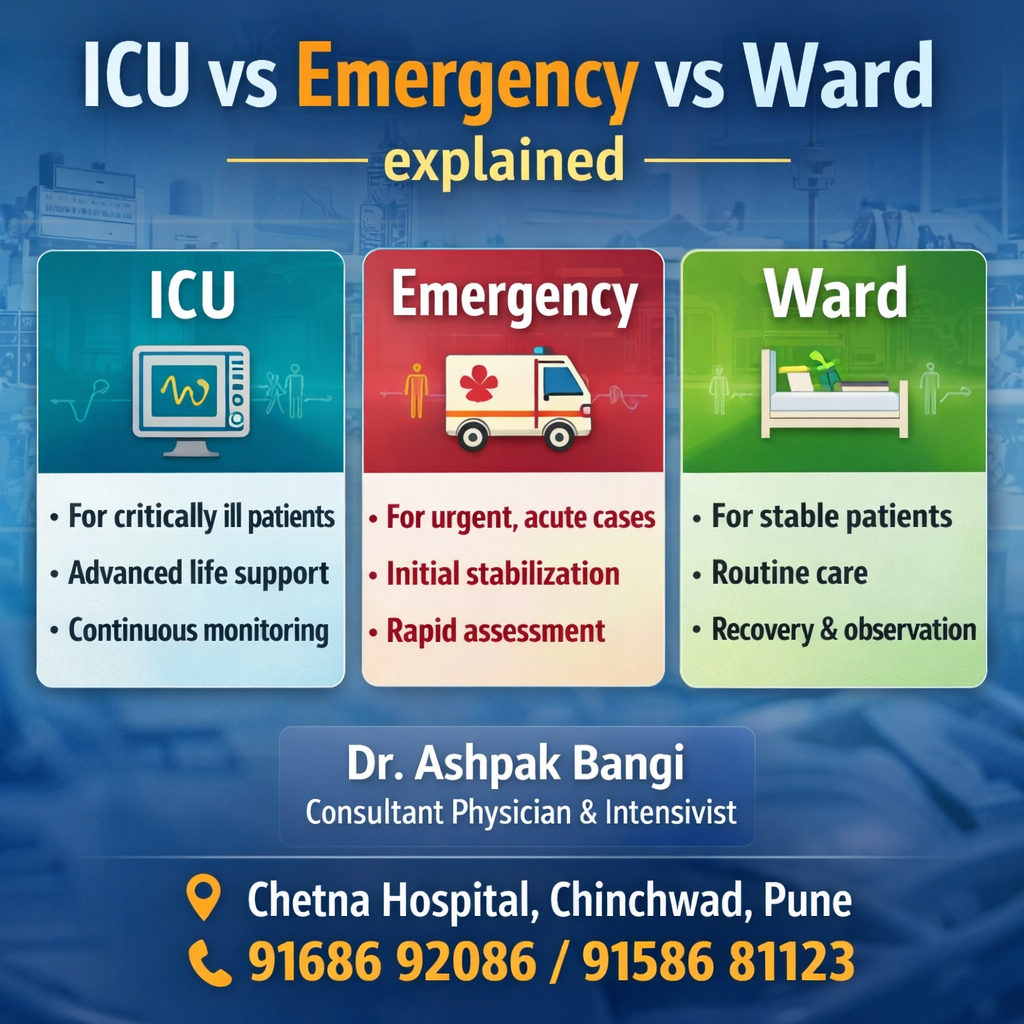
ICU vs Emergency vs Ward: Understanding the Difference
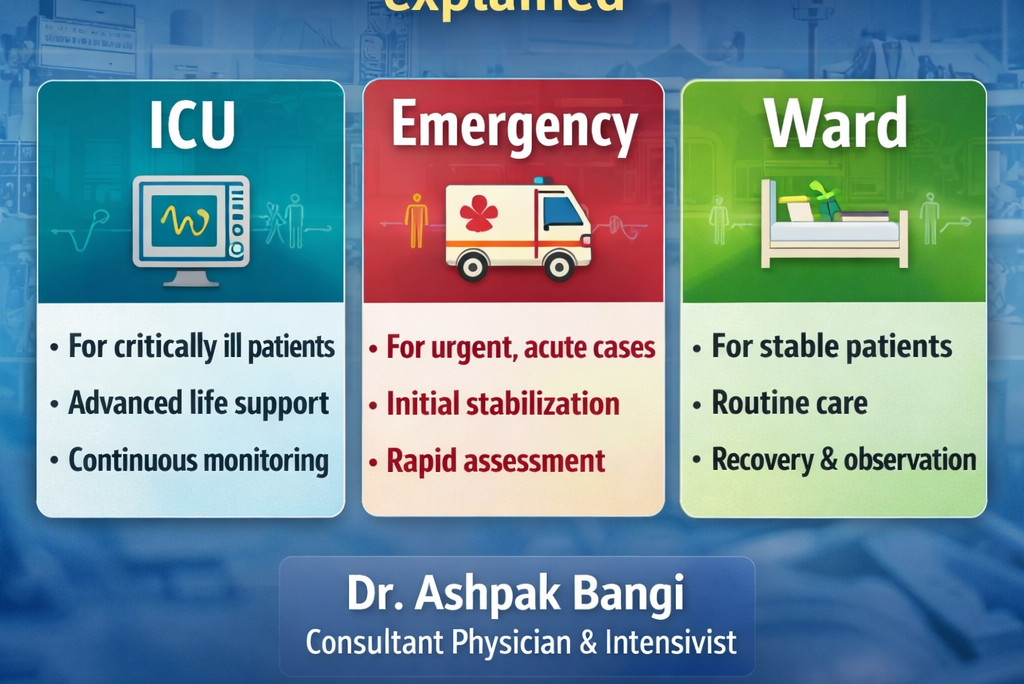
Many patients and families are often confused about the difference between ICU, Emergency, and Ward care. Here’s a clear breakdown:
1. ICU (Intensive Care Unit)
The ICU is for critically ill patients who need advanced monitoring and life support. Dr. Ashpak Bangi explains that ICU care is crucial for patients with severe respiratory distress, multi-organ failure, septic shock, or post-major surgeries.
Key features of ICU care:
- Continuous monitoring of vital signs
- Advanced ventilator support and oxygen therapy
- Rapid response to life-threatening complications
- Expert management of sepsis, shock, and organ dysfunction
2. Emergency Department
The Emergency Department (ED) is designed for immediate assessment and stabilization of patients with acute illnesses or injuries. The goal is to quickly identify life-threatening conditions and initiate urgent interventions.
Key features of Emergency care:
- Rapid triage and assessment
- Initial stabilization of acute conditions
- Immediate referral to ICU or ward based on severity
3. Hospital Ward
The Ward is for stable patients who require ongoing observation, routine treatment, or recovery after ICU care. While critical interventions are less frequent, regular monitoring and preventive care are essential to avoid complications.
By understanding these differences, patients and families can make informed decisions about where to seek care.
Common ICU Challenges and How to Avoid Them
Despite technological advancements, ICU care comes with unique challenges. Dr. Ashpak Bangi shares insights from his experience in critical care management:
1. Ventilator Management
Improper ventilator settings can lead to ventilator-induced lung injury or worsen respiratory failure. Key tips include:
- Regularly monitoring tidal volume, PEEP, and oxygen saturation
- Adjusting ventilation based on lung compliance and blood gas results
- Preventing ventilator-associated pneumonia through strict hygiene
2. Sepsis Management
Sepsis is a leading cause of ICU mortality. Dr. Bangi stresses:
- Early recognition of infection signs
- Timely initiation of sepsis bundles including antibiotics and fluid resuscitation
- Continuous monitoring of organ function
3. Fluid Management
Both overhydration and dehydration can be harmful. Proper fluid balance management is crucial for patients with kidney injury, shock, or heart failure.
4. Multi-Organ Failure
ICU patients often face complications in multiple organ systems. Expert intensivists monitor cardiac, renal, hepatic, and respiratory function simultaneously to reduce mortality risk.
Role of an Intensivist in Pune
An intensivist is a doctor specialized in critical care medicine, trained to manage the most complex and life-threatening cases. Dr. Ashpak Bangi’s role as an ICU doctor in Pune includes:
- Leading the ICU team and coordinating care across specialties
- Making rapid decisions on ventilator support, dialysis, and medications
- Guiding families through critical care decisions with empathy
- Implementing evidence-based protocols to reduce complications and improve outcomes
By combining experience, technology, and a patient-centric approach, an intensivist ensures the best possible outcomes for critically ill patients.
How AI and Technology Support Critical Care
Modern ICUs are increasingly integrating AI and predictive analytics to enhance patient outcomes. According to Dr. Bangi:
- AI Early Warning Systems can detect deterioration before visible symptoms appear
- Ventilator AI tools help optimize oxygen delivery and reduce lung injury
- Predictive analytics guide treatment plans and ICU discharge timing
While AI supports decision-making, expert judgment from an experienced intensivist remains irreplaceable.
Why Choose Dr. Ashpak Bangi for Critical Care in Pune?
Dr. Ashpak Bangi is a trusted intensivist in Pune, known for his compassionate care and clinical expertise. Patients and families rely on him for:
- Comprehensive ICU care including ventilator support and sepsis management
- Emergency consultations for life-threatening conditions
- Patient-centered guidance for recovery and rehabilitation
- Expertise in multi-organ failure, shock management, and advanced monitoring
📍 Location: Chetna Hospital, Chinchwad, Pune
📞 Contact: 9168692086 / 9158681123