Tooth sensitivity treatment often starts with a sensitivity toothpaste, but only when the twinge is short and sharp and goes away once the cold or sweet thing is gone. If the pain lingers, comes when you bite, or you can see a chip, a dark spot or a broken filling, the cause may be a cavity, a crack or a worn filling. Then a dentist in Chinchwad needs to check and treat the tooth itself.
NextGen Dental and Cosmetic Clinic, dental department at Chetna Hospital, Chinchwad
Call 91686 92087
Get Directions
WhatsApp
Room No 4, First Floor, Chetna Hospital, Sambhaji Nagar, Near HP Petrol Pump, Nigdi Bhosari Highway, Chinchwad 411019
Key takeaways
- A short, sharp twinge that fades once the cold is gone often comes from exposed dentin.
- However, pain that lingers, or pain when you bite, needs a dental check.
- A desensitising toothpaste usually needs several uses before it helps.
- Spit out the paste after brushing; do not rinse it away.
- Also, hard brushing and acidic food and drinks can wear enamel and make the zing worse.
In this article
- When is tooth sensitivity treatment just a toothpaste?
- Why does a tooth zing with cold?
- When does tooth sensitivity treatment mean fixing the tooth?
- What happens at a tooth sensitivity treatment visit?
- When should you see a dentist urgently?
- Frequently asked questions
Many people who say they have “sensitive teeth” have already changed their toothpaste twice. Sometimes the paste is all that is needed. Other times the pain comes from a problem in the tooth that a paste cannot reach. So here is how a dentist usually tells the two apart. You can have your teeth checked at NextGen Dental and Cosmetic Clinic, Chetna Hospital.
Around Diwali, festive sweets and chilled drinks are on many tables.
When is tooth sensitivity treatment just a toothpaste?
A toothpaste is often enough when the twinge is short and sharp. It comes with cold, air, sweet or sour food, or touch, and it goes away when the trigger is removed. The British Society of Periodontology describes this as the typical pattern of dentine hypersensitivity, which comes from exposed dentin.
For this, tooth sensitivity treatment at home means brushing twice a day with a desensitising toothpaste. Also spit, do not rinse, so the paste stays on the teeth. The British Society of Periodontology also suggests rubbing a small amount onto the sensitive area with a fingertip. However, the American Dental Association notes that a desensitising paste usually needs several applications before the sensitivity is reduced, and some products take longer to help. So give it time before you decide it has failed, and see a dentist if it does not settle.
Why does a tooth zing with cold?
Under the enamel lies dentin, which contains microscopic tubes. When dentin loses its covering, these tubes let heat, cold and acidic or sticky foods reach the nerves inside the tooth (American Dental Association). Enamel can wear thin from hard brushing or acidic food and drinks. Also, gums can pull back and expose the root. Mayo Clinic lists worn enamel, exposed roots, cavities, cracked or chipped teeth, worn fillings and gum disease as possible causes, and notes that tooth whiteners may also cause sensitivity.
A few everyday habits help protect the enamel (Mayo Clinic, Cleveland Clinic):
- Brush twice a day with a soft-bristled brush and gentle strokes.
- Limit acidic foods and drinks such as citrus, pickles and fizzy drinks; drinking through a straw can help.
- If you grind your teeth, ask your dentist about a mouth guard.
When does tooth sensitivity treatment mean fixing the tooth?
Some signs suggest the problem is in the tooth itself, and a paste alone will not fix it:
- The pain lingers after the cold is gone.
- Also, it hurts when you bite down.
- You see a dark spot, a chipped edge or an old filling that has cracked.
- The toothache lasts more than 2 days, or does not go away when you take painkillers.
Cleveland Clinic notes that pain that does not go away can be a sign of a more serious issue, and the NHS lists tooth decay, a cracked or damaged tooth and a loose or broken filling as causes of toothache. In these cases tooth sensitivity treatment means repairing the tooth. For example, a filling, an inlay, bonding or a crown may be used to correct a flaw or decay. If sensitivity is severe and persistent and cannot be treated by other means, the American Dental Association says root canal treatment may be considered. Our article on cracked tooth pain explains the crack pattern in more detail.
What happens at a tooth sensitivity treatment visit?
First, the dentist asks when it hurts, where, and for how long. Then the dentist looks at the teeth, the gum line and old fillings. Many mouth problems cause pain that feels like sensitivity, so the dentist checks for other causes such as decay, a crack or a worn filling before deciding on a plan (British Society of Periodontology).
After that, the plan depends on what the dentist finds:
- Exposed dentin, no damage: a desensitising paste, a fluoride varnish in the clinic, or a sealant or bonded coat over the exposed root.
- Cavity or worn filling: a filling or a replacement filling.
- Gum recession: gum care and, sometimes, a gum graft to cover the exposed root. Our guide to gum disease explains how gum problems develop.
- Severe, persistent sensitivity that other treatment has not helped: root canal treatment may be considered.
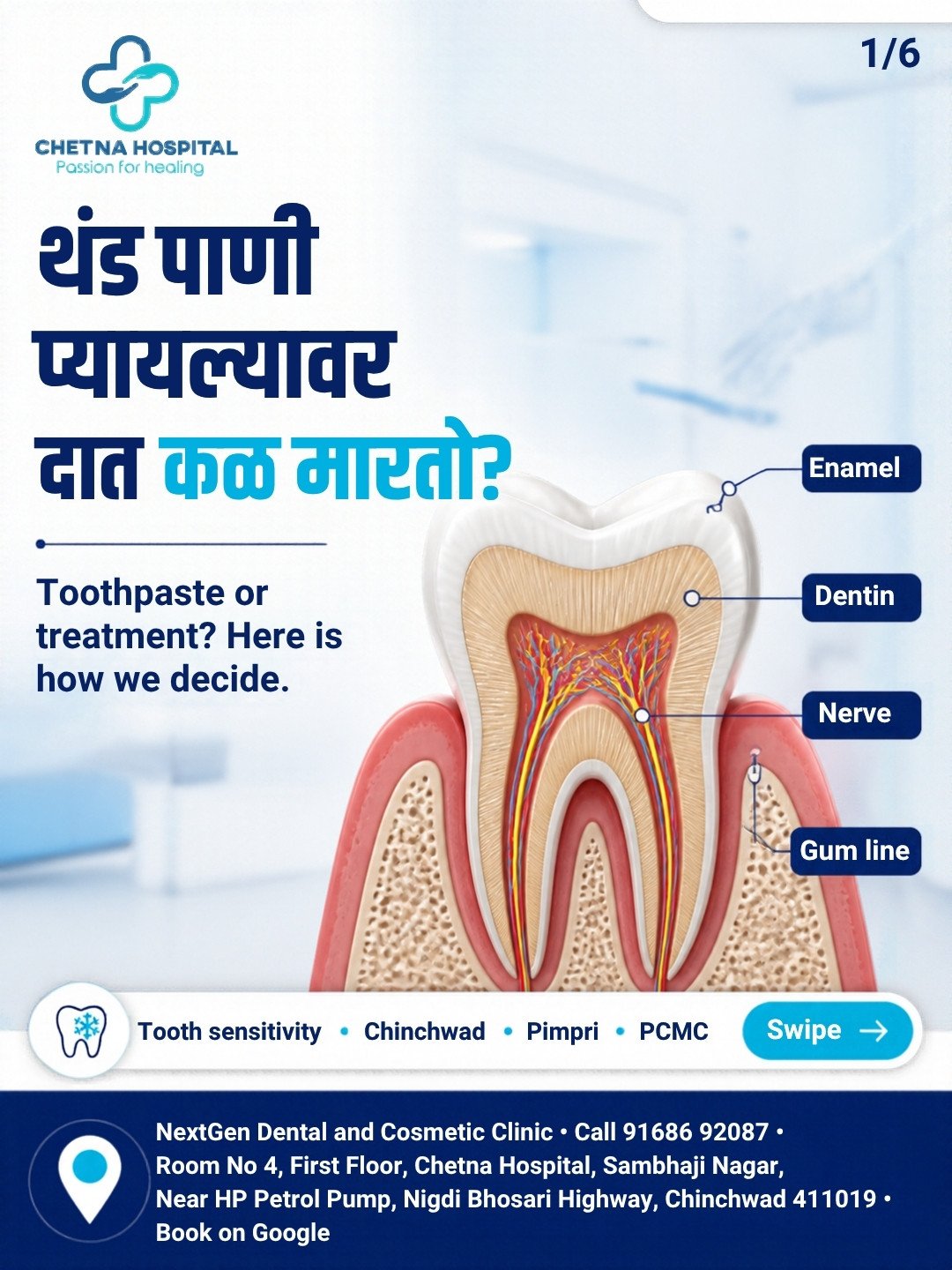
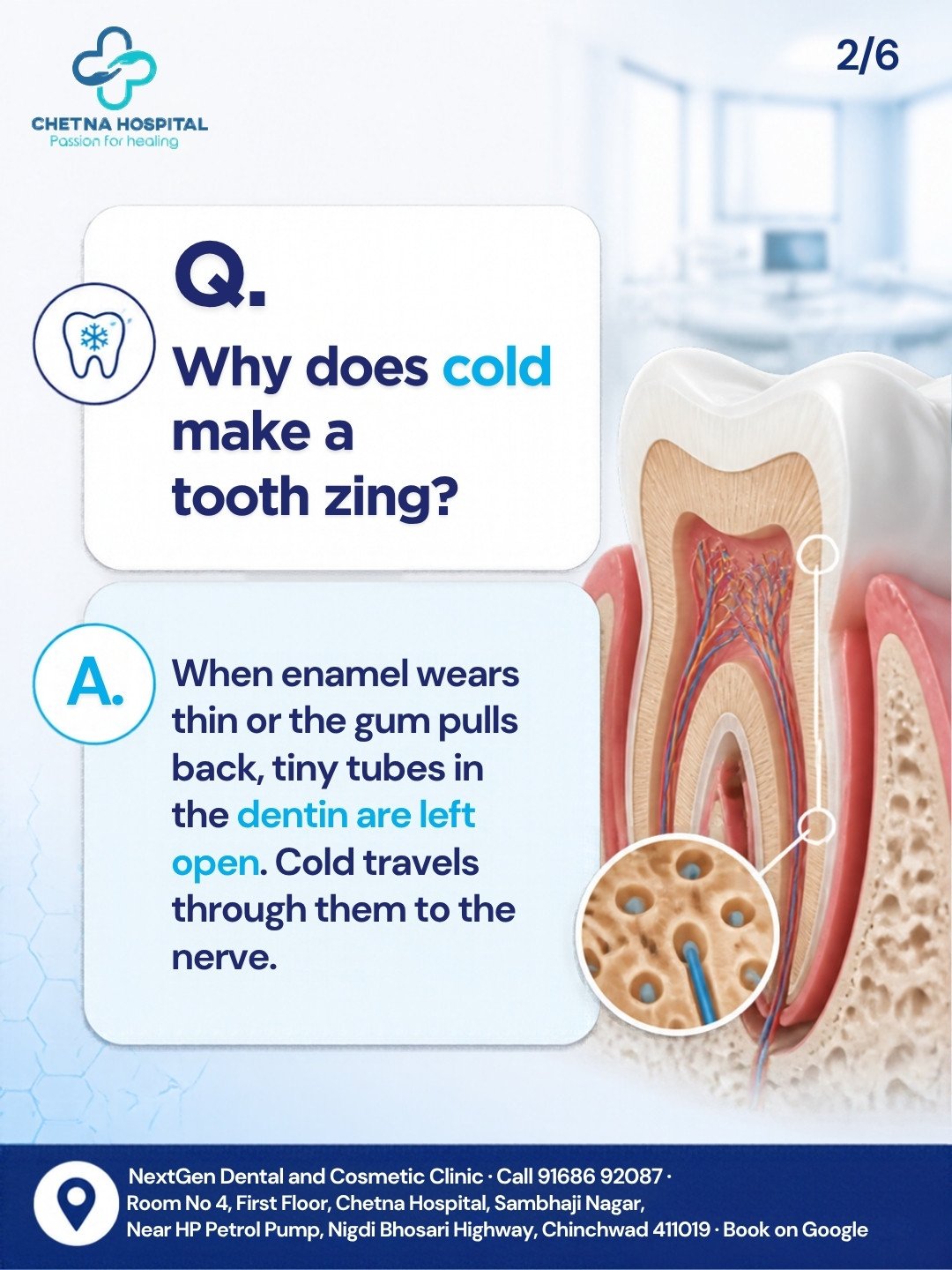
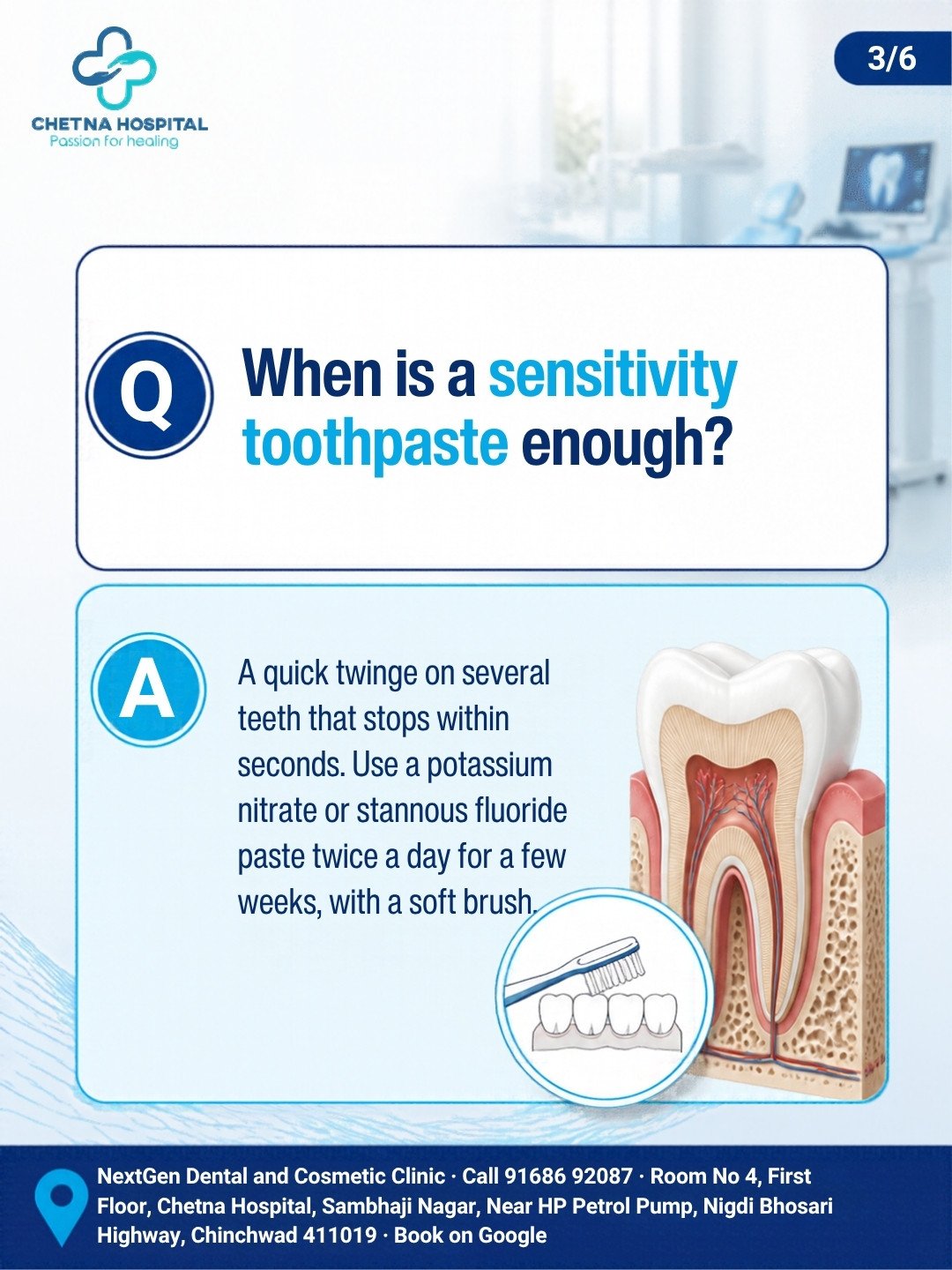
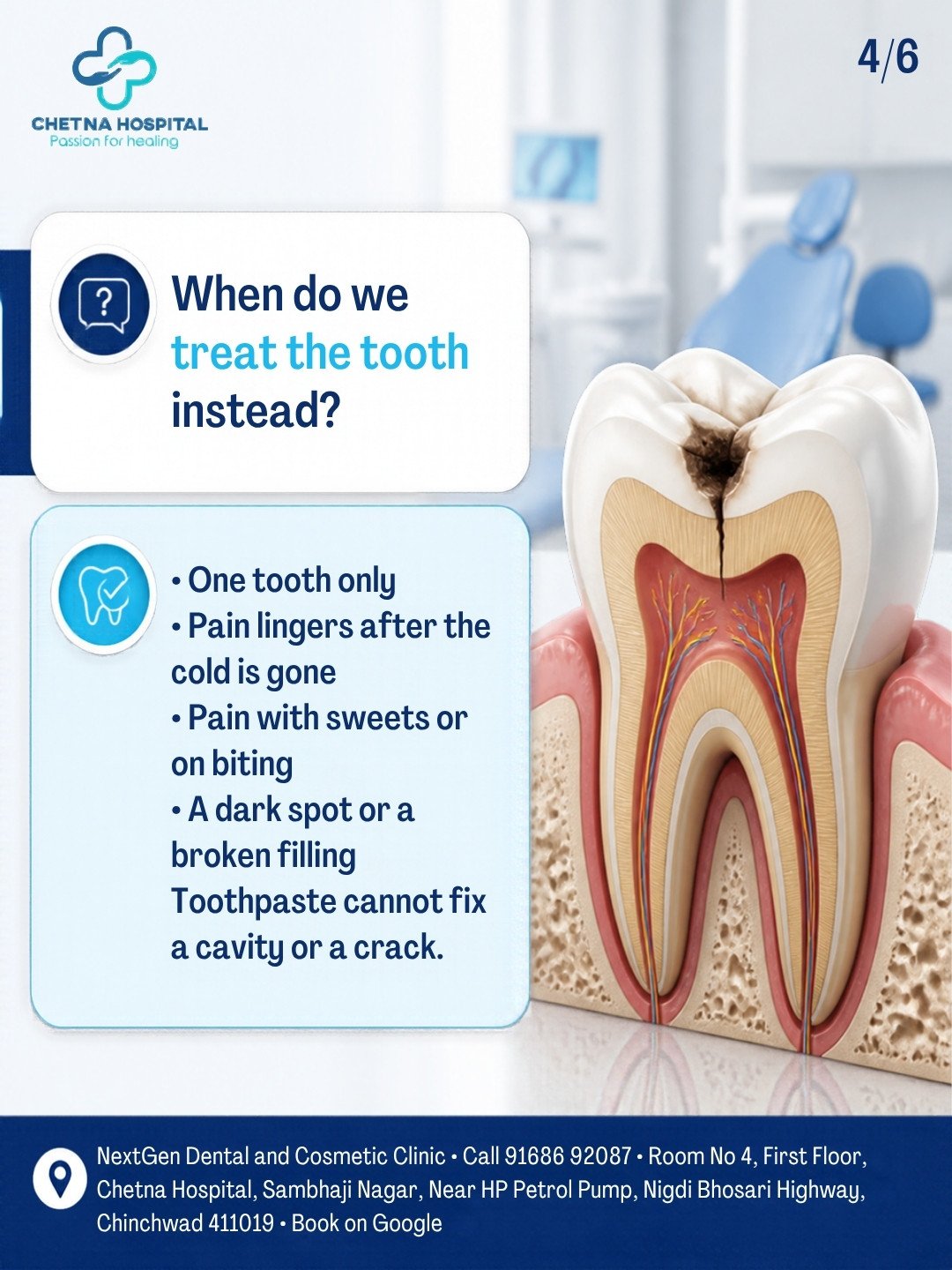
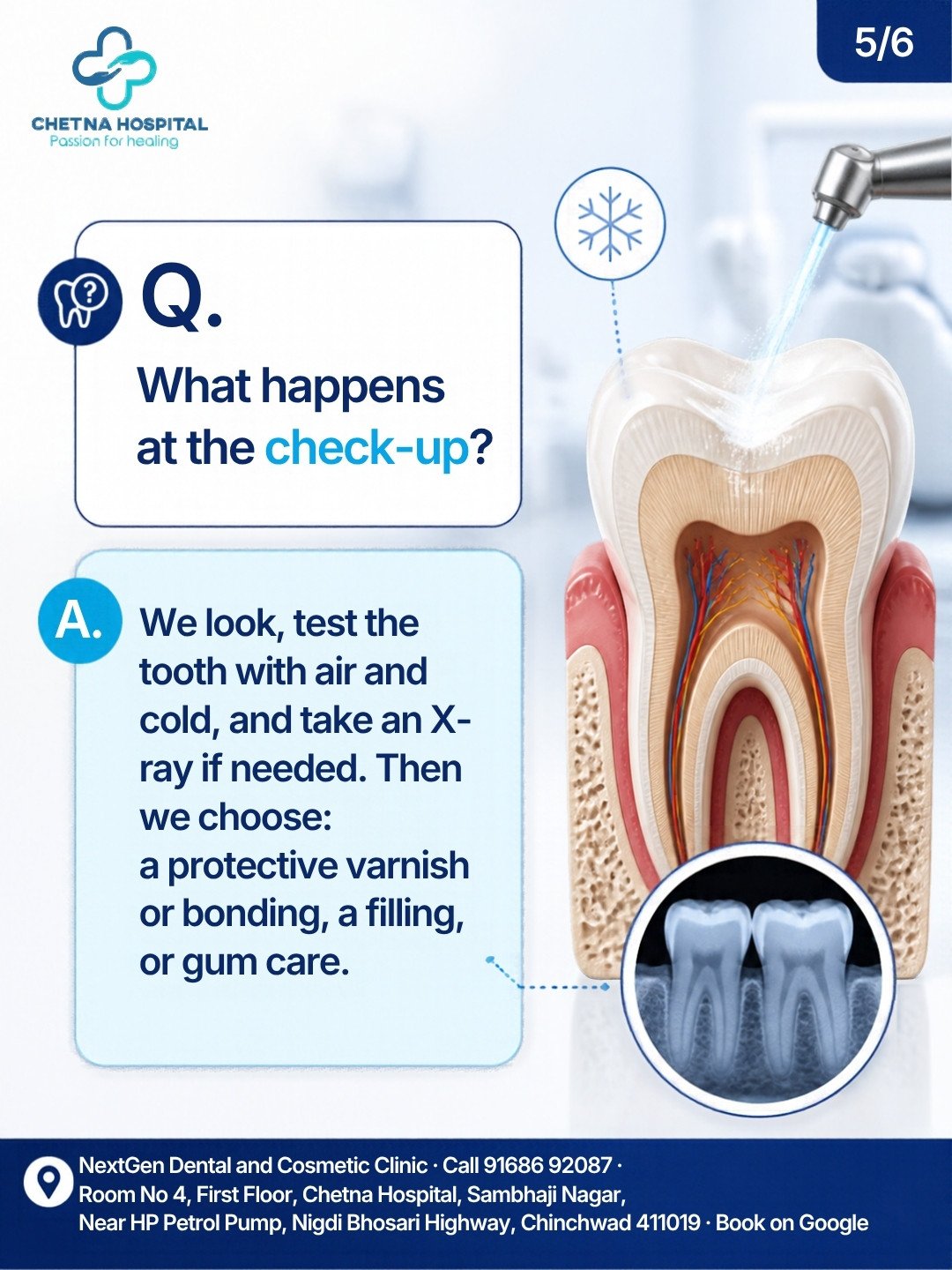
Swipe through our Instagram carousel on tooth sensitivity.
When should you see a dentist urgently?
See a dentist soon, the same day if you can, if you have toothache (NHS, Betsi Cadwaladr University Health Board, NHS Wales):
- That does not go away when you take painkillers
- With a swollen cheek, jaw or gum
- With a high temperature
- With red gums or a bad taste in your mouth
- From a broken tooth that causes severe pain
Go to a hospital emergency department straight away if the area around your eye or your neck is swollen, or if swelling in your mouth or neck makes it hard to breathe, swallow or speak, or call 108. Do not drive yourself.
India’s Ministry of Health and Family Welfare also lists sensitivity to hot and cold, sweet and sour, and pain, swelling or pus discharge as signs of tooth decay that need referral to a dentist (MoHFW, oral health care guidelines). Meanwhile, keep brushing gently. Our guide to the 2-2-2 rule for teeth covers a simple routine, and our post on festive sweets and your teeth explains how to look after your teeth during festivals.
Tooth sensitivity treatment near you in Chinchwad
NextGen Dental and Cosmetic Clinic is at Room No 4, First Floor, Chetna Hospital, Sambhaji Nagar, Near HP Petrol Pump, Nigdi Bhosari Highway, Chinchwad 411019. Patients come from Chinchwad, Pimpri, Akurdi, Nigdi, Ravet, Wakad, Hinjewadi, Pimple Saudagar, Thergaon, Tathawade, Punawale, Moshi and Bhosari. Call 91686 92087, or see our contact page for the route.
Frequently asked questions
How long does tooth sensitivity treatment with toothpaste take to work?
A desensitising toothpaste usually needs several applications before the sensitivity is reduced, and some products take longer to help. If the pain is no better after that, or it lingers or comes when you bite, get the tooth checked.
Is tooth sensitivity treatment in the clinic painful?
A fluoride varnish or a sealant is painted onto the sensitive area of the tooth. If a filling or other repair is needed, the dentist will explain each step first, including whether a local anaesthetic will be used, and you can ask questions before anything is done.
Can whitening make teeth sensitive?
Yes. Tooth whiteners may cause sensitivity. Also, acidic things such as lemon can wear enamel. So ask a dentist before you whiten, especially if your teeth already zing.
Does sensitivity mean I have a cavity?
Not always. A short, sharp twinge that goes away when the cold is gone often comes from exposed dentin. Pain that lingers, pain when you bite, or a visible dark spot or broken filling is more likely to need a dentist to check for a cavity or a crack.
Where can I get tooth sensitivity treatment in Chinchwad?
NextGen Dental and Cosmetic Clinic is at Room No 4, First Floor, Chetna Hospital, Sambhaji Nagar, Near HP Petrol Pump, Nigdi Bhosari Highway, Chinchwad 411019. Call 91686 92087 to ask for an appointment.
Have a question about sensitive teeth? Talk to the dental team.
Call 91686 92087
Get Directions
WhatsApp
NextGen Dental and Cosmetic Clinic · Room No 4, First Floor, Chetna Hospital, Sambhaji Nagar, Near HP Petrol Pump, Nigdi Bhosari Highway, Chinchwad 411019
Sources
- Mayo Clinic. Sensitive teeth: causes and treatment
- American Dental Association, MouthHealthy. Sensitive teeth.
- Cleveland Clinic. Teeth sensitivity.
- British Society of Periodontology. Dentine hypersensitivity (patient leaflet).
- NHS. Toothache.
- Betsi Cadwaladr University Health Board, NHS Wales. Urgent dental service.
- Ministry of Health and Family Welfare, Government of India. Operational guidelines for oral health care at Health and Wellness Centres.
This article is general health information and does not replace a dental examination. Whether a tooth needs a toothpaste, a filling or any other treatment is decided after the dentist has seen it.
How this article was prepared: Chetna Hospital’s content team wrote it with the help of AI writing tools and checked it against the sources listed. It is general health information, not personal medical advice.