








Introduction
Why Choose a Gynecologist in PCMC for PCOS Treatment?
Finding the right Gynecologist in PCMC is important for women experiencing hormonal problems, irregular periods, fertility concerns, or symptoms related to Polycystic Ovary Syndrome (PCOS).
PCOS is a common hormonal condition that affects many women during their reproductive years. It can impact menstrual cycles, ovulation, fertility, skin health, weight management, and overall well-being.
According to trusted medical information from NHS, PCOS can affect menstrual cycles, fertility, and hormone levels.
Many women ignore early signs such as irregular periods, acne, unwanted facial hair, or sudden weight changes. However, delaying medical advice may allow symptoms to continue for a longer time. Therefore, early consultation with an experienced gynecologist can help in proper diagnosis and management.
At Chetna Multispeciality Hospital, Chinchwad, women from PCMC, Chinchwad, Akurdi, Nigdi, Pimpri Colony, Yamuna Nagar, Kalewadi, Bhosari MIDC, and nearby areas can receive expert guidance for PCOS and other gynecological concerns.
PCOS can affect teenagers, working women, and women planning pregnancy. Moreover, every woman may experience different symptoms. A personalized treatment approach helps address individual health needs.
In this complete guide, you will learn about:
- PCOS symptoms and warning signs
- Common causes and risk factors
- Diagnosis methods
- Treatment options
- Lifestyle changes
- Nutrition and exercise tips
- When to consult a gynecologist
According to trusted medical resources such as NHS PCOS Information, PCOS is a common condition that requires proper medical evaluation and management.
- Why PCOS Awareness Is Important
- Causes and Risk Factors of PCOS
- Common Symptoms of PCOS
- When Should You Visit a Gynecologist?
- How PCOS Is Diagnosed
- PCOS Treatment Options
- Lifestyle Tips for PCOS Management
- Nutrition Guide for PCOS
- Exercise and Healthy Habits
- PCOS Myths and Facts
- Frequently Asked Questions
- Why Choose Dr. Bharati Patil?
Why PCOS Awareness Is Important
PCOS is a hormonal disorder that affects how the ovaries function. It may cause irregular ovulation, which can influence menstrual cycles and pregnancy planning.
Additionally, PCOS may be associated with insulin resistance and other metabolic changes. However, symptoms vary from woman to woman. Some women may experience mild symptoms, while others may face multiple concerns.
Early diagnosis of PCOS provides several benefits:
- Helps identify hormonal imbalance
- Supports better menstrual health
- Helps with fertility planning
- Encourages healthy lifestyle changes
- Reduces the risk of delayed treatment
- Provides emotional and medical support
Women often search for a Gynecologist near me when they notice repeated period problems or fertility concerns. Consulting a qualified doctor can help identify the actual cause of symptoms.
A gynecologist evaluates your condition carefully and suggests treatment based on your age, symptoms, health history, and future pregnancy plans.
Causes and Risk Factors of PCOS
The exact cause of PCOS is not fully understood. However, several factors may contribute to hormonal imbalance.
Hormonal Imbalance
Hormones play an important role in regulating menstrual cycles and ovulation.
Women with PCOS may have increased levels of androgens, which are hormones found in both men and women.
Higher androgen levels may contribute to:
- Irregular periods
- Acne
- Excess facial hair growth
- Hair thinning
Insulin Resistance
Insulin helps the body control blood sugar levels. In some women with PCOS, the body does not respond properly to insulin.
As a result, the body may produce more insulin. This increased insulin level may affect hormone balance and ovulation.
Healthy eating habits and regular physical activity may support better metabolic health.
Family History
Genetics may increase the chance of developing PCOS.
Women with a close family member who has PCOS may have a higher risk. Therefore, sharing your family health history during consultation is helpful.
Lifestyle Factors
Certain lifestyle factors may contribute to hormonal imbalance.
These include:
- Lack of regular exercise
- Unhealthy eating habits
- Poor sleep patterns
- Long-term stress
- Weight changes
However, PCOS can also affect women who maintain a healthy weight. Proper medical evaluation is important for accurate diagnosis.
Common Symptoms of PCOS
PCOS symptoms can differ between women. Some women notice symptoms during teenage years, while others identify the condition while planning pregnancy.
Irregular Periods
Changes in menstrual cycles are among the most common PCOS symptoms.
Signs may include:
- Delayed periods
- Missed periods
- Irregular cycles
- Heavy menstrual bleeding
Tracking your menstrual cycle can help your gynecologist understand your symptoms better.
Skin and Hair Changes
Hormonal changes may affect skin and hair health.
Common signs include:
- Acne
- Oily skin
- Excess facial hair
- Increased body hair
- Hair thinning
- Dark patches on skin
These changes may affect confidence and emotional health. Therefore, medical guidance can help manage symptoms effectively.
Weight Management Problems
Some women with PCOS may experience:
- Difficulty losing weight
- Weight gain around the abdomen
- Sudden weight fluctuations
However, body weight alone cannot confirm PCOS. Diagnosis requires proper medical assessment.
Fertility Concerns
PCOS may affect ovulation, which can make pregnancy planning difficult for some women.
However, many women with PCOS can achieve pregnancy with proper medical care and guidance.
Emotional Changes
PCOS symptoms may affect emotional well-being.
Some women may experience:
- Stress
- Low confidence
- Mood changes
- Anxiety related to fertility or appearance
A supportive healthcare approach focuses on both physical and emotional health.
When Should You Visit a Gynecologist?
Many women experience occasional changes in their menstrual cycle. However, repeated symptoms should not be ignored.
Early consultation with a qualified Gynecologist in PCMC can help identify PCOS and other hormonal conditions at the right time.
You should consult a gynecologist if you notice:
- Irregular periods for several months
- Very heavy menstrual bleeding
- Severe period pain
- Difficulty becoming pregnant
- Sudden facial hair growth
- Persistent acne problems
- Excessive hair loss
- Unexplained weight changes
- Symptoms affecting daily activities
Additionally, if home remedies and lifestyle changes do not improve your symptoms, professional medical advice is recommended.
Women searching for a Gynecologist near me in Chinchwad, Akurdi, Nigdi, Pimpri Colony, or PCMC can consult an experienced specialist for proper evaluation.
How Is PCOS Diagnosed?
PCOS diagnosis requires a complete medical evaluation. A gynecologist reviews symptoms, health history, and test results before confirming the condition.
There is no single test that confirms PCOS. Therefore, doctors usually consider different factors together.
According to Mayo Clinic PCOS Information, diagnosis generally includes symptom evaluation, physical examination, and
medical testing.
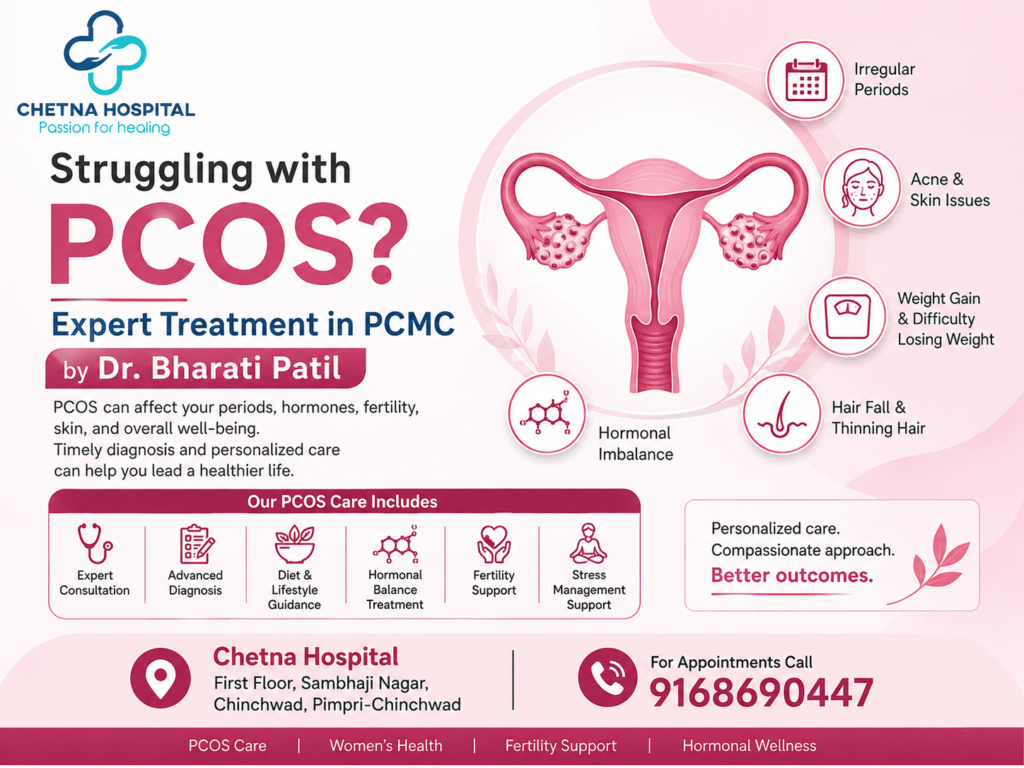
Woman struggling with PCOS symptoms and seeking gynecologist in PCMC consultation
1. Medical History Review
During consultation, your doctor may ask about:
- Menstrual cycle patterns
- Period-related concerns
- Weight changes
- Skin and hair symptoms
- Pregnancy history
- Family history of PCOS
This information helps the doctor understand your health condition better.
2. Physical Examination
A physical examination may help identify visible signs linked with PCOS.
The doctor may check for:
- Acne
- Excess hair growth
- Hair thinning
- Weight-related concerns
- Other hormonal symptoms
Additionally, your doctor may discuss your lifestyle habits, diet, and stress levels.
3. Blood Tests
Blood tests may be recommended to check:
- Hormone levels
- Blood sugar levels
- Cholesterol levels
- Thyroid function
These tests help rule out other conditions that may have similar symptoms.
4. Pelvic Ultrasound
A pelvic ultrasound may help examine the ovaries and uterus.
However, ovarian cysts alone do not mean a woman has PCOS. A complete medical assessment is necessary for accurate diagnosis.
PCOS Treatment Options
PCOS treatment focuses on managing symptoms and improving overall health.
Treatment plans depend on:
- Age
- Symptoms
- Hormone levels
- Pregnancy goals
- Overall health condition
Every woman may require a different approach. Therefore, treatment should always be personalized.
1. Lifestyle Changes for PCOS Management
Healthy lifestyle habits are an important part of PCOS care.
Doctors may recommend:
- Balanced nutrition
- Regular physical activity
- Better sleep habits
- Stress management
- Healthy weight management when required
Additionally, small daily improvements can support better hormone balance and overall wellness.
2. Medicines for PCOS
Depending on symptoms, doctors may prescribe medicines to help:
- Regulate menstrual cycles
- Manage acne
- Reduce unwanted hair growth
- Improve insulin sensitivity
- Support ovulation
Medicines should only be taken under medical supervision.
Avoid self-medication because hormonal treatments require proper evaluation.
3. Fertility Support for Women With PCOS
PCOS may affect ovulation in some women. As a result, some women may experience difficulty while planning pregnancy.
A gynecologist may suggest:
- Hormonal evaluation
- Ovulation monitoring
- Fertility assessment
- Pregnancy planning guidance
With proper care, many women with PCOS can successfully plan pregnancy.
4. Surgical Options for PCOS
Surgery is not required for every woman with PCOS.
In selected cases, doctors may discuss procedures depending on individual health needs.
Therefore, surgical decisions should always be made after detailed consultation.
Lifestyle Tips for Managing PCOS
Healthy daily habits can support PCOS management and improve overall wellness.
1. Follow a Balanced Diet
Choose foods that support steady energy and better nutrition.
Include:
- Fresh vegetables
- Fruits
- Whole grains
- Protein-rich foods
- Healthy fats
2. Exercise Regularly
Regular exercise supports fitness and metabolic health.
Helpful activities include:
- Walking
- Yoga
- Swimming
- Cycling
- Strength training
Choose activities that you enjoy and can continue regularly.
3. Maintain Healthy Weight
If weight management is needed, focus on gradual lifestyle changes.
Small improvements are easier to maintain for long-term health.
4. Improve Sleep Quality
Good sleep supports hormone balance.
Try to:
- Maintain fixed sleep timings
- Reduce screen time before bedtime
- Create a relaxing bedtime routine
5. Manage Stress
Stress management can support emotional and physical health.
Helpful methods include:
- Meditation
- Deep breathing exercises
- Yoga
- Relaxing hobbies
6. Stay Hydrated
Drinking enough water supports digestion, energy, and overall body functions.
7. Reduce Processed Foods
Limit:
- Sugary foods
- Packaged snacks
- Refined carbohydrates
- Unhealthy fats
Choose fresh and nutrient-rich food options instead.
8. Track Your Periods
Maintain a record of:
- Period dates
- Flow changes
- Pain symptoms
- Other hormonal changes
This information helps doctors during follow-up visits.
9. Attend Regular Checkups
Regular gynecological visits help monitor symptoms and treatment progress.
Women from Sambhaji Nagar, Chinchwad, Nigdi, Akurdi, Yamuna Nagar, and nearby PCMC areas can seek expert women’s healthcare support.
10. Avoid Self-Medication
Always consult a healthcare professional before taking:
- Hormonal medicines
- Fertility supplements
- Herbal products
- Health supplements
Nutrition Guide for Women With PCOS
A balanced diet can support better health management. However, nutrition needs may vary for each woman.
| Nutrient | Benefits | Food Sources |
|---|---|---|
| Protein | Supports muscle health and helps maintain fullness | Eggs, pulses, paneer, fish, chicken |
| Fiber | Supports digestion and blood sugar control | Vegetables, fruits, oats, whole grains |
| Healthy Fats | Supports hormone function | Nuts, seeds, olive oil, avocado |
| Calcium | Supports bone strength | Milk, curd, dairy products |
| Iron | Supports healthy blood levels | Spinach, beans, legumes |
Exercise and Healthy Habits
Regular movement can improve energy levels and support overall health.
Recommended activities include:
- Brisk walking
- Yoga
- Swimming
- Cycling
- Strength exercises
Additionally, maintain:
- 7–9 hours of quality sleep
- Regular meal timings
- Adequate water intake
- Stress reduction practices
Consistent healthy habits can support long-term PCOS management.
Symptoms You Should Never Ignore
PCOS symptoms may develop slowly. However, some signs require medical attention because they may indicate hormonal imbalance or other health concerns.
You should consult a Gynecologist in PCMC if you experience:
- Periods missing for several months
- Very heavy menstrual bleeding
- Severe pelvic pain
- Sudden increase in facial or body hair
- Persistent acne problems
- Excessive hair thinning or hair loss
- Difficulty becoming pregnant
- Sudden unexplained weight changes
- Symptoms affecting confidence or daily activities
Additionally, early consultation helps identify the cause of symptoms and supports timely treatment planning.
PCOS Myths vs Facts
Understanding correct information helps women make better healthcare decisions.
| Myth | Fact |
|---|---|
| PCOS only affects overweight women. | PCOS can affect women of different body types. |
| Women with PCOS cannot become pregnant. | Many women with PCOS can achieve pregnancy with proper medical support. |
| PCOS is only a fertility problem. | PCOS can affect periods, skin, weight, hormones, and overall health. |
| One medicine can permanently cure PCOS. | PCOS is a long-term condition that can be managed with proper care. |
| Irregular periods are always normal. | Frequent irregular cycles should be evaluated by a gynecologist. |
| PCOS happens only after marriage. | PCOS can affect teenagers and women of reproductive age. |
PCOS Wellness Checklist
Following healthy habits can support better PCOS management.
✅ Track your menstrual cycle regularly
✅ Follow a balanced nutrition plan
✅ Include daily physical activity
✅ Maintain healthy sleep habits
✅ Drink enough water throughout the day
✅ Manage stress with relaxation techniques
✅ Attend regular gynecological checkups
✅ Follow your doctor’s treatment advice
✅ Avoid unnecessary self-medication
✅ Monitor changes in skin, hair, and weight
Frequently Asked Questions About PCOS
1. What is PCOS?
PCOS (Polycystic Ovary Syndrome) is a hormonal condition that affects ovarian function. It may cause irregular periods, acne, unwanted hair growth, weight changes, and fertility concerns.
2. What are the first signs of PCOS?
Common early signs include irregular periods, acne, excess facial hair, hair thinning, and difficulty managing weight.
However, symptoms can vary from woman to woman.
3. Can PCOS be treated?
Yes, PCOS symptoms can often be managed with lifestyle changes, medicines, and regular medical guidance.
Treatment depends on individual health needs and symptoms.
4. Can women with PCOS get pregnant?
Many women with PCOS can become pregnant. However, some women may need fertility evaluation and medical support.
A gynecologist can suggest suitable options based on your condition.
5. When should I visit a gynecologist for PCOS?
You should consult a doctor if you have irregular periods, fertility concerns, sudden hormonal changes, or symptoms affecting your daily life.
6. Which doctor should I consult for PCOS treatment in PCMC?
A qualified gynecologist can diagnose PCOS and provide suitable treatment guidance.
Women searching for a Gynecologist near me, PCOS treatment in Chinchwad, or a maternity hospital near me can consult Dr. Bharati Patil at Chetna Multispeciality Hospital.
7. Can lifestyle changes improve PCOS symptoms?
Yes, healthy food choices, regular exercise, good sleep, and stress management may support better symptom control.
8. Is PCOS common among young women?
Yes, PCOS commonly affects teenagers and women of reproductive age.
Early awareness helps with timely evaluation and better health management.
Why Choose Dr. Bharati Patil for PCOS Care?
Dr. Bharati Patil provides comprehensive and patient-focused gynecological care for women at every stage of life.
She focuses on accurate diagnosis, personalized treatment planning, and compassionate support for women experiencing hormonal and reproductive health concerns.
With more than 15 years of clinical experience, Dr. Bharati Patil provides care for:
- PCOD/PCOS management
- Menstrual disorder treatment
- Infertility evaluation and treatment
- Antenatal and postnatal care
- High-risk pregnancy management
- Gynecological surgeries
- Menopause and adolescent health
Her patient-first approach helps women understand their health concerns and make informed decisions.
Doctor Details
Doctor Name: Dr. Bharati Patil
Specialization:
Gynecologist & Obstetrician providing women’s healthcare, PCOS management, infertility care, pregnancy care, and gynecological treatments.
Hospital Name:
Chetna Multispeciality Hospital
Hospital Location:
Sambhaji Nagar, Chinchwad, Pimpri-Chinchwad, Maharashtra 411019
Phone:
91686 90447
Website:
Chetna Multispeciality Hospital Official Website
Doctor Profile: https://chetnahospital.co.in/doctor/dr-bharati-patil/]
PCOS Care in Chinchwad and PCMC
Dr. Bharati Patil provides women’s healthcare services for patients from:
- Chinchwad
- Sambhaji Nagar
- Akurdi
- Nigdi
- Yamuna Nagar
- Shahu Nagar
- Bhosari MIDC
- Kalewadi
- Triveni Nagar
- Mohan Nagar
- Pimpri Colony
- Thermax Chowk
- Chinchwad Station
- Gawade Colony
If you are experiencing PCOS symptoms, irregular periods, fertility concerns, or hormonal changes, professional evaluation can help you understand your condition better.
📞 Book an appointment with Dr. Bharati Patil at Chetna Multispeciality Hospital for personalized PCOS care and women’s health consultation.
Conclusion
PCOS is a common hormonal condition that can affect periods, fertility, skin health, weight, and emotional well-being.
However, early diagnosis, healthy lifestyle habits, and proper medical guidance can help women manage symptoms effectively.
Every woman experiences PCOS differently. Therefore, personalized care from an experienced gynecologist is important.
If you are searching for a Gynecologist in PCMC, Gynecologist near me, or a trusted women’s healthcare specialist in Chinchwad, consult Dr. Bharati Patil at Chetna Multispeciality Hospital for expert guidance.