Knee Replacement Surgery in Pune | Dr. Nirmal Patil
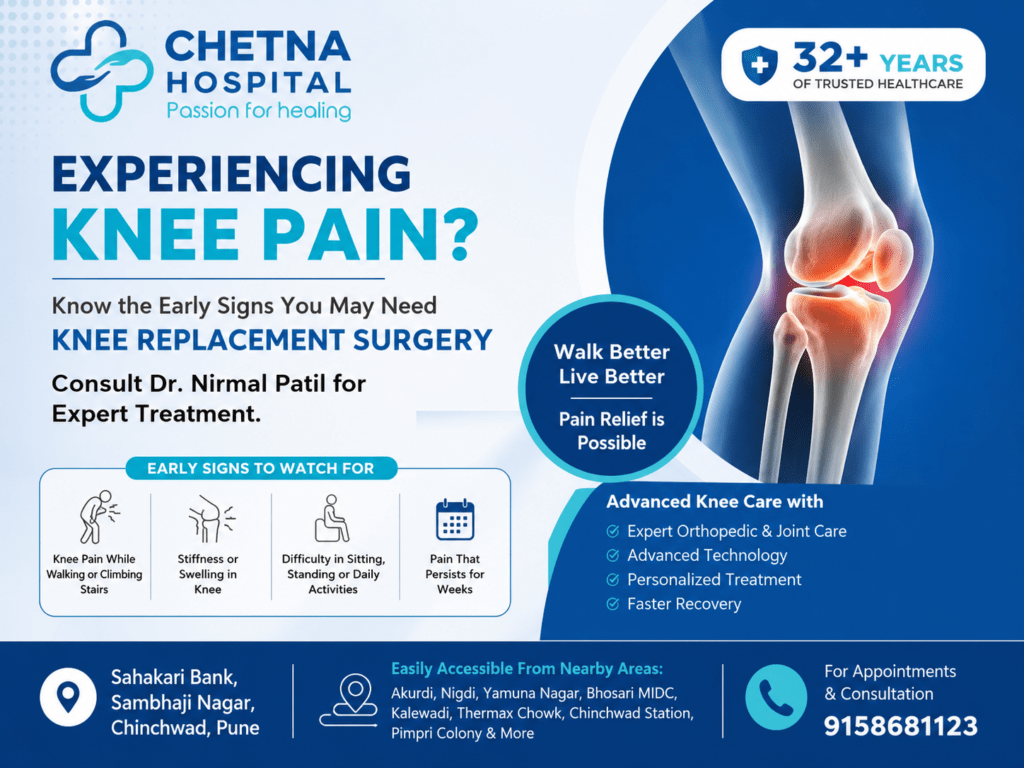
Experiencing chronic knee pain or stiffness? Learn the early signs that you may need knee replacement surgery and explore treatment options with Dr. Nirmal Patil, orthopedic specialist in Pune.
Knee pain is one of the most common orthopedic problems affecting adults, especially those over the age of 50. While medications, physiotherapy, and lifestyle modifications can provide temporary relief, severe knee damage may eventually require surgical treatment.
If climbing stairs, walking short distances, or even standing has become painful, it may be time to consider knee replacement surgery. Dr. Nirmal Patil, an experienced orthopedic specialist in Pune, provides advanced diagnosis and personalized treatment for patients suffering from chronic knee pain.
What Is Knee Replacement Surgery?
Knee replacement surgery, also known as knee arthroplasty, is a procedure in which damaged cartilage and bone in the knee joint are replaced with artificial implants. The goal is to relieve pain, restore movement, and improve the patient’s quality of life.
Modern surgical techniques and high-quality implants have made knee replacement safer, more effective, and associated with faster recovery than ever before.
Early Signs You May Need Knee Replacement Surgery
Recognizing the symptoms early can help prevent worsening joint damage. Some common signs include:
1. Persistent Knee Pain
Pain that continues for several months despite medication, physiotherapy, or injections may indicate advanced joint damage.
2. Difficulty Walking
If you struggle to walk even short distances or require support such as a walking stick, your knee joint may have significantly deteriorated.
3. Stiffness in the Knee
Difficulty bending or straightening the knee, especially after resting, is a common symptom of severe arthritis.
4. Swelling That Doesn’t Improve
Recurring swelling despite rest, ice therapy, and medications may indicate chronic inflammation within the joint.
5. Pain While Climbing Stairs
Experiencing sharp pain while climbing or descending stairs is often an early indication of cartilage wear.
6. Knee Deformity
A bow-legged or knock-kneed appearance caused by arthritis may require surgical correction.
7. Limited Daily Activities
If knee pain prevents you from performing routine activities like shopping, cooking, exercising, or enjoying hobbies, surgery may be the best long-term solution.
Common Conditions That Lead to Knee Replacement
Several conditions can damage the knee joint over time, including:
- Osteoarthritis
- Rheumatoid arthritis
- Post-traumatic arthritis
- Severe cartilage damage
- Knee deformities
- Advanced joint degeneration due to aging
When Should You Consult an Orthopedic Specialist?
You should consult an orthopedic surgeon if:
- Knee pain lasts longer than three months.
- Pain interferes with sleep.
- Medications no longer provide relief.
- Walking becomes increasingly difficult.
- The knee frequently locks or gives way.
- Conservative treatments have failed.
Early evaluation helps determine whether surgery is necessary or if non-surgical treatments can still be effective.
Treatment Options Before Knee Replacement
Not every patient requires immediate surgery. Depending on your condition, treatment may include:
- Pain management medications
- Physiotherapy
- Weight management
- Lifestyle modifications
- Knee braces
- Joint lubrication injections
- Platelet-Rich Plasma (PRP) therapy (in selected cases)
If these treatments no longer relieve symptoms, knee replacement may be recommended.
Types of Knee Replacement Surgery
The entire knee joint is replaced with artificial components. This is the most common procedure for advanced arthritis.
Partial Knee Replacement (PKR)
Only the damaged portion of the knee is replaced, preserving healthy bone and cartilage.
Revision Knee Replacement
Performed when a previous knee replacement implant has worn out, loosened, or become infected.
Benefits of Knee Replacement Surgery
Patients who undergo successful knee replacement often experience:
- Significant pain relief
- Improved mobility
- Better joint stability
- Enhanced quality of life
- Easier walking and stair climbing
- Improved participation in daily activities
- Long-lasting results with proper care
Recovery After Knee Replacement
Recovery varies from patient to patient, but most individuals can expect:
- Standing and walking with assistance within 24–48 hours
- Physiotherapy beginning shortly after surgery
- Improved mobility within several weeks
- Return to routine daily activities in approximately 6–12 weeks
- Continued strengthening and improvement over several months
Following your surgeon’s rehabilitation plan is essential for achieving the best possible outcome.
Why Choose Dr. Nirmal Patil for Knee Replacement Surgery in Pune?
Dr. Nirmal Patil is dedicated to providing comprehensive orthopedic care with a patient-centered approach. Every treatment plan is tailored to the individual’s condition, lifestyle, and recovery goals.
Patients benefit from:
- Comprehensive orthopedic evaluation
- Personalized treatment planning
- Advanced surgical techniques
- Modern implant options
- Comprehensive rehabilitation guidance
- Compassionate, patient-focused care
Frequently Asked Questions
Is knee replacement surgery painful?
The surgery is performed under anesthesia. After the procedure, pain is managed effectively with medications and rehabilitation.
How long does a knee replacement last?
Modern knee implants can last 15–20 years or longer, depending on factors such as activity level, weight, and overall health.
What is the best age for knee replacement?
There is no ideal age. The decision is based on the severity of symptoms, joint damage, and the impact on daily life rather than age alone.
Can I walk normally after surgery?
Most patients regain comfortable walking and experience a significant improvement in mobility after completing rehabilitation.
Schedule Your Consultation
Living with chronic knee pain doesn’t have to be your new normal. If you’re experiencing persistent discomfort, stiffness, or difficulty performing everyday activities, consulting an experienced orthopedic specialist can help you understand your treatment options.
Book a consultation with Dr. Nirmal Patil, orthopedic specialist in Pune, to receive a comprehensive evaluation and personalized care plan designed to help you regain mobility and improve your quality of life.
Need Expert Advice for Your Knee Pain?
Don’t ignore persistent knee pain, stiffness, or difficulty walking. Get a proper evaluation and personalized treatment plan from Dr. Nirmal Patil, Orthopedic Specialist in Pune.
Book Your Consultation Today and Take the First Step Towards Pain-Free Movement.
📞 Contact us today for an appointment.
CALL NOW – 9158681123