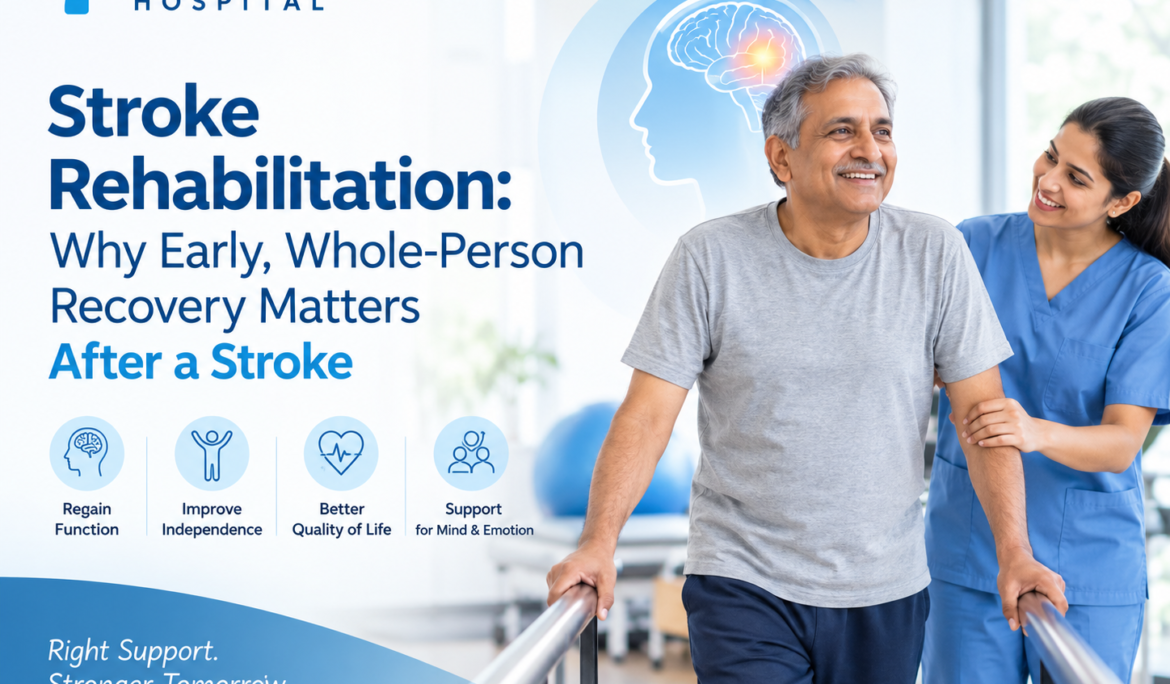
A stroke can change a person’s life within minutes. While emergency treatment is critical during the initial stage, recovery does not end when the immediate medical crisis is over. Increasing attention is now being given to early stroke rehabilitation, with new rehabilitation guidance emphasizing the importance of addressing not only physical disabilities but also cognitive, emotional, communication and everyday living challenges.
For stroke survivors and their families, one message is becoming increasingly important: stroke rehabilitation should begin as early as medically appropriate and continue as an individualized, coordinated recovery plan.
What Is Stroke Rehabilitation?
Stroke rehabilitation is a structured process that helps a person regain as much independence and function as possible after a stroke.
Depending on the individual’s condition, rehabilitation may address:
- Movement and muscle strength
- Balance and coordination
- Walking and mobility
- Speech and communication
- Swallowing difficulties
- Memory and concentration
- Emotional and psychological health
- Activities of daily living
- Ability to return to work or social activities
Stroke affects different people in different ways. Therefore, rehabilitation is not a one-size-fits-all treatment. The program should be based on the type and severity of the stroke, the affected areas of the brain, existing health conditions and the person’s individual recovery goals.
Why Should Stroke Rehabilitation Begin Early?
One of the key themes highlighted by recent discussions around stroke rehabilitation is the importance of starting rehabilitation early.
Once a patient’s medical condition is stable, appropriate rehabilitation interventions can help address functional problems and prevent complications associated with prolonged inactivity.
Early rehabilitation may help a patient work toward:
- Improving mobility
- Regaining muscle strength
- Developing better balance
- Improving speech and communication
- Managing swallowing problems
- Becoming more independent with daily activities
- Adapting to cognitive changes
- Addressing emotional challenges after stroke
However, early does not mean that every patient should immediately undergo intensive exercise. The timing, intensity and type of rehabilitation must be determined by the treating medical and rehabilitation team.
Stroke Rehabilitation Should Start Before Hospital Discharge
Traditionally, families may think of rehabilitation as something that begins only after a patient leaves the hospital. However, rehabilitation planning can begin during the hospital stay itself.
Before discharge, healthcare professionals can assess a patient’s:
- Physical abilities
- Mobility and balance
- Speech and language
- Swallowing function
- Cognitive abilities
- Ability to perform daily activities
- Emotional and psychological wellbeing
- Home environment and caregiver support
This assessment helps the team develop an appropriate recovery plan for the next stage of care.
For families, early discharge planning can also answer important questions: What exercises are appropriate? Does the patient need assistance while walking? Are there swallowing precautions? What changes are required at home? How frequently should rehabilitation sessions take place?
Stroke Recovery Is More Than Physical Therapy
When people hear “stroke rehabilitation,” they often think about walking exercises or strengthening weak limbs. Physical recovery is certainly important, but modern stroke rehabilitation takes a broader approach.
1. Physical Rehabilitation
A stroke can cause weakness or paralysis, often affecting one side of the body. Physiotherapy may help patients work on:
- Muscle strength
- Balance
- Coordination
- Transfers
- Standing
- Walking
- Arm and hand function
- Flexibility and movement
The specific exercises depend on the patient’s condition and should be guided by qualified professionals.
2. Speech and Language Rehabilitation
Some stroke survivors experience difficulty speaking, understanding language, reading or writing.
Speech and language therapy can help address communication difficulties. Patients may also require assessment and rehabilitation for swallowing problems, which can occur after certain strokes.
Difficulty swallowing should not be ignored because it can increase the risk of complications such as aspiration and inadequate nutrition.
3. Occupational Therapy
A stroke may make everyday activities unexpectedly difficult.
Occupational therapy can focus on helping patients regain or adapt skills required for daily life, such as:
- Dressing
- Eating
- Grooming
- Bathing
- Using household objects
- Writing
- Returning to hobbies
- Performing work-related tasks
The goal is to help the individual become as independent and safe as possible.
4. Cognitive Rehabilitation
Stroke can sometimes affect memory, attention, concentration, problem-solving and other thinking abilities.
These changes may be less visible than physical weakness but can have a significant effect on everyday life.
Cognitive rehabilitation may involve strategies and exercises designed around the individual’s specific difficulties and goals.
5. Mental Health and Emotional Support
Depression, anxiety, frustration, fear and emotional changes can occur after a stroke.
A survivor may also struggle with the sudden loss of independence or changes in their ability to work and participate in activities they previously enjoyed.
Therefore, mental health should be considered an important part of stroke recovery, rather than an issue separate from rehabilitation.
The Role of Caregivers in Stroke Recovery
Stroke recovery often involves the entire family.
Caregivers may help with medication schedules, appointments, exercises, mobility, nutrition and everyday activities. They may also provide emotional support.
At the same time, caregiving can be physically and emotionally demanding.
Families should receive appropriate education about the patient’s condition and rehabilitation plan. Caregivers should also know when they need professional assistance rather than attempting to manage complex medical or rehabilitation needs alone.
How Long Does Stroke Rehabilitation Take?
There is no universal recovery timeline.
Some people make significant improvements during the first weeks and months, while others require rehabilitation for a longer period. Recovery can continue beyond the early stages, depending on the individual’s condition, rehabilitation participation and other health factors.
The pace of recovery can be influenced by factors such as:
- Type of stroke
- Location and extent of brain injury
- Severity of initial symptoms
- Age and overall health
- Other medical conditions
- Cognitive and emotional health
- Access to rehabilitation
- Consistency with the rehabilitation program
- Family and caregiver support
Rather than focusing only on how quickly someone recovers, rehabilitation should focus on measurable, meaningful and achievable functional goals.
When Should a Stroke Survivor See a Rehabilitation Specialist?
A stroke survivor may benefit from a rehabilitation assessment when there are ongoing problems with:
- Walking or balance
- Arm or leg weakness
- Coordination
- Speech or language
- Swallowing
- Memory or concentration
- Performing daily activities
- Emotional wellbeing
- Returning to work or normal routines
A multidisciplinary team may include a neurologist, rehabilitation physician, physiotherapist, occupational therapist, speech and language therapist, psychologist and other specialists depending on the patient’s needs.
Stroke Rehabilitation at Chetana Hospital
For stroke survivors and families looking for professional guidance, Chetana Hospital can be considered as a point of consultation for assessing post-stroke health and rehabilitation needs.
A stroke rehabilitation plan should ideally be individualized after evaluating the patient’s neurological status, physical limitations, communication and swallowing needs, cognitive function and ability to perform daily activities.
Patients and caregivers should discuss their recovery goals with the appropriate neurology and rehabilitation specialists at Chetana Hospital to determine what type of follow-up care and rehabilitation may be suitable.
Can Stroke Be Prevented?
Rehabilitation focuses on recovery, but prevention of another stroke is equally important.
Depending on the type and cause of stroke, doctors may recommend managing risk factors such as:
- High blood pressure
- Diabetes
- High cholesterol
- Smoking
- Obesity
- Physical inactivity
- Certain heart conditions
- Excessive alcohol consumption
Taking prescribed medicines regularly and attending follow-up appointments are also important parts of secondary stroke prevention.
Patients should never stop or change prescribed medication without consulting their doctor.
Recognizing Another Stroke: Act Quickly
Stroke rehabilitation is important, but recognizing a new stroke is an emergency.
Warning signs can include:
- Sudden weakness or numbness, especially on one side of the body
- Sudden difficulty speaking or understanding speech
- Sudden vision problems
- Sudden dizziness or difficulty walking
- Sudden severe headache without a known cause
- Sudden loss of coordination or balance
If these symptoms occur, seek emergency medical care immediately. Do not wait for symptoms to disappear.
Frequently Asked Questions About Stroke Rehabilitation
What is the best time to start stroke rehabilitation?
Rehabilitation planning can begin during the hospital stay, and appropriate rehabilitation may start once the patient’s medical condition is stable. The timing and intensity should always be decided by the treating healthcare team.
Can a stroke patient fully recover?
Recovery varies significantly between individuals. Some patients regain most or all of their previous abilities, while others may have lasting disabilities. Rehabilitation aims to maximize recovery and independence.
Is physiotherapy enough after a stroke?
Not always. Stroke rehabilitation can involve several areas, including physiotherapy, occupational therapy, speech and language therapy, cognitive rehabilitation and psychological support, depending on the patient’s needs.
Can stroke rehabilitation help with speech problems?
Yes. Patients with speech, language or communication difficulties may benefit from assessment and therapy from a qualified speech and language professional.
Why is caregiver involvement important after stroke?
Caregivers often play an important role in supporting daily activities, following rehabilitation recommendations and identifying changes in the patient’s condition. They should also receive appropriate guidance and support themselves.
Does stroke recovery stop after a few months?
Not necessarily. Recovery varies from person to person, and some individuals can continue making functional improvements with appropriate rehabilitation and ongoing practice.
Medical disclaimer: This article is intended for general educational purposes and does not replace diagnosis, treatment or personalized medical advice from a qualified healthcare professional. Stroke symptoms require immediate emergency medical evaluation.