Introduction: Sleep and vision
Ever notice your vision going a little blurry after a late night? Maybe your eyes feel heavy, dry or just… off. You rub them and blink, but they still don’t feel right. Tiredness really can affect how your eyes feel and how clearly you see. The link between sleep and vision matters even more in today’s screen-heavy world.
Sleep is when your body rests and recovers, and your eyes are part of that. With late-night scrolling, binge-watching and stress keeping us awake, many of us are not giving our eyes that rest.
Whether you work on a laptop, spend hours on your phone or often stay up late, your eyes work hard all day. Understanding how sleep affects your vision can help you keep your eyes comfortable.
Whether you work in the IT hubs of Hinjewadi and Wakad, or live in Akurdi, Nigdi or Ravet, digital eye strain is common. The eye care (ophthalmology) department at Chetna Hospital in Chinchwad (Sambhaji Nagar) can check your eyes if tired, dry or blurry eyes keep bothering you. Call 91686 90442 to book.
What is the Connection Between Sleep and Vision?
How does sleep help your eyes rest and recover?
While you sleep, your eyes are closed and protected. The surface of the eye, especially the cornea, gets a break from dust, dry air and the drying effect of long screen use.
Brain and Eye Coordination
Vision is not just about your eyes. It also depends on how your brain processes what you see. When you are short of sleep, your reactions and attention slow down, so seeing and responding can feel slower too.
Tear Film and Eye Surface
Your tear film keeps the eye surface moist and clear. When you are tired, your eyes often feel dry, gritty and uncomfortable.
Eye Muscle Rest
The muscles in and around your eyes work all day to focus and move your eyes. Sleep gives them a rest. When you are tired, focusing for long periods can feel harder.
Why can lack of sleep cause blurry vision and eye strain?
Dry, Irritated Eyes
Research suggests poor sleep may affect the tear film, and tired eyes often feel dry. Dry eyes can cause itchy, sore, gritty or red eyes, and blurry vision.
Eye Muscle Fatigue
Imagine holding a weight all day without rest. Tired eyes can struggle to keep focus, which leads to eye strain. Being overtired is also a common cause of eyelid twitching.
Slower Visual Processing
When you are sleep-deprived, your brain responds more slowly. This can mean slower reactions and more difficulty concentrating on what you see, which matters for things like driving.
Eye Surface Irritation
Tiredness can make your eyes feel more sensitive and irritated, and it can make existing problems like dry eye feel worse.
Screens and Sleep
Late-night screen use can make it harder to fall asleep. Long screen sessions also make us blink less, which dries the eyes. Together, poor sleep and long screen time can leave your eyes tired and uncomfortable. Digital eye strain does not cause lasting damage to the eyes.
Symptoms (How Do I Know I Have It?)
After a poor night’s sleep, the signs are usually easy to spot. One of the most common is temporary blurry vision, which usually improves after rest.
You may have dry, itchy or burning eyes during the day. Many people feel as if their eyelids are heavy. Eyelid twitching is another common sign of tiredness and is usually harmless. Headaches around the eyes and sensitivity to light can also happen.
Reading or focusing on screens may feel harder than usual. These symptoms often come together and can affect your work and comfort.
What Happens to Your Eyes When You Don’t Sleep?
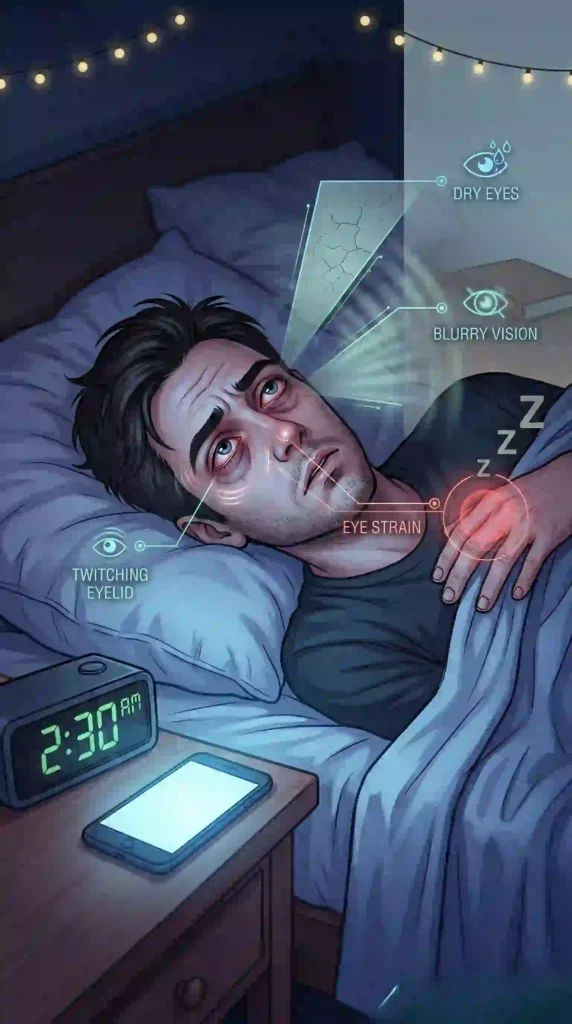
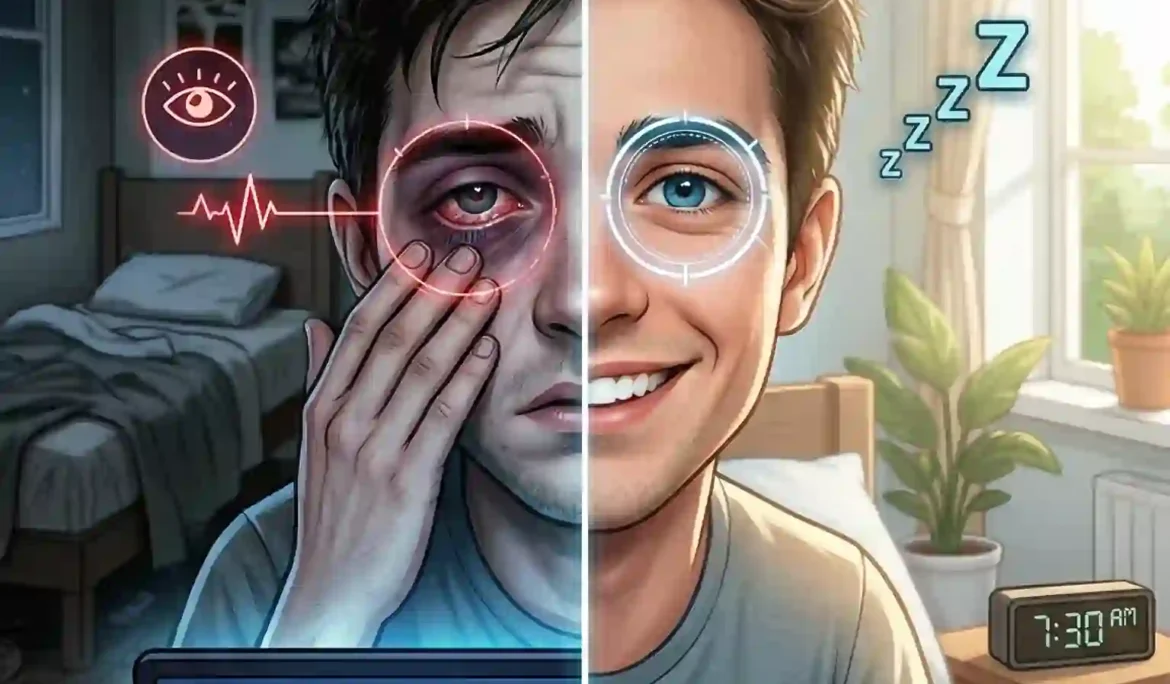
When you skip sleep, your eyes do more than “feel tired”. The eye surface can become dry and irritated, and your eyes may look red.
Your brain also processes what you see more slowly, so things can feel a little off and concentrating is harder.
If you are short of sleep night after night, these symptoms can keep coming back. This is a sign to look at your sleep habits, and to get your eyes checked if symptoms do not settle.
Is It Temporary or Permanent?
Most eye symptoms caused by lack of sleep are temporary. Once you get proper rest, your eyes usually recover. Blurry vision clears, dryness eases and your eyes feel normal again.
If you are short of sleep for a long time, symptoms such as dryness and strain can keep returning, and existing eye problems may feel worse. Blurry vision that does not clear after rest may have another cause, such as a need for glasses or an eye condition, so get your eyes checked.
How Is It Diagnosed?
An eye doctor will usually ask about your symptoms, sleep habits, screen use and daily routine. They examine the front of your eyes and may check your tears and your vision to look for dry eye or a need for glasses, and to rule out other eye conditions.
Many people do not think of sleep as a cause of eye discomfort. Improving sleep habits often helps symptoms like dryness and strain.
What Can I Do? (Treatment / Relief)
Relief often starts with simple steps. Lubricating eye drops (artificial tears) from a pharmacy can help dry eyes; ask a pharmacist or eye doctor which type suits you. A warm (not hot) compress on closed eyelids and gentle lid cleaning can help with dryness. A cool compress may soothe tired, puffy eyes.
Follow the 20-20-20 rule: every 20 minutes, look at something about 20 feet (6 metres) away for at least 20 seconds. This gives your eyes a short break during screen use.
Cut down on screen time, especially before bed. Most importantly, improve your sleep routine. Going to bed and getting up at the same time each day can make a big difference.
How to Prevent It?
Most adults need 7 to 9 hours of sleep a night. Try to get up at the same time every day, including weekends.
Limit screen time for 2 to 3 hours before bed, or use your device’s night-time setting in the evening. Avoid tea, coffee, alcohol and smoking for at least 6 hours before bed, and do not eat a big meal late at night. Drink enough water and eat a balanced diet that includes foods with vitamin A and omega-3 fatty acids.
Managing stress with relaxation techniques can also help you sleep better, which helps your eyes feel more comfortable.
Digital Lifestyle Impact
Modern life revolves around screens. Light from screens late at night can keep you more alert and make it harder to fall asleep. This can lead to a cycle of poor sleep and tired eyes.
Late-night scrolling also means more hours of close focus and less blinking. Over time, this combination can leave your eyes uncomfortable more often.
Risk Factors
| Risk Factor | Effect on Eyes |
|---|---|
| Long screen time without breaks | Eye strain and dryness |
| Stress/anxiety | Poor sleep and eyelid twitching |
| Insomnia | Ongoing tired eyes |
| Poor sleep habits | Repeated eye discomfort |
| Wearing contact lenses for too long | Dryness and irritation |
FAQ
Yes. Poor sleep can leave you with blurry vision, dry or irritated eyes, eye strain and eyelid twitching. These usually get better after a good night’s rest.
Sleep will not correct problems like short-sightedness (myopia) or long-sightedness (hyperopia). But it can ease dryness, tiredness and temporary blurriness, so your eyes feel more comfortable. If blurry vision does not clear after rest, have an eye test.
The 20-20-20 rule helps reduce digital eye strain. Every 20 minutes, look at something about 20 feet (6 metres) away for at least 20 seconds. It gives your eyes a short break and is useful for anyone who works on screens.
Go to bed when you feel sleepy and get up at the same time every day. Avoid tea, coffee, alcohol and smoking for at least 6 hours before bed. Do not eat a big meal late at night. Exercise during the day, but not within 4 hours of bedtime. Limit screens for 2 to 3 hours before bed.
For eye health, eat a balanced diet with leafy greens, carrots, sweet potatoes, nuts and fish. For sleep, regular routines matter more than any single food: avoid caffeine and heavy meals late in the day.
Important
This article is for general information only. It should not replace advice, diagnosis or treatment from a doctor. If you have vision problems that do not go away, see an eye doctor.
When to get help straight away: go to an emergency department straight away, or call 108 or 112, if you have sudden loss of vision, a dark curtain or shadow over your vision, new flashes or floaters, a chemical in the eye, an eye injury, or severe eye pain with redness, headache or feeling sick.
📍 Chetna Hospital, Sambhaji Nagar, Chinchwad
📞 Eye department: 91686 90442 / main hospital line 9158681123
🔗 https://chetnahospital.co.in/contact/
Medical Disclaimer
This article is for information only and should not replace professional medical advice. If you have vision problems that do not go away, see an eye doctor. Finding and treating eye problems early helps protect your eyesight.
Conclusion
Your eyes are not built to run nonstop. They need rest, just like the rest of your body. Missing sleep does not only make you tired. It can affect how well you see and how comfortable your eyes feel.
The takeaway is simple: better sleep helps your eyes feel better. Small changes in your routine can make a big difference. So tonight, instead of scrolling, give your eyes the rest they need.
Book an Eye Check-up
Need an eye check-up in Chinchwad?
If blurry, tired or dry eyes keep bothering you, the eye care (ophthalmology) department at Chetna Hospital can help.
📍 Location: Sambhaji Nagar, Chinchwad, Pune (near Akurdi Railway Station).
📞 Call 91686 90442 to book a check-up.
General health information, not a diagnosis. Reviewed and updated by Chetna Hospital’s content team with the help of AI writing tools, November 2026.