Pneumonia is a common lung infection, but when it becomes severe, it can turn into a life-threatening medical emergency. Severe pneumonia affects the lungs’ ability to supply oxygen to the body and can quickly lead to respiratory failure, sepsis, and multi-organ damage if not treated in time. In such cases, ICU support under the supervision of an experienced Intensivist becomes essential.
At Chetna Superspeciality Hospital, Sambhajinagar, Chinchwad, Pune, patients with severe pneumonia receive advanced ICU care, continuous monitoring, and life-saving interventions under the expertise of Dr. Ashpak Bangi, Physician & Intensivist.
This blog explains what severe pneumonia is, when ICU support is needed, warning signs, treatment options, and why early ICU admission saves lives.
What Is Pneumonia?
Pneumonia is an infection that causes inflammation of the air sacs (alveoli) in one or both lungs. These air sacs may fill with fluid or pus, leading to:
- Cough with phlegm
- Fever and chills
- Chest pain
- Difficulty breathing
While many cases of pneumonia can be treated with oral medications at home, severe pneumonia requires hospitalization and often ICU care.
What Is Severe Pneumonia?
Severe pneumonia occurs when the infection causes significant lung damage, resulting in low oxygen levels and systemic complications. It is more common in:
- Elderly patients
- Children
- Patients with diabetes, heart disease, or lung disease
- Individuals with weak immunity
- Smokers
If not treated promptly, severe pneumonia can progress to respiratory failure, sepsis, and even death.
Warning Signs of Severe Pneumonia
Early recognition of severe pneumonia is critical. You should seek emergency medical attention if any of the following symptoms are present:
- Severe breathlessness or rapid breathing
- Oxygen levels remaining low despite oxygen therapy
- High fever not responding to medication
- Confusion, drowsiness, or altered consciousness
- Bluish lips or fingertips
- Drop in blood pressure (shock)
- Reduced urine output
- Extreme weakness or inability to speak full sentences
Patients showing these signs often need ICU admission for close monitoring and advanced treatment.
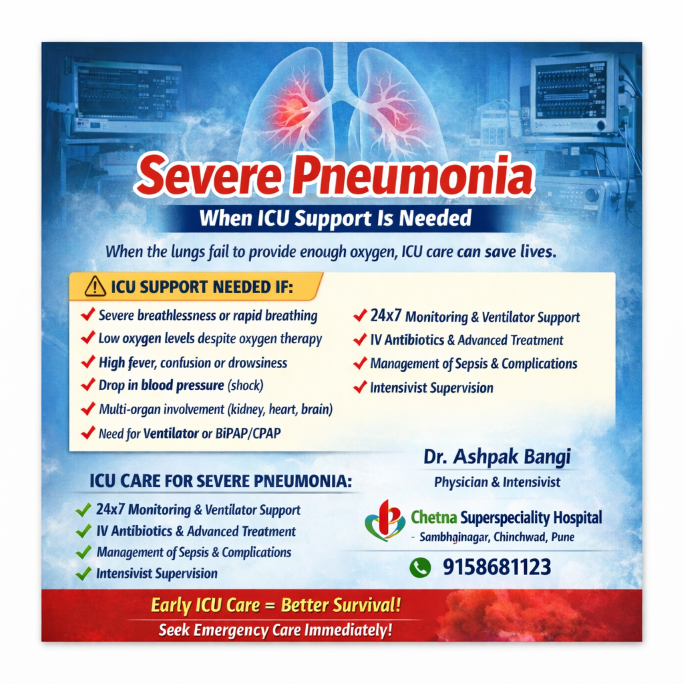
When Is ICU Support Needed in Pneumonia?
Not all pneumonia patients require ICU care, but ICU support is essential when the lungs fail to meet the body’s oxygen demands or complications develop.
ICU Support Is Needed If:
- Oxygen levels remain low despite oxygen mask support
- Patient requires ventilator or BiPAP/CPAP support
- Severe respiratory distress or fatigue develops
- Blood pressure drops dangerously low
- Sepsis or septic shock is suspected
- Multiple organs (kidneys, heart, brain) are affected
- Patient has serious underlying medical conditions
At Chetna Superspeciality Hospital, ICU admission decisions are taken early to prevent deterioration and improve survival chances.
Role of an Intensivist in Severe Pneumonia
An Intensivist is a doctor specially trained to manage critically ill patients in the ICU.
Dr. Ashpak Bangi, Physician & Intensivist at Chetna Superspeciality Hospital, plays a crucial role in:
- Assessing disease severity
- Managing ventilator and oxygen therapy
- Treating sepsis and complications
- Adjusting antibiotics based on response
- Coordinating multi-organ support
- Monitoring the patient round-the-clock
This specialized care significantly improves outcomes in severe pneumonia cases.
ICU Treatment for Severe Pneumonia
1. Advanced Oxygen & Ventilator Support
Patients may require:
- High-flow oxygen therapy
- Non-invasive ventilation (BiPAP/CPAP)
- Invasive mechanical ventilation in critical cases
The goal is to maintain adequate oxygen delivery while allowing the lungs to heal.
2. Intravenous Antibiotics & Medications
Strong IV antibiotics are started immediately, often before test results, to control infection. Treatment is later tailored based on culture reports.
Additional medications may include:
- Antivirals (if viral pneumonia)
- Steroids (in selected cases)
- Fever and pain control medicines
3. Sepsis & Shock Management
Severe pneumonia can lead to sepsis, a life-threatening condition where infection spreads into the bloodstream.
ICU care includes:
- IV fluids
- Blood pressure-supporting medications
- Continuous monitoring of vital organs
4. Continuous Monitoring
ICU patients are monitored 24×7 for:
- Oxygen saturation
- Heart rate
- Blood pressure
- Urine output
- Blood parameters
This allows early detection of complications and rapid intervention.
5. Multi-Organ Support
If pneumonia affects other organs, ICU care ensures:
- Dialysis support for kidney failure
- Cardiac monitoring for heart complications
- Neurological observation for altered consciousness
Why Early ICU Admission Saves Lives
Delaying ICU care in severe pneumonia can lead to rapid deterioration. Early ICU admission improves survival by:
- Preventing respiratory collapse
- Reducing the risk of sepsis
- Allowing timely ventilator support
- Ensuring close medical supervision
- Reducing ICU stay duration
At Chetna Superspeciality Hospital, Chinchwad, the focus is always on early intervention and evidence-based critical care.
Recovery After Severe Pneumonia
Recovery may take time, especially after ICU treatment. Patients may experience:
- Weakness
- Breathlessness on exertion
- Fatigue
Post-ICU care includes:
- Gradual oxygen reduction
- Breathing exercises
- Nutritional support
- Follow-up with Physician & Intensivist
With proper care, most patients regain good lung function.
Why Choose Chetna Superspeciality Hospital for Severe Pneumonia?
✔ Advanced ICU & Critical Care Unit
✔ Experienced Physician & Intensivist – Dr. Ashpak Bangi
✔ 24×7 emergency & ventilator support
✔ Modern monitoring & infection control
✔ Patient-centric and ethical treatment approach
Areas Served by Chetna Superspeciality Hospital
Chetna Superspeciality Hospital provides critical care services to patients from:
Chinchwad | Sambhajinagar | Wakad | Thergaon | Ravet | Kiwale | Punawale | Chikhali | Bhosari | Moshi | Nigdi | Akurdi | Tathawade | Sangvi | Rahatani | Dapodi
Patients searching for ICU care for pneumonia near me, Intensivist in Chinchwad, or critical care hospital in Pune can rely on Chetna Hospital for timely treatment.
When to Seek Emergency Care?
Do not wait if pneumonia symptoms worsen. Seek immediate medical attention if breathing becomes difficult or oxygen levels fall. Early ICU care can make the difference between recovery and complications.
Consult Now
Dr. Ashpak Bangi
Physician & Intensivist
Chetna Superspeciality Hospital
📍 Sambhajinagar, Chinchwad, Pune
📞 9158681123