Sciatica pain is one of the most common reasons patients visit an orthopaedic or spine specialist today. It can significantly affect daily activities, work productivity, and quality of life. Many people ignore early symptoms, assuming it is “just back pain,” but untreated sciatica can worsen over time and lead to nerve damage.
In this detailed guide, Dr. Nirmal Patil, Orthopaedic & Spine Surgeon, explains sciatica pain, its symptoms, warning signs, causes, risk factors, and when to seek expert care at Chetna Superspeciality Hospital, Chinchwad, Pune.
What Is Sciatica Pain?
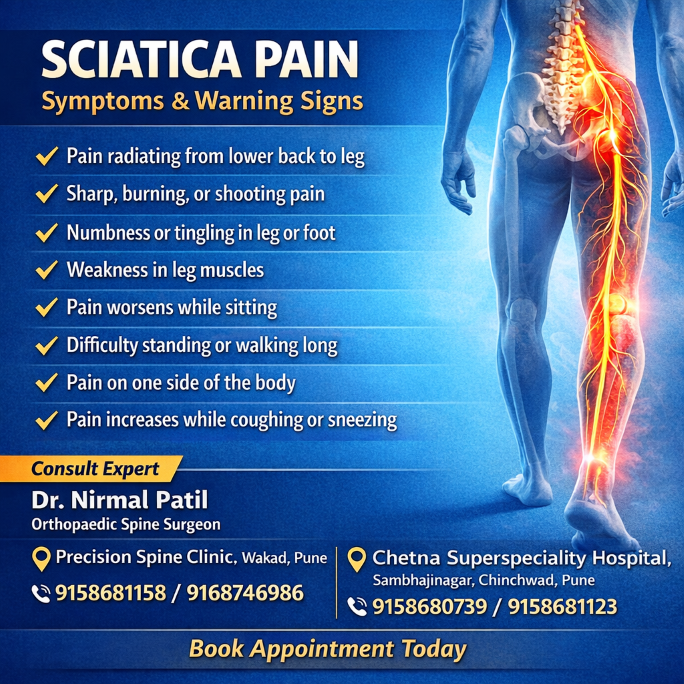
Sciatica is a condition caused by irritation or compression of the sciatic nerve, the longest nerve in the human body. The sciatic nerve starts in the lower back (lumbar spine), passes through the hips and buttocks, and travels down each leg.
When this nerve is compressed or inflamed, it causes pain that typically radiates from the lower back to the leg, often affecting only one side of the body.
Common Symptoms of Sciatica Pain
Recognizing the early symptoms of sciatica is crucial for timely treatment. The most common signs include:
1. Radiating Leg Pain
Pain that starts in the lower back or buttock and travels down the thigh, calf, or foot is a classic symptom of sciatica.
2. Sharp or Burning Pain
Patients often describe sciatica pain as sharp, electric, shooting, or burning rather than dull back pain.
3. Numbness and Tingling
A pins-and-needles sensation or numbness in the leg, foot, or toes may indicate nerve involvement.
4. Muscle Weakness
Weakness in the affected leg may cause difficulty walking, climbing stairs, or standing for long periods.
5. Pain Worsens While Sitting
Prolonged sitting increases pressure on the sciatic nerve, worsening the pain.
6. Pain on One Side of the Body
Sciatica usually affects only one leg, not both.
7. Pain While Coughing or Sneezing
Sudden movements like coughing or sneezing can increase nerve pressure and intensify pain.
Warning Signs You Should Not Ignore
Certain symptoms indicate worsening sciatica and require immediate medical attention:
- Persistent leg pain lasting more than 1–2 weeks
- Increasing numbness or weakness in the leg
- Difficulty walking or maintaining balance
- Severe pain interfering with sleep
- Loss of bladder or bowel control (medical emergency)
If you experience these symptoms, consult a spine surgeon in Chinchwad or PCMC without delay.
Common Causes of Sciatica Pain
Sciatica is not a disease but a symptom of underlying spine conditions. Common causes include:
Slipped Disc (Herniated Disc)
A bulging or slipped disc pressing on the sciatic nerve is the most common cause.
Lumbar Canal Stenosis
Narrowing of the spinal canal can compress nerves, especially in elderly patients.
Degenerative Disc Disease
Age-related wear and tear of spinal discs can irritate nerve roots.
Spondylolisthesis
Slippage of one vertebra over another may compress the sciatic nerve.
Poor Posture & Lifestyle Factors
Long sitting hours, wrong bending, obesity, and lack of exercise increase the risk.
Who Is at Higher Risk of Sciatica?
People at higher risk include:
- Office workers with prolonged sitting
- IT professionals in Wakad, Hinjewadi, and PCMC areas
- Drivers and machine operators
- Overweight individuals
- Elderly patients
- People with poor posture habits
- Individuals with previous spine injuries
Diagnosis of Sciatica Pain
At Chetna Superspeciality Hospital, Chinchwad, diagnosis involves:
- Detailed clinical examination
- Assessment of posture, reflexes, and muscle strength
- X-rays (if required)
- MRI scan for precise nerve and disc evaluation
Dr. Nirmal Patil focuses on identifying the exact cause before recommending a personalized treatment plan.
Non-Surgical Treatment for Sciatica (Early Stages)
Most sciatica cases can be managed without surgery when treated early. Treatment options may include:
- Activity modification
- Pain management
- Physiotherapy
- Posture correction
- Lifestyle changes
- Weight management
Early intervention helps reduce pain and prevents progression.
When Is Surgery Required for Sciatica?
Surgery is considered only when:
- Pain does not improve with conservative treatment
- Progressive nerve weakness occurs
- Severe nerve compression is detected
- Quality of life is severely affected
Modern spine care focuses on minimally invasive techniques whenever surgery is needed.
Why Choose Dr. Nirmal Patil for Sciatica Treatment in Pune?
- Experienced Orthopaedic & Spine Surgeon
- Expertise in spine disorders and nerve-related pain
- Patient-focused and ethical approach
- Accurate diagnosis and evidence-based care
- Trusted by patients across Chinchwad, PCMC, Wakad, Pimpri, Nigdi, Akurdi, and Thergaon
Hospital & Clinic Locations
📍 Chetna Superspeciality Hospital
Sambhajinagar, Chinchwad, Pune
📞 9158680739 / 9158681123
📍 Precision Spine Clinic
Wakad, Pune
📞 9158681158 / 9168746986
When Should You Consult a Spine Surgeon in Chinchwad?
You should consult Dr. Nirmal Patil if you experience:
- Radiating leg pain
- Persistent lower back pain
- Numbness or tingling
- Muscle weakness
- Difficulty sitting or walking
- Pain affecting daily life
Early diagnosis can prevent complications and long-term nerve damage.
Conclusion
Sciatica pain should never be ignored. What starts as mild leg pain can progress into severe nerve compression if left untreated. Understanding the symptoms and seeking timely care from an experienced spine specialist can make a significant difference.
If you are suffering from sciatica pain or back-related nerve symptoms, consult
Dr. Nirmal Patil, Orthopaedic & Spine Surgeon, at Chetna Superspeciality Hospital, Chinchwad, Pune, for accurate diagnosis and expert spine care.