
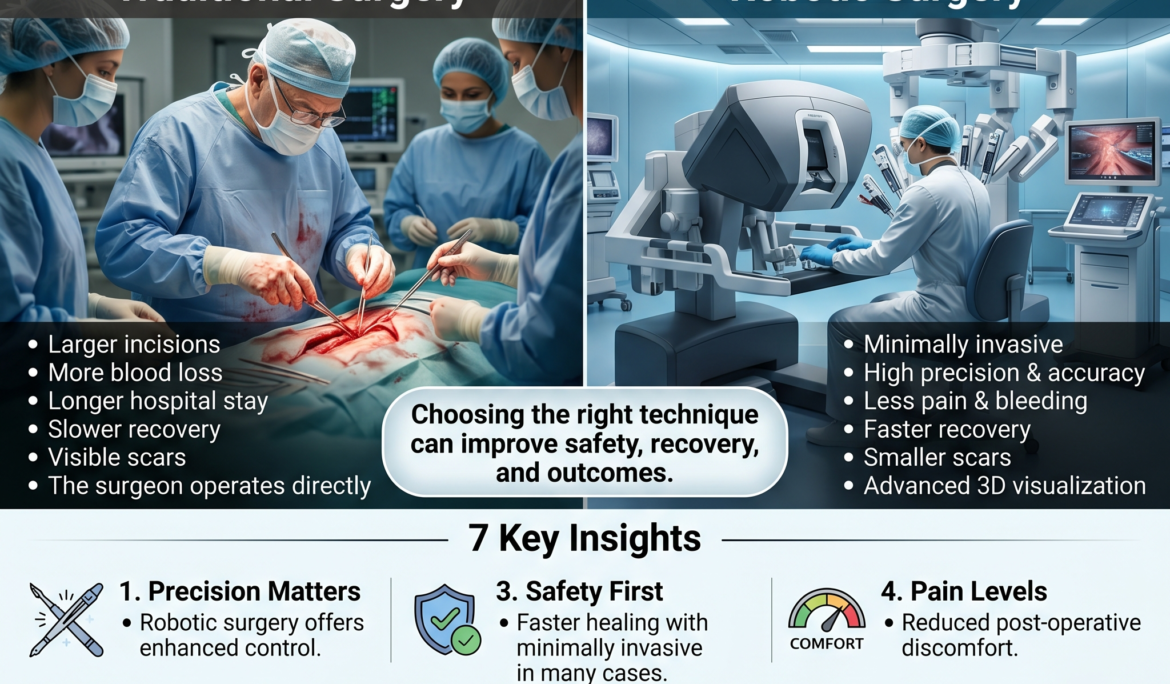
When it comes to choosing the right surgical treatment, consulting a general surgeon in PCMC is the first and most important step. However, many patients today are confused between robotic vs. traditional surgery, especially when considering factors like pain, recovery time, and surgical precision. While traditional methods have been trusted for years, modern advancements such as robotic-assisted surgery benefits and minimally invasive surgery are changing patient experiences dramatically. So, how do you decide which option is right for you? Let’s break it down in a simple and practical way.
General Surgeon in PCMC Explains Robotic vs. Traditional Surgery
Understanding the Fear Factor in Surgery
To begin with, let’s acknowledge something real—surgery can feel intimidating. In fact, most people immediately imagine pain, long recovery periods, and uncertainty. However, as medical technology evolves, these fears are gradually being replaced with confidence and clarity. So, what’s really changed? The answer lies in how procedures are performed today.
Traditionally, surgery involved large incisions and longer healing times. As a result, patients often delay treatment due to fear of discomfort. On the other hand, modern approaches like robotic-assisted surgery benefits are reshaping expectations. Not only do these techniques reduce physical trauma, but they also improve outcomes significantly.
Moreover, think of it this way: if you had to fix a delicate object, wouldn’t you prefer precision tools over bulky ones? Similarly, robotic systems allow surgeons to operate with incredible accuracy, like a general surgeon in PCMC. Consequently, patients experience less pain and faster recovery. Therefore, the fear factor begins to fade when people understand the advantages of minimally invasive surgery.
Why Patients Fear Surgical Procedures
Firstly, uncertainty plays a huge role in fear. Patients often worry about complications, anesthesia risks, and recovery timelines. In addition, stories from others can amplify anxiety. As a result, even necessary surgeries get postponed.
However, awareness is improving. For instance, patients consulting a general surgeon in PCMC now receive detailed explanations and reassurance. This, in turn, helps them feel more in control of their decisions.
How Technology Is Changing Surgical Anxiety
Interestingly, technology is not just improving outcomes—it’s also transforming patient psychology. With robotic systems, surgeons can perform procedures with greater confidence. Consequently, patients benefit from reduced complications and smoother recoveries. Therefore, anxiety naturally decreases when outcomes become more predictable.
What Is Traditional Surgery?
To understand the comparison better, it’s important first to explore traditional surgery. Essentially, this method involves making a larger incision to access the affected area directly. For decades, it has been the standard approach and remains highly effective in many situations.
However, while traditional surgery is reliable, it does come with certain challenges. For example, larger incisions often lead to more pain and longer healing periods. In contrast, newer techniques aim to minimize these issues.
Common Techniques Used
Typically, traditional surgery includes direct manual intervention. Surgeons use standard instruments and rely heavily on their experience. As a result, outcomes depend significantly on skill and precision.
Benefits and Limitations
On one hand, traditional surgery is widely available and suitable for complex or emergency cases. On the other hand, it has drawbacks such as:
- Longer recovery time
- Increased postoperative pain
- Higher risk of infection
Therefore, while it remains essential, many patients now explore alternatives offered by a general surgeon in PCMC.
What Is Robotic Surgery?
Now, let’s shift focus to robotic surgery. Unlike traditional methods, this approach uses advanced technology to assist surgeons. Importantly, robots don’t act independently. Instead, they enhance the surgeon’s capabilities.
As a result, procedures become more precise and controlled. Furthermore, smaller incisions lead to quicker healing and less discomfort.
How Robotic-Assisted Surgery Works
In this system, the surgeon operates from a console. Meanwhile, robotic arms replicate the surgeon’s movements with greater accuracy. Consequently, even delicate procedures can be performed with confidence.
Key Technologies Behind Precision
Notably, robotic surgery relies on:
- High-definition 3D visualization
- Motion scaling for accuracy
- Tremor elimination
Therefore, these features collectively improve surgical outcomes and patient safety.
Robotic vs Traditional Surgery: Key Differences
Comparison Table
| Feature | Robotic Surgery | Traditional Surgery |
|---|---|---|
| Incision Size | Small | Large |
| Pain Level | Low | Moderate to High |
| Recovery Time | Faster | Longer |
| Precision | High | Moderate |
| Hospital Stay | Short | Extended |
Recovery, Pain & Accuracy
Clearly, robotic surgery offers several advantages. For instance, smaller incisions result in less pain. Additionally, patients recover faster and return to normal life sooner. In contrast, traditional surgery often requires an extended healing time.
Therefore, many individuals prefer consulting a general surgeon in PCMC who provides robotic options.
Robotic-Assisted Surgery Benefits vs Traditional Surgical Methods
Minimally Invasive Surgery and Faster Recovery Time
One of the most significant benefits is quicker recovery. Because the procedure is minimally invasive, the body heals faster. As a result, hospital stays are shorter.
Moreover, patients can resume daily activities sooner. This, in turn, improves overall quality of life.
Surgical Precision in Robotic vs Traditional Surgery
Equally important is precision. Robotic systems allow surgeons to operate with unmatched accuracy. Consequently, the risk of complications decreases.
Risks and Limitations of Both Methods
Risks in Traditional Surgery
Although effective, traditional surgery carries risks such as infections and longer recovery periods. Therefore, careful evaluation is necessary.
Risks in Robotic Surgery
Similarly, robotic surgery has limitations. For example, it requires advanced equipment and training. However, complications are rare.
Expert Opinion: General Surgeon in PCMC
When choosing a surgical method, expert advice is crucial. In this regard, Dr Dhananjay Patil, a trusted general surgeon in PCMC, offers advanced solutions.
Chetna Hospital, Sambhaji Nagar, Chinchwad
📞 8390861787 / 9158681123
🌐 https://chetnahospital.co.in/
📍 https://maps.app.goo.gl/
Serving a 5–15 km radius, Dr Dhananjay Patil specializes in minimally invasive surgery, surgical precision, and faster recovery techniques.
Located in Chinchwad, Chetna Hospital provides easy access for patients from Sambhajinagar, Akurdi, Nigdi, and Ravet looking for a General Surgeon.
Why Choose Dr Dhananjay Patil
- Extensive experience
- Advanced robotic procedures
- Patient-focused care
Which Option Does a General Surgeon in PCMC Recommend?
Ultimately, the choice depends on several factors. For example, the type of condition and overall health play a major role. Additionally, surgeon expertise is critical.
Therefore, consulting a qualified general surgeon in PCMC ensures the best decision. In conclusion, understanding your options empowers you to choose confidently.
FAQs
A: Yes, because it offers better precision, smaller incisions, and fewer complications.
A: Yes, as smaller incisions lead to less tissue damage and reduced pain.
A: Typically, 30–50% faster compared to traditional surgery.
A: Initially, yes, but shorter hospital stays can balance costs.
A: No, some cases still require traditional methods.
A: Dr Dhananjay Patil is highly recommended for advanced care.
Conclusion
To sum up, both robotic and traditional surgeries have their place in modern medicine. However, as technology advances, robotic-assisted procedures are becoming increasingly popular. Not only do they reduce pain, but they also improve recovery time and surgical precision. Therefore, if fear has been holding you back, exploring modern options can make a significant difference. Consulting an experienced general surgeon in PCMC will help you make the safest and most informed decision.
📞 Book your consultation today with Dr. Dhananjay Patil, General Surgeon, for expert evaluation and personalized Robotic vs. Traditional Surgery recommendations.
Location – Sahakari Bank, Chetna Hospital, OPD 1, Ground Floor, Sambhaji Nagar Rd, next to Pimpri Chinchwad, Sambhajinagar, Chinchwad, Pune, Maharashtra 411019