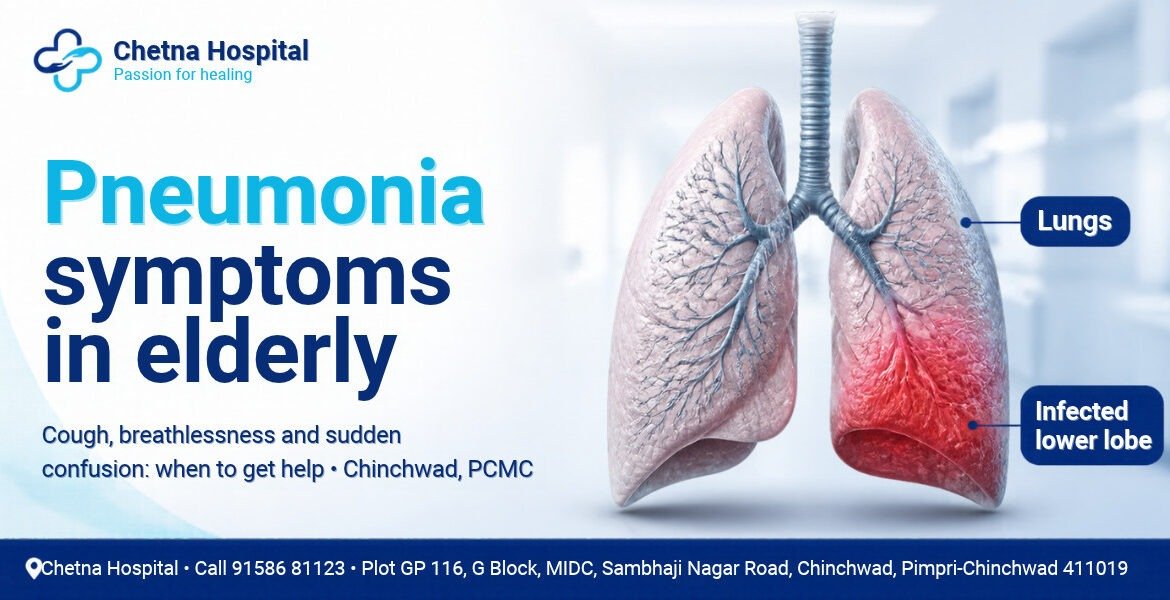
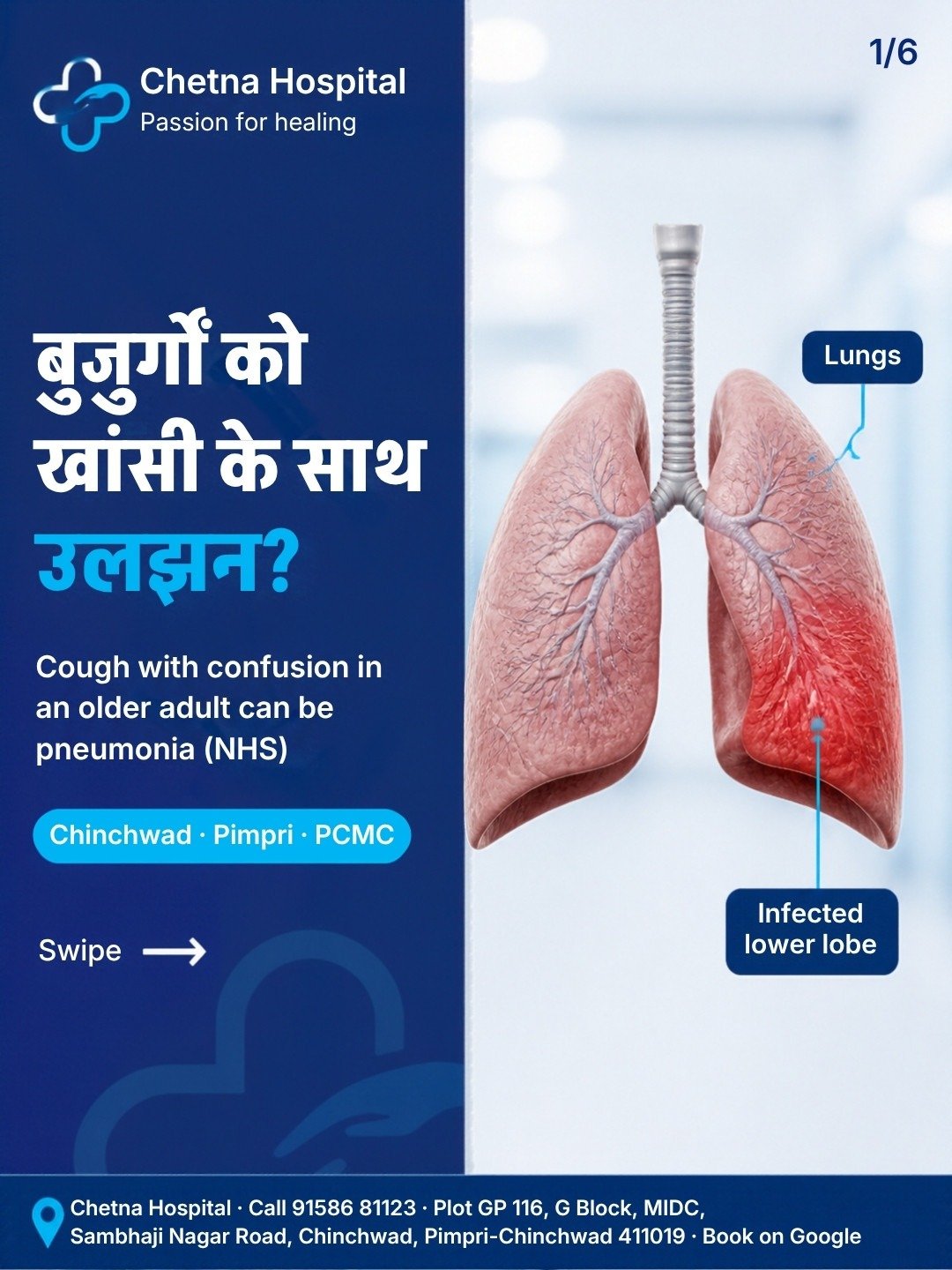
Pneumonia symptoms in elderly people can be easy to miss, because a cough may come with sudden confusion instead of a high fever. The NHS lists cough, breathlessness, high temperature, chest pain and tiredness, and notes that confusion is common in older adults. If an older family member in Chinchwad or PCMC has these signs, get them checked the same day.
Call 91586 81123WhatsAppGet Directions
Key takeaways
- Pneumonia symptoms in elderly adults can include confusion, not just a cough (NHS).
- Breathlessness, chest pain when coughing and yellow or green phlegm need a doctor the same day.
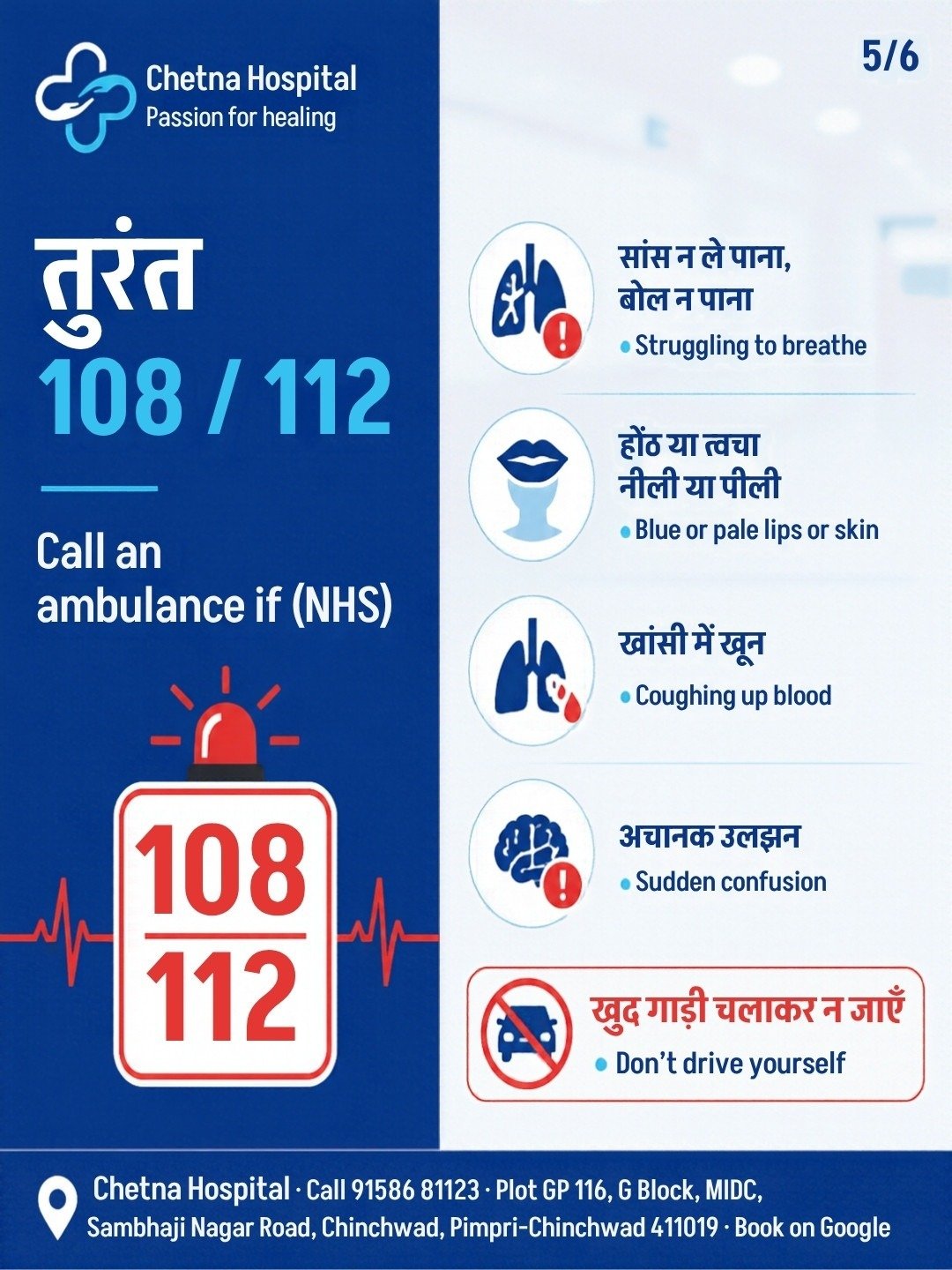
- Blue lips, coughing blood, struggling to breathe or sudden confusion: call 108 or 112.
- People over 65 and those with heart or long-term lung disease are at higher risk.
- Do not take cough medicine for pneumonia, because coughing helps clear the infection (NHS).
In this article:
- What are the pneumonia symptoms in elderly people?
- Why is confusion a warning sign in older adults?
- Who is at higher risk this winter?
- When do pneumonia symptoms in elderly family members need a same-day check?
- When are pneumonia symptoms in elderly people an emergency?
- What helps at home?
- Frequently asked questions
Why this is in the news now: Pune is in its coldest spell of the season, with a further drop in night temperatures reported by Punekar News. Coughs and colds are common in homes right now, so it helps to know which signs point to something more serious in an older parent or grandparent.
What are the pneumonia symptoms in elderly people?
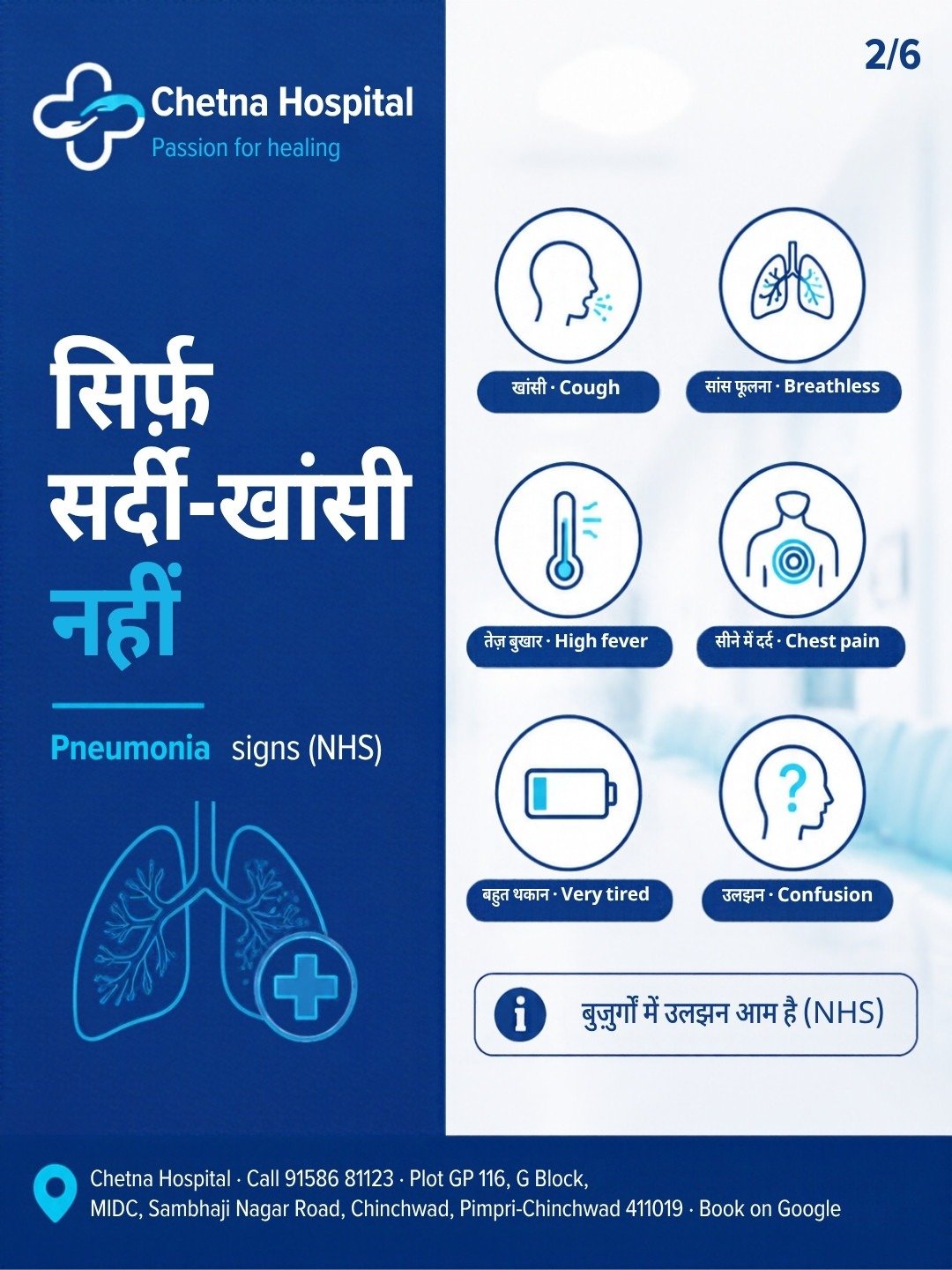
Pneumonia is an infection of the lungs. According to the NHS, symptoms can start suddenly or build up over a few days. They can include:
- a cough
- shortness of breath
- a high temperature
- chest pain
- an aching body
- feeling very tired
- loss of appetite
- wheezing
- feeling confused
Not every older person gets all of these. For example, a grandparent may eat less, sleep more and seem muddled, while the cough stays mild. So watch for a change from their normal self, not only for fever. Pneumonia symptoms in elderly family members are easier to spot when someone checks on them morning and evening.
Why is confusion a warning sign in older adults?
The NHS notes that feeling confused is common in older people with pneumonia. Families often put it down to age, a bad night or the cold weather. However, new confusion along with a cough or breathlessness is a reason to see a doctor, not to wait.
Sudden confusion is also on the NHS list of signs that need emergency help. If a parent who was clear-headed yesterday cannot follow a conversation today, treat it as urgent. In short, pneumonia symptoms in elderly people do not always look like a chest problem at first.
Who is at higher risk this winter?
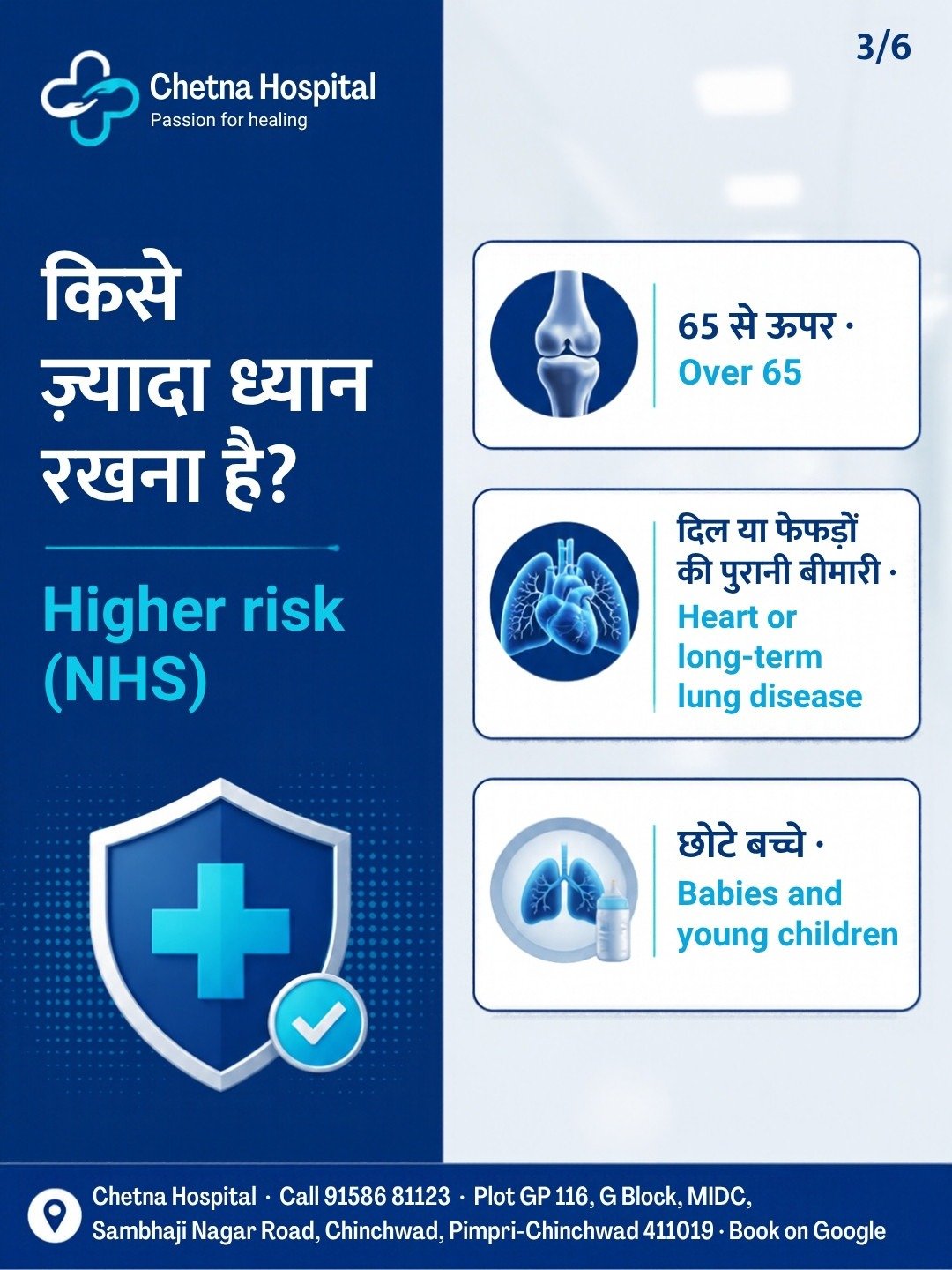
The NHS says anyone can get pneumonia, but some people are more likely to become seriously ill. The risk is higher if you:
- are over 65
- have heart disease or a long-term lung condition
- are a baby or young child
- are not getting better after taking antibiotics
Pneumonia can also follow flu or other chest infections, the NHS explains. Also, the NHS lists vaccines against pneumococcal infection, flu, RSV and COVID-19. Ask your doctor which ones suit an older family member. If your parent has heart disease, mention it when you book, because it changes how closely the doctor will want to follow them.
When do pneumonia symptoms in elderly family members need a same-day check?
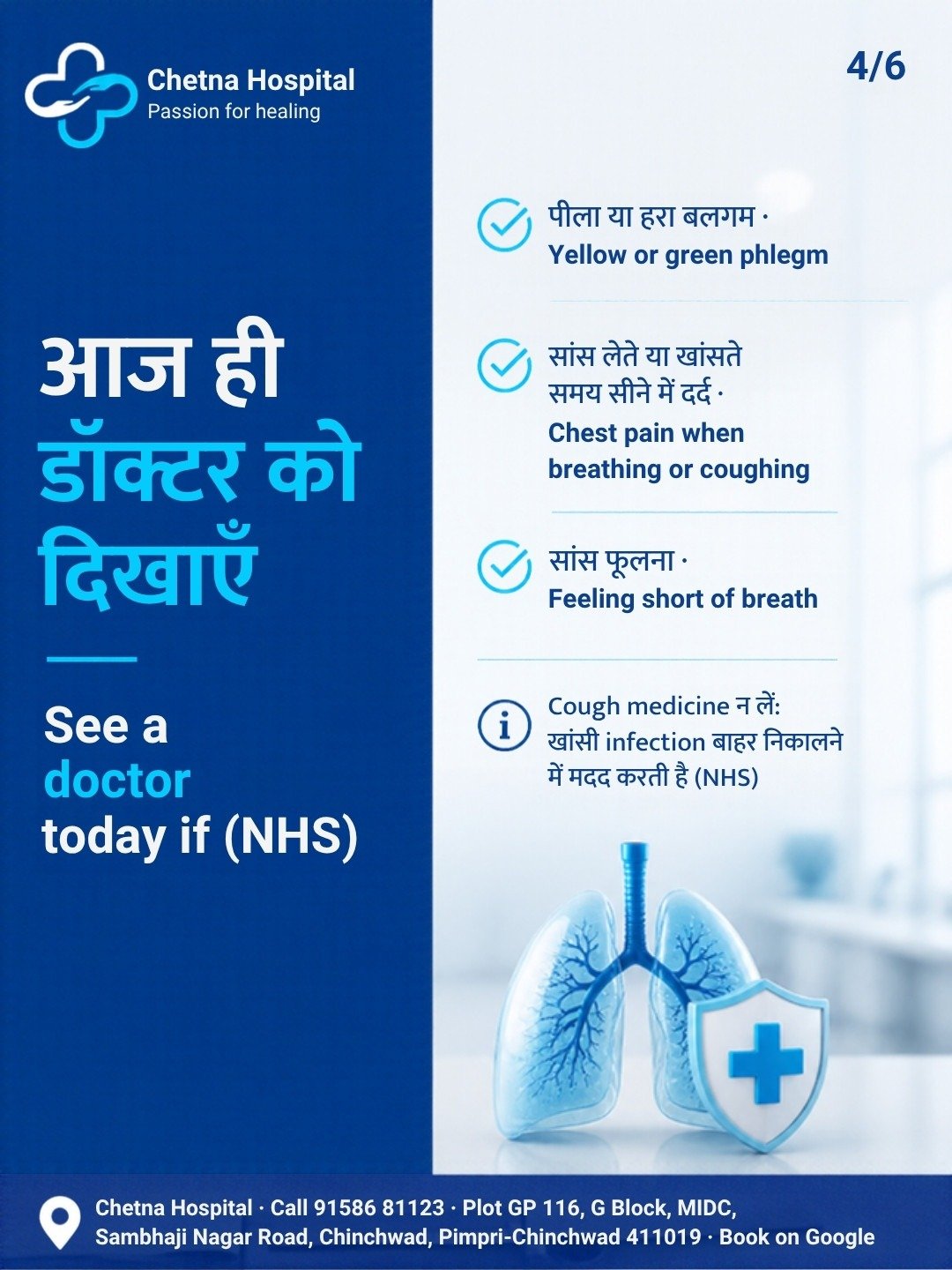
The NHS advises an urgent doctor’s appointment if a person has:
- a cough that is not going away
- yellow or green phlegm
- chest pain that comes and goes, or happens when breathing or coughing
- shortness of breath
For an older adult, do not wait for a few more days to see if it settles. Then, at the visit, tell the doctor when the cough started, whether there has been confusion, and which medicines they take. Book a consultation through our contact page or call 91586 81123. You can also see the full list of services at Chetna Hospital.
It also helps to bring a short note. Write down any temperature readings you took at home, how much your parent is eating and drinking, and whether the breathing seems faster than usual. Bring their current prescriptions or the medicine strips too. Older adults often take several medicines, and the doctor needs the full list before adding anything new. If your parent lives alone, ask a neighbour or relative to stay with them until they have been seen.
When are pneumonia symptoms in elderly people an emergency?
Call 108 or 112, or go to the nearest emergency department, if the person:
- is struggling to breathe, choking or gasping and cannot speak
- has pale, blue or blotchy skin, lips or tongue
- is coughing up blood
- suddenly becomes confused
The NHS also advises not to drive yourself to hospital in this situation. Ask someone else to drive, or call an ambulance.
What helps at home?
Once a doctor has seen them, the NHS suggests rest, plenty of fluids, and paracetamol or ibuprofen if the doctor says these are safe. However, it advises against cough medicine, because coughing helps the body clear the infection.
If antibiotics are prescribed, finish the course. Also contact the doctor if there is no improvement after 2 to 3 days on antibiotics (NHS). Most people get better in 2 to 4 weeks, the NHS says, but older adults may need closer follow-up. For other seasonal problems, read our guide to food poisoning after a wedding feast.
Pneumonia symptoms in elderly: slides
Save these slides or share them with a family member who looks after an older parent.
Consultation near you
Chetna Hospital: Plot GP 116, G Block, MIDC, Sambhaji Nagar Road, Chinchwad, Pimpri-Chinchwad 411019. Call 91586 81123, message on WhatsApp or get directions.
Areas served: Chinchwad, Pimpri, Akurdi, Nigdi, Ravet, Wakad, Hinjewadi, Pimple Saudagar, Thergaon, Tathawade, Punawale, Moshi and Bhosari.
Worried about an older parent’s cough? Book a consultation at Chetna Hospital.
Call 91586 81123WhatsAppGet Directions
Frequently asked questions
What are the common pneumonia symptoms in elderly people?
The NHS lists a cough, shortness of breath, a high temperature, chest pain, an aching body, feeling very tired and loss of appetite. It also says that feeling confused is common in older people with pneumonia.
Can pneumonia symptoms in elderly adults start without a high fever?
The NHS says symptoms can start suddenly or gradually over a few days, and a high temperature is one possible symptom among several. So a cough with new confusion or breathlessness needs a check even if the fever is mild.
When should an older person with a cough see a doctor the same day?
The NHS advises an urgent appointment for a cough with yellow or green phlegm, chest pain when breathing or coughing, or feeling short of breath.
When is pneumonia an emergency?
Call 108 or 112 if the person is struggling to breathe or cannot speak, has blue, pale or blotchy lips or skin, is coughing up blood, or suddenly becomes confused. The NHS advises not driving yourself to hospital.
Where can I get a cough checked in Chinchwad?
Chetna Hospital is on Sambhaji Nagar Road, Plot GP 116, G Block, MIDC, Chinchwad. Call 91586 81123 to book a consultation.
About Chetna Hospital
Chetna Hospital is a multispeciality hospital on Sambhaji Nagar Road in Chinchwad, serving families across Pimpri-Chinchwad. See our doctor profiles or call 91586 81123 to book.
Sources
This article is general health information and does not replace a medical consultation.
Last updated 27 November 2026