
Folic acid works best when it starts before pregnancy, not after a positive test. The NHS advises 400 micrograms a day from before you conceive until 12 weeks of pregnancy. Planning a baby in Chinchwad or elsewhere in PCMC? Ask Dr Bharati Patil, a gynaecologist in Chinchwad, which supplements you need before you start trying.
Call 91686 90447WhatsAppGet Directions
Why this is in the news now: India is in the middle of its wedding season, and for many newly married couples, planning a baby comes next. That makes this a good time to get the timing of folic acid right.
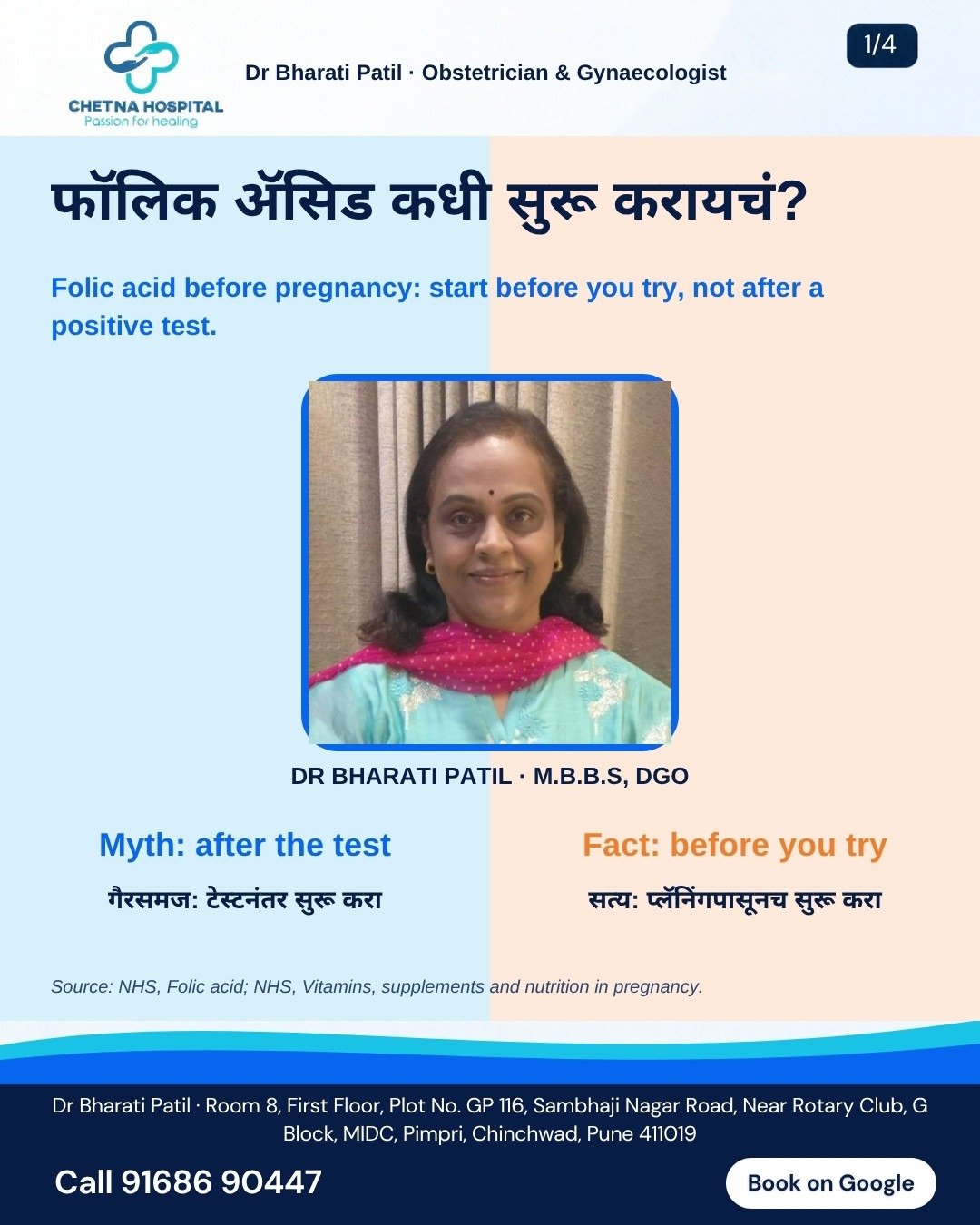
The myth: “I will start once the test is positive”
Many women think of folic acid only after a pregnancy test turns positive, or after the first scan. It feels logical: why take a pregnancy vitamin before there is a pregnancy?
The problem is timing. The NHS says folic acid helps a baby’s brain, skull and spinal cord develop properly. That development begins in the first weeks, often before a period is even late. By the time a test is positive, part of that window has already passed.
The fact: start before you try
The NHS advice covers three points:
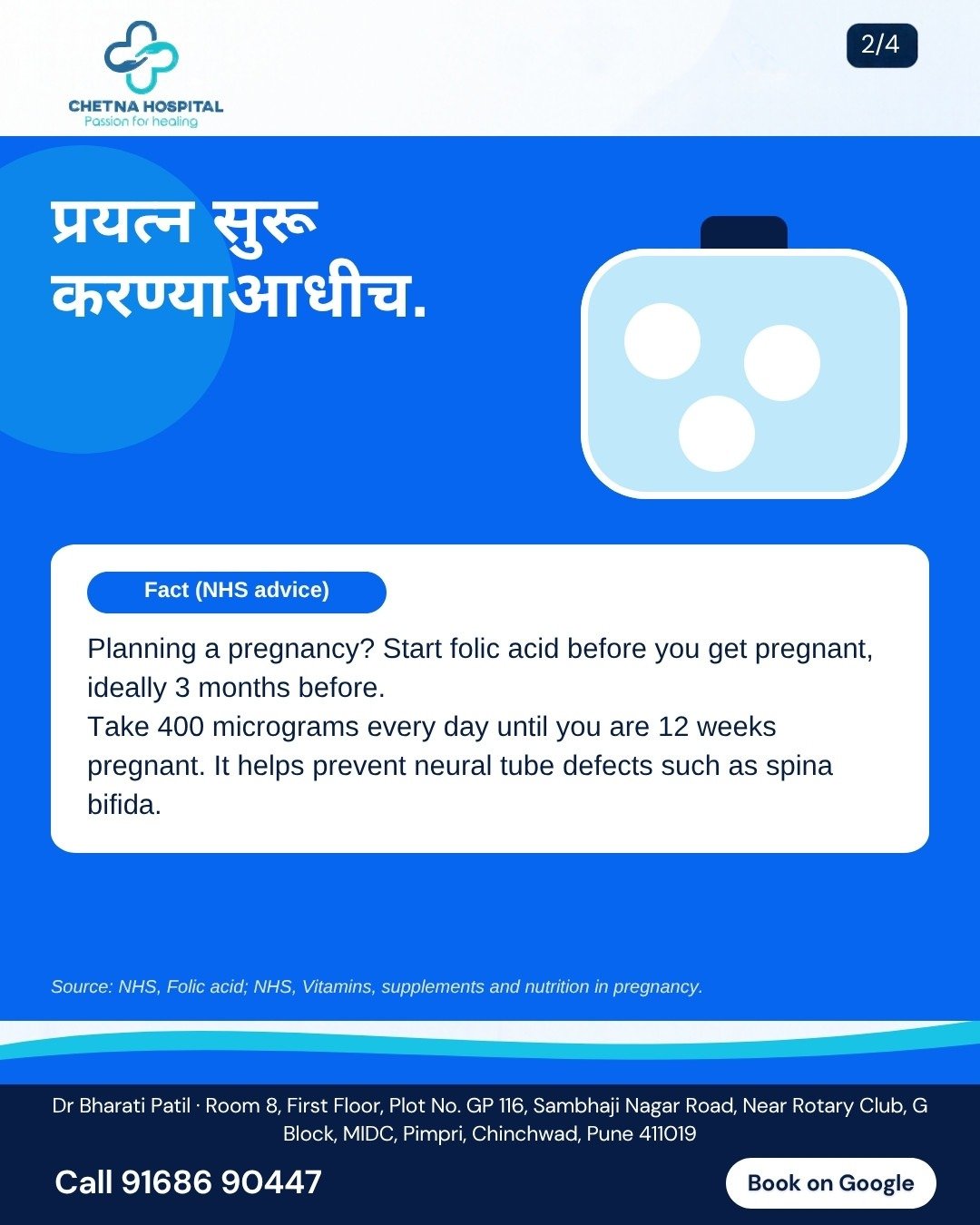
- When to start: before you get pregnant. The NHS medicines page says ideally 3 months before.
- How much: 400 micrograms of folic acid every day.
- How long: until you are 12 weeks pregnant.
The NHS says folic acid can help prevent birth defects known as neural tube defects, including spina bifida. Supplements are sold in pharmacies, and a doctor can also prescribe them.
If the pregnancy was not planned
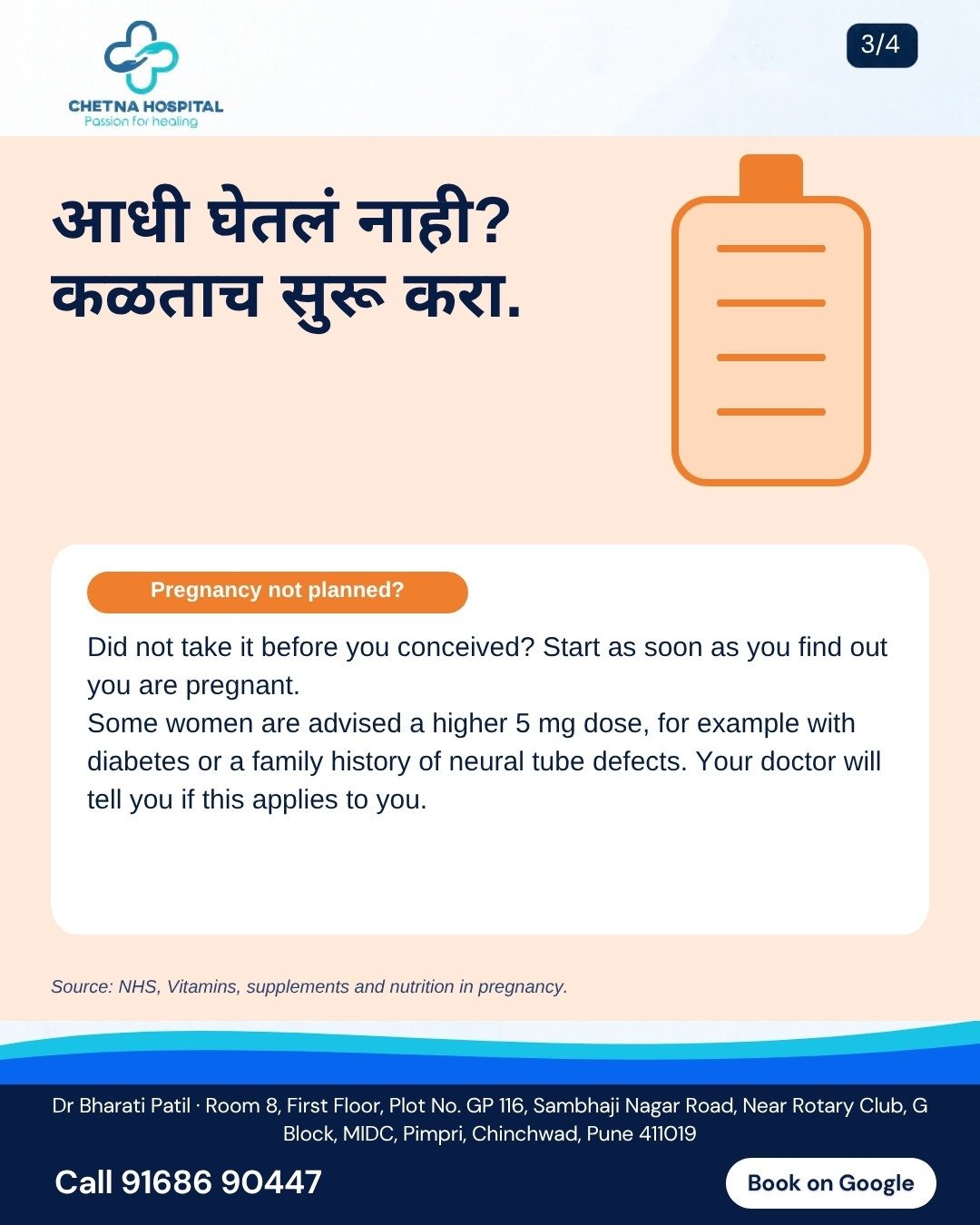
Many pregnancies are not planned to the month, and that is fine. If you did not take folic acid before you conceived, the NHS advice is simple: start as soon as you find out you are pregnant, and keep taking it until 12 weeks. Do not take two doses to make up for a missed one.
Then book your first pregnancy visit. Bring the supplement strip or bottle with you so the dose can be checked.
Who may need a higher dose
For some women, 400 micrograms is not enough. The NHS says a higher dose of 5 milligrams a day, taken until 12 weeks of pregnancy, is advised if:
- you or the baby’s biological father have a neural tube defect, or a family history of one
- you have had a previous pregnancy affected by a neural tube defect
- you have diabetes
- you take anti-epilepsy medicine
- you take anti-retroviral medicine for HIV
The 5 mg dose is prescribed by a doctor. If any of these apply to you, speak to your gynaecologist before you start trying, rather than picking a dose off the shelf. Do not stop or change an epilepsy or diabetes medicine on your own.
A common gap in pregnancy planning
Many couples plan to “start a family soon” without thinking about supplements until the first pregnancy check-up. By then the pregnancy may already be several weeks along. Folic acid still helps from that point, but the weeks before are a missed chance. A short pre-pregnancy visit closes that gap.
Folic acid is not the only one
Two more points from the NHS are worth knowing before pregnancy:
- Vitamin D: the NHS recommends 10 micrograms a day for pregnant and breastfeeding women, between September and March. Women who cover their skin outdoors or spend most of their time indoors may need it all year.
- Avoid vitamin A (retinol): the NHS says not to take cod liver oil or any supplement containing vitamin A (retinol) in pregnancy. Some general multivitamins contain it, so read the label.
Before you start trying: a short checklist
- Start 400 micrograms of folic acid daily, unless your doctor advises the 5 mg dose.
- Make a list of every medicine and supplement you take, including ones from other doctors.
- If you have diabetes, epilepsy, thyroid problems or high blood pressure, plan a visit before you try.
- Check that your multivitamin does not contain vitamin A (retinol).
- Write down your questions for the visit.
Questions to ask at a pre-pregnancy visit
A pre-pregnancy visit does not need to be long. These questions cover most of what matters:
- Is the standard 400 microgram dose right for me, or do I need 5 mg?
- Are any of my current medicines a problem if I get pregnant?
- Should I take vitamin D as well, and how much?
- Which blood tests are worth doing before we start trying?
- When should I book my first visit once the test is positive?
If you already know the answers to some of these, the visit can focus on the rest.
More reading from Chetna Hospital: period delay tablets and when to see a gynaecologist, and the HPV vaccine and the right age to give it.
Folic acid slides to save or share
Share these slides with someone who is planning a pregnancy.
Consultation near you
Dr Bharati Patil, Obstetrician and Gynaecologist: Room 8, First Floor, Plot No. GP 116, Sambhaji Nagar Road, Near Rotary Club, G Block, MIDC, Pimpri, Chinchwad, Pune 411019. Call 91686 90447, message on WhatsApp or get directions. You can also use our contact page or see other departments on our services page.
Areas served: Chinchwad, Pimpri, Akurdi, Nigdi, Ravet, Wakad, Hinjewadi, Pimple Saudagar, Thergaon, Tathawade, Punawale, Moshi and Bhosari.
Call 91686 90447WhatsAppGet Directions
Frequently asked questions
When should I start folic acid if I am planning a pregnancy?
Start before you get pregnant. The NHS says ideally 3 months before, and advises 400 micrograms every day until you are 12 weeks pregnant.
I did not take folic acid before I conceived. Is it too late?
No. The NHS advises starting as soon as you find out you are pregnant and continuing until 12 weeks.
Who needs the higher 5 mg dose of folic acid?
The NHS lists women with diabetes, those taking anti-epilepsy or anti-retroviral medicine, and those where either parent has a neural tube defect, a family history of one, or a previous affected pregnancy. A doctor prescribes this dose.
Is a regular multivitamin enough before pregnancy?
Check the label and ask your doctor. The NHS advises 400 micrograms of folic acid a day for most women, and warns against supplements containing vitamin A (retinol) in pregnancy.
Where can I get pre-pregnancy advice in Chinchwad?
You can speak to Dr Bharati Patil, obstetrician and gynaecologist at Chetna Hospital, Chinchwad, on 91686 90447. Bring a list of any medicines or supplements you take.
Your doctor: Dr Bharati Patil
Dr Bharati Patil (M.B.B.S, DGO) is an obstetrician and gynaecologist at Chetna Hospital, Chinchwad. She sees women from across Pimpri-Chinchwad for pregnancy care, pre-pregnancy questions and gynaecology. See her profile page or call 91686 90447 to book.
Sources
- NHS: Vitamins, supplements and nutrition in pregnancy
- NHS: Folic acid
- Business Today, 17 November 2026: India’s wedding season
This article is general health information and does not replace a medical consultation.
Last updated 26 November 2026