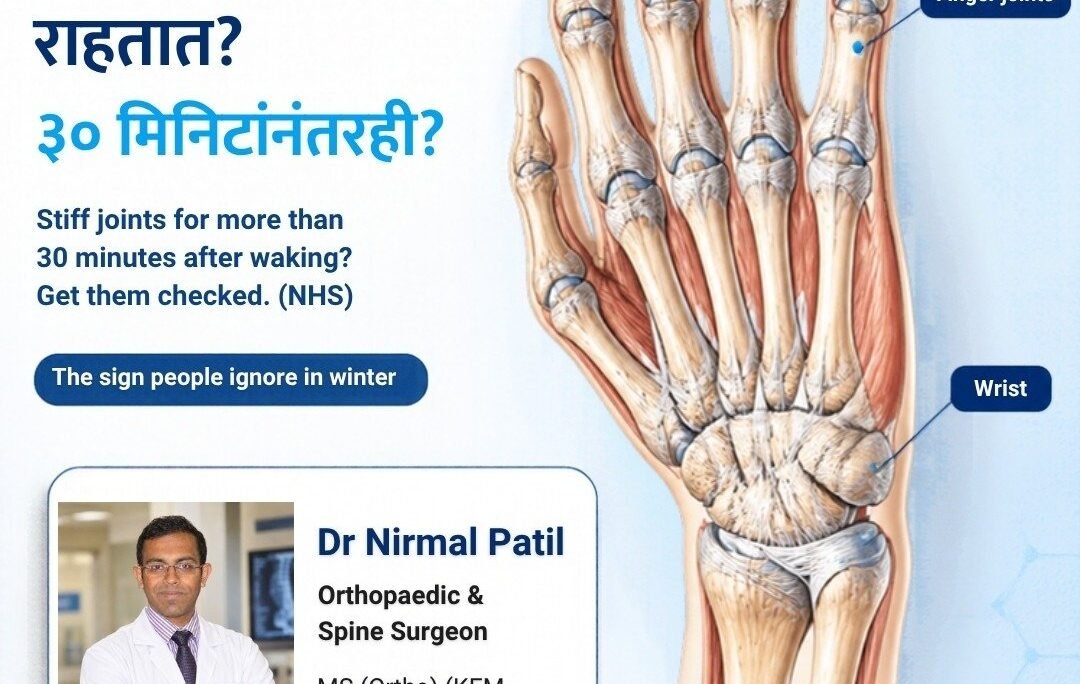
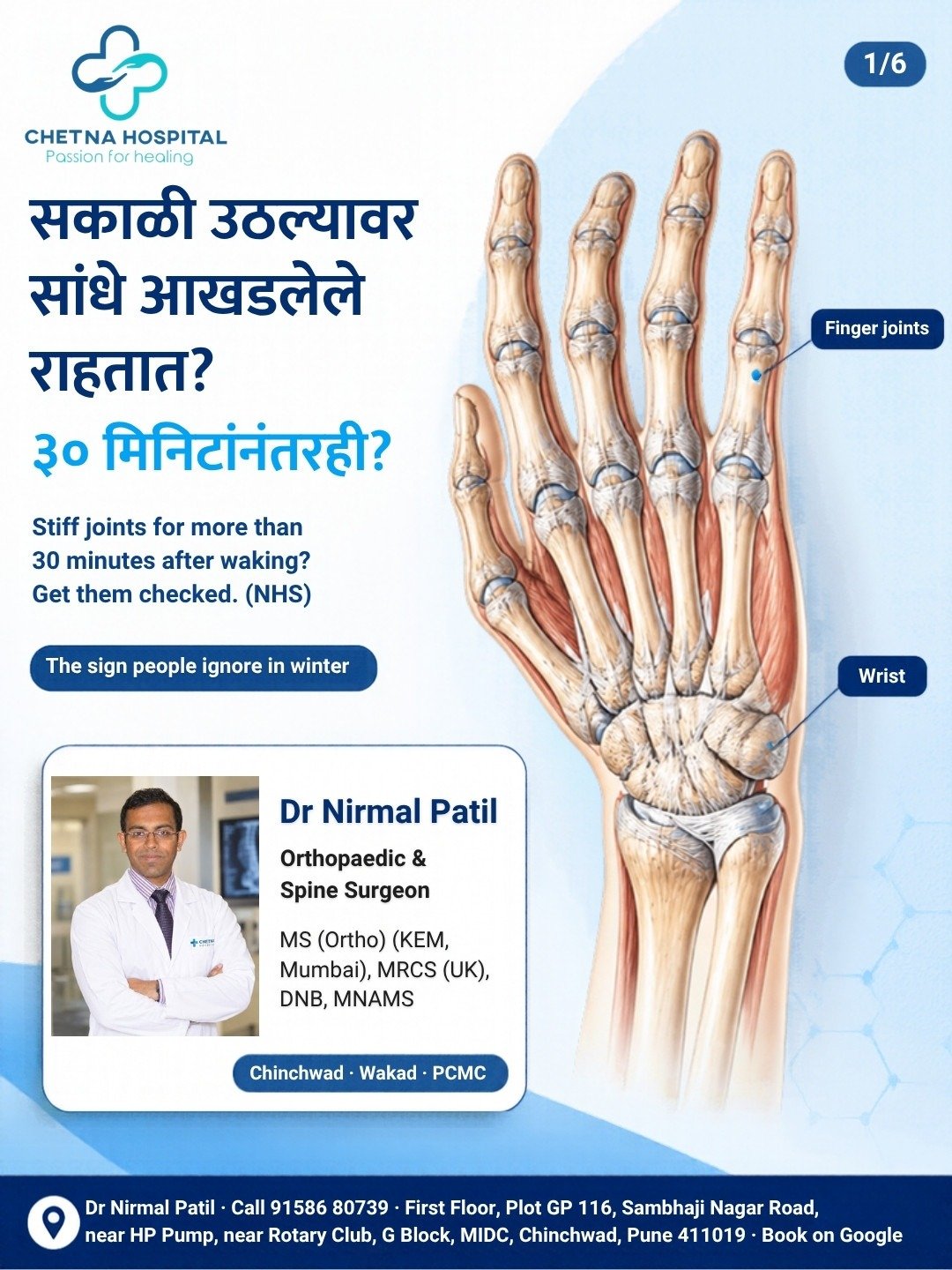
Morning joint stiffness that lasts more than 30 minutes after waking is worth getting checked, according to the NHS. In osteoarthritis, morning stiffness usually eases within about 30 minutes. Longer stiffness, especially with swollen, warm joints on both sides of the body, can point to an inflammatory condition such as rheumatoid arthritis.
Call 91586 80739Book on GoogleWhatsApp
Key takeaways
- Stiffness for more than 30 minutes after waking is the NHS threshold for seeing a doctor.
- Osteoarthritis stiffness usually eases within about 30 minutes; rheumatoid arthritis stiffness often lasts longer.
- Small joints of the hands and feet, both sides at once, and swollen warm joints are clues to look for.
- A hot, swollen joint with fever needs urgent care.
- Keep the joint moving gently rather than resting it completely.
In this article
- How long should morning joint stiffness last?
- Why do joints feel stiffer on winter mornings?
- Osteoarthritis or rheumatoid arthritis: what is the difference?
- Which clues should you look for?
- When is morning joint stiffness urgent?
- What can you do at home?
- How should you prepare for a joint check-up?
- Frequently asked questions
Many people in Chinchwad, Pimpri and Wakad notice stiff fingers, wrists or knees on cold mornings. Most of the time the stiffness loosens as the day starts. When it keeps going past half an hour, or turns up every morning, it is a sign to get the joints examined. This guide explains what morning joint stiffness can mean, using NHS guidance, and when to see an orthopaedic doctor.
How long should morning joint stiffness last?
The NHS joint pain guidance says to see a GP if your joints are stiff for more than 30 minutes after waking up. That 30-minute mark is useful because it helps separate the short stiffness many people feel after a night of rest from stiffness that needs a closer look.
Note how long it takes each morning for your joints to feel normal. A simple note on your phone for a week gives your doctor clear information to work with.
Why do joints feel stiffer on winter mornings?
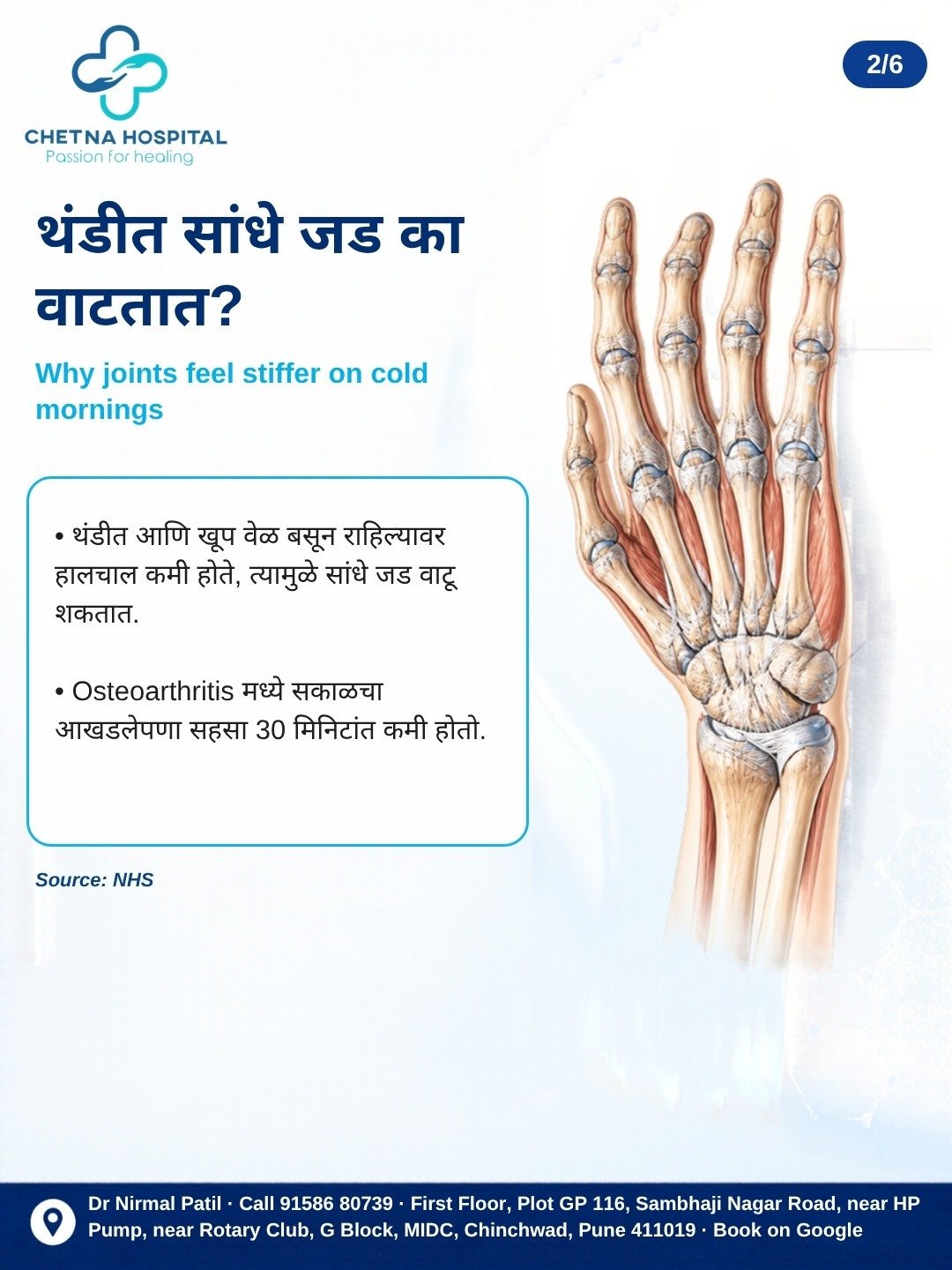
Cold mornings tend to keep people still for longer: under a blanket, in a chair, or sitting through a commute. Less movement leaves joints feeling heavy when you start the day. Joint aches during seasonal change were discussed in The Week on 8 November 2026, and Punekar News has reported Pune bracing for sub-10°C temperatures as the winter chill deepens.
Cold weather alone does not explain stiffness that lasts well past 30 minutes or keeps returning. That pattern deserves an examination.
Osteoarthritis or rheumatoid arthritis: what is the difference?
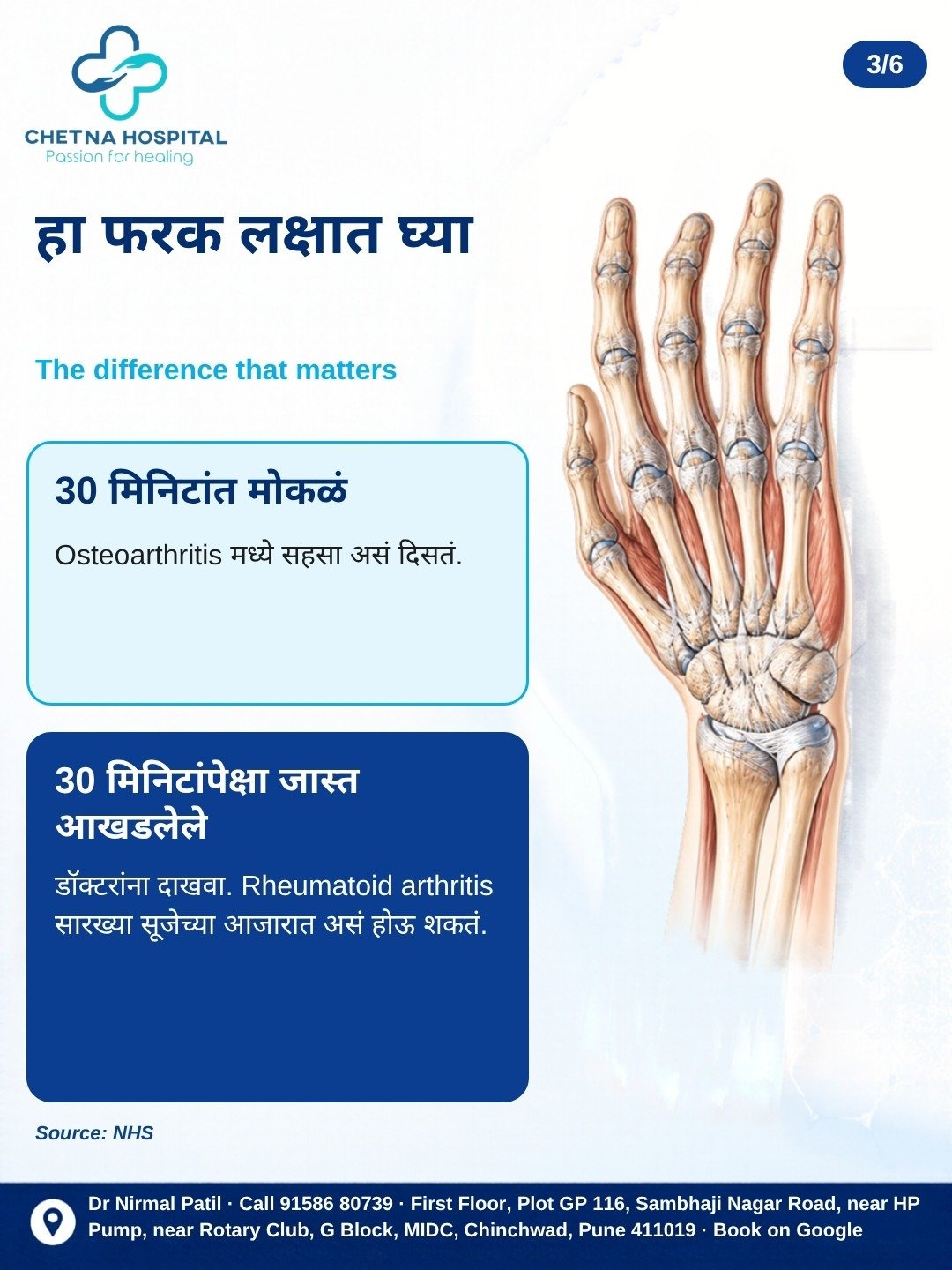
According to the NHS rheumatoid arthritis symptoms page, morning stiffness in osteoarthritis usually lasts about 30 minutes, while stiffness in rheumatoid arthritis often lasts longer. Rheumatoid arthritis is an inflammatory condition, so the timing of stiffness is one of the clues a doctor uses.
| Feature | Osteoarthritis | Rheumatoid arthritis |
|---|---|---|
| Morning stiffness | Usually eases within about 30 minutes | Often lasts longer |
| Joints often affected first | Varies | Small joints of the hands and feet |
| Pattern | Varies | Same joints on both sides of the body |
Source: NHS. A table cannot diagnose you; it shows why the length of stiffness matters when you speak to a doctor.

Which clues should you look for?
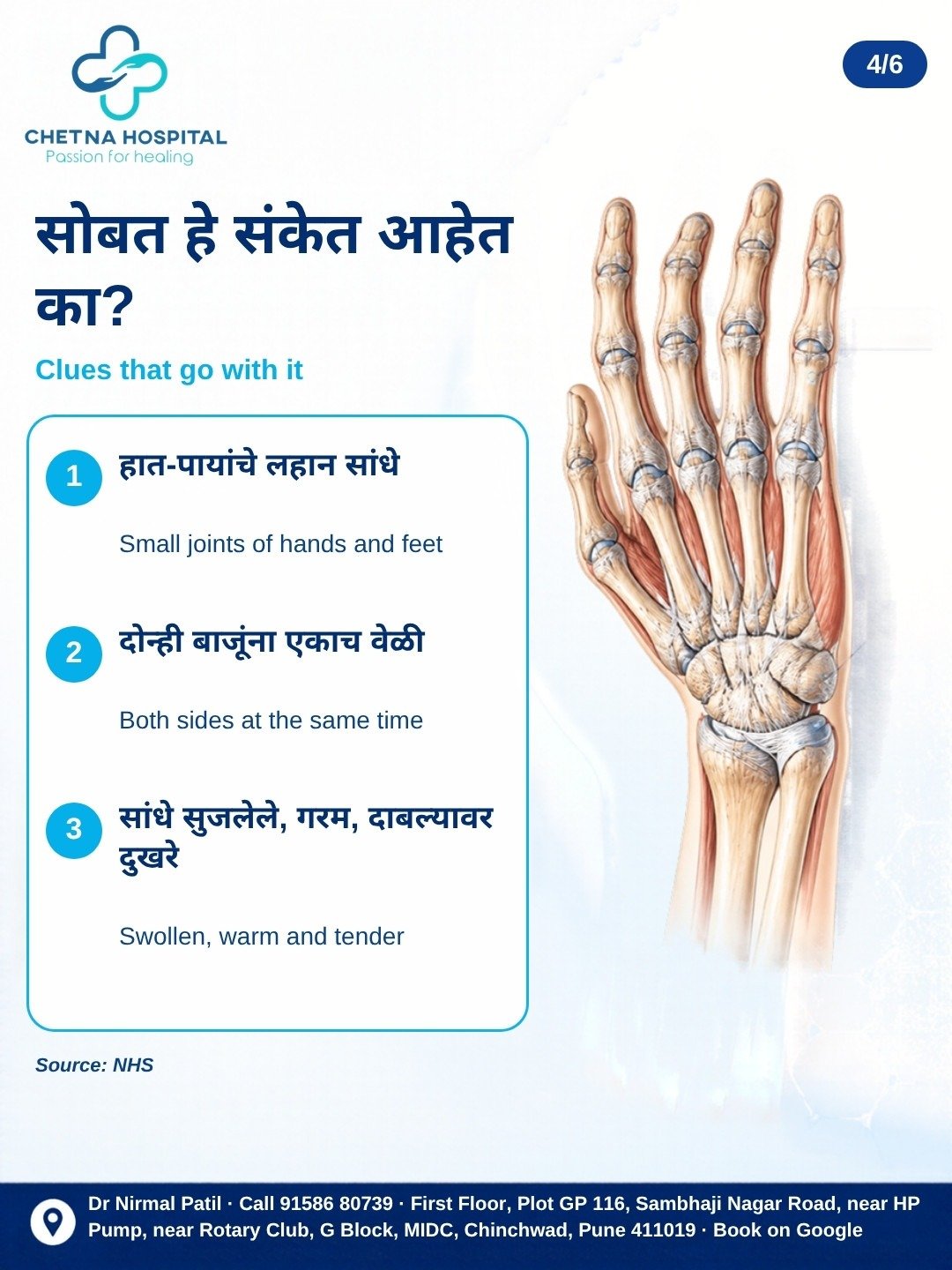
Alongside long morning stiffness, the NHS lists these signs of rheumatoid arthritis:
- small joints of the hands and feet affected first
- the same joints on both sides of the body
- joints that are swollen, warm and tender
If you notice more than one of these, book an appointment rather than waiting for the weather to change.
When is morning joint stiffness urgent?
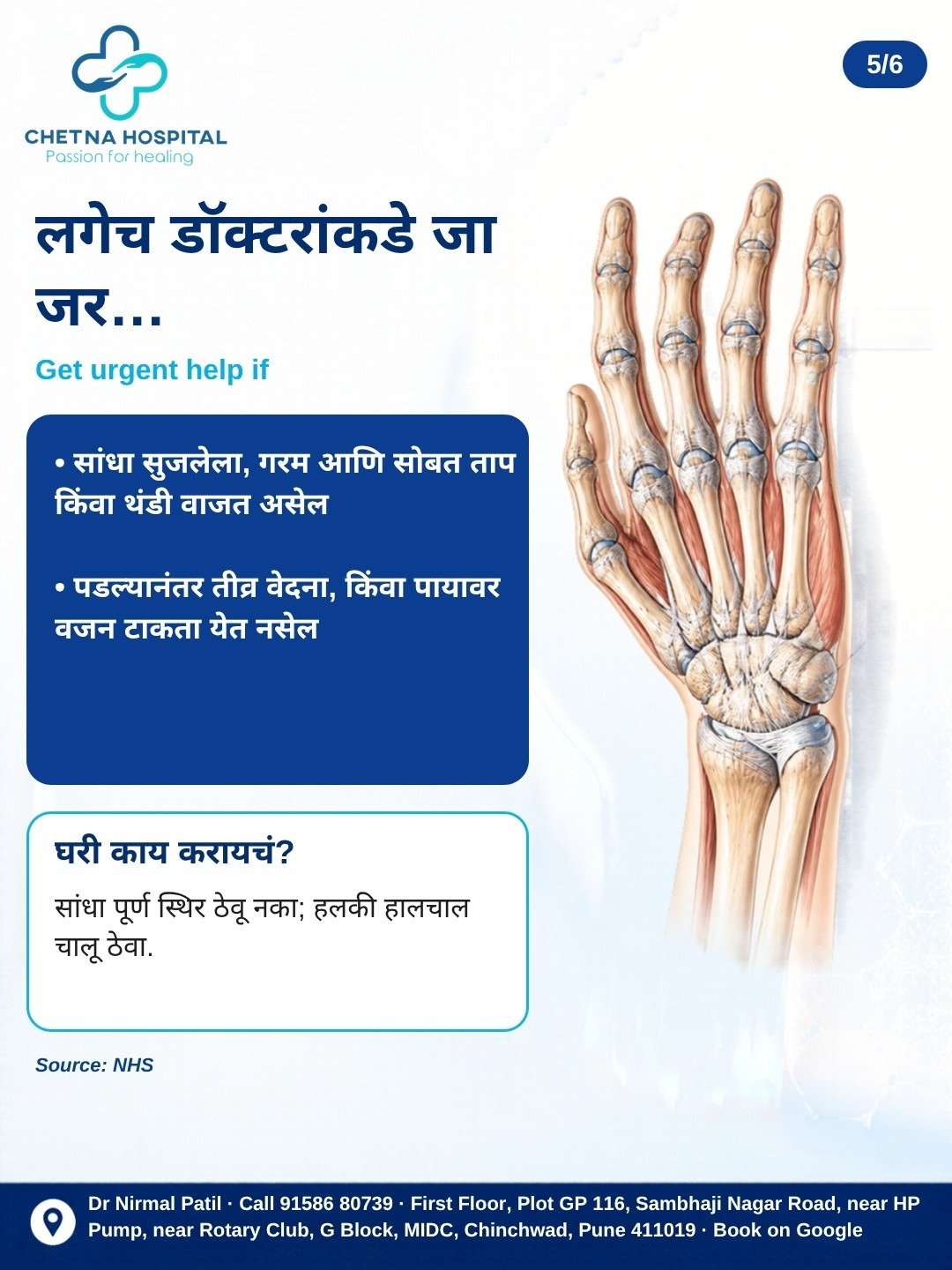
Get urgent medical help if a joint is hot and swollen and you feel feverish or shivery. The NHS links this combination with septic arthritis, an infection in the joint. Go to emergency care if you have very bad pain after a fall or injury, or if you cannot put weight on a joint.
What can you do at home?
The NHS advises not to stop moving the affected joint completely. Gentle movement through the day usually helps more than keeping the joint still. Keep track of how long the stiffness lasts and which joints are involved, and bring that record to your appointment.
How should you prepare for a joint check-up?
A clear record helps the appointment move faster. Before you visit, write down:
- which joints feel stiff, and whether the same joints on both sides are involved
- how many minutes the stiffness lasts each morning, noted over several days
- whether any joint looks swollen, feels warm or is tender to touch
- whether you have had a fever, a fall or an injury recently
- the medicines and supplements you take at present
Bring any earlier blood reports or X-rays you already have. Wear loose clothing so the doctor can examine the joints that bother you, including the hands, wrists, knees or feet. If stiffness makes the morning hard, ask for a time later in the day when moving is easier for you.
Write down your questions too, for example how long the stiffness should take to settle and which signs mean you should come back sooner.
What patients say
★★★★★ “It was great experience doctor was completely cooperative.”
Sagar D., Google review, November 2026
★★★★★ “Nice treatment always”
Jaidev A., Google review, November 2026
Read all Google reviews. Individual experiences vary.
Consultation near you
Chinchwad: Dr Nirmal Patil, First Floor, Plot GP 116, Sambhaji Nagar Road, near HP Pump, near Rotary Club, G Block, MIDC, Chinchwad, Pune 411019. Call 91586 80739.
Wakad: Dr Nirmal Patil – Wakad, Unit 401–402, 4th Floor, MI Commercia Building, Wakad, Pune 411057. Call 91687 46986. Directions.
Frequently asked questions
How long is normal morning joint stiffness?
The NHS says to see a GP if your joints are stiff for more than 30 minutes after waking up. In osteoarthritis, morning stiffness usually eases within about 30 minutes, so stiffness that lasts longer is worth an examination.
Is morning joint stiffness always arthritis?
No. Cold weather and long periods of sitting still can make joints feel stiff for a short time. Stiffness that lasts more than 30 minutes, or comes with swelling, warmth and tenderness, needs a check to find the cause.
Which signs point towards rheumatoid arthritis?
The NHS lists stiffness that lasts longer than in osteoarthritis, small joints of the hands and feet affected first, the same joints on both sides of the body, and joints that are swollen, warm and tender.
When is joint pain an emergency?
Get urgent help if a joint is hot and swollen and you feel feverish or shivery, which can be a sign of joint infection. Go to emergency care for severe pain after a fall or if you cannot put weight on a joint.
Should I rest a stiff joint completely?
No. The NHS advises not to stop moving the affected joint completely. Gentle movement through the day is usually better than keeping the joint still.
Does Dr Nirmal Patil also treat back and neck problems?
Yes. Dr Nirmal Patil is an orthopaedic and spine surgeon in Chinchwad who sees joint and spine problems. Read about back pain in your 20s for common causes of early spine trouble.
Where can I read about recovery after spine surgery?
Our article on endoscopic discectomy at L5-S1 explains recovery and what to expect, written for patients looking for a spine surgeon in Chinchwad. You can also read about endoscopic spine surgery at Chetna Hospital.
Morning stiffness every day? Get your joints checked.
Call 91586 80739Book on GoogleWhatsApp

Your doctor: Dr Nirmal Patil
Dr Nirmal Patil, MS (Ortho) (KEM, Mumbai), MRCS (UK), DNB, MNAMS. International Orthopaedic Diploma (SICOT, Belgium). Advanced Diploma in Spine Surgery (UK, EUROSPINE). Clinical Fellowship Trained Spine Surgeon (Germany, Japan, Queen’s Medical Centre and London Bridge Hospital, UK, South Korea). Orthopaedic and spine surgeon at Chinchwad and Wakad.
Sources
- NHS, Joint pain: https://www.nhs.uk/conditions/joint-pain/
- NHS, Rheumatoid arthritis symptoms: https://www.nhs.uk/conditions/rheumatoid-arthritis/symptoms/
- The Week, 8 November 2026, seasonal joint aches
- Punekar News, Pune winter temperatures
This article is general health information and does not replace a medical consultation.
Last updated: 17 November 2026