Heart-related emergencies are among the most serious medical conditions, yet many people use the terms heart attack and cardiac arrest interchangeably. While both are life-threatening, they are not the same. Understanding the difference between a heart attack and cardiac arrest can help you act quickly, seek timely treatment, and potentially save a life.
At Chetna Hospital’s Cardiology Department, located in Sambhajinagar, Chinchwad (Pimpri-Chinchwad), our experienced cardiologists provide comprehensive diagnosis, emergency care, and long-term management for all types of heart diseases.
This blog explains the difference between heart attack and cardiac arrest, their causes, symptoms, emergency response, and prevention — in simple, easy-to-understand terms.
Understanding Heart Disease: Why Awareness Is Critical
Heart disease is one of the leading causes of death in India. Factors such as stress, sedentary lifestyle, smoking, diabetes, high blood pressure, and high cholesterol significantly increase the risk of cardiac problems.
People living in urban and semi-urban areas like Chinchwad, Pimpri, Akurdi, Nigdi, Thergaon, Wakad, Ravet, Bhosari, Dapodi, and Phugewadi are especially vulnerable due to lifestyle-related risk factors.
Early awareness and timely cardiac care can reduce complications and improve survival rates.
What Is a Heart Attack?
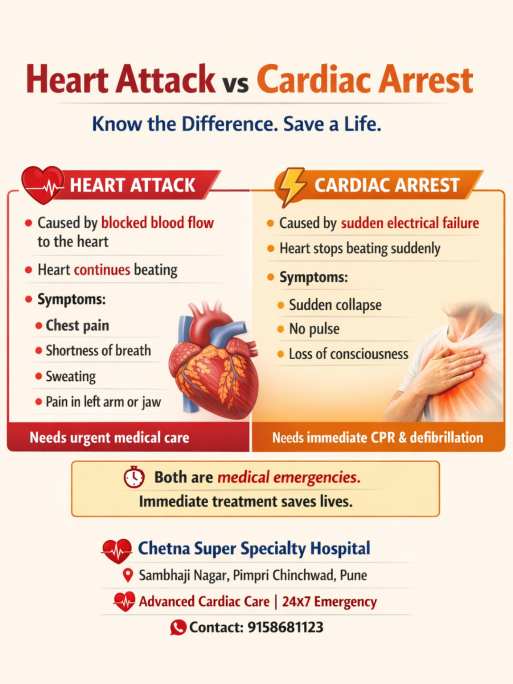
A heart attack, medically known as myocardial infarction, occurs when the blood flow to a part of the heart muscle is blocked. This blockage is usually caused by a blood clot forming in a coronary artery narrowed by plaque (fatty deposits).
Common Causes of Heart Attack
- Coronary artery disease
- High cholesterol
- High blood pressure
- Smoking
- Diabetes
- Obesity
- Family history of heart disease
- Chronic stress
Symptoms of a Heart Attack
Heart attack symptoms may vary from person to person, but common warning signs include:
- Chest pain, pressure, or heaviness
- Pain radiating to the left arm, jaw, neck, or back
- Shortness of breath
- Cold sweats
- Nausea or vomiting
- Dizziness or lightheadedness
- Extreme fatigue
⚠️ Important: Heart attack symptoms in women and elderly patients can be subtle, such as fatigue, indigestion-like discomfort, or breathlessness.
Is a Person Conscious During a Heart Attack?
Yes, most people remain conscious during a heart attack, especially in the early stages. However, if not treated promptly, it can lead to severe complications or even cardiac arrest.
What Is Cardiac Arrest?
A cardiac arrest occurs when the heart suddenly stops beating effectively, leading to an immediate halt in blood flow to the brain and vital organs. It is primarily an electrical problem of the heart.
Without immediate intervention, cardiac arrest can result in death within minutes.
Common Causes of Cardiac Arrest
- Abnormal heart rhythms (ventricular fibrillation)
- Severe heart attack
- Cardiomyopathy
- Congenital heart conditions
- Severe electrolyte imbalance
- Trauma or electric shock
- Drug overdose
Symptoms of Cardiac Arrest
Cardiac arrest is sudden and dramatic. Symptoms include:
- Sudden collapse
- Loss of consciousness
- No pulse
- No breathing or gasping
- Unresponsiveness
🚨 Cardiac arrest is a medical emergency requiring immediate CPR and defibrillation.
Heart Attack vs Cardiac Arrest: Key Differences
| Aspect | Heart Attack | Cardiac Arrest |
|---|---|---|
| Cause | Blocked blood flow | Electrical failure |
| Nature | Circulatory problem | Electrical problem |
| Consciousness | Often conscious | Always unconscious |
| Onset | Gradual or sudden | Sudden |
| Emergency Response | Immediate medical care | CPR + defibrillator |
| Survival Depends On | Speed of treatment | Immediate action |
Understanding this difference is crucial for the public, caregivers, and family members.
Can a Heart Attack Lead to Cardiac Arrest?
Yes. A severe heart attack can trigger cardiac arrest, especially if it causes dangerous heart rhythm disturbances. This is why early treatment of heart attack symptoms is vital to prevent sudden cardiac death.
At Chetna Hospital, Chinchwad, our cardiology team focuses on early intervention to reduce such risks.
What to Do in an Emergency?
If You Suspect a Heart Attack:
- Call emergency medical services immediately
- Keep the person calm and seated
- Loosen tight clothing
- Do not ignore symptoms
- Reach the nearest cardiac care hospital urgently
If Someone Suffers Cardiac Arrest:
- Call emergency services immediately
- Start CPR if trained
- Use an AED (Automated External Defibrillator) if available
- Continue until medical help arrives
Quick action can double or triple survival chances.
Diagnosis & Cardiac Care at Chetna Hospital
The Cardiology Department at Chetna Hospital offers advanced diagnostic and emergency cardiac services, including:
- ECG (Electrocardiogram)
- 2D Echocardiography
- TMT (Stress Test)
- Blood tests for cardiac markers
- Continuous cardiac monitoring
- Emergency cardiac stabilization
We ensure accurate diagnosis and timely management for patients from Chinchwad, Pimpri, Nigdi, Wakad, Ravet, Akurdi, Thergaon, Bhosari, and surrounding areas.
Treatment & Recovery
Heart Attack Treatment May Include:
- Medications to dissolve clots
- Blood pressure & cholesterol management
- Lifestyle modification guidance
- Long-term cardiac follow-up
Post-Cardiac Arrest Care:
- Intensive monitoring
- Heart rhythm management
- Identifying underlying heart disease
- Rehabilitation & preventive strategies
Our goal is not just survival — but long-term heart health.
Preventing Heart Attack & Cardiac Arrest
Prevention plays a key role in reducing heart-related emergencies.
Heart-Healthy Tips:
- Maintain a balanced, low-fat diet
- Exercise regularly
- Control blood pressure & diabetes
- Quit smoking
- Manage stress
- Get regular heart checkups
People with family history of heart disease should be especially vigilant.
Why Choose Chetna Hospital for Cardiac Care?
✔ Experienced cardiologists
✔ Advanced cardiac diagnostics
✔ Emergency-ready cardiac care
✔ Patient-focused treatment approach
✔ Trusted hospital in Chinchwad & Pimpri-Chinchwad
We are committed to delivering reliable, compassionate, and evidence-based cardiac care close to your home.
Conclusion
While both heart attack and cardiac arrest are medical emergencies, understanding their differences can help you respond effectively. A heart attack is a blockage-related problem, whereas cardiac arrest is a sudden electrical failure of the heart.
If you or your loved ones experience warning signs of heart disease, do not delay medical consultation.
📍 Visit Chetna Hospital, Sambhajinagar, Chinchwad, for expert cardiology care and heart health guidance.
Your heart deserves timely attention — because every heartbeat matters.