Eye injury during sports, such as corneal abrasions and blunt trauma require immediate care. At Chetna Hospital, Dr. Rachana Tiwari-Patil specializes in treating athletic eye trauma for patients in the PCMC area.
Understanding Sports-Related Eye Injuries
Sports provide excitement, competition, and physical fitness benefits. However, along with these advantages comes a risk that many athletes overlook—eye injury during sports. Every year, thousands of players experience eye trauma while participating in recreational or professional activities. In fact, medical studies estimate that around 40,000 sports-related eye injuries require emergency room treatment annually, making it one of the most common preventable athletic injuries.
Because the eye is delicate and exposed, even a small impact can cause significant damage. During fast-paced sports, objects such as balls, rackets, sticks, or even another player’s elbow can strike the face unexpectedly. As a result, the eye may suffer injuries ranging from mild irritation to severe structural damage. Additionally, athletes often underestimate the seriousness of these incidents. A minor scratch or temporary blur may appear harmless at first, yet underlying trauma could gradually worsen without treatment.
Another factor contributing to sports eye injuries is the unpredictable nature of athletic environments. For example, balls change direction rapidly, players react instinctively, and collisions occur unexpectedly. Consequently, the eyes become vulnerable to sudden impact from multiple angles. Protective reflexes like blinking or raising the hands rarely provide enough protection against high-speed objects.
Fortunately, most sports-related ocular injuries are preventable. Medical experts estimate that proper protective eyewear could prevent nearly 90% of eye injuries in athletics. Therefore, awareness, safety equipment, and early medical care play a crucial role in preserving vision. Understanding how eye injuries occur, recognizing warning signs, and knowing the appropriate response can protect both an athlete’s health and their future performance.
Sports Eye Care in Chinchwad
Emergency Contact: Chetna Hospital, Chinchwad (+91 91686 90448).
Specialist: Dr. Rachana Tiwari-Patil
Common Injuries: Corneal abrasions, blunt trauma, and retinal tears.
Prevention: Use polycarbonate lenses (ASTM certified).
Why the Human Eye Is Vulnerable During Physical Activities
The human eye functions like an advanced optical camera that continuously captures visual information. At the same time, it remains extremely fragile compared with other parts of the body. Unlike organs protected by thick layers of muscle or bone, the eyes sit in shallow sockets that leave portions exposed to direct impact. Consequently, any fast-moving object traveling toward the face can easily strike the eye.
During many sports, objects move faster than the human reaction time. For instance, a tennis serve can exceed 120 miles per hour, while a baseball pitch may travel over 90 miles per hour. When these objects collide with the eye, the force compresses the eyeball and then causes it to expand rapidly. As a result, internal tissues may stretch or tear, potentially damaging structures responsible for vision.
Environmental conditions can further increase vulnerability. Bright sunlight, reflections from water or snow, and debris in the air may reduce visibility and slow reaction time. Meanwhile, physical contact between players introduces additional hazards. Accidental finger pokes, elbows, or collisions often occur during intense gameplay.
Because of these factors, athletes in both amateur and professional sports face some level of risk. However, proper equipment and safety awareness can dramatically reduce the likelihood of injury. Protective eyewear, for example, acts like a shield that absorbs impact energy and prevents direct contact with the eye.
Key Parts of the Eye That Can Be Injured During Sports
To understand how eye injury during sports affects vision, it helps to look at the major structures within the eye. Each component performs a unique role in the process of seeing. When one of these structures becomes damaged, the entire visual system may be affected.
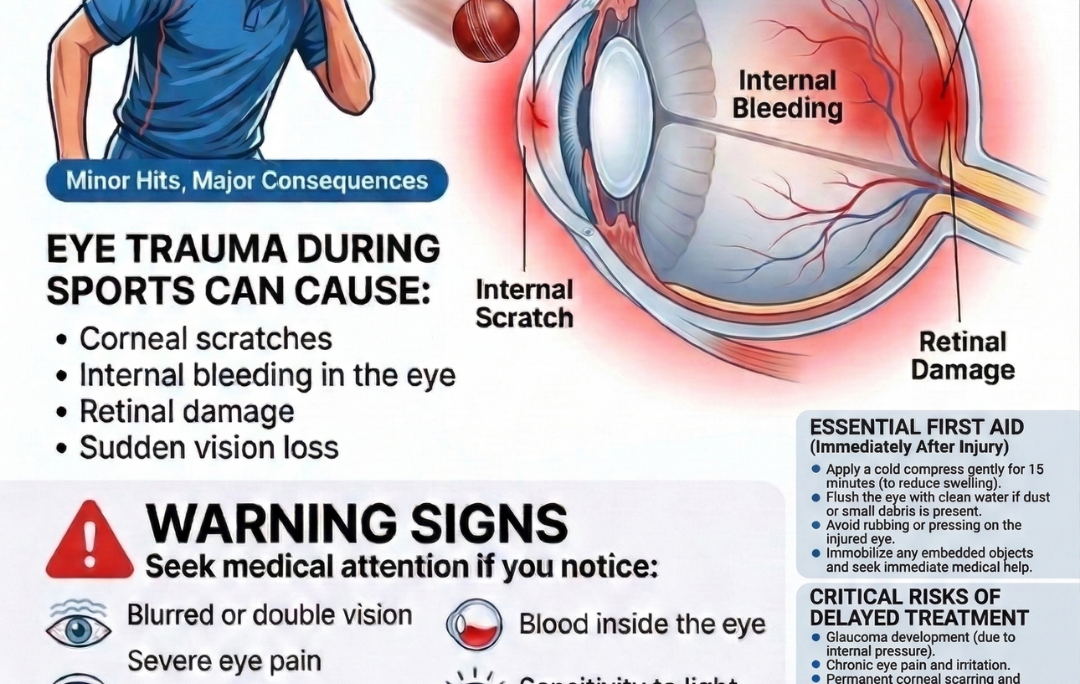
The cornea, which is the transparent front layer of the eye, is one of the most commonly injured areas. Because it sits on the surface, it can easily be scratched by fingernails, dust, or sports equipment. These scratches are known as corneal abrasions, and they often cause intense pain, tearing, and sensitivity to light.
Behind the cornea lies the iris and pupil, which control how much light enters the eye. Blunt trauma can damage these structures or cause bleeding inside the eye’s front chamber. This condition, called hyphema, may lead to blurred vision and increased eye pressure.
The lens is another vulnerable component. A strong blow to the eye may dislocate the lens or cause it to become cloudy, resulting in traumatic cataracts. Meanwhile, deeper inside the eye sits the retina, a thin layer of tissue responsible for converting light into signals sent to the brain. Retinal tears or detachments are among the most serious sports injuries because they can cause permanent vision loss if untreated.
Surrounding bones and eyelids also play an important protective role. However, severe impacts may fracture the orbital bones or cause cuts around the eyelids. Therefore, any injury affecting the eye region should be evaluated carefully to prevent long-term complications.
Common Types of Eye Trauma in Athletic Activities
“At our eye clinic in Chinchwad, we frequently treat local athletes from Pimpri-Chinchwad (PCMC) for various sports-related traumas, ranging from minor scratches to emergency retinal issues.”
Athletic eye injuries vary widely depending on the type of sport, the speed of objects involved, and the level of contact between players. While some injuries are mild and heal quickly, others require immediate medical intervention.
Blunt Eye Injuries in Athletics
Blunt trauma represents the most frequent form of sports-related eye injury. This type of damage occurs when an object strikes the eye without penetrating it. Examples include impacts from basketballs, tennis balls, hockey pucks, or accidental elbow contact during gameplay.
When blunt trauma occurs, several internal structures may be affected. For example, the cornea might scratch against the eyelid, leading to painful abrasions. Meanwhile, blood may collect in the eye’s front chamber, producing hyphema. In severe cases, the retina may tear or detach due to the sudden pressure changes inside the eyeball.
Athletes often assume that a blunt hit is harmless if the pain disappears quickly. However, internal damage may not appear immediately. Swelling or bleeding inside the eye may gradually impair vision hours after the injury occurs. Consequently, even mild-appearing impacts should be evaluated by a medical professional.
Penetrating Eye Damage from Sports Equipment
Although less common, penetrating injuries are far more dangerous. These injuries occur when sharp objects pierce the eye’s outer layers, creating an open wound. Broken equipment, fishing hooks, shattered eyewear, or metal fragments can all cause this type of trauma.
Penetrating injuries often produce severe pain and sudden vision loss. In some situations, a foreign object may remain lodged in the eye. Attempting to remove it without medical assistance can worsen the injury and increase infection risk. Therefore, covering the eye with a protective shield and seeking emergency care is the safest approach.
Because the eye contains delicate fluids and tissues, any puncture can disrupt its internal pressure and structure. As a result, surgery is frequently required to repair the damage and preserve vision.
Chemical and UV-Related Eye Damage in Outdoor Sports
Not all sports eye injuries involve physical impact. Chemical exposure and ultraviolet radiation can also damage the eyes during athletic activities. Swimmers, for example, may experience irritation from pool chemicals, while athletes working with equipment maintenance products might accidentally splash cleaning solutions into their eyes.
Outdoor sports introduce another risk—ultraviolet (UV) radiation from the sun. Snow sports and water sports are particularly hazardous because sunlight reflects off surfaces like ice or water, intensifying exposure. Prolonged UV exposure can cause photokeratitis, a painful condition similar to a sunburn on the eye’s surface.
Although these injuries may appear less dramatic than blunt trauma, they still require prompt treatment. Immediate flushing with clean water and professional medical evaluation are essential steps to prevent lasting damage.
Sports That Carry the Highest Risk of Eye Injuries
Certain athletic activities naturally involve more hazards for the eyes. High-speed projectiles, physical contact, and confined playing areas all contribute to increased injury rates.
High-Impact Sports That Often Cause Ocular Injuries
Some sports consistently appear at the top of injury statistics. Basketball, for example, is frequently identified as a leading cause of sports eye trauma because players compete closely and accidental finger contact is common. Baseball and softball also pose significant risks due to the speed of pitched or batted balls.
Racquet sports such as squash, racquetball, and badminton are particularly dangerous for the eyes. The ball or shuttlecock travels extremely fast in a small space, leaving little time for players to react. Similarly, sports like hockey and lacrosse introduce hazards from sticks and high-velocity pucks.
Moderate-Risk Activities That Can Harm Vision
Other sports carry moderate levels of eye injury risk. Cycling may expose riders to airborne debris or insects, while water sports sometimes involve collisions with boards or equipment. Even sports considered relatively safe, such as running or golf, can still cause accidental injuries under certain conditions.
Therefore, athletes should not assume that lower-risk sports are completely safe. Instead, they should remain aware of potential hazards and take appropriate precautions whenever necessary.
Symptoms of Athletic Eye Accidents
Recognizing symptoms quickly can make the difference between full recovery and permanent vision problems.
Immediate Warning Signs After a Sports Eye Injury
Some symptoms appear immediately after an injury occurs. Sudden vision loss, severe eye pain, or visible blood in the eye are clear warning signs that require urgent medical attention. Additionally, double vision, swelling around the eye, or difficulty moving the eye may indicate internal damage.
Another concerning symptom is the presence of a foreign object embedded in the eye. In such cases, the object should not be removed by hand because doing so may cause additional damage.
Delayed Vision Problems After Sports Trauma
Sometimes symptoms develop hours or even days after the initial injury. Gradual vision loss, headaches, increased eye pressure, or sensitivity to light can all indicate deeper problems. Because athletes often dismiss these symptoms as fatigue or minor irritation, treatment may be delayed.
Consequently, any change in vision following a sports injury should prompt medical evaluation.
First Aid for Eye Accidents in Sports
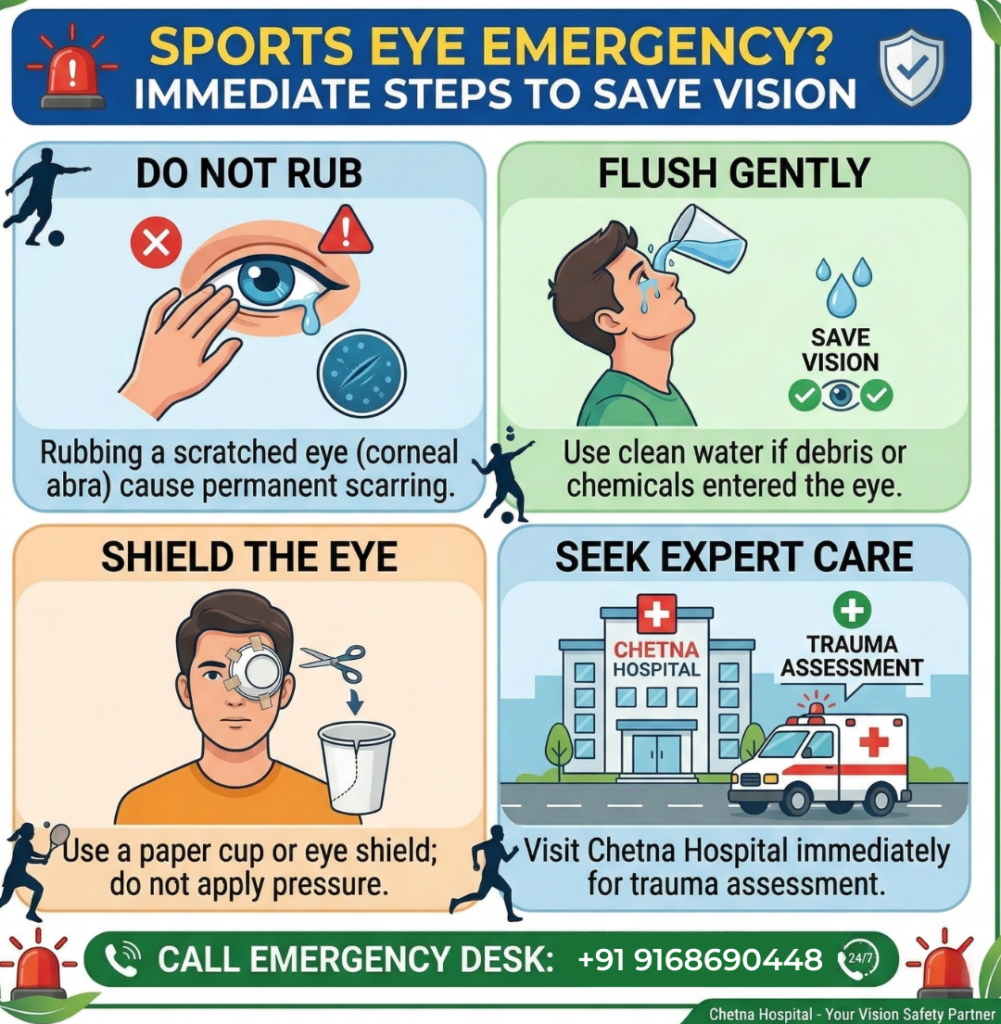
Immediate and appropriate first aid can reduce the severity of an injury and protect vision until medical help becomes available.
Immediate Care After an Athletic Eye Injury
First, the injured athlete should stop playing immediately to avoid further trauma. If swelling or bruising occurs around the eye, a gentle cold compress can help reduce inflammation. However, pressure should never be applied directly to the eyeball.
When small debris enters the eye, rinsing with clean water may remove the particle safely. Meanwhile, chemical exposure requires continuous flushing for at least 15 minutes.
Common Mistakes to Avoid After Eye Trauma
Certain actions can worsen eye injuries. Rubbing the eye is one of the most common mistakes because it may scratch the cornea. Attempting to remove embedded objects is another dangerous practice.
Using medications or ointments without medical guidance can also complicate treatment. Therefore, protecting the eye and seeking professional care is always the safest approach.
Medical Treatment for Sports Eye Trauma
Treatment depends on the type and severity of the injury.
Non-Surgical Treatment for Minor Eye Injuries
Minor injuries such as corneal abrasions often heal with antibiotic eye drops, pain relief medication, and short periods of rest. Doctors may also recommend avoiding sports activities until the eye fully recovers.
Surgical Care for Severe Ocular Damage
Severe injuries may require surgical procedures. Retinal detachment often demands urgent surgery to restore vision, while orbital fractures may need reconstructive repair. In rare situations, procedures such as lens replacement or corneal transplantation become necessary.
Preventing Eye Injuries in Sports
Prevention remains the most effective strategy.
Protective Eyewear and Safety Standards
Sports goggles made from polycarbonate lenses provide excellent impact resistance. Additionally, helmets with face shields offer essential protection in sports like hockey and football.
Athletes should choose equipment that meets recognized safety standards, such as ASTM or ANSI certification. Regular inspection ofthe gear also ensures continued protection.
Recovery After an Athletic Eye Injury
Returning to sports after an eye injury requires patience and careful medical supervision. Doctors typically evaluate vision, healing progress, and eye pressure before allowing athletes to resume activity.
A gradual return-to-play approach is often recommended. Initially, athletes may participate in light training before progressing to full practice and competition. Protective eyewear becomes particularly important during this stage because the eye remains vulnerable.
Long-Term Vision Problems After Sports Eye Trauma
In some cases, sports eye injuries lead to long-term complications. These may include glaucoma, cataracts, retinal scarring, or reduced visual acuity. Athletes might also experience difficulty with depth perception or peripheral vision.
Regular eye examinations help detect these issues early. With proper care and protective equipment, many athletes can continue enjoying sports while maintaining healthy vision.
Expert Opinion from Dr. Rachana Tiwari-Patil
“As a leading eye specialist in Chinchwad, Dr. Rachana provides specialized care for patients across Akurdi, Nigdi, and Ravet at Chetna Hospital.”
Dr. Rachana Tiwari-Patil, Consultant Ophthalmologist and Phaco-Refractive Surgeon at Chetna Hospital, emphasizes the importance of early evaluation for sports-related eye injuries.
According to Dr. Rachana Tiwari-Patil, athletes frequently underestimate eye trauma because symptoms initially seem mild. However, what appears to be a small problem may actually indicate more serious internal damage. Therefore, she recommends seeking medical attention immediately whenever vision changes occur after a sports accident.
Dr. Rachana Tiwari-Patil also highlights the importance of protective eyewear. Modern sports goggles and safety equipment can prevent a large percentage of injuries, making them an essential investment for athletes of all levels.
Suffered a sports eye injury? Don’t wait for symptoms to worsen. Visit Dr. Rachana Tiwari-Patil at Chetna Hospital, Chinchwad, for an immediate evaluation. Call +91 9168690448 to book your emergency consultation.
Need Emergency Eye Care in Chinchwad?
Don’t ignore eye pain or blurred vision after a sports injury. Visit Dr. Rachana Tiwari | Eye Specialist in Chinchwad | Eye Clinic | Cataract Surgeon | Ophthalmologist in Chinchwad, Chetna Hospital, the preferred choice for athletes in Chinchwad, Pimpri, and Akurdi.
📍 Address: consulting 1, Chetna Hospital, Plot No, GP 116, Sambhaji Nagar Rd, near Rotary Club, G Block, MIDC, Chinchwad, Pimpri-Chinchwad, Pune, Maharashtra 411019
🔗 Learn More: Ophthalmology Services at Chetna Hospital
📞 Book an Appointment Now
Serving PCMC Sports Hubs
Located in the heart of Chinchwad, we provide 24/7 emergency eye care for athletes training at:
- Annasaheb Magar Stadium (Pimpri) – 3.2 km away
- Madanlal Dhingra Ground (Akurdi) – 2.8 km away
- Major Dhyan Chand Stadium (Nehrunagar) – 4.5 km away
- Balewadi Stadium (Wakad/Mhalunge) – 14 km away
Get Directions to Chetna Hospital → Google Maps
FAQs
You can visit Chetna Hospital in Chinchwad, where Dr. Rachana Tiwari-Patil provides expert emergency care for athletic eye trauma, including corneal abrasions and blunt force injuries.
Seek medical help immediately if you experience blurred vision, sudden flashes of light, blood in the eye (hyphema), or persistent pain after an impact.
Yes, Dr. Rachana Tiwari-Patil at Chetna Hospital specializes in diagnosing and managing severe ocular trauma, including retinal tears and detachments caused by sports impacts.
Recovery time varies depending on the severity of the injury. Minor abrasions may heal in a few days, while serious trauma may require weeks or months.
Yes, many athletes return to play after full recovery and medical clearance. Using proper protective equipment helps prevent future injuries.
Conclusion
For athletes in Chinchwad, Pimpri, and Akurdi, immediate expert care is available at Chetna Hospital, strategically located for quick access during sports emergencies.
Eye injuries during sports are more common than many athletes realize. From minor corneal scratches to severe retinal damage, these injuries can affect both vision and athletic performance. Because the eye is extremely delicate, even small impacts should be taken seriously.
Fortunately, most sports eye injuries are preventable through proper awareness and protective equipment. Athletes who recognize early symptoms and seek prompt treatment significantly improve their chances of recovery.
Protecting vision should always be a priority. After all, healthy eyesight allows athletes to perform at their best and continue enjoying the sports they love.