Are you one of those people who spend most of their day hunched over a computer screen? If you’re wondering “how many hours do you sit daily?” and the answer is more than 6-8 hours, you might be putting your spine at serious risk. For residents in Pune and Pimpri-Chinchwad, the good news is that endoscopic spine surgery offers a modern, less invasive solution for spine problems that traditional surgery simply can’t match.
At Chetna Hospital, Chinchwad, led by the expertise of Dr. Nirmal Patil, patients are finding relief from chronic back pain through these advanced, “keyhole” techniques designed for the modern professional.
Why Recommends Endoscopic Techniques
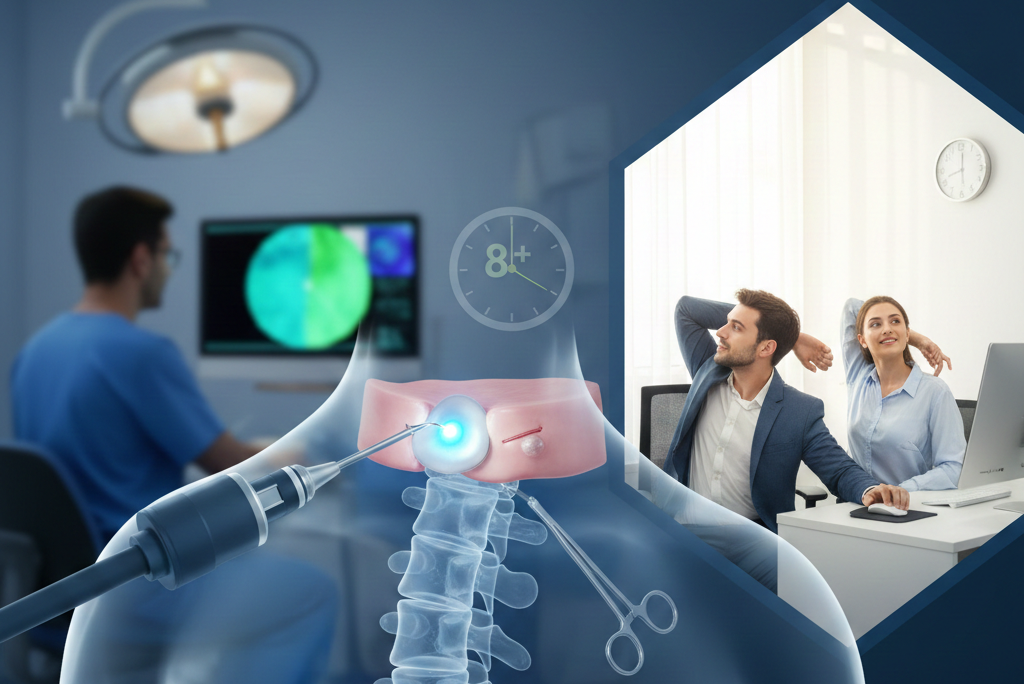
Endoscopic spine surgery is a cutting-edge surgical technique that uses tiny cameras and specialized instruments to treat spine problems through very small incisions. Unlike traditional open spine surgery that requires large cuts and significant muscle damage, this advanced approach allows surgeons to see inside your spine using a pencil-thin tube with a camera attached.
Think of it like keyhole surgery for your back. The surgeon makes a small incision, usually less than an inch long, and inserts the endoscope to view the problem area on a high-definition monitor. This allows for precise treatment of herniated discs, bone spurs, and other spine issues without the trauma of traditional surgery.
How It Differs from Traditional Spine Surgery
Traditional spine surgery often requires large incisions (3-5 inches), cutting through muscles, and longer hospital stays. In contrast, Dr. Nirmal Patil specializes in the endoscopic approach, which offers:
- Tiny incisions (less than 1 inch)
- Minimal muscle damage
- Same-day or overnight hospital stays
- Faster recovery times
The Growing Problem: How Many Hours Do You Sit Daily?
This question has become more important than ever in our digital age. Studies show that the average office worker sits for 8-10 hours daily, and some sit for up to 15 hours when including commuting and relaxing.
The Statistics Are Alarming
- 86% of full-time workers spend their entire workday sitting.
- The average person sits for 7.7 hours daily.
- Back pain affects 80% of adults at some point in their lives.
When you sit for extended periods, especially with poor posture, your spine bears tremendous pressure. The pressure on your lower back discs increases by up to 40% when sitting compared to standing. This constant pressure can lead to disc degeneration, herniation, and chronic pain—conditions frequently treated at Chetna Hospital.
Why Sitting Too Much Damages Your Spine
Understanding how prolonged sitting affects your spine explains why specialized intervention is often necessary.
- Increased Disc Pressure: Your discs act like cushions. Excessive pressure can cause them to bulge outward or rupture (herniation), pressing against nearby nerves.
- Muscle Weakness and Imbalance: Sitting causes hip flexors to tighten while glutes and core muscles become inactive, forcing back muscles to overwork.
- Poor Posture Problems: Slouching, rounding shoulders, and “tech neck” (tilting the head forward for screens) create structural strain that accumulates over years of desk work.
Key Benefits of Endoscopic Spine Surgery in Chinchwad
For patients whose spine problems have progressed beyond conservative treatment, this procedure offers remarkable advantages.
Minimal Invasiveness
The biggest advantage is the preservation of healthy tissue. Traditional surgery requires stripping muscle away from the bone, but endoscopic techniques work around these structures. This results in less bleeding and a lower infection risk.
Faster Recovery Times
Most patients at Chetna Hospital experience:
- Return to desk work within 1-2 weeks.
- Full recovery within 4-6 weeks.
- Immediate relief from “shooting” leg pain in many cases.
Superior Visualization
The high-definition cameras provide Dr. Nirmal Patil with incredibly detailed views, allowing for more precise removal of problematic tissue while protecting delicate nerves.
Common Conditions Treated
Endoscopic spine surgery is highly effective for conditions common among desk job professionals:
- Herniated Discs: When the soft center of a disc pushes through its outer layer, causing sciatica (shooting leg pain).
- Spinal Stenosis: Narrowing of the spinal canal that compresses nerves, often causing leg weakness.
- Degenerative Disc Disease: Accelerated wear and tear caused by years of prolonged sitting.
- Facet Joint Problems: Inflammation of the small joints in the spine due to poor posture.
The Procedure: What to Expect
Pre-Operative Preparation
Before your surgery at Chetna Hospital, you’ll undergo a detailed medical history review, physical examination, and imaging studies (MRI/CT scans). Dr. Nirmal Patil ensures each patient understands the procedure and has realistic expectations.
During the Surgery
- Anesthesia: Local anesthesia with sedation or general anesthesia is administered.
- Incision: A tiny incision (less than 1 inch) is made near the affected area.
- Endoscope Insertion: The camera and instruments are inserted via a small tube.
- Treatment: The surgeon removes the herniated portion, or bone spur, while watching a high-definition monitor.
- Closure: The incision is closed with just a few stitches and a small bandage.
The entire procedure typically takes 45-90 minutes.
Recovery and Results
Recovery is generally much smoother than traditional surgery. In the first 24-48 hours, patients are encouraged to walk regularly to prevent blood clots. By the second week, most can gradually increase activity levels, though bending and heavy lifting should still be avoided.
Expected Results:
- Success rates for endoscopic spine surgery range from 85-95%.
- Significant improvement in mobility and quality of life.
- Minimal visible scarring.
Prevention Tips for Spine Health
While surgery can fix the damage, lifestyle changes are essential to prevent recurrence:
- Workplace Ergonomics: Adjust your monitor to eye level and use a chair with lumbar support.
- The 30-Minute Rule: Stand up and stretch every 30-45 minutes.
- Core Strengthening: Focus on exercises that support the spine, such as planks or yoga.
- Postural Awareness: Keep your feet flat on the floor and avoid crossing your legs for long periods.
When to See a Specialist
If you are experiencing “red flag” symptoms, it is time to consult a professional like Dr. Nirmal Patil:
- Severe pain that doesn’t improve with rest.
- Pain radiating down the leg (sciatica).
- Numbness, tingling, or weakness in the legs or feet.
- Loss of bladder or bowel control (requires immediate emergency attention).
- Back pain lasting more than 6 weeks despite conservative care.
What is Endoscopic Spine Surgery?
Add a sentence emphasizing that this advanced technique requires specialized training.
“While endoscopic techniques are revolutionary, they require immense precision. Dr. Nirmal Patil, having completed the prestigious APSS Medtronic Spine Fellowship, brings world-class expertise to Chetna Hospital, ensuring patients receive the highest standard of care available globally
Trust Your Spine with an Internationally Trained Expert
Choosing the right surgeon is critical for spinal health. Dr. Nirmal Patil is a distinguished recipient of the APSS (Asia Pacific Spine Society) Medtronic Spine Fellowship. This intensive specialized training ensures that the latest global advancements in minimally invasive and endoscopic spine surgery are available right here in Chinchwad. His fellowship background means:
- Advanced Precision: Training in the latest Medtronic surgical technologies.
- Global Standards: Procedures follow international safety and success protocols.
- Expert Diagnosis: Better identification of whether you truly need surgery or conservative care.
Conclusion
Endoscopic spine surgery represents a significant advancement for the millions of people living in the “sitting era.” This innovative approach at Chetna Hospital, Chinchwad, offers hope for those suffering from chronic pain, providing an effective solution with minimal disruption to their busy lives.
Ready to take the next step toward a pain-free life? Contact Dr. Nirmal Patil at Chetna Superspeciality Hospital, Chinchwad, Pune.
Ready to take the next step? Chetna Hospital is easily accessible for residents of Ravet, Akurdi, and Thergaon, located right in the heart of Chinchwad. Contact Dr. Nirmal Patil today
Contact Details:
- Address: Chetna Hospital, Chinchwad, Pune
- Phone: 9158680739 | 9158681123
- Schedule: Book your consultation today to discover if endoscopic surgery is right for you.
A. Yes. Dr. Nirmal Patil at Chetna Hospital provides advanced spine care for patients across Chinchwad, Akurdi, Ravet, and Thergaon, making it the top choice for local spine treatment.
A. Most endoscopic spine procedures at Chetna Hospital are performed as same-day or overnight stay surgeries, allowing you to return to the comfort of your home quickly.
A. Yes. With success rates between 85–95%, it is highly effective for treating herniated discs and sciatica, especially for professionals suffering from long sitting hours.