Back pain is one of the most common health complaints today, especially among working professionals, homemakers, and senior citizens. While occasional back discomfort can be harmless, persistent or worsening pain may be an early sign of a slipped disc, a condition that requires timely medical attention. Early diagnosis can prevent long-term complications and reduce the need for surgery.
In this blog, Dr. Nirmal Patil, Orthopaedic & Spine Surgeon at Chetna Hospital, Chinchwad, Pune, explains the early signs of slipped disc, causes, risk factors, and when to consult a spine specialist.
What Is a Slipped Disc?
A slipped disc, medically known as disc prolapse or herniated disc, occurs when the soft inner portion of a spinal disc pushes out through its outer layer. Spinal discs act as shock absorbers between the vertebrae. When a disc slips or bulges, it can press on nearby nerves, causing pain, numbness, or weakness.
Slipped discs commonly occur in:
- Lower back (lumbar spine)
- Neck (cervical spine)
Early Signs of Slipped Disc You Should Not Ignore
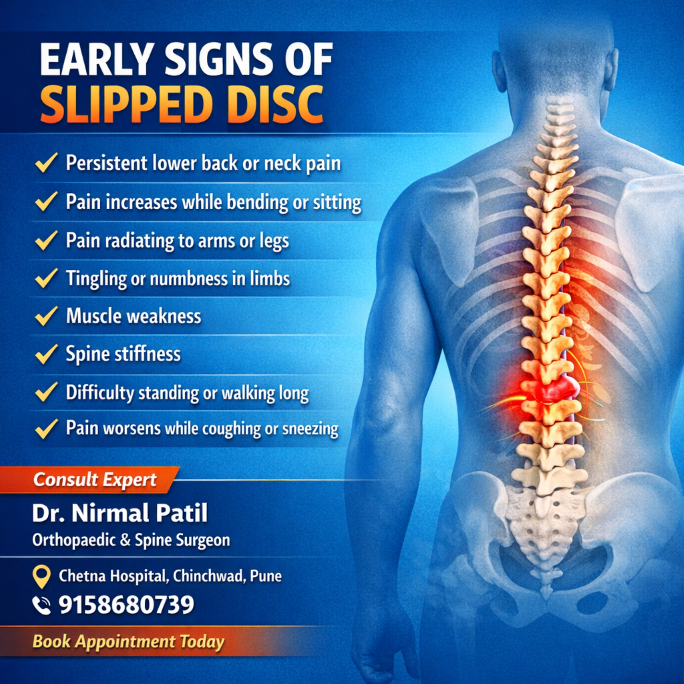
Recognizing early symptoms is crucial for effective treatment. Below are the most common early warning signs of a slipped disc:
1. Persistent Back or Neck Pain
Pain that lasts for weeks and does not improve with rest may indicate disc-related issues. The pain often worsens with movement, bending, or sitting for long hours.
2. Pain Radiating to Arms or Legs
If you experience pain traveling from the lower back to the leg (sciatica) or from the neck to the arm, it may indicate nerve compression due to a slipped disc.
3. Tingling or Numbness
A tingling sensation or numbness in the arms, hands, legs, or feet is an early neurological sign caused by pressure on spinal nerves.
4. Muscle Weakness
Weakness in the legs or arms may make it difficult to walk, lift objects, or maintain balance. This symptom should never be ignored.
5. Increased Pain While Sitting or Bending
Sitting for prolonged periods increases pressure on spinal discs. Pain that worsens while sitting, bending forward, or lifting objects can indicate disc problems.
6. Stiffness in the Spine
Reduced flexibility or stiffness in the neck or lower back, especially in the morning, can be an early sign of disc degeneration.
7. Pain While Coughing or Sneezing
Sudden pain during coughing, sneezing, or laughing may indicate increased disc pressure affecting spinal nerves.
8. Difficulty Standing or Walking for Long
Patients may feel discomfort, heaviness, or pain while standing or walking for extended periods.
Common Causes of Slipped Disc
Several factors contribute to the development of a slipped disc:
- Poor posture while sitting or standing
- Wrong bending and lifting techniques
- Long hours of desk work
- Sudden twisting movements
- Obesity and excess body weight
- Age-related disc degeneration
- Weak core muscles
- Repetitive strain from daily activities
Who Is at Higher Risk?
People at higher risk of developing a slipped disc include:
- Office workers with prolonged sitting
- Drivers with long driving hours
- Individuals with physically demanding jobs
- People with poor posture habits
- Overweight individuals
- Elderly patients
- People with sedentary lifestyles
Why Early Diagnosis Is Important
Ignoring early symptoms can lead to:
- Severe nerve damage
- Chronic pain
- Difficulty walking
- Loss of bladder or bowel control (in severe cases)
- Increased chances of surgery
Early diagnosis allows for non-surgical treatments, faster recovery, and better long-term outcomes.
Diagnosis of Slipped Disc
At Chetna Hospital, Chinchwad, diagnosis includes:
- Detailed clinical examination
- Medical history assessment
- X-rays (if required)
- MRI scan for accurate disc evaluation
Dr. Nirmal Patil focuses on identifying the exact cause and severity of the condition before recommending treatment.
Non-Surgical Management (Early Stage)
In early stages, slipped disc can often be managed without surgery through:
- Activity modification
- Pain management
- Physiotherapy
- Posture correction
- Lifestyle changes
Early intervention helps patients return to normal life quickly.
When Should You Consult a Spine Specialist in Pune?
You should consult Dr. Nirmal Patil, Orthopaedic & Spine Surgeon in Pune, if you experience:
- Persistent back or neck pain for more than 2 weeks
- Radiating pain to arms or legs
- Numbness or tingling
- Muscle weakness
- Difficulty walking or standing
- Pain affecting daily activities
Why Choose Dr. Nirmal Patil for Slipped Disc Treatment?
- Experienced Orthopaedic & Spine Surgeon
- Patient-centric approach
- Accurate diagnosis and personalized treatment
- Expertise in both non-surgical and advanced spine care
- Trusted by patients across Pune and PCMC
Hospital Location & Contact Details
📍 Chetna Hospital, Chinchwad, Pune
👨⚕️ Dr. Nirmal Patil
🦴 Orthopaedic & Spine Surgeon
📞 Call: 9158680739
📅 Book Appointment Today
Conclusion
A slipped disc does not develop overnight. It gives early warning signs that should never be ignored. Recognizing these symptoms and consulting a spine specialist at the right time can prevent complications and help you return to a pain-free life.
If you or your loved ones are experiencing persistent back or neck pain, consult Dr. Nirmal Patil at Chetna Hospital, Chinchwad, Pune, for expert spine care and early diagnosis.