








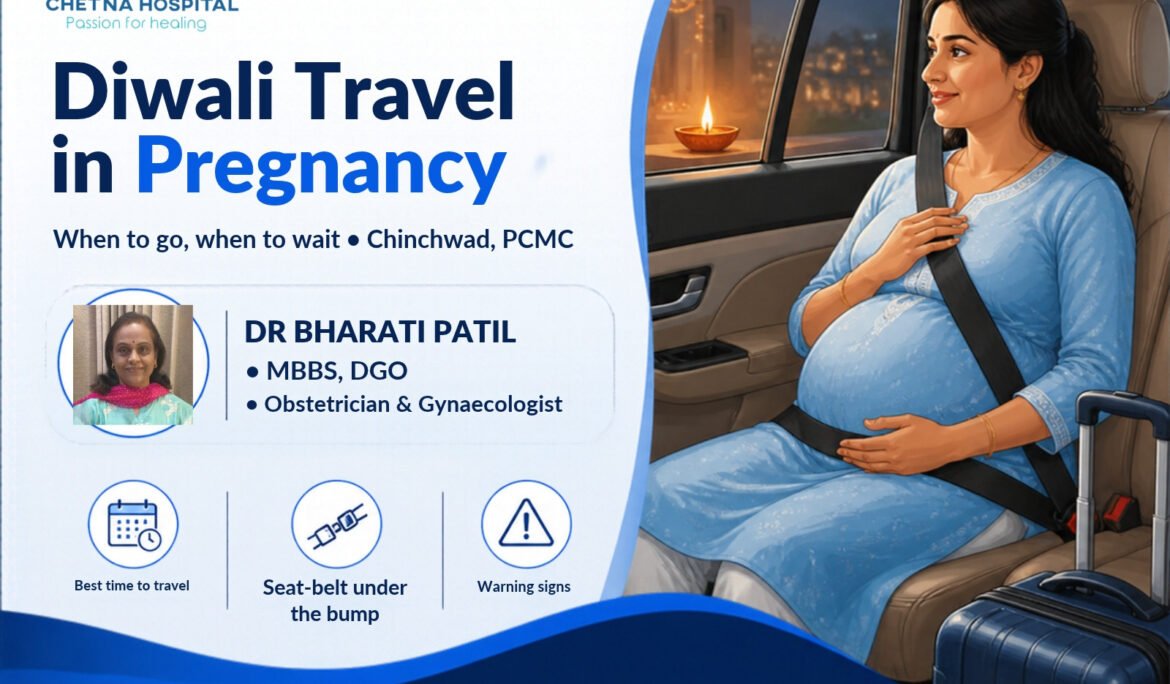
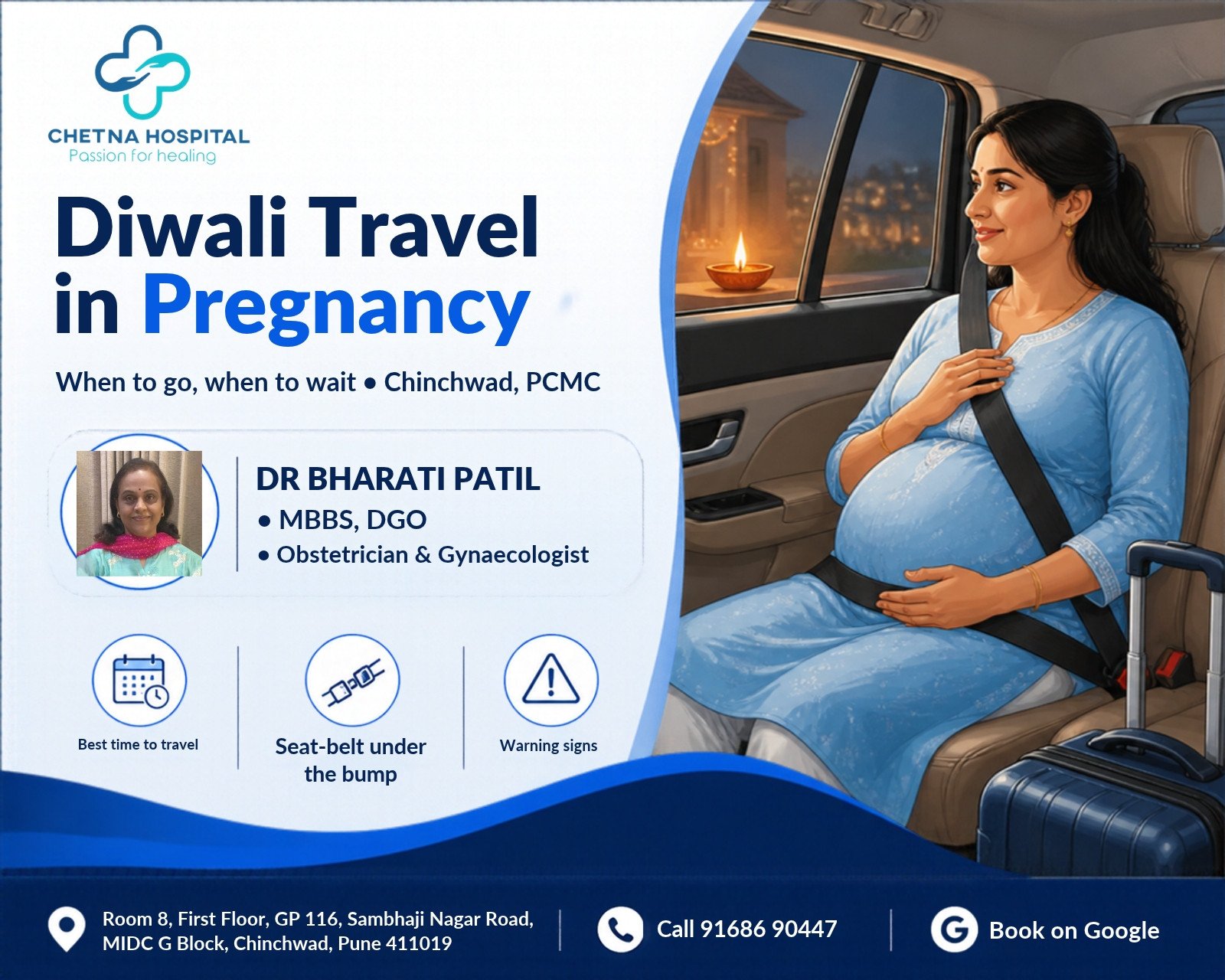
Travelling for Diwali during pregnancy is usually fine when the pregnancy is healthy, and the middle months are the easiest time to go. If there has been bleeding, high BP or sugar, twins or early labour before, see a gynaecologist such as Dr Bharati Patil in Chinchwad, PCMC before you book, and get same-day care for warning signs on the way.
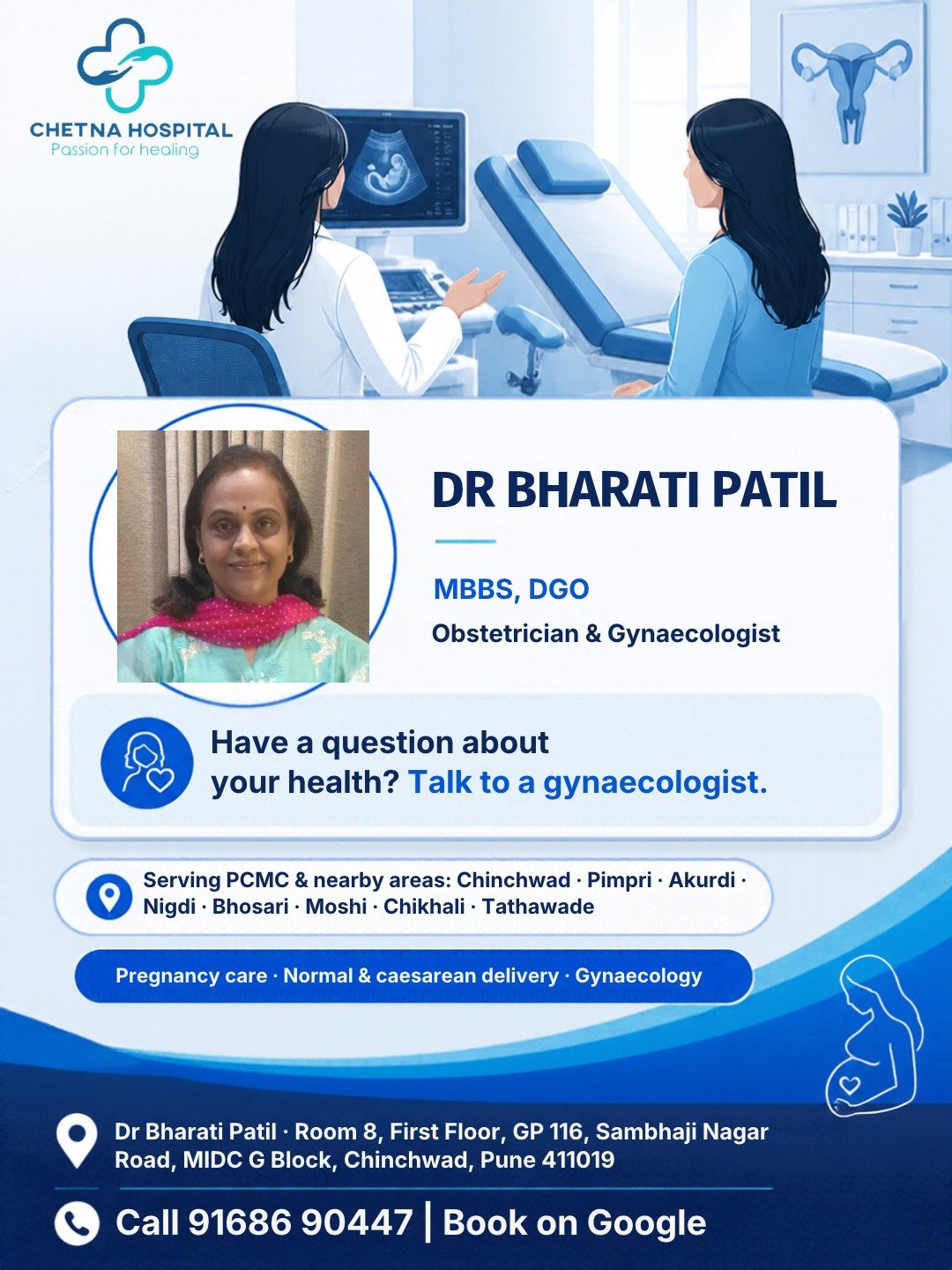
Dr Bharati Patil – Obstetrician & Gynaecologist in Chinchwad, PCMC
Why this is in the news now: Diwali falls on 8 November 2026 and families across Pune and Pimpri Chinchwad are booking trips home. The Pune ST division has announced extra buses for the Diwali rush in the first week of November (Punekar News), and long bus, train and car journeys are exactly where pregnant women have questions.
A question that comes up before every Diwali
Before Diwali, many pregnant women ask the same thing: “Can I go to my mother’s place for the festival?” Often the tickets are already booked and the bags are half packed.
When travel is usually fine
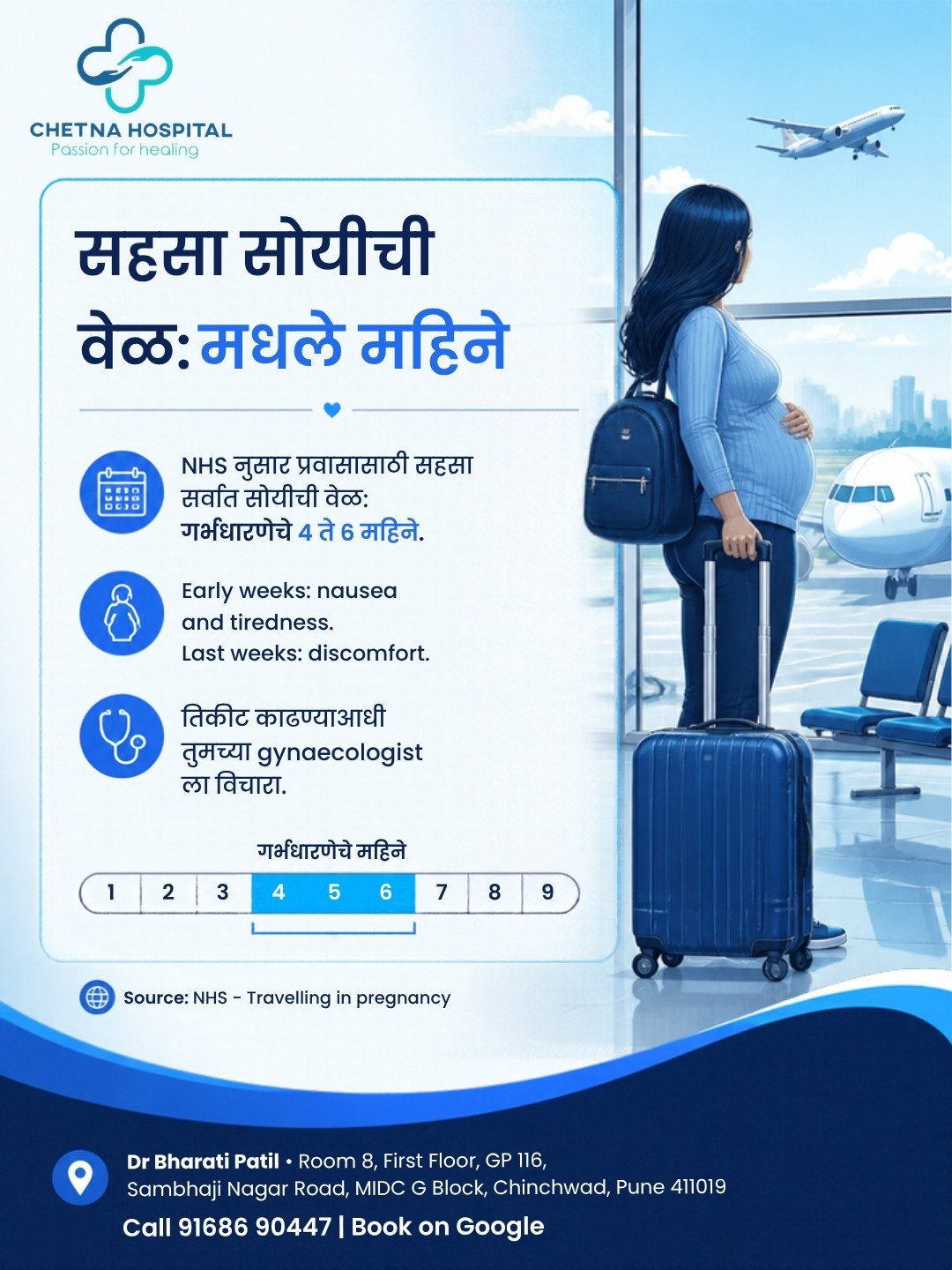
For a healthy pregnancy, travel is not harmful in itself. The NHS says the best time to travel is usually in mid-pregnancy, between 4 and 6 months: early pregnancy often brings nausea and tiredness, and the last weeks can be uncomfortable (NHS – Travelling in pregnancy). A Canadian public-health statement on pregnancy and travel adds that the decision is best made together with your own obstetric care provider, looking at the reason for the trip, the destination and the medical care available there (CATMAT, Canada Communicable Disease Report).
In practice, that means a short visit to your gynaecologist before you travel, with your tickets and your file in hand.
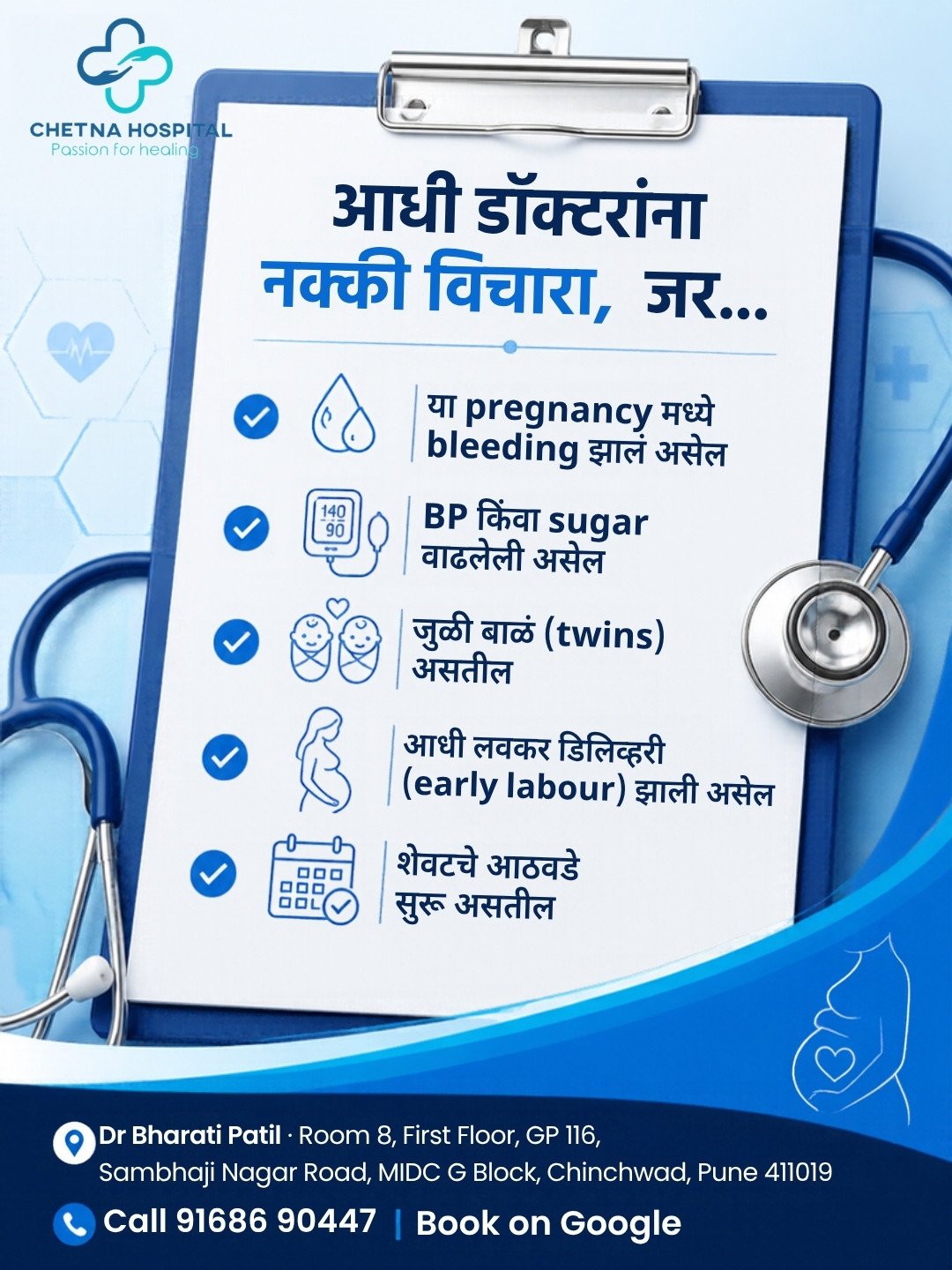
Check with your gynaecologist before you book if
- this pregnancy has had any bleeding or spotting
- your blood pressure or blood sugar is high, or you are on treatment for either
- you are expecting twins
- you have had early labour or a pregnancy loss before
- you are in the last weeks of pregnancy, when labour is more likely and you may be far from your own hospital
None of these automatically means “don’t go”. They mean the plan needs to be made with your doctor, and sometimes the journey should be shorter, later, or avoided.
Car, bus, train or plane: what changes
| Mode | What to do |
|---|---|
| Car | Lap belt under the bump, cross strap between the breasts, never across the bump. The NHS advises avoiding long car journeys where you can; if you can’t, stop regularly to get out and walk. |
| Bus | Choose a seat near the front where the ride is smoother. Get up and move at every halt. |
| Train | A lower berth is easier. Walk along the coach from time to time and keep water with you. |
| Plane | The NHS says flying is not harmful, but airlines set their own limits late in pregnancy and may ask for a doctor’s letter. Ask the airline before you book. |
On journeys longer than 4 hours, the NHS notes a small risk of blood clots. On a flight, it advises moving about every 30 minutes or so (NHS); on the road, stop regularly to walk. When you can’t get up, flex and rotate your feet and wiggle your toes in your seat (not while driving).
What to carry
- your pregnancy file and latest reports (the NHS calls these handheld notes)
- your regular tablets, enough for the whole trip
- water and light snacks, so you are not waiting hours for a meal
- the name and number of a hospital near where you are staying
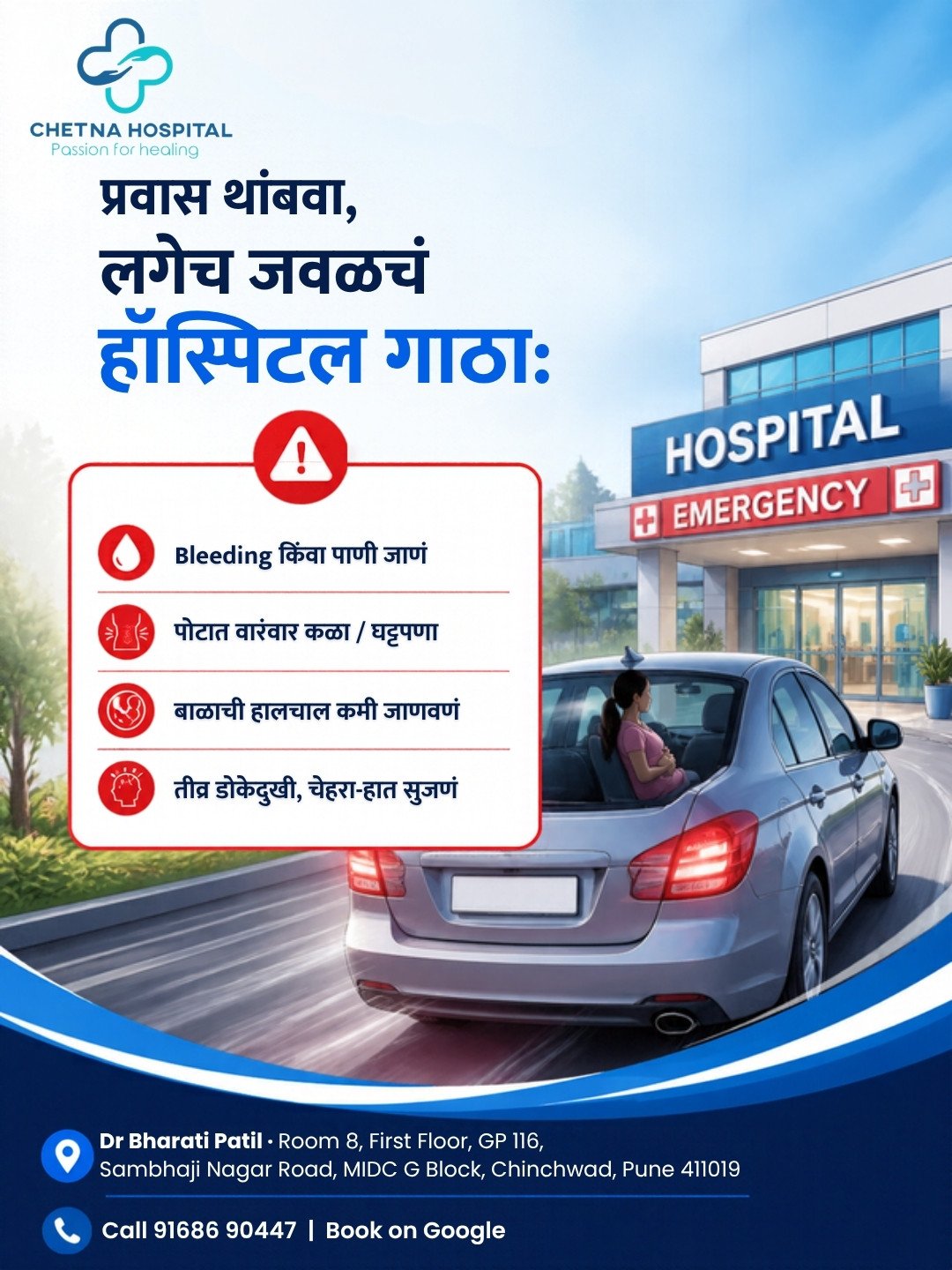
Stop the journey and get help if
- you have bleeding or leaking fluid
- you feel regular tightening or pain in the tummy
- the baby is moving less than usual
- you have a severe headache, blurred vision, or sudden swelling of the face or hands
Do not wait to reach home. Go to the nearest hospital and show them your file.
Festivals bring other questions too. Women who plan travel or a puja in the same week often ask about delaying a period; read period-delay tablets: when they are advised and when they are not.
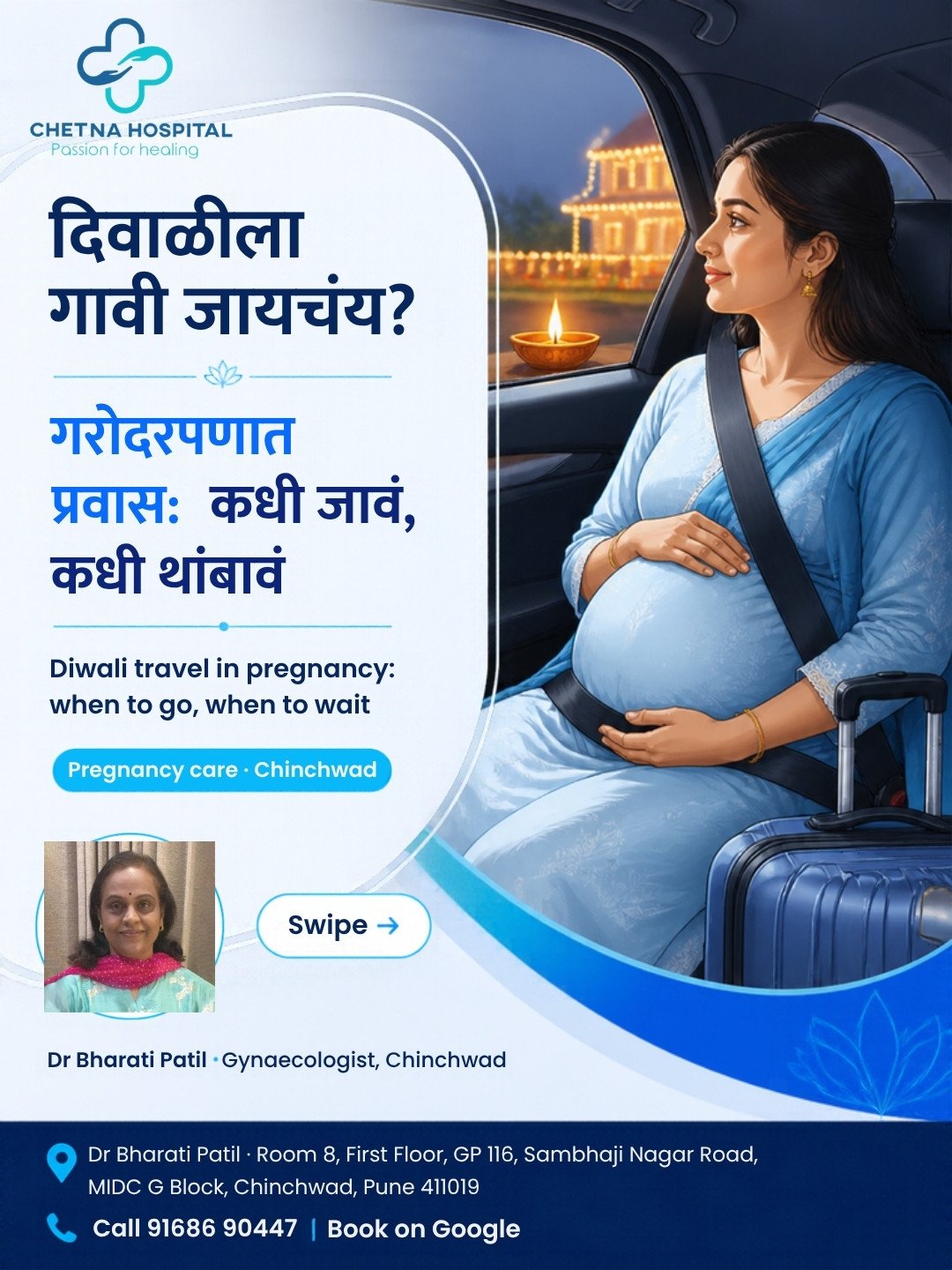
The slides from our post
Save these, or send them to someone who is travelling this Diwali.
Consultation near you
Dr Bharati Patil consults at Room 8, First Floor, Plot No. GP 116, Sambhaji Nagar Road, near Rotary Club, G Block, MIDC, Chinchwad, Pune 411019 (Chetna Hospital). Women come to her from Chinchwad, Pimpri, Akurdi, Nigdi, Ravet, Wakad, Hinjewadi, Pimple Saudagar, Thergaon, Tathawade, Punawale, Moshi and Bhosari.
Read more about Dr Bharati Patil, gynaecologist in Chinchwad, our gynaecology and maternity services, and why many women look for a lady gynaecologist in Pimpri Chinchwad. For back ache after a long journey, our physiotherapy team at Next Gen Rehab can help.
Questions women ask about travelling in pregnancy
When is the best time to travel during pregnancy?
For most healthy pregnancies, the middle months are the easiest time to travel. The NHS says the best time is usually between 4 and 6 months, because early pregnancy often brings nausea and tiredness and the last weeks can be uncomfortable. Check with your gynaecologist before you book.
Can I travel by car for Diwali while pregnant?
Usually yes, if your pregnancy is healthy, though the NHS advises avoiding long car journeys where you can. Wear the lap belt under your bump and the cross strap between your breasts, never across the bump. On a long journey, stop regularly to get out, walk and stretch, drink water and carry your pregnancy file.
Who should not travel during pregnancy without asking a doctor first?
Talk to your gynaecologist before travelling if this pregnancy has had bleeding or spotting, if your blood pressure or sugar is high, if you are expecting twins, if you have had early labour before, or if you are in the last weeks of pregnancy.
Is there a gynaecologist in Chinchwad who can advise on travel in pregnancy?
Yes. Dr Bharati Patil, Obstetrician and Gynaecologist (MBBS, DGO), consults at Chetna Hospital, Room 8, First Floor, GP 116, Sambhaji Nagar Road, MIDC G Block, Chinchwad, Pune 411019. Call or WhatsApp 91686 90447.
What warning signs mean I should stop the journey?
Stop and go to the nearest hospital if you have bleeding, leaking fluid, regular tightening or pain in the tummy, less baby movement than usual, or a severe headache with swelling of the face or hands.
Have a question about your health? Talk to a gynaecologist.
Sources
- NHS. Travelling in pregnancy.
- Committee to Advise on Tropical Medicine and Travel (CATMAT). Statement on pregnancy and travel. Canada Communicable Disease Report, 2010 (PubMed Central).
- Punekar News. Pune ST division to operate extra buses for the Diwali rush.
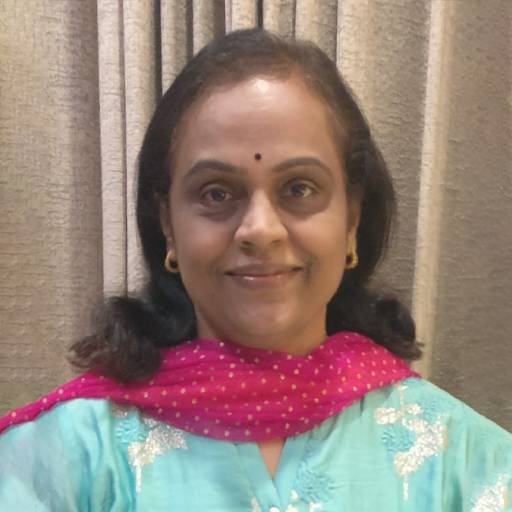
Your doctor: Dr Bharati Patil
Consultant Obstetrician & Gynaecologist
MBBS, DGO (JJ Hospital, Mumbai)
Pregnancy care, normal and caesarean delivery, and gynaecology surgery at Chetna Hospital, Chinchwad. View full profile
This article is general health information and does not replace a consultation. Whether travel suits your pregnancy depends on your own history and your doctor’s examination.
How this article was prepared: Chetna Hospital’s content team wrote it with the help of AI writing tools and checked it against the sources listed. It is general health information, not personal medical advice from the doctor named on this page.