Diabetic retinopathy is a complication of diabetes, caused by high blood sugar levels damaging the back of the eye (retina). It can cause blindness if left undiagnosed and untreated.
However, it usually takes several years for diabetic retinopathy to reach a stage where it could threaten your sight.
To minimise the risk of this happening, people with diabetes should:
- ensure they control their blood sugar levels, blood pressure and cholesterol
- have regular diabetic eye checks, as often as their eye doctor advises, to pick up and treat any problems early on
How diabetes can affect the eyes
The retina is the light-sensitive layer of cells at the back of the eye that converts light into electrical signals. The signals are sent to the brain which turns them into the images you see.
The retina needs a constant supply of blood, which it receives through a network of tiny blood vessels.
Over time, a persistently high blood sugar level can damage these blood vessels in 3 main stages:
- background retinopathy – tiny bulges develop in the blood vessels, which may bleed slightly but do not usually affect your vision
- pre-proliferative retinopathy – more severe and widespread changes affect the blood vessels, including more significant bleeding into the eye
- proliferative retinopathy – scar tissue and new blood vessels, which are weak and bleed easily, develop on the retina; this can result in some loss of vision
However, if a problem with your eyes is picked up early, lifestyle changes and treatment can stop it getting worse.
Risk of diabetic retinopathy
Anyone with type 1 diabetes or type 2 diabetes is potentially at risk of developing diabetic retinopathy.
You’re at a greater risk if you:
- have had diabetes for a long time
- have a persistently high blood sugar (blood glucose) level
- have high blood pressure
- have high cholesterol
- are pregnant
- are of Asian or Afro-Caribbean background
By keeping your blood sugar, blood pressure and cholesterol levels under control, you can reduce your chances of developing diabetic retinopathy.
Symptoms of diabetic retinopathy
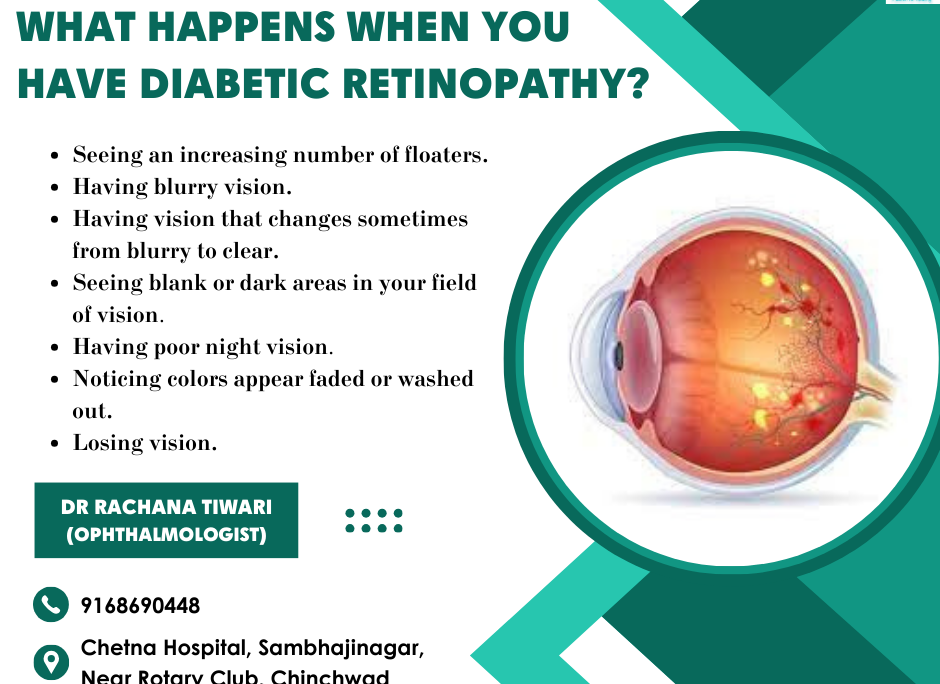
You will not usually notice diabetic retinopathy in the early stages, as it does not tend to have any obvious symptoms until it’s at a later stage.
However, early signs of the condition can be picked up by examining and photographing the back of the eyes during a diabetic eye check.
See an eye doctor promptly if you experience:
- gradually worsening vision
- shapes floating in your field of vision (floaters)
- blurred or patchy vision
- eye pain or redness
- difficulty seeing in the dark
These symptoms do not necessarily mean you have diabetic retinopathy, but it’s important to get them checked out. If you suddenly lose vision, or notice a shower of new floaters or a dark curtain over your vision, go to the nearest emergency department straight away or call 108 or 112.
Do not wait until your next routine eye check.
Regular diabetic eye checks
Everyone with type 1 or type 2 diabetes should have their eyes checked regularly, even if their vision seems fine. Your eye doctor will advise how often, based on your results.
Regular checks matter because:
- diabetic retinopathy does not tend to cause any symptoms in the early stages
- the condition can cause permanent blindness if not diagnosed and treated promptly
- an eye check can detect problems in your eyes before they start to affect your vision
- if problems are caught early, treatment can help prevent or reduce vision loss
The check involves examining the back of the eyes, usually after drops to widen the pupils, and may include taking photographs.
Depending on your result, you may be advised to attend more regular appointments or discuss treatment options with a specialist.
Reduce your risk of diabetic retinopathy
You can reduce your risk of developing diabetic retinopathy, or help prevent it getting worse, by:
- controlling your blood sugar, blood pressure and cholesterol levels
- taking your diabetes medicine as prescribed
- attending all your eye check-ups
- getting medical advice quickly if you notice any changes to your vision
- maintaining a healthy weight, eating a healthy, balanced diet, exercising regularly and stopping smoking
Treatments for diabetic retinopathy
Treatment for diabetic retinopathy is only necessary if an eye check finds significant problems that mean your vision is at risk.
If the condition has not reached this stage, the above advice on managing your diabetes is recommended.
The main treatments for later-stage diabetic retinopathy are:
- laser treatment
- injections of medication into your eyes
- an operation to remove blood or scar tissue from your eyes
General health information, not a diagnosis. Reviewed and updated by Chetna Hospital’s content team, November 2026.