Congenital Heart Disease (CHD) Quick Overview
| Congenital Heart Disease Topic | Key Information |
|---|---|
| What is Congenital Heart Disease? | A birth defect affecting the heart’s structure and normal blood flow. |
| Causes of Congenital Heart Disease | Genetic factors, maternal health issues, infections, and lifestyle during pregnancy. |
| Symptoms of Congenital Heart Disease | Cyanosis, breathing problems, poor feeding, fatigue, and slow growth. |
| Types of Congenital Heart Disease | Septal defects, valve defects, and critical congenital heart disease conditions. |
| Diagnosis of Congenital Heart Disease | Echocardiogram, ECG, pulse oximetry, and imaging tests. |
| Treatment of Congenital Heart Disease | Medications, surgery, catheter procedures, and long-term care. |
What is Congenital Heart Disease (CHD)?
Definition of Congenital Heart Disease in Newborns
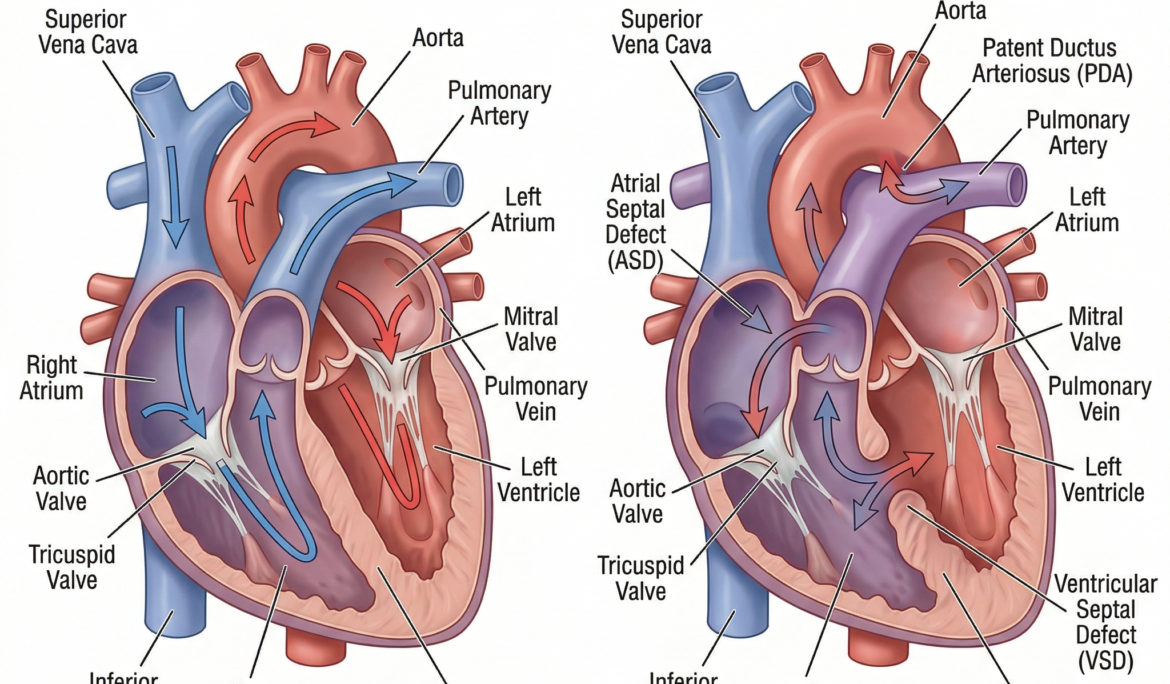
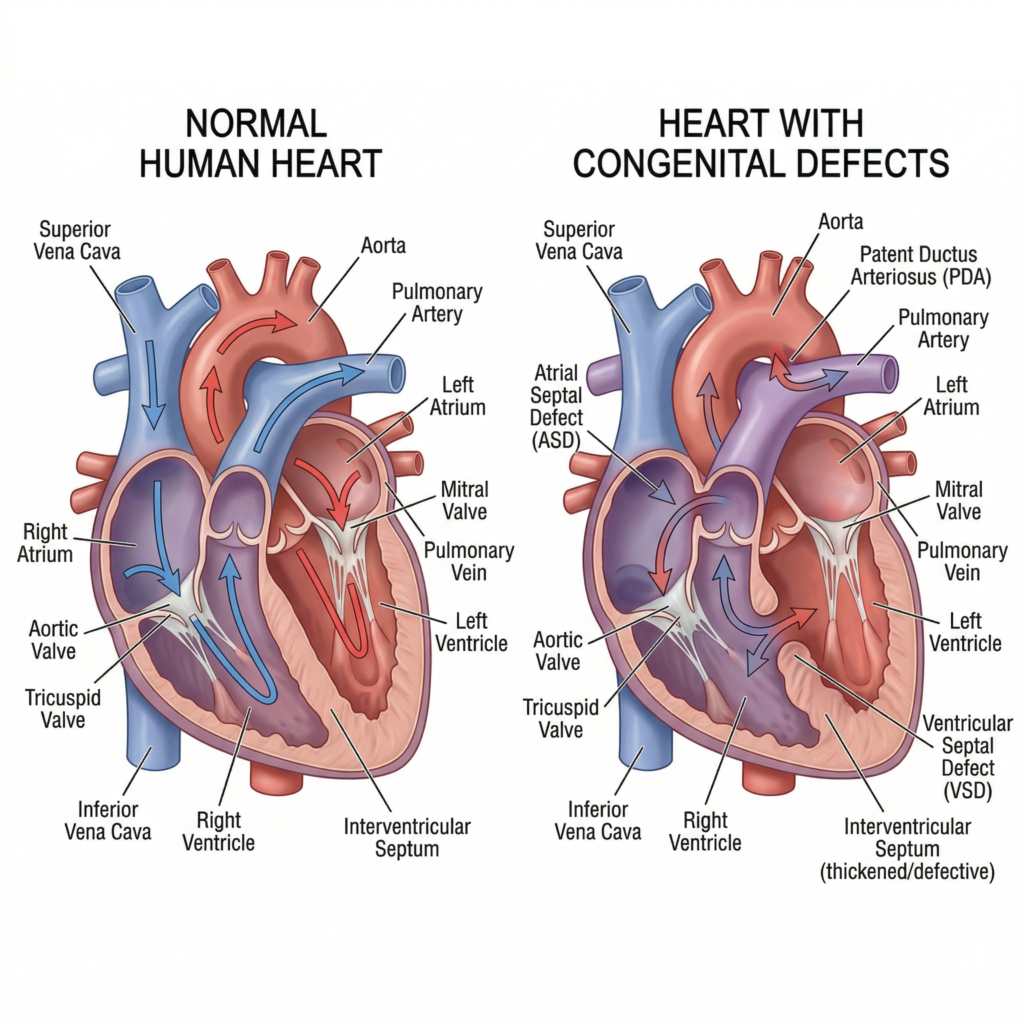
Congenital heart disease (CHD) represents a constellation of structural irregularities in the heart that are present at birth, shaping how blood courses through this vital organ. Imagine the heart as an intricately designed architectural marvel—valves acting like doors, chambers like rooms, and vessels like corridors. When even a small segment of this structure forms imperfectly, the entire system can behave differently. These deviations might be subtle, causing negligible disruption, or profound, demanding immediate medical intervention.
Globally, CHD stands as one of the most prevalent birth anomalies, affecting roughly 1 in every 100 newborns, translating into millions of affected families navigating this journey. Despite its frequency, the spectrum of severity varies dramatically. Some individuals remain unaware of their condition for years, while others require surgical correction within days of birth. What makes CHD particularly intricate is not merely its presence, but the diversity of forms it can assume—each with unique physiological consequences.
Precision Cardiac Vascular Center at Chetna Hospital offers comprehensive diagnosis and treatment for Congenital Heart Disease for patients in Chinchwad, Nigdi, and across Pune.
Located in the heart of Chinchwad, Pune, the Precision Cardiac Vascular Center at Chetna Hospital specializes in diagnosing and managing CHD for families across Nigdi, Akurdi, and the wider PCMC area.
Quick Facts
| Feature | Precision Cardiac Vascular Center Details | | :— | :— | | Condition | Congenital Heart Disease (CHD) | | Location | 3rd Floor, Chetna Hospital, Chinchwad, Pune | | Key Service | Pediatric & Adult Cardiology Consultations | | Coverage Area | 5km radius (Nigdi, Pradhikaran, Akurdi, PCMC) |
How Congenital Heart Disease Develops During Pregnancy
The heart begins its formation astonishingly early—within the first three weeks of pregnancy, often before a woman even realizes she is expecting. During this fleeting yet critical window, cells divide, migrate, and organize into a functioning organ. Any disruption—genetic misinstructions, environmental exposures, or maternal health factors—can alter this delicate choreography.
Think of it like constructing a building on a tight deadline with evolving blueprints. A minor misalignment in the foundation can cascade into structural inconsistencies. Similarly, when the embryonic heart deviates from its intended design, congenital anomalies emerge. This explains why prevention isn’t always straightforward; many influencing factors operate silently and unpredictably during these early stages.
Understanding Congenital Heart Disease in Newborns
How Congenital Heart Disease Affects Newborn Babies
In newborns, CHD doesn’t merely reside as a structural flaw—it actively reshapes how oxygen-rich blood circulates throughout the body. When the heart cannot efficiently pump or properly separate oxygenated and deoxygenated blood, vital organs may receive an inadequate oxygen supply. This can subtly or dramatically influence growth, energy levels, and organ function.
Picture a city where the water distribution system is flawed—some neighborhoods receive less water, while others face pressure inconsistencies. Similarly, babies with CHD may experience breathing difficulties, feeding fatigue, and sluggish weight gain, all stemming from compromised circulation. In severe cases, oxygen deprivation manifests as a bluish tint in the skin, known as cyanosis, signaling an urgent physiological imbalance.
Early Detection of Congenital Heart Disease in Infants
Modern medicine has refined its diagnostic lens, enabling earlier identification of CHD than ever before. Shortly after birth, clinicians employ a combination of observational acuity and technological tools to detect anomalies. A simple stethoscope examination may reveal unusual heart murmurs—subtle acoustic clues of turbulent blood flow.
More advanced methods, such as pulse oximetry screening, measure oxygen saturation in the blood, offering a quick yet powerful indicator of circulatory efficiency. If abnormalities arise, an echocardiogram—essentially an ultrasound of the heart—provides a real-time visual map of cardiac structures. Early detection can dramatically alter outcomes, often transforming a potentially life-threatening condition into a manageable one.
Causes of Congenital Heart Disease During Pregnancy
Genetic Causes of Congenital Heart Disease
Genetics often plays a pivotal role in the emergence of CHD. When certain genes responsible for cardiac development mutate or misfire, structural abnormalities can occur. Conditions such as Down syndrome or DiGeorge syndrome frequently coexist with heart defects, underscoring the genetic connection.
If a parent or sibling has CHD, the probability of recurrence increases, though it’s far from deterministic. Genetics, in this sense, behaves less like a fixed script and more like a probabilistic blueprint—raising risk but not guaranteeing outcome. This nuance makes genetic counseling an invaluable resource for families with a history of heart defects.
Environmental Factors Leading to Congenital Heart Disease
External influences during pregnancy can subtly interfere with fetal heart development. Exposure to harmful substances—alcohol, tobacco, or certain medications—can disrupt cellular processes at critical moments. Even infections such as rubella or cytomegalovirus can alter developmental pathways.
It’s not merely about avoiding extremes; even seemingly moderate exposures can carry implications. Think of fetal development as a finely tuned orchestra—introducing discordant elements can shift the entire composition. This underscores the importance of mindful lifestyle choices during pregnancy.
Maternal Health Risks for Congenital Heart Disease
A mother’s health serves as the environment in which the fetus develops, making it a crucial determinant. Conditions like diabetes, hypertension, or thyroid disorders can influence the biochemical milieu surrounding the developing heart. Elevated blood sugar levels, for instance, can interfere with normal organ formation.
Obesity and autoimmune diseases further complicate this landscape, introducing inflammatory or metabolic stressors. While not all cases are preventable, managing these conditions effectively can significantly reduce risk, offering a proactive pathway toward healthier outcomes.
Congenital Heart Disease Symptoms in Infants and Children
What are the early signs of Congenital Heart Disease?
In newborns, symptoms often emerge as subtle whispers rather than loud alarms. A baby might struggle with feeding, becoming fatigued after only a few minutes. Rapid breathing or excessive sleepiness may seem benign at first glance, but can hint at underlying cardiac inefficiency.
More conspicuous signs include cyanosis, where the lips or fingertips adopt a bluish hue, and persistent sweating during minimal activity. These manifestations are the body’s way of signaling that the heart is working harder than it should, striving to compensate for structural inefficiencies.
Signs in Older Children
As children grow, symptoms may evolve or intensify. A child with CHD might find it difficult to keep up with peers during play, experiencing shortness of breath or early fatigue. Some instinctively squat during exertion—a fascinating adaptive behavior that temporarily improves blood circulation.
Physical growth may lag, and recurring respiratory infections can become a pattern. These signs often prompt further investigation, leading to diagnoses that might have remained concealed during infancy.
Symptoms and Warning Signs of Congenital Heart Disease
| Blue lips or skin (cyanosis), rapid breathing, weak crying, and low oxygen levels. | Congenital Heart Disease Symptoms |
|---|---|
| Newborns | Poor feeding, sweating while feeding, slow weight gain, and frequent infections. |
| Infants | Chest pain, fainting spells, inability to keep up with peers, and tiredness. |
| Toddlers | Delayed growth, fatigue during play, shortness of breath, pale skin. |
| Children | Chest pain, fainting spells, inability to keep up with peers, tiredness. |
| Teenagers | Irregular heartbeat, dizziness, reduced stamina, and breathing issues. |
| When to visit Chetna Hospital Emergency | Emergency heart care Chinchwad |
| When to See a Doctor | Severe breathing issues, bluish skin, fainting, or unusual fatigue. |
Types of Congenital Heart Defects
Simple Heart Defects
Simple defects typically involve isolated structural issues, such as holes in the heart walls (ASD or VSD) or mild valve narrowing. These conditions may resolve naturally or require minimal intervention. In many cases, individuals lead entirely normal lives, unaware of any limitation.
Complex Heart Defects
Complex defects, on the other hand, involve multiple abnormalities that significantly disrupt blood flow. Conditions like Tetralogy of Fallot or Hypoplastic Left Heart Syndrome demand intricate medical and surgical management. These cases often require staged interventions and lifelong monitoring, reflecting the profound impact of structural complexity.
Diagnosis and Testing
Prenatal Screening Techniques
Advancements in prenatal imaging have made it possible to detect many heart defects before birth. A fetal echocardiogram provides a detailed view of the baby’s heart, allowing specialists to anticipate and plan interventions immediately after delivery.
Postnatal Diagnostic Tools
After birth, a combination of ECG, chest X-rays, MRI scans, and cardiac catheterization helps refine the diagnosis. Each tool contributes a different perspective, collectively building a comprehensive understanding of the heart’s structure and function.
How is Congenital Heart Disease treated at Precision Cardiac Vascular Center?
At Precision Cardiovascular Center, we utilize advanced Echocardiography and interventional cardiology to treat CHD. Our facility at Chetna Hospital, Chinchwad, is equipped with a dedicated Cath Lab to handle complex pediatric and adult cardiac cases locally, eliminating the need for patients in PCMC to travel to central Pune.
Accessing Heart Care in PCMC:
Precision Cardiac Vascular Center is strategically located at Chetna Hospital near the Nigdi-Bhosari Highway. We are easily accessible (within 10-15 minutes) for residents of Pradhikaran, Ravet, and Thermax Chowk.
Living with Congenital Heart Disease
Daily Life and Long-Term Care
Living with CHD is less about limitation and more about adaptation. With proper care, children can attend school, engage in activities, and build fulfilling lives. Regular check-ups, balanced nutrition, and tailored physical activity form the cornerstone of long-term management.
Emotional well-being is equally important. Families often find strength in support networks, where shared experiences foster resilience and understanding.
Prevention and Risk Reduction
Steps Before and During Pregnancy
Preventive strategies focus on optimizing maternal health. Taking prenatal vitamins, avoiding harmful substances, and managing chronic conditions can significantly reduce risk. While not all cases are preventable, these measures create a healthier developmental environment.
Conclusion and Key Takeaways
Ensure the first paragraph mentions: “Precision Cardiac Vascular Center at Chetna Hospital offers comprehensive diagnosis and treatment for Congenital Heart Disease for patients in Chinchwad, Nigdi, and across Pune.
FAQs on Congenital Heart Disease
A: Yes, many individuals with congenital heart disease (CHD) can live long and active lives. With early diagnosis, advanced treatment, and continuous cardiac care, life expectancy has improved significantly.
A: Congenital heart disease is a condition where a baby is born with a structural defect in the heart. These abnormalities affect normal blood flow and heart function from birth.
A: The 7 critical congenital heart defects (CCHD) include:
1. Hypoplastic Left Heart Syndrome (HLHS)
2. Pulmonary Atresia
3. Tetralogy of Fallot (TOF)
4. Total Anomalous Pulmonary Venous Return (TAPVR)
5. Transposition of the Great Arteries (TGA)
6. Tricuspid Atresia
7. Truncus Arteriosus
A: Some congenital heart defects can be completely repaired with surgery, while others require lifelong management. Modern treatments allow most patients to live healthy lives.
A: Yes, severe congenital heart disease can be life-threatening if untreated. However, early detection and proper medical care greatly reduce the risk of death.
A: You can visit the Precision Cardiac Vascular Center at Chetna Hospital, located in Sambhaji Nagar, Chinchwad.
Why Choose Precision Cardiac Vascular Center in Chinchwad for Congenital Heart Disease Care?
Choosing the right place for congenital heart disease treatment is crucial, and Precision Cardiovascular Centre stands out for its patient-focused and expert-driven approach. The center is led by experienced cardiologists who specialize in diagnosing and managing various forms of congenital heart disease, ensuring that every patient receives accurate evaluation and the most effective care plan.
With access to advanced diagnostic technology such as echocardiography and modern cardiac imaging, the team is able to detect heart conditions early and with precision. This allows for timely intervention, which plays a vital role in improving outcomes for both children and adults living with congenital heart defects.
What truly sets the center apart is its commitment to personalized treatment plans. Every case of congenital heart disease is different, and the care provided is tailored to match the patient’s specific condition, severity, and long-term health needs. From initial diagnosis to ongoing follow-ups, patients benefit from comprehensive cardiac care under one roof, making the entire process seamless and stress-free.
Beyond medical expertise, the center emphasizes a compassionate, patient-centered approach, ensuring that families feel supported, informed, and confident throughout their journey. Located at Chetna Hospital in Chinchwad, it has become a trusted destination for congenital heart disease care, known for reliability, accessibility, and quality treatment.
Contact us
📞 Call Now: 91686 92085 / 9158681123
🌐 Visit Website: www.chetnahospital.co.in
📍 Location: Chetna Hospital, Sambhaji Nagar, Chinchwad
👉 Book your appointment today and take the first step toward better heart health.
Our center is conveniently located near the HP Petrol Pump on Nigdi Bhosari Highway, making it accessible for patients coming from Thermax Chowk or Akurdi Railway Station.
Serving patients from Akurdi, Nigdi, Ravet, and Bhosari.
📍 Trusted Cardiac Across Chinchwad & PCMC
Chetna Hospital (Sambhaji Nagar) is the preferred choice for residents seeking expert cardiac services within a 5 km radius. We provide easy access and specialized care for patients in:
Chinchwad Gaon & Kalewadi (3 km): Serving families across the Pimpri-Chinchwad link road.
Chinchwad & Sambhaji Nagar: Located right in the heart of the community.
Akurdi & Pradhikaran (2–3 km): Just a 10-minute drive via Tilak Bridge or Akurdi Station Road.
Nigdi & Yamuna Nagar (4 km): Conveniently accessible via the Old Pune-Mumbai Highway.
Ravet & Walhekarwadi (4.5 km): Rapidly growing residential hubs with direct connectivity to our clinic.
Precision CardiacVascular Center at Chetna Hospital provides advanced pediatric and adult cardiology services for residents in Chinchwad, Nigdi, Akurdi, Ravet, and Thermax Chowk. Located just off the Nigdi-Bhosari Highway, we are the primary heart care hub for the PCMC community.