
Expert Dental Care by Dr. Amit Gupte at Chetna Hospital, Chinchwad, Pune
A healthy and confident smile plays an important role in both personal and professional life. Damaged, discolored, or weakened teeth can affect not only appearance but also chewing efficiency and overall oral health. One of the most advanced and reliable solutions in modern dentistry is ceramic crown treatment.
At Chetna Hospital, Chinchwad, Dr. Amit Gupte, an experienced dental professional, provides high-quality ceramic crown treatments designed to restore natural aesthetics, strength, and long-term function. Patients from Pimpri-Chinchwad, Nigdi, Akurdi, Wakad, Ravet, Hinjewadi, Bhosari, and PCMC areas trust Chetna Hospital for advanced dental care.
What Is a Ceramic Crown?
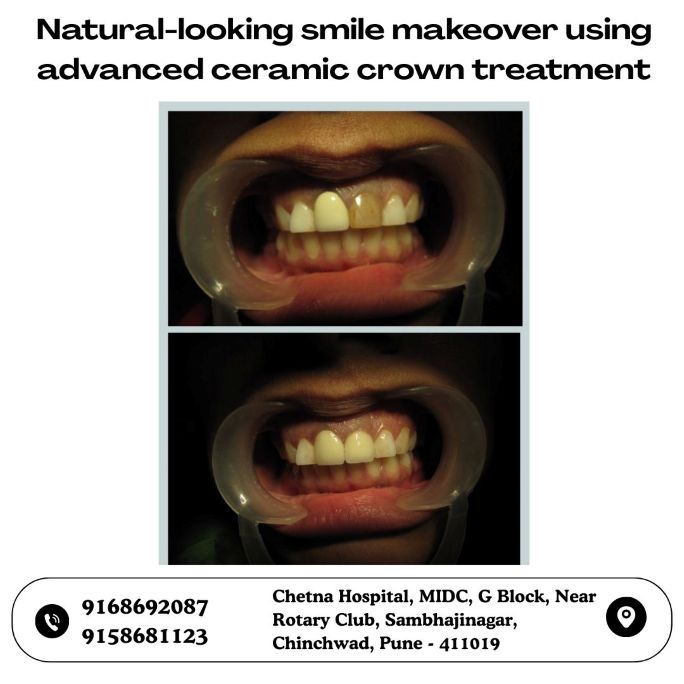
A ceramic crown is a tooth-shaped cap placed over a damaged, broken, decayed, or discolored tooth to restore its shape, size, strength, and appearance. Unlike metal crowns, ceramic crowns are tooth-colored, making them an ideal choice for front and visible teeth.
Ceramic crowns are widely used in cosmetic dentistry and restorative dentistry due to their natural translucency and excellent biocompatibility.
When Is Ceramic Crown Treatment Needed?
Dr. Amit Gupte recommends ceramic crowns in the following situations:
- Severely decayed teeth
- Broken or fractured teeth
- Discolored or stained teeth that do not respond to whitening
- Teeth with large fillings
- Post root canal treatment
- Worn-out or uneven teeth
- Smile makeover procedures
Ceramic crowns not only enhance appearance but also protect weakened teeth from further damage.
Benefits of Ceramic Crown Treatment
1. Natural Aesthetic Appearance
Ceramic crowns closely mimic the color, shape, and translucency of natural teeth, making them almost indistinguishable.
2. Metal-Free & Biocompatible
Ceramic crowns are metal-free, reducing the risk of allergies or gum discoloration.
3. Long-Lasting Strength
Advanced ceramic materials provide excellent durability and withstand normal chewing forces.
4. Gum-Friendly
Ceramic crowns are gentle on gums and help maintain healthy gum tissue.
5. Improved Confidence
A restored smile enhances self-esteem and overall facial appearance.
Types of Ceramic Crowns Used in Modern Dentistry
At Chetna Hospital, ceramic crown options are selected based on clinical needs:
- All-Ceramic Crowns – Best for front teeth and cosmetic cases
- Zirconia Crowns – High strength with excellent aesthetics
- Porcelain Crowns – Natural look with good durability
Dr. Amit Gupte evaluates each patient’s dental condition before recommending the most suitable crown type.
Ceramic Crown Treatment Procedure
Step 1: Dental Examination & Consultation
A detailed oral examination, X-rays, and bite analysis are performed to assess tooth condition.
Step 2: Tooth Preparation
The affected tooth is gently reshaped to allow proper crown placement.
Step 3: Impression & Shade Selection
Digital or physical impressions are taken, and tooth shade is selected to match natural teeth.
Step 4: Temporary Crown
A temporary crown protects the tooth while the permanent ceramic crown is fabricated.
Step 5: Final Crown Placement
The custom-made ceramic crown is permanently cemented after ensuring perfect fit and comfort.
The procedure is painless and performed under local anesthesia if required.
Ceramic Crown vs Metal Crown
| Feature | Ceramic Crown | Metal Crown |
|---|---|---|
| Appearance | Natural, tooth-colored | Metallic |
| Aesthetics | Excellent | Poor |
| Gum Reaction | Very friendly | May cause discoloration |
| Best for | Front & visible teeth | Back teeth |
| Popular Choice | Yes | Less preferred |
Due to superior aesthetics, ceramic crowns are now the preferred option for most patients.
Ceramic Crown for Smile Makeover
Ceramic crowns play a major role in smile makeover treatments. They help correct:
- Uneven teeth
- Gaps between teeth
- Discolored or stained teeth
- Irregular tooth shape
Patients looking for a natural-looking smile transformation in Chinchwad often choose ceramic crown treatment at Chetna Hospital.
How Long Do Ceramic Crowns Last?
With proper care, ceramic crowns can last 10–15 years or longer. Longevity depends on:
- Oral hygiene habits
- Avoiding excessive force or teeth grinding
- Regular dental check-ups
- Proper bite alignment
Dr. Amit Gupte emphasizes preventive care to ensure long-lasting results.
Aftercare Tips for Ceramic Crowns
To maintain your ceramic crown:
- Brush twice daily with a soft-bristle toothbrush
- Floss regularly
- Avoid biting hard objects (ice, pens)
- Limit extremely hard or sticky foods
- Visit your dentist for regular check-ups
Good oral hygiene ensures crown durability and overall dental health.
Is Ceramic Crown Treatment Safe?
Yes. Ceramic crowns are clinically safe, biocompatible, and widely used worldwide. They do not cause harm to gums or surrounding teeth when placed by an experienced dentist.
At Chetna Hospital, Chinchwad, strict sterilization and hygiene protocols are followed to ensure patient safety.
Why Choose Chetna Hospital for Ceramic Crown Treatment?
- Experienced dentist Dr. Amit Gupte
- Advanced dental equipment
- High-quality ceramic materials
- Personalized treatment planning
- Convenient location near MIDC G Block, Rotary Club
- Trusted dental care for PCMC residents
Patients from Pimpri, Chinchwad, Nigdi, Akurdi, Wakad, Ravet, Hinjewadi, Bhosari, Pimple Saudagar, and nearby areas choose Chetna Hospital for reliable dental solutions.
About Dr. Amit Gupte
Dr. Amit Gupte is a skilled dental professional known for precision, aesthetic focus, and patient-centered care. He has extensive experience in ceramic crown treatment, restorative dentistry, and smile makeover procedures. His approach emphasizes natural results, comfort, and long-term oral health.
When Should You Visit a Dentist for Crown Treatment?
Consult a dentist if you experience:
- Tooth pain or sensitivity
- Broken or cracked teeth
- Severe discoloration
- Difficulty chewing
- Post root canal treatment needs
Early intervention prevents complications and preserves natural teeth.