Bone health plays a crucial role in maintaining mobility, independence, and quality of life. One of the most common yet often overlooked bone conditions is Osteoporosis, also known as bone weakness. It is a silent disease that gradually weakens bones, making them fragile and more prone to fractures. Many people in PCMC areas like Wakad, Chinchwad, Ravet, Thergaon, Punawale, and Bhosari remain unaware of osteoporosis until a fracture occurs.
This blog explains what osteoporosis is, its causes, symptoms, risk factors, diagnosis, prevention, and why timely consultation with an orthopaedic doctor in PCMC is essential.
What is Bone Weakness (Osteoporosis)?
Osteoporosis is a medical condition where bones lose density, strength, and mass, becoming thin and porous. As a result, even minor falls, sudden movements, or simple daily activities can lead to fractures—especially of the spine, hip, wrist, and shoulder.
Osteoporosis is often called a “silent disease” because bone loss occurs without pain or noticeable symptoms in the early stages. Many patients realize they have osteoporosis only after experiencing a fracture or chronic back pain.
Why Osteoporosis is a Growing Concern in PCMC
With increasing life expectancy, sedentary lifestyles, poor dietary habits, and lack of awareness, osteoporosis cases are rising rapidly in urban and semi-urban areas of Pimpri-Chinchwad (PCMC). Both men and women, especially those above 40 years, are at risk.
Postmenopausal women, elderly individuals, office workers with minimal physical activity, and people with vitamin deficiencies are commonly affected.
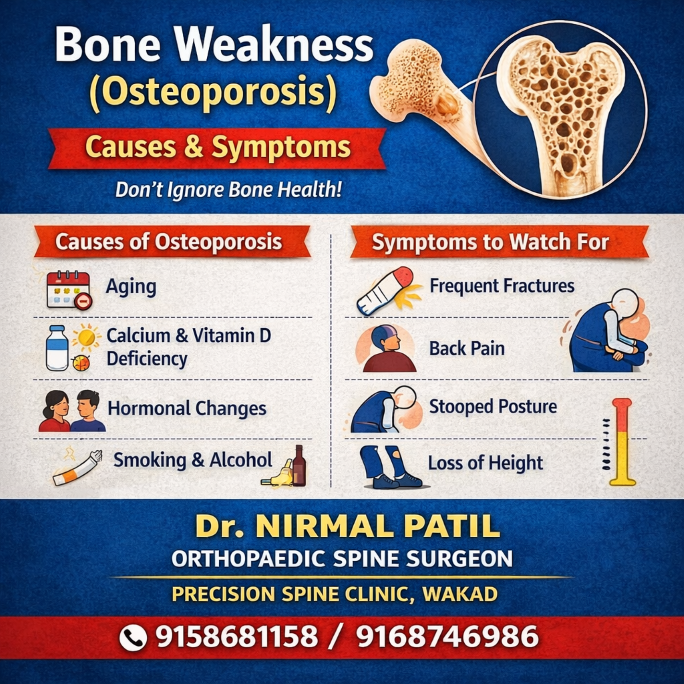
Causes of Bone Weakness (Osteoporosis)
Understanding the causes of osteoporosis helps in early prevention and treatment. The most common causes include:
1. Aging
As we age, bone formation slows down while bone breakdown increases. After the age of 40, bone density naturally starts declining, making older adults more vulnerable to fractures.
2. Calcium Deficiency
Calcium is essential for strong bones. Long-term low calcium intake weakens bones and accelerates bone loss.
3. Vitamin D Deficiency
Vitamin D helps the body absorb calcium. Lack of sunlight exposure, indoor lifestyle, or poor nutrition can lead to vitamin D deficiency, a major contributor to osteoporosis.
4. Hormonal Changes
- Postmenopausal women experience rapid bone loss due to reduced estrogen levels.
- Low testosterone levels in men also affect bone strength.
5. Lack of Physical Activity
A sedentary lifestyle, prolonged sitting, and lack of weight-bearing exercises weaken bones over time.
6. Poor Nutrition
Low protein intake, excessive junk food, and poor overall nutrition negatively impact bone health.
7. Smoking and Alcohol Consumption
Smoking reduces bone-forming cells, while excessive alcohol interferes with calcium absorption, increasing fracture risk.
8. Long-Term Medication Use
Prolonged use of:
- Steroids
- Thyroid medications
- Anti-epileptic drugs
can significantly reduce bone density.
9. Family History
Genetics play an important role. If osteoporosis runs in your family, your risk is higher.
Symptoms of Osteoporosis
One of the biggest challenges with osteoporosis is that early symptoms are usually absent. However, as bone weakness progresses, the following symptoms may appear:
Early-Stage Symptoms
- Mild back or joint pain
- Muscle weakness
- Fatigue
Advanced Symptoms
- Frequent fractures after minor falls
- Chronic back pain due to spinal fractures
- Loss of height over time
- Stooped or hunched posture (kyphosis)
- Bone tenderness
- Weak grip strength
If you notice these symptoms, it is important to consult an orthopaedic doctor in PCMC immediately.
Common Fractures Caused by Osteoporosis
Osteoporosis-related fractures can severely affect mobility and independence. The most common fractures include:
- Spine fractures – leading to back pain and height loss
- Hip fractures – often requiring surgery and prolonged recovery
- Wrist fractures – common after falls
- Shoulder fractures
Early diagnosis can prevent these serious complications.
Who is at Higher Risk of Osteoporosis?
You may be at higher risk if you:
- Are above 40 years of age
- Are postmenopausal
- Have a sedentary lifestyle
- Have low body weight
- Have vitamin D or calcium deficiency
- Smoke or consume alcohol regularly
- Have a family history of osteoporosis
Regular bone health check-ups are strongly recommended for high-risk individuals in PCMC.
Diagnosis of Osteoporosis
An experienced orthopaedic doctor in PCMC can diagnose osteoporosis using:
1. Bone Density Test (DEXA Scan)
The most reliable test to measure bone mineral density and assess fracture risk.
2. X-rays
Useful in detecting fractures and advanced bone loss.
3. Blood Tests
To check calcium, vitamin D levels, and hormonal imbalances.
Early diagnosis allows timely treatment and prevents complications.
Treatment Options for Osteoporosis
Treatment focuses on slowing bone loss, strengthening bones, and preventing fractures.
Non-Surgical Treatment
- Calcium and vitamin D supplements
- Bone-strengthening medications
- Lifestyle modification
- Physiotherapy and guided exercises
Surgical Treatment
In cases of fractures, especially hip or spine fractures, orthopaedic surgical intervention may be required.
An experienced orthopaedic spine and bone specialist ensures the right treatment plan based on age, severity, and lifestyle.
Prevention of Bone Weakness (Osteoporosis)
Prevention is always better than cure. Simple lifestyle changes can protect bone health:
- Eat calcium-rich foods (milk, curd, cheese, leafy vegetables)
- Get adequate sunlight exposure
- Perform weight-bearing exercises like walking and yoga
- Avoid smoking and alcohol
- Maintain a healthy body weight
- Get regular bone density tests
When Should You Consult an Orthopaedic Doctor in PCMC?
You should consult an orthopaedic specialist if you experience:
- Persistent back or joint pain
- Frequent fractures
- Loss of height or posture changes
- Postmenopausal bone pain
- Family history of osteoporosis
Early consultation can prevent long-term disability.
Expert Orthopaedic Care in PCMC
If you are searching for a trusted orthopaedic doctor in PCMC for bone weakness and osteoporosis treatment, consult a specialist who offers:
- Advanced diagnosis
- Ethical and patient-friendly care
- Personalized treatment plans
- Comprehensive bone and spine care
Areas commonly served include Wakad, Chinchwad, Ravet, Thergaon, Punawale, Kiwale, Chikhali, Bhosari, Moshi, Nigdi, Akurdi, Tathawade, Rahatani, and surrounding PCMC areas.
Conclusion
Osteoporosis is a serious yet preventable condition. With early diagnosis, proper treatment, and lifestyle changes, bone weakness can be effectively managed. Ignoring symptoms can lead to fractures, chronic pain, and reduced quality of life.
If you or your loved ones are experiencing signs of bone weakness, do not delay. Consult an experienced orthopaedic doctor in PCMC and take the first step towards stronger, healthier bones.