


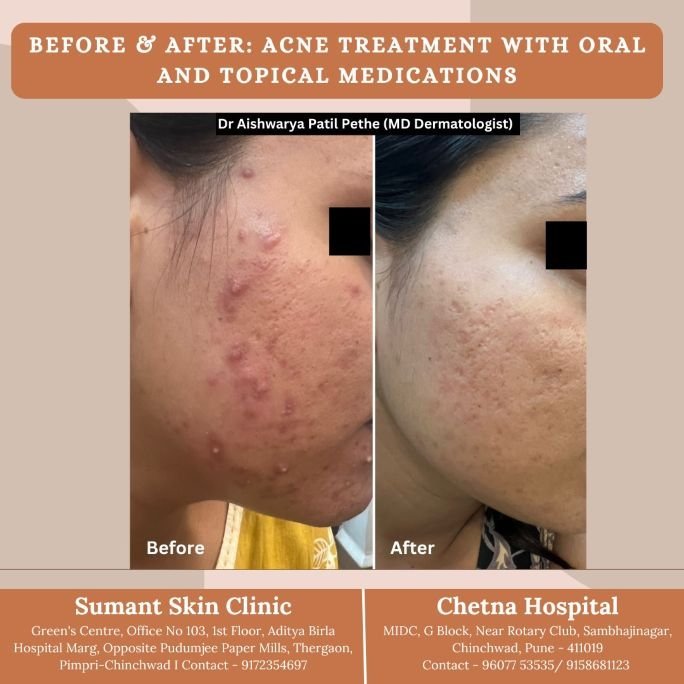
See a dermatologist (a skin doctor) if your acne is deep, painful or leaving scars or dark marks. It is also worth going if pharmacy products have not helped after several weeks. In Pune, check that the doctor is registered with the Maharashtra Medical Council and has a postgraduate degree in skin, such as MD or DNB in dermatology.
A good first visit should end with a clear plan and a date to come back. This guide covers what acne is, when to get help, what to ask and how to care for your skin at home.
What is acne?
Acne is a common skin condition that causes spots. It can be mild, moderate or severe. It most often affects the face, chest and back, says the NHS guide to acne.
Acne starts when tiny openings in the skin, called hair follicles, get blocked with oil and dead skin cells. Bacteria that normally live on the skin can then cause redness, swelling and pus.
Acne is very common in teenagers and young adults. It often settles by the mid-20s, but it can carry on into adult life.
Signs of acne
Acne can cause several kinds of spots:
- Whiteheads and blackheads: small blocked pores on the surface of the skin
- Papules: raised red or pink bumps
- Pustules: bumps filled with pus
- Nodules and cysts: larger lumps under the skin that can be painful
Your skin may also feel oily, hot or sore. You can read more about blackheads and whiteheads (comedones) and cystic acne on our blog.
What causes acne?
Hormones are thought to play a big part. Hormone levels rise in puberty, and they also change around periods and pregnancy. Other things linked to acne include:
- acne in your family
- polycystic ovary syndrome (PCOS)
- some medicines
- greasy skin products and some cosmetics
- pressure or rubbing on the skin, for example from a helmet, a phone or a tight collar
- smoking
- stress, which can make acne worse
Some common beliefs are not true. Acne is not caused by dirty skin, and research has not found any food that causes it, according to NHS Wales. Washing more than twice a day can irritate the skin.
See a doctor if
Mild acne, with a few blackheads, whiteheads and small spots, can often be managed with pharmacy products. Speak to a doctor if:
- pharmacy products have not helped after several weeks
- you have many spots, or deep and painful lumps or cysts
- your acne is leaving scars or dark marks
- the skin around your spots is hot, swollen and red, which can be a sign of infection
- you are pregnant or planning a pregnancy, because some acne products are not safe in pregnancy
- acne is making you feel anxious, low or shy of meeting people
Nodules and cysts carry the greatest risk of scarring, so they need proper treatment.
How to choose a dermatologist for acne in Pune
A few simple checks can help you choose a skin doctor with care:
- Registration. Doctors in Maharashtra are registered with the Maharashtra Medical Council. It is fine to ask for the registration number. You can also search for a doctor by name or number on the National Medical Commission’s Indian Medical Register.
- Qualifications. A dermatologist has a medical degree (MBBS) and a postgraduate degree in dermatology, such as MD or DNB. You can ask about these too.
- Clear explanations. The doctor should tell you what type of acne you have, the choices for treating it and the possible side effects. No single acne treatment works for everyone, so be careful of anyone who promises fast or lasting clear skin.
- A plan for follow-up. Acne care usually needs more than one visit. Mayo Clinic notes that follow-up every three to six months is typical until the skin improves.
- Respect for how you feel. Acne can affect mood and confidence. A good doctor will ask how it affects you.
- Easy to reach. A clinic near your home or work in PCMC makes it easier to keep follow-up visits.
What happens at the first visit
The doctor will look at your skin to see what kind of spots you have. They may ask:
- when the acne started and what seems to make it worse, such as stress or your periods
- which medicines, supplements, skin products and make-up you use
- what you have already tried, and whether acne runs in your family
- for women, whether your periods are regular and whether you are pregnant or planning a pregnancy
- how acne is affecting your mood and confidence
Sometimes the doctor may ask for lab tests to rule out other conditions.
What to take with you: a list of your medicines, supplements and skin products. Bring any old acne prescriptions and your questions.
Questions you may want to ask:
- What type of acne do I have?
- What treatment do you suggest, and what are the side effects?
- When should I expect to see a change?
- What should I do if the first treatment does not help?
- Should I change my skin care or make-up?
How acne is treated
The US National Institutes of Health says treatment aims to heal the spots you have, stop new ones forming and prevent scars. The right choice depends on how severe your acne is, and some options are not suitable in pregnancy. A doctor may prescribe medicine, such as:
- Creams or gels that you put on the skin. Some can cause dryness, redness or a burning feeling.
- Tablets for moderate or severe acne. For some women, hormone-based tablets may help.
For some people, the doctor may also suggest a procedure in the clinic. Examples include light therapy, a chemical peel, removing blackheads and whiteheads, draining a cyst or an injection into a large, painful lump. You can read more on the Mayo Clinic acne treatment page.
Acne treatment takes time. Many treatments can take two to three months to start working, and your doctor may change the plan at a follow-up visit. Some acne treatments are not safe in pregnancy, so always tell your doctor if you are pregnant or trying for a baby.
Acne scars and dark marks
Picking or squeezing spots can cause scars. Deep nodules and cysts are the most likely to scar.
On brown or darker skin, a spot can leave a dark mark after it heals. A doctor can suggest treatment to fade these marks. Sun can make these marks worse, so daily sun protection helps. A dermatologist can also advise you on treatment for acne scars.
What you can do at home
- Wash the skin with acne twice a day, using a mild cleanser and lukewarm water.
- Wash gently and do not scrub. Avoid scrubs, rough pads, astringents and face masks.
- Take off make-up before you go to bed.
- Choose make-up, sunscreen and hair products that are water-based or labelled “non-comedogenic”.
- Do not pick, squeeze or pop spots.
- Protect your skin from the sun, as many acne medicines make the skin burn more easily.
- Shower soon after exercise or heavy sweating.
- Wash your hair regularly and keep it off your face.
- Cut down on rubbing and pressure on the skin from phones, helmets, tight collars and bag straps.
- Get enough sleep and find ways to manage stress.
For mild acne, the American Academy of Dermatology suggests using one pharmacy product for 6 to 8 weeks before adding another. You can also read our tips on caring for oily skin.
Frequently asked questions
Will my acne go away on its own?
It may. Acne often settles by the mid-20s, but it can carry on into adult life. Treatment can help control spots and lower the chance of scars.
Is acne caused by oily food or dirty skin?
No. Research has not found any food that causes acne, and acne is not caused by poor hygiene. A healthy diet is still good for your overall health.
Can adults get acne?
Yes. Acne can continue after the teenage years. Adult acne is more common in women, and hormone changes linked to periods, pregnancy or PCOS can play a part.
How long does acne treatment take to work?
Many treatments can take two to three months to start working. Your doctor will usually see you again to check how your skin is doing and change the plan if needed.
Is it safe to use acne products during pregnancy?
Not all of them. Some acne products and medicines are not safe in pregnancy. If you are pregnant or trying for a baby, ask a doctor before you use any acne treatment.
Should I squeeze or pop my pimples?
No. Picking or squeezing spots can cause scars and dark marks.
Sources
- NHS: Acne
- NHS Wales: Acne
- American Academy of Dermatology: Adult acne treatment dermatologists recommend
- Mayo Clinic: Acne, diagnosis and treatment
- NIAMS (US National Institutes of Health): Acne, diagnosis, treatment and steps to take
- National Medical Commission: Indian Medical Register
How to reach Chetna Hospital
To see the dermatology team, call 9607753535 or 9158681123, or visit the Dermatology Department at Chetna Hospital, MIDC G Block, Near Rotary Club, Sambhajinagar, Chinchwad, Pune – 411019.
How this article was prepared: Chetna Hospital’s content team wrote it with the help of AI writing tools and checked it against the sources listed. It is general health information, not personal medical advice.