Blurred or distorted vision is a common complaint among patients visiting eye clinics in Pune. One of the main causes of such vision problems is astigmatism, a refractive error that affects people of all ages. Unlike myopia or hypermetropia, astigmatism occurs due to an irregular curvature of the cornea or lens, leading to distorted vision at all distances.
For residents in Chinchwad, Wakad, Thergaon, Ravet, Punawale, and nearby areas, consulting an experienced ophthalmologist like Dr. Rachana Tiwari Patil at Chetna Hospital, Chinchwad, Pune can ensure early diagnosis and effective management of astigmatism.
What is Astigmatism?
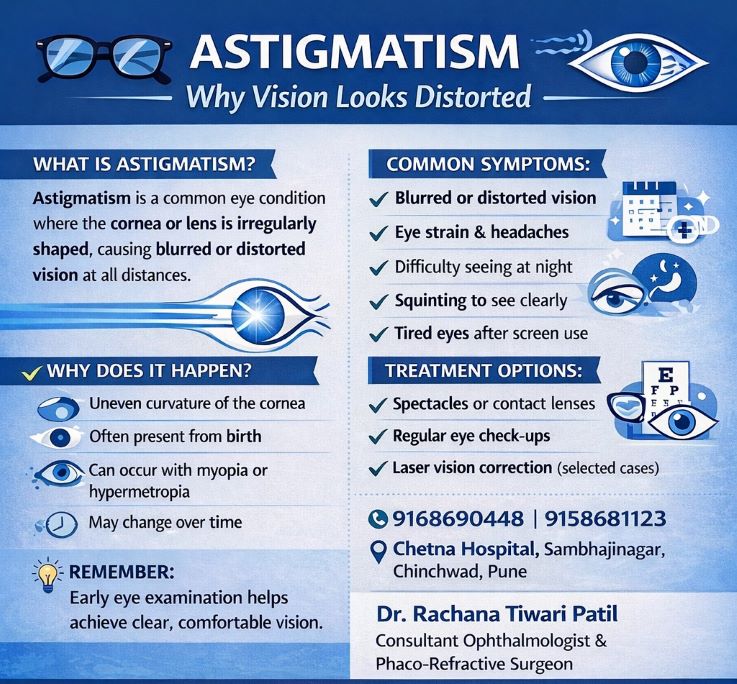
Astigmatism is a common refractive error caused by an irregular shape of the cornea or, less commonly, the lens inside the eye. In a normal eye, the cornea and lens are evenly curved, allowing light to focus precisely on the retina at the back of the eye. In astigmatism, the uneven curvature prevents light from focusing correctly, resulting in blurred or distorted vision.
Astigmatism can affect both children and adults, and in many cases, it is present from birth. While minor astigmatism may not cause noticeable vision problems, higher degrees of astigmatism can interfere with daily activities such as reading, driving, or working on digital screens.
Symptoms of Astigmatism
Recognizing the symptoms of astigmatism is crucial for early intervention. Common signs include:
- Blurred or distorted vision at all distances
- Eye strain or fatigue, especially after prolonged reading or screen use
- Headaches caused by constant eye effort
- Difficulty seeing at night, including glare or halos around lights
- Squinting to improve clarity
- Tired eyes after focusing for long periods
If you notice these symptoms, it is advisable to schedule a consultation with an ophthalmologist to prevent further eye strain and maintain healthy vision.
Causes of Astigmatism
Astigmatism occurs when the cornea or lens has an irregular shape. Instead of being perfectly round like a basketball, it may be shaped more like a football. This irregularity prevents light from focusing correctly on the retina, causing blurred or distorted images.
Other contributing factors include:
- Genetics: Astigmatism often runs in families
- Eye injuries or surgery: Trauma or procedures affecting the cornea
- Other refractive errors: Astigmatism can co-exist with myopia (nearsightedness) or hypermetropia (farsightedness)
- Changes over time: Corneal curvature can change with age, altering vision
Diagnosing Astigmatism
Proper diagnosis requires a comprehensive eye examination by a qualified ophthalmologist. At Chetna Hospital, Chinchwad, Dr. Rachana Tiwari Patil uses advanced diagnostic tools to evaluate the degree and type of astigmatism.
Tests may include:
- Visual acuity test: Measures clarity of vision at different distances
- Corneal topography: Maps the surface curvature of the cornea
- Refraction test: Determines the exact lens power needed for correction
- Eye health evaluation: Detects co-existing conditions like cataracts or glaucoma
Early detection is essential to prevent eye strain, headaches, and long-term vision problems.
Types of Astigmatism
Astigmatism is classified based on its location and orientation:
- Corneal Astigmatism: Caused by an irregularly shaped cornea
- Lenticular Astigmatism: Caused by an irregularly shaped lens
- Regular Astigmatism: Principal meridians of the eye are perpendicular
- Irregular Astigmatism: Principal meridians are not perpendicular, often due to eye injury or surgery
Understanding the type of astigmatism helps ophthalmologists recommend the most effective treatment or corrective options.
Treatment Options for Astigmatism
The management of astigmatism depends on its severity and patient needs.
1. Eyeglasses
Corrective glasses are the most common treatment. They use cylindrical lenses to compensate for the uneven corneal curvature, providing clear and comfortable vision.
2. Contact Lenses
Specialized toric contact lenses are designed for astigmatism. They provide better peripheral vision and are suitable for active lifestyles.
3. Laser Vision Correction
For selected patients, laser procedures like LASIK or PRK can reshape the cornea to correct astigmatism permanently. Candidates must undergo a thorough evaluation to ensure suitability.
4. Regular Eye Check-Ups
Even if you already use corrective lenses, periodic eye examinations are essential to monitor changes in vision and maintain eye health.
Astigmatism in Children
Astigmatism often appears in childhood, sometimes affecting learning and reading ability. Symptoms in children may include:
- Squinting while reading
- Sitting very close to screens or books
- Complaining of headaches
- Frequent eye rubbing
Early detection by an ophthalmologist like Dr. Rachana Tiwari Patil is crucial to prevent amblyopia (lazy eye) and ensure proper visual development.
Living with Astigmatism
While astigmatism is common and manageable, there are ways to reduce discomfort in daily life:
- Maintain proper lighting while reading
- Take regular breaks from screens
- Use prescribed corrective lenses consistently
- Schedule annual eye check-ups
- Eat a vision-friendly diet rich in vitamins A, C, and E
When to See an Ophthalmologist
Consult an ophthalmologist if you experience:
- Persistent blurred or distorted vision
- Eye strain or frequent headaches
- Night vision problems
- Changes in prescription needs
- Vision problems affecting work, studies, or daily life
Dr. Rachana Tiwari Patil at Chetna Hospital, Chinchwad, Pune, offers expert evaluation and personalized treatment plans for patients in Chinchwad, Wakad, Thergaon, Ravet, Punawale, Pimpri, and surrounding areas.
Conclusion
Astigmatism is a common yet treatable eye condition that affects vision clarity and comfort. Recognizing the symptoms early and seeking professional care is essential to maintain healthy vision and prevent long-term complications.
If you experience blurred or distorted vision, headaches, or eye strain, consult Dr. Rachana Tiwari Patil, Consultant Ophthalmologist & Phaco-Refractive Surgeon, at Chetna Hospital, Sambhajinagar, Chinchwad, Pune. Early diagnosis ensures the best treatment outcomes and helps you enjoy clear, comfortable vision.
📞 Contact: 9168690448 | 9158681123